
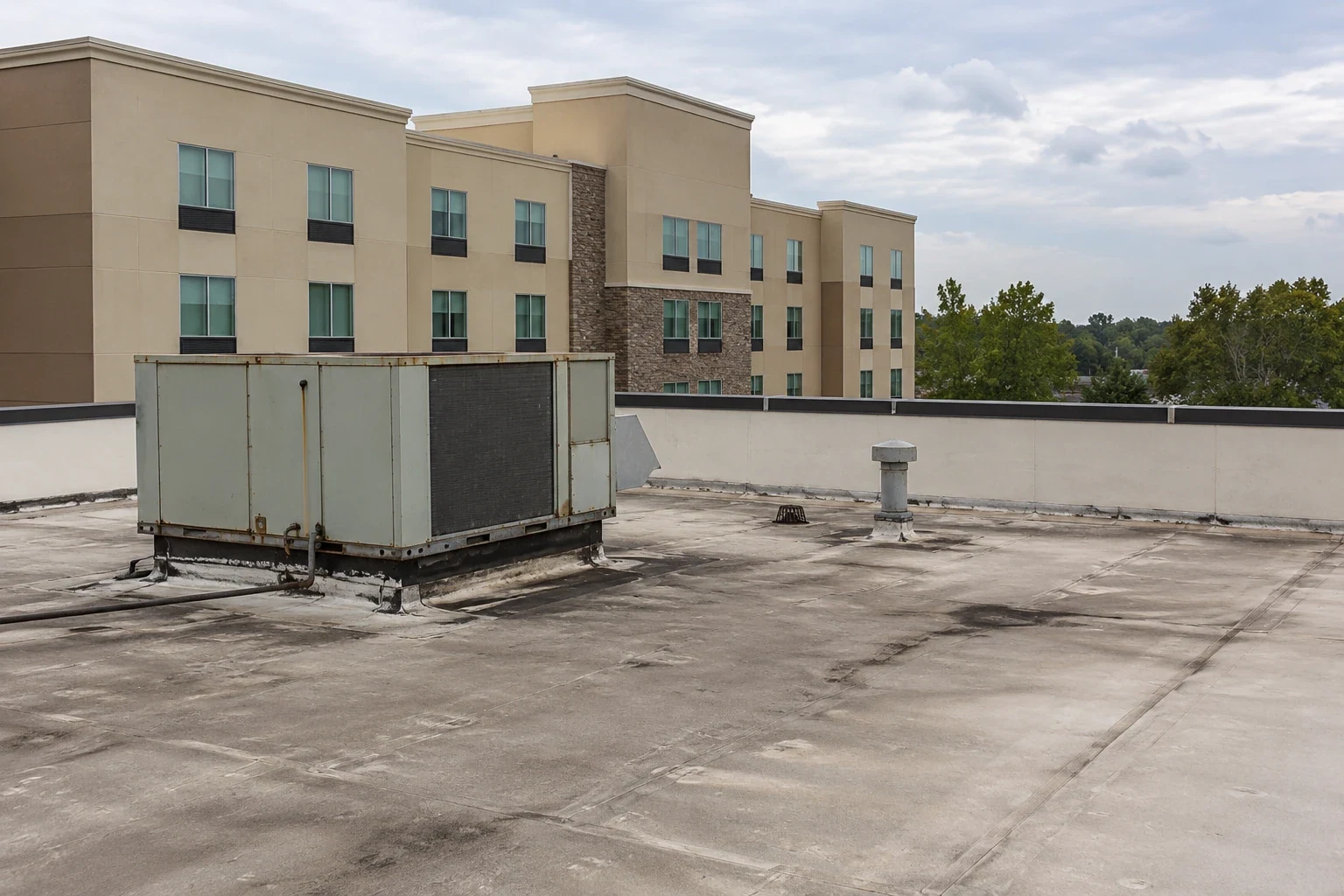
Every leak at a hotel costs money. A wet ceiling in a guest room takes the room out of inventory, a drip in the lobby or ballroom is visible to every guest, and a bad review about a stained ceiling lingers online long after the repair. Many hotels in Chesapeake have skylights over atriums, pool areas or corridors, and skylights are a frequent leak source. Hotel roofs also carry HVAC units, exhaust fans for kitchens and laundry, and pool equipment, all of which need proper flashing.
Skylight leaks are tricky because water can come in through two different places: the roof flashing around the skylight curb, or the skylight itself, through cracked glazing, failed seals or a damaged frame. Those are separate repairs, often by separate contractors. We inspect the curb, the flashing and the roof around it, look at the skylight frame and glazing from the outside, and test the insulation for moisture. You get photos and a written explanation of where the water is coming from and who should fix it, so you don't pay a roofer to chase a glazing problem or the other way around.
Skylight curb or skylight unit
A skylight sits on a curb, and the roof membrane is flashed up the sides of that curb. If the flashing is too low, pulled loose or cracked at the corners, water gets in at the base. If the curb itself is rotted, new flashing will not hold. Above that, the skylight frame and glazing have their own seals and weep holes, and when those fail, water runs down inside the curb and looks just like a roof leak. Condensation on the inside of the glass in a humid pool area can drip as well, which is a ventilation issue rather than a leak.
Our skylight and penetration flashing work covers rebuilding the curb flashing, repairing or replacing rotted curbs and installing new counterflashing. If the glazing or frame is the problem, we tell you so a skylight or glazing contractor can repair it. Where a skylight needs to be removed for curb repair, we coordinate with that contractor so the opening is protected and never left exposed to weather or guests below. On atrium skylights, we also plan interior protection, since anything dropped can fall a long way into a public space.
Wet insulation before a new surface
Hotel owners sometimes ask about recoating or recovering a roof that leaks. That can make sense, but only if the insulation underneath is dry. Wet insulation trapped under a new coating or membrane keeps damaging the deck, can grow mold and lets the leak continue. Before recommending any new surface, we find out how much of the roof is wet. Recoating over wet insulation is one of the most common and expensive mistakes we see on hotel roofs.
An infrared moisture survey can map wet areas across the roof in an evening. We confirm the results with core samples, because pool exhaust, HVAC equipment and recent rain can affect the readings. With the wet areas known, we can price a repair, a recover or a replacement and show which makes sense for the building and the budget. Wet areas are replaced first in any option. If the deck under a pool area has rusted from humidity, we report it with photos and get approval before going further.
Working above guests
Hotels stay open, and guests expect quiet. Before any section is opened, we work with the general manager or chief engineer to identify which rooms sit under each phase and whether they should be blocked from sale during noisy work. Tear-off and other loud tasks are scheduled for late morning and early afternoon, after checkout and before check-in, when most guests are out. Odor-producing adhesives are kept away from air intakes and pool ventilation.
Our roofing for occupied buildings process limits how much roof is open at once and dries in every section at the end of the shift. Entrances, the porte-cochère and parking stay clear for guests. Weddings, conferences and other events are worked into the schedule so crews are never overhead during an event. The hotel gets a short daily update so the front desk can answer guest questions. Crews are reminded that guests are below and asked to keep noise and music down.
Hotels near Greenbrier
Greenbrier has a concentration of hotels serving business travelers and visitors, along with others along the city's major roads. Each hotel has its own roof type, age and equipment. For hotel roofing in Greenbrier, we inspect the specific property and base the repair on what we find there. Hotel brands sometimes have requirements for visible parts of the building, which we keep in mind for any edge or canopy work. If the hotel is part of a portfolio, we keep each property's findings separate and easy to file.
Hotel roofs carry HVAC units for public areas, packaged units for guest rooms, kitchen and laundry exhaust and sometimes pool dehumidifiers. Our rooftop curb and equipment support work covers flashing and supports for that equipment, with shutdowns scheduled through the hotel's engineering staff. Pool dehumidifiers in particular need careful timing, because shutting them down for long can cause condensation problems inside.
The proposal explains the cause, the repair, the schedule and how guests will be protected from noise and disruption. Items for other contractors, such as glazing or HVAC, are listed separately. Photos are labeled by roof area and the rooms below so the engineering team can match them to guest complaints.
Drains, records and related buildings
Drains on a hotel roof collect a lot of debris and need regular cleaning. Our drain and scupper work covers rebuilding drains, replacing strainers and resetting outlets so water flows freely. At closeout, the hotel receives photos, a roof plan showing work by area, a list of materials and notes on items for other trades. Those records help the next engineer or contractor when a new leak appears. They also make it easier to tell whether a new problem is related to earlier work.
Apartment buildings share many of the same concerns, and our apartment roofing page covers working above residents. Hotels in retail centers also share roofs and walls with other tenants, and our shopping center roofing page explains how we coordinate across multiple businesses. Regular spring and fall inspections, and checks after major storms, keep small problems from becoming lost room nights.
Commercial Roofing Questions
Is the skylight leak from the roof or the skylight?
It can be either. Water can enter through the curb flashing or through the skylight frame and glazing. We check both and tell you which contractor should make the repair.
Can we recoat or recover the roof to stop leaks?
Only if the insulation underneath is dry. We check for wet insulation first, since a new surface over it traps moisture and lets the problem continue.
How do you keep noise away from guests?
We schedule loud work between checkout and check-in, keep open areas small and plan around events. Rooms under noisy work can be blocked if needed.
Who handles rooftop HVAC and pool equipment?
The hotel's engineering staff and HVAC contractors. We flash the curbs and supports and coordinate shutdowns with them.
What records do we receive?
Photos, a roof plan of the work, a materials list and notes on any glazing, HVAC or other items for other contractors.
Have the hotel skylight leak traced
Tell us which rooms or public areas are affected and when the water appears. We will inspect the skylight and roof, photograph what we find and explain the repair in writing.