

Leaves and trash piled at a shopping center roof drain block the water's path off the roof. The water backs up and sits against seams and flashings that were never meant to be underwater. Preventive roof maintenance in Chesapeake starts with problems like that, ones you can see and fix before they turn into leaks.
We check the drains and roof details on the areas you assign, then tell you what we cleaned, what we fixed and what needs more work. A maintenance visit should tie each finding to an action, not just a checkbox. For a shopping center roof, let us know which tenant spaces are occupied and how we get roof access. Clearing a drain and rebuilding a damaged one are different jobs, and our report keeps them separate so unfinished repairs don't get buried.
In the Greenbrier commercial area and across Chesapeake, maintenance starts with the building and the roof areas you want covered. We go over drains and equipment access with the operator. Debris around a curb can hide a flashing problem, and once it's cleared we can see more, though wet insulation may still need checking. A clean roof doesn't mean every detail is ready for repair. Our report separates what we finished from anything that needs another visit or a repair approval.
What a maintenance visit covers
A maintenance visit should list exactly which roof areas and tasks are included. We compare what we see with records of past problem spots. Drains, edges and equipment flashings each need their own kind of check. Tell us about any access restrictions before we set the schedule and price.
"Maintenance" doesn't mean rebuilding every detail. Cleaning and inspecting often turn up work that needs a separate repair quote. Those findings stay in the report after the visit, so routine work stays connected to real decisions about the roof.
A commercial roof inspection during maintenance should note which areas we could reach and what we couldn't check. We record visible changes without claiming to know whether the insulation is wet. Old patches show us where to look, but they don't answer what's underneath. A clean, continuous surface doesn't prove the insulation under it is sound. Equipment we couldn't get to is listed alongside the areas we did check, so the report never claims more than we saw. We compare drain condition with photos from earlier visits. Debris that keeps coming back and a leak that keeps coming back need different follow-up. The log separates maintenance we've done from repairs waiting on approval.
Clearing drains vs. repairing them
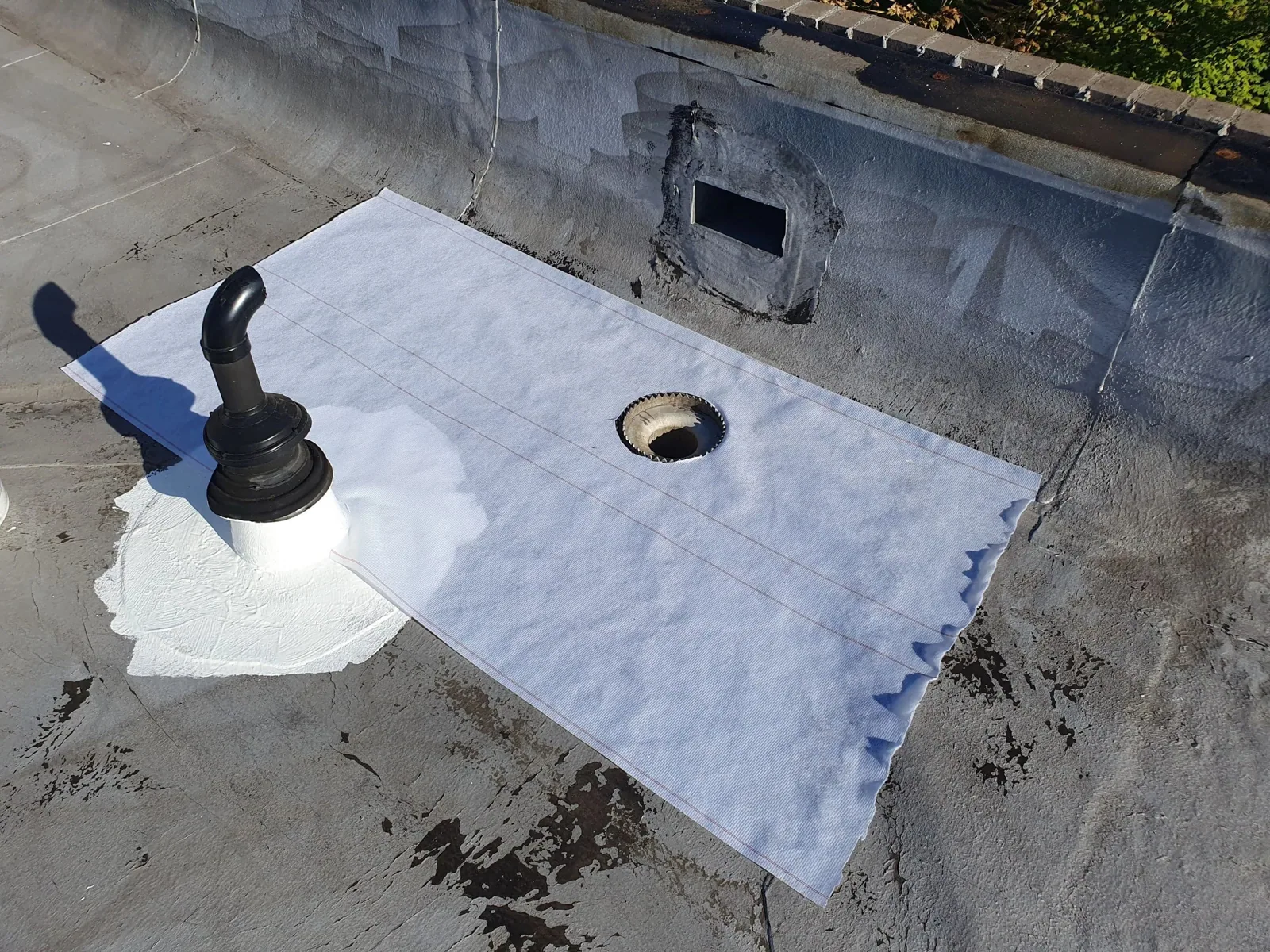
A clogged drain and a broken drain can happen at the same time. We note the debris separately from any damage to the membrane, flashing or insulation. The maintenance visit covers cleaning and checking the drain. It doesn't automatically include redesigning drainage or fixing hidden damage.
If we find damage, we describe the permanent repair. Clearing debris can get water moving again while another problem is still there. If the same interior leak keeps showing up, it gets its own investigation. The report says which drain we cleared and which problem, if any, we fixed.
A roof drain and scupper repair needs the drain flashing and the roof around it checked. We look at the drain height, the clamping ring and the insulation around the drain bowl. If a plumber or HVAC contractor needs to be involved, that's planned before we open the flashing. Cleaning and rebuilding a drain are listed separately. A clear drain doesn't fix wet insulation next to it; if we confirm wet board, the repair includes replacing it. The fix should address what's actually wrong at the drain.
Checking seams and flashings by roof type
A worn patch can still be weak after the debris around it is cleared. Before recommending any repair, we identify the roof type. On a TPO roof, repairs need TPO-compatible prep and welding. Membranes that look alike can need different repair materials, so we note the roof type with each finding.
A maintenance finding can lead to a clearly defined repair, with any insulation work listed separately from routine cleaning. That keeps a maintenance visit from turning into an open-ended repair bill.
On an EPDM roof, seams and flashings are checked against the original installation and product requirements. We review seam and flashing concerns along with any records. "Rubber roof" covers a lot of products, and not every old repair will accept a new patch. The roof's condition and the right prep come before a permanent fix. You'll see what we saw and what needs to be rebuilt. Wet insulation under the detail may still need to be confirmed. The repair should fully close the problem, because routine maintenance can't remove damaged material hidden under the surface.
When maintenance turns up a repair
When we find something loose or damaged that needs a real repair, we give it its own scope: the problem, the prep and the repair. Suspected wet insulation stays a question to confirm before we set quantities. If removal is needed, disposal and new insulation are listed. If damage might extend further, we agree on how it will be measured and approved before opening up.
That way you can compare repair costs without confusing them with maintenance. Any area we open gets sealed every night. Maintenance findings stay separate from the work needed to fix them.
Maintenance in Greenbrier and Western Branch starts with the specific building and its operator. We go over roof access and equipment restrictions for each visit. A unit we can't reach isn't inspected until it's cleared, and the report notes that next to the work we finished. Blocked drains and details we couldn't reach are listed separately, with a follow-up once they're accessible. Work hours can change how materials are delivered and how often we have to set up, so we plan around the areas we can actually reach. You get a clear plan for the roof above the affected rooms, with follow-up assigned where access or hidden conditions are still unresolved.
Keeping a useful roof log
The maintenance log lists the areas we covered and the tasks we completed. We keep photos of what we found and any open repair questions. Cleaning, temporary repairs and permanent fixes are logged separately. A service date doesn't close every equipment or insulation concern.
You can use the log to plan the next job. If a new leak appears, note when and where, and we'll compare it with the log. That way, later comparisons are based on real changes at specific spots. The log stays useful without claiming the whole roof is fine.
Maintenance and warranty requirements come from your actual warranty documents. We go over the relevant records instead of guessing terms from the roof type. A product name doesn't tell you the warranty term or what's covered. Any permanent repair still needs matching materials and proper prep. Repairs and recurring maintenance tasks are listed separately. If a detail is still blocked, it stays on the next work order. Photos link the original problem to its current condition, and the summary explains what still needs work after the visit.
Commercial Roofing Questions
What should a maintenance agreement spell out?
The roof areas and tasks included, any access limits from the operator, and the spots with a history of problems.
Does clearing a drain fix a damaged drain?
No. Clearing gets water moving; a cracked or loose drain flashing needs a separate repair, and we list both.
Can a maintenance visit confirm the insulation is dry?
No. We can only report what we see. If wet insulation is suspected, we recommend core cuts or a moisture scan.
What happens if maintenance finds a needed repair?
We write it up separately with the problem, the prep and any insulation work, so you can approve it on its own.
What should the roof log include?
What we did, photos of what we found, and open concerns, with routine maintenance kept separate from repairs still needed.
Catch roof problems before they become leaks
Tell us where your roof has had problems before and how we get access. We'll check the areas you assign and explain what we find, with photos.