

Office tenants notice a roof leak immediately. A stained ceiling tile over a conference room, water on a desk or a wet carpet by the window means a call to the property manager, and repeated leaks can sour a lease renewal. In Chesapeake, one of the most common sources we find on office roofs is the junction where the roof meets a parapet, a penthouse wall or a taller part of the building. The flashing at the base of the wall pulls loose, the counterflashing or coping above it opens up, or the wall itself lets water in above the flashing.
Wall leaks are tricky because water that gets in high on the wall can run down inside it and appear along a window head or at the base of an exterior wall, well away from the actual opening. Wind-driven rain makes it worse. We inspect the wall flashing, the coping or counterflashing, and the wall surface above, then test the insulation along the base of the wall for moisture. You get photos and a written explanation of where the water is getting in and what a lasting repair involves, along with a plan to keep tenants working while it is fixed.

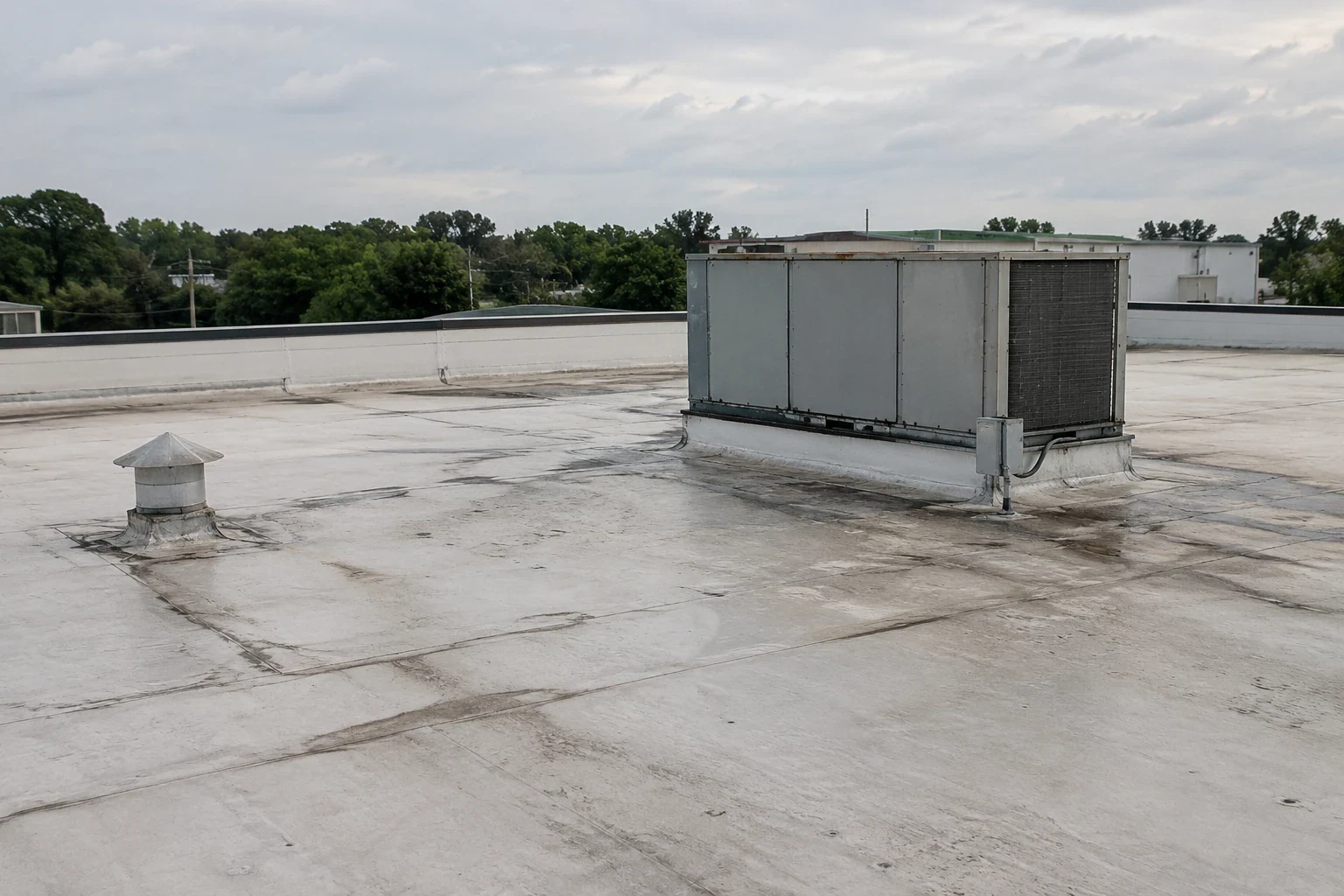
Following the water at the wall
Before anyone patches a wall leak, it helps to know where the water is entering. The flashing at the base of the wall may be loose. The metal coping on top of a parapet may have open joints. Masonry, stucco or panel joints above the roof may be letting water into the wall cavity. A patch at the wrong spot does nothing. We check each of these, and where needed we use a controlled water test to confirm the source.
A proper flashing failure repair removes the old flashing, repairs the wall surface behind it, replaces wet insulation at the base and installs new flashing with a secure top termination and counterflashing. Coping joints are resealed or the coping is replaced. If the wall itself is the source, we say so plainly, because the right fix may be masonry or sealant work by another trade, not new roofing.
Can the existing roof stay?
Office owners often ask whether a leaking roof can be recovered rather than torn off. A recover adds new insulation and membrane over the existing roof, which saves money, reduces noise and debris, and keeps the building more comfortable during the work. It only works if the existing roof is mostly dry and the building does not already have two roofs. Wet insulation trapped under a recover keeps damaging the deck and lets leaks continue.
Before recommending a roof recover, we take core samples and run a moisture survey to find out how much of the roof is wet. Wet areas are removed and replaced first. We also check that walls, curbs and drains can be adjusted to the new roof height, since a recover raises the roof surface. The proposal lays out the cost of a recover and a full replacement side by side. It also shows how each option affects tenants and how long each would take.
Keeping tenants at work
Office buildings stay occupied during roof work, so planning starts with the tenants. Before any section is opened, we work with the property manager to identify which suites sit under each phase, when noisy work can happen and how tenants will be notified. Tear-off and other loud tasks are scheduled for early morning or after hours where needed, especially over conference rooms and executive offices.
Following our roofing for occupied buildings approach, nothing is left open overnight. We keep adhesive fumes away from fresh-air intakes and choose low-odor products where they work well. Entrances, parking and walkways below the work are protected or rerouted.
The property manager gets a short daily update, so questions from tenants can be answered quickly. If a tenant has a server room or other sensitive space, we agree on extra protection before the roof above it is opened. Any unexpected condition is reported the same day with photos.
Office properties in Chesapeake
Chesapeake office buildings range from small professional buildings to larger multi-story offices in Greenbrier and other business areas. Their roofs vary in age, material and how many times they have been repaired. Before we recommend anything, we inspect the specific building and look at any roof records the owner has, such as the original warranty, past repair invoices or drawings, then compare them with what is actually on the roof today. Records help, but buildings change over time.
The property manager tells us which suites are affected, when leaks appear and whether anything has changed recently, such as new HVAC equipment or a tenant build-out that added roof penetrations. We inspect the roof, walls, drains and curbs, test the insulation and photograph what we find. The proposal explains the cause, the repair options, the schedule and the tenant protection plan. If we find something outside roofing, such as masonry or window problems, we list it separately for the right contractor.
After the repair
Tenant changes often mean new rooftop equipment or penetrations, and each one needs proper flashing. When that work happens after our repair, it should be flashed by a roofer so the wall and curb details we rebuilt stay intact. Medical offices share many of these concerns with added clinical requirements, and our medical office roofing page covers them.
Many flex buildings have office space at the front and shop or warehouse space behind, and our flex industrial roofing page explains how we handle multiple tenant uses under one roof. At closeout, the owner receives photos, a roof plan of the work, a list of materials and notes on anything another trade still needs to handle. Inspections in spring and fall and after major storms help catch loose flashings and open coping joints before tenants notice a leak. A short report after each visit helps the owner plan budgets and answer tenant questions.
Commercial Roofing Questions
Why does water show up at the window instead of the roof?
Water that gets in at a wall flashing, coping or wall joint can run down inside the wall and appear at a window head or along the base of a wall, far from the opening.
Can we recover the office roof instead of tearing it off?
Often, if the existing roof is mostly dry and there is only one roof in place. We test for wet insulation first and replace any wet areas before the recover.
How do you keep tenants comfortable during roof work?
We plan around tenant schedules, do noisy work early or after hours when needed, keep fumes away from air intakes and seal the roof every day.
What if the wall, not the roof, is leaking?
We tell you plainly and list it separately. Masonry, sealant or window repairs may be needed from another trade.
What records do we receive?
Photos, a roof plan showing the work, a list of materials and notes on any items for other contractors.
Have the office wall flashing leak traced
Tell us which suites or rooms are affected and when the water shows up. We will inspect the roof and walls above them and send photos with a plain repair plan.