
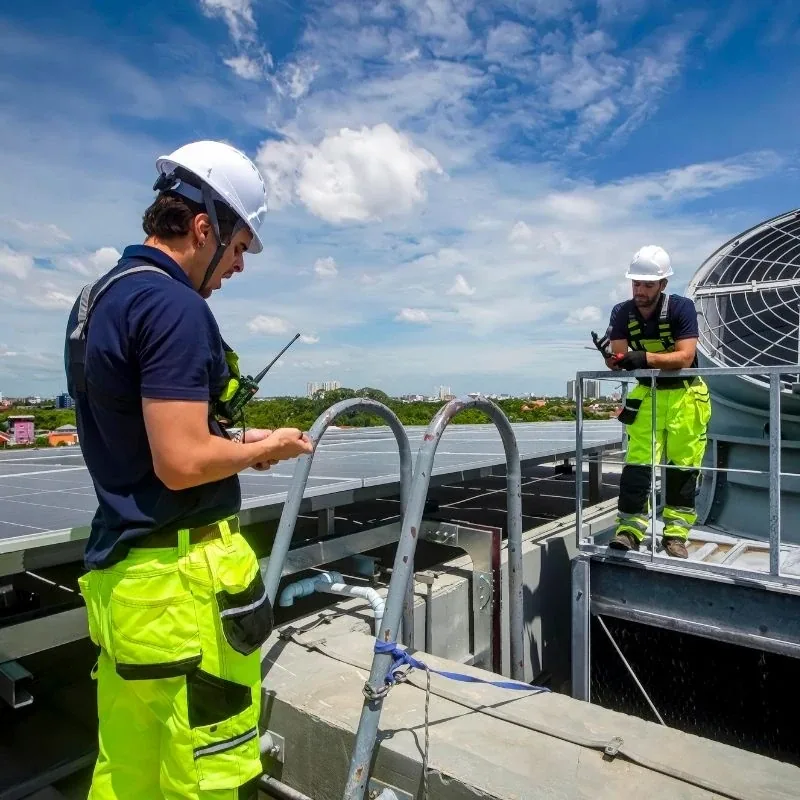
When a seam on an office roof leaks, the insulation can stay wet for many feet in every direction. You can't tell how far from the top of the roof. Infrared moisture surveys in Chesapeake help answer that question: how much of the insulation is wet, and where?
Before we schedule, we look at how the roof is built and whether conditions will allow a useful scan. Infrared shows likely wet areas. Core cuts confirm them. On an office building roof, we start by asking what decision the survey needs to support, such as a repair, a recover or a replacement. The scan points us to likely wet areas but doesn't by itself decide what gets torn out. The repair is based on what we confirm.
For hospitals and medical buildings, we confirm the roof type, which areas we can access and any equipment restrictions before we read the results. A leak that keeps coming back near a curb can soak insulation well past the visible problem. We review past repairs along with what we see now, and note any areas we couldn't access. Every reading stays tied to the roof and the conditions on the night of the scan, and the report marks where a core cut is still needed before setting repair quantities.
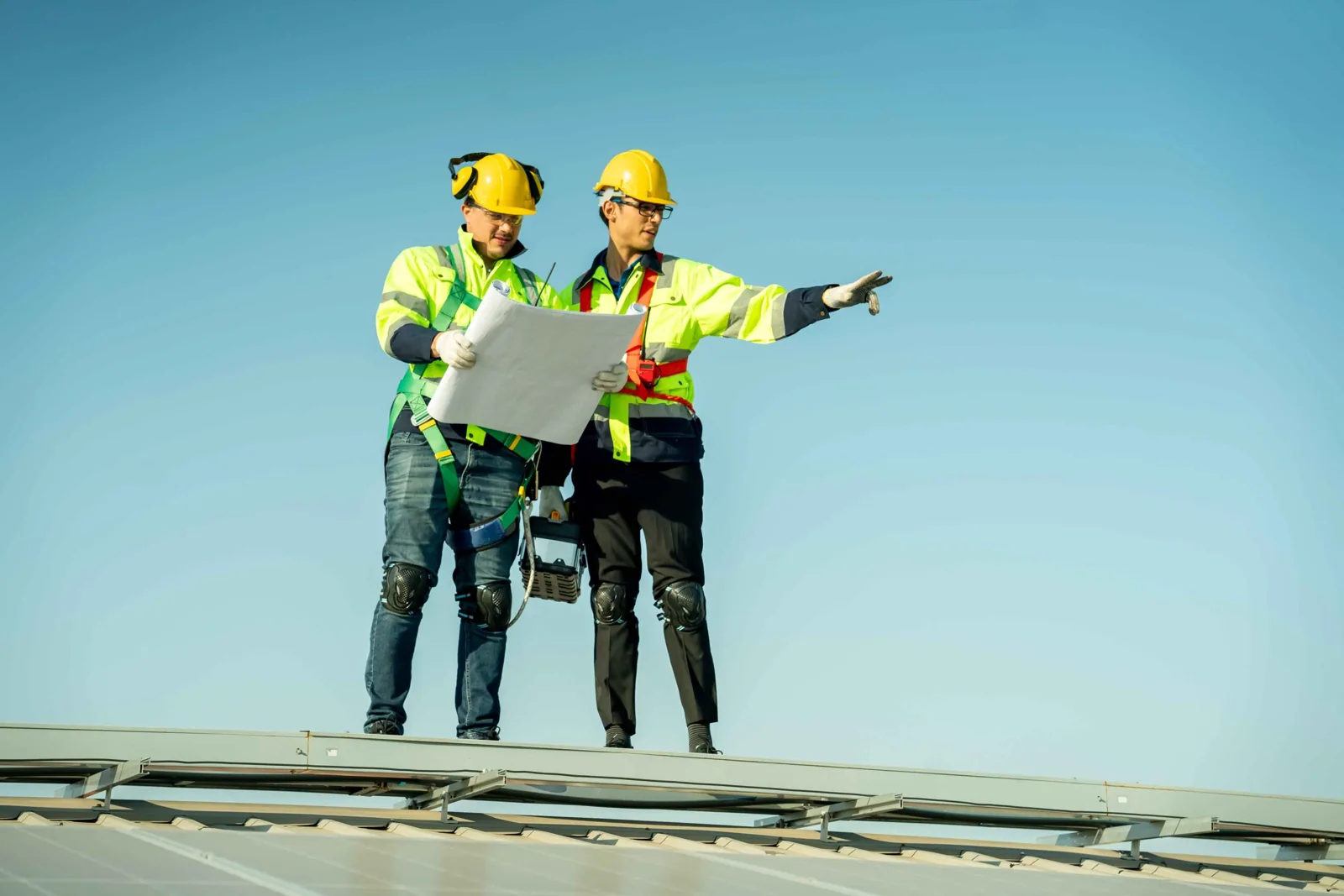
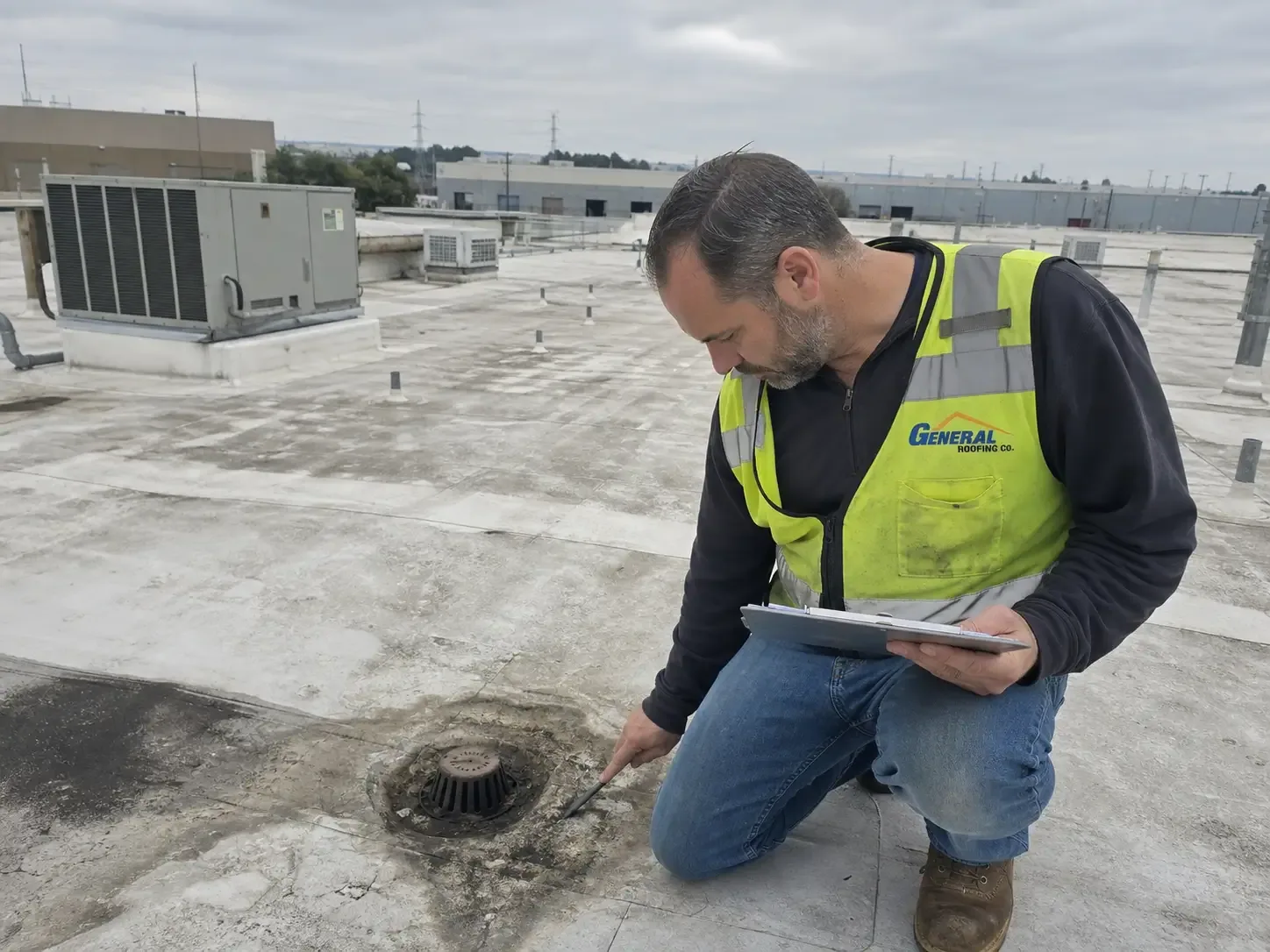
What decision is the survey for?
A likely wet area and a confirmed one are not the same thing. We agree up front whether the survey is meant to help decide on keeping the roof, repairing it or investigating further. Past records and leak history help us focus on the right question. The method has to suit the roof and the conditions on the night we scan.
"Moisture survey" can sound like it covers everything. It doesn't show the condition of every layer. We note any areas we couldn't scan and any other limits, so you can use the results before committing to repair quantities.
A commercial roof inspection often comes first to look at the seams, flashings and details. We compare those findings with the area we plan to scan. A visible split points us in a direction but doesn't show how far the wet area goes, because water spreads through the insulation beyond the hole. Fixing the leak and confirming the wet insulation are separate steps. If you size the repair to the patch, you may miss wet board around it. The survey answers its own question, with follow-up when needed, and the results should never be taken as a guarantee about the whole roof.
Weather and roof conditions for a good scan
Infrared scanning depends on the weather and the roof. It works best on a clear, dry evening after a sunny day, when wet insulation holds heat longer than dry insulation. We check the roof and the forecast before committing to a date. Having a crew available or easy roof access doesn't guarantee usable results.
The type of roof also affects how well a scan works. Ballasted roofs, some coated roofs and some metal roofs don't scan well. If conditions aren't right on the scheduled night, we reschedule rather than give you a poor scan.
On a TPO roof, we need to know what's under the membrane where possible. The membrane type doesn't tell you what insulation or how many layers are underneath. We compare any records with what we can see before interpreting the scan. Knowing the top layer isn't the same as knowing the full roof build-up. Some product details may need to be confirmed before any permanent work. The scan is a tool for answering a question, not proof on its own, and its limits are spelled out for your roof.
Confirming wet areas with core cuts
An infrared scan shows areas that hold heat differently. That often means wet insulation, but not always. It doesn't tell you exactly how wet the board is or where to stop tearing off. We confirm suspected areas with core cuts before setting final quantities.
You'll see likely wet areas separately from confirmed ones. A color change on a scan shouldn't decide every square foot removed, and a clean scan isn't proof the roof is dry everywhere. Repair quantities come from what we confirm on your roof.
A modified bitumen roof often has several layers, and we review what we can find about the build-up before reading the scan. We don't assume what's underneath from the top sheet. We cut cores where the scan shows something worth checking. Wet insulation and loose attachment may need different checks before we decide what can stay. The final repair area is based on the insulation we actually find, not just the shape on the scan. Our survey maps show what we scanned and any conditions that limited the results, and core cuts confirm the layers before tear-off quantities are set.
Using survey results for repair, recover or replacement
A roof recover only makes sense if the existing roof is dry and sound. A new membrane won't fix wet insulation underneath it. When the survey and cores confirm wet board, we include removing it, hauling it off and replacing it in the price, along with the new membrane. Compare full proposals, not just square footage.
If more wet board turns up once the roof is opened, we agree on how it will be measured and approved before going further. The roof is sealed every night. The survey informs the scope; it isn't the repair itself.
A roof replacement scope should state exactly where tear-off stops, based on confirmed conditions. We separate confirmed wet areas from those that still need checking. Rooftop units may also need to be lifted by another trade before we can rebuild around them. Those items go next to the insulation quantities and flashing work. Material orders should be based on what we confirmed. A finished survey doesn't mean every part is ready to install, and the roof still has to be prepped with matching materials. The finished roof should fix the leak and the wet insulation it caused.
What the survey report should include
Greenbrier North Commerce Park sits within the Greenbrier business district, but every survey is set up with the specific building and its operator. A moisture survey in Greenbrier gets the same building-by-building review. We look at the roof and whether infrared will work on that type of roof. On roofs with several layers, we decide what we're trying to learn before setting quantities. Suspected wet areas stay separate from damage we confirm once we open the roof, and that holds through repair and ordering.
The report should name the area we scanned and the conditions that night. We keep scan findings separate from what we later confirm and from the finished work. Photos and a short explanation tie each finding to its question. Anything we're still unsure about stays on the list after the survey.
Warranty questions need your warranty documents. A survey can't promise coverage or how long the roof will last. You get a clear record of what was found and what decisions come next.
Survey records should note the roof area, conditions during the scan and why each reading was taken. A reading can point us to a spot to check but doesn't by itself justify tearing out material. The operator tells us which areas are off-limits and any equipment activity that might affect access. We compare readings with roof records and what we can see, then list what needs confirming before repair quantities are set. Keep the survey map with the later tear-off record so likely wet areas and confirmed damage stay separate.
Commercial Roofing Questions
What should a moisture survey start with?
The decision you need to make, such as repair, recover or replace, and what we know about how the roof is built.
If we can get on the roof, is it ready to scan?
Not necessarily. Infrared needs the right weather and roof type. If conditions aren't right, we reschedule.
Does a hot spot on the scan mean that area must be torn out?
Not by itself. We confirm with core cuts before setting how much insulation to remove.
Will a new membrane fix wet insulation underneath?
No. Confirmed wet insulation has to be removed and replaced, and that belongs in the price alongside the new roof.
What should the survey report include?
What was scanned, conditions on the night, likely wet areas, what cores confirmed, and what still needs to be decided.
What do you need the moisture survey to answer?
Send us your roof records and tell us what decision is waiting on the moisture question. We'll explain whether infrared will work on your roof and send a short summary with images.