
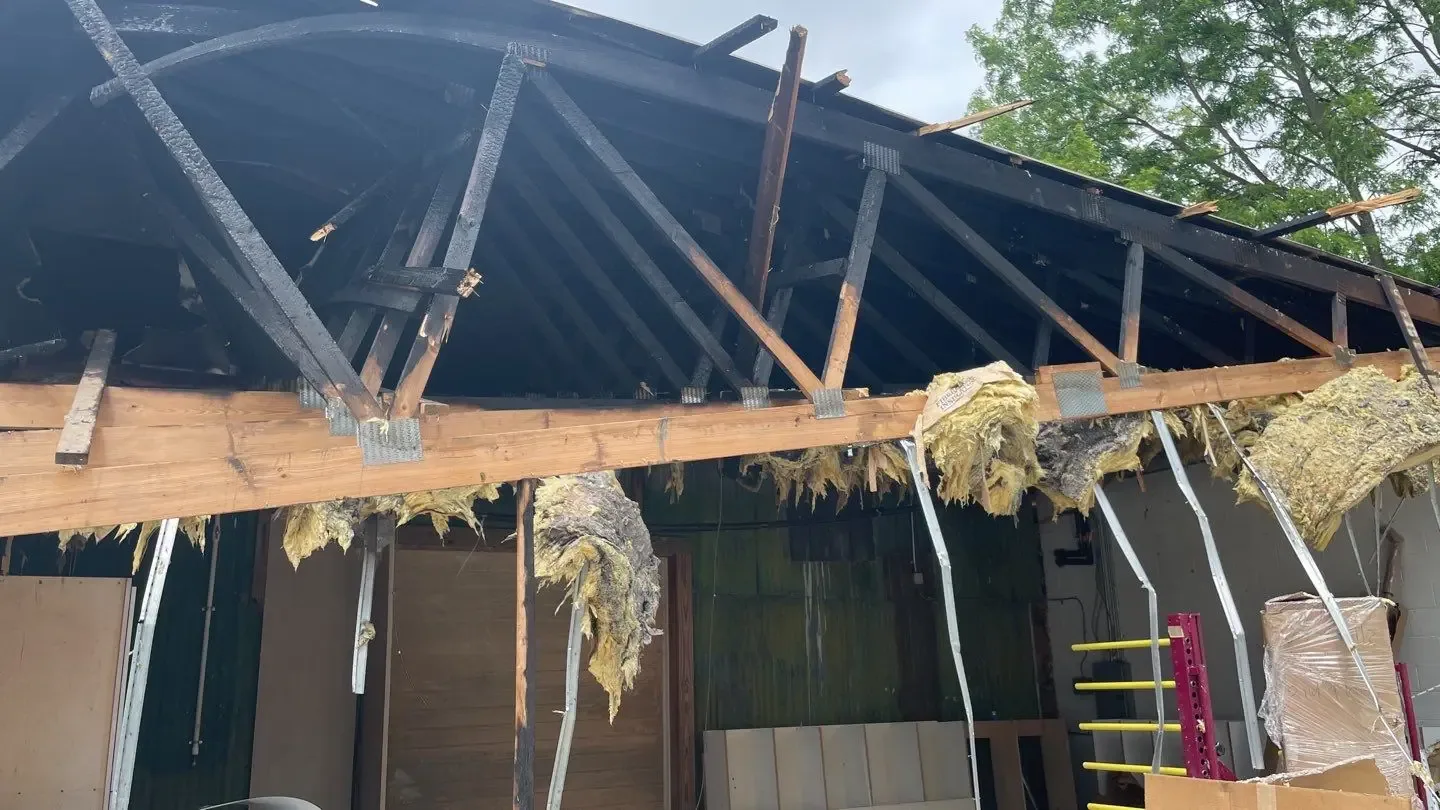
A flapping warehouse roof edge pulls on the next row of fasteners every time the wind gusts. Rain then gets under the loose edge and travels inward. Storm damage roof repair in Chesapeake starts with what we can actually see changed on the roof.
We compare what you noticed after the storm with the roof as it is now and any older records. Storm damage findings are kept separate from assumptions about the whole roof. On a warehouse roof, tell us which rooms and equipment are affected. The repair fixes the damage we confirm and any wet insulation it caused. A storm report alone doesn't tell you which seams or flashings need replacing.
For hospitals and medical buildings, storm repair starts with the building, an on-site contact and the visible damage. We coordinate protection and any equipment shutdowns before opening anything. Note when you first saw the leak and what changed; older photos help compare, but they don't show what's under the membrane. We work only in the areas the operator approves. The permanent repair starts with the damage we confirm, and any open questions are stated before the scope grows.
Documenting what the storm changed
An open seam, bent edge metal and damaged insulation are three different findings. We photograph what we can reach and note when the storm happened. Older patches may show problems that were there before the storm, and earlier roof records help make that comparison. Calling it storm damage doesn't mean every worn detail was caused by the storm. Our scope separates what we saw from questions still open underneath, so each repair is based on the roof at that spot.
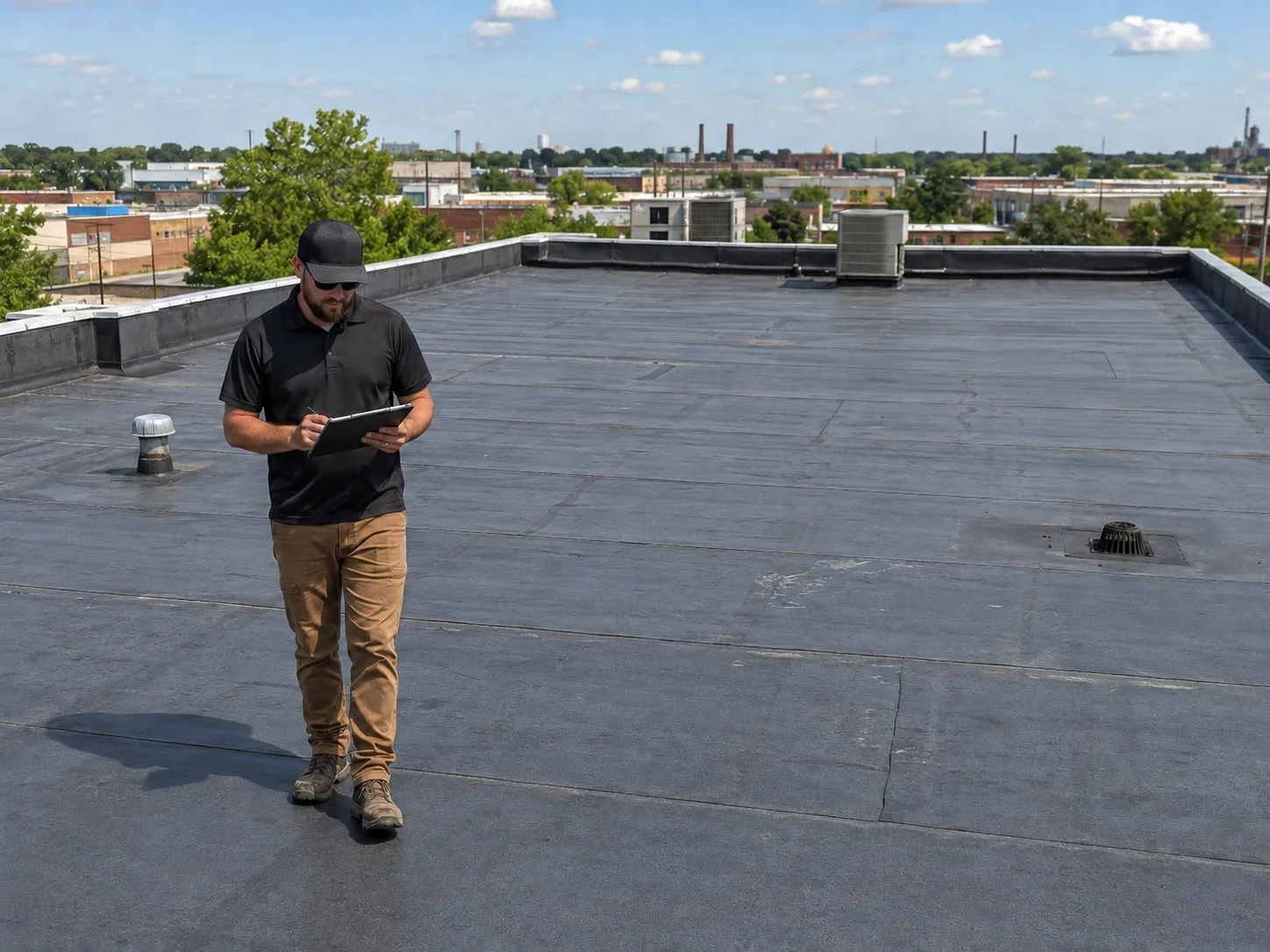
A commercial roof inspection after a storm should name the areas we checked and what we were looking for. We compare the edges, field and rooftop equipment with the leaks reported inside. Interior stains help us know where to look but don't prove where water entered, since rain can run through the insulation before appearing somewhere else.
Where we couldn't see under the membrane or reach an area, we say so. The inspection describes what we found, not every layer of the roof, and repair quantities follow what we confirm, not a general description of the storm. Older photos help us tell fresh damage from old wear. Any open areas get temporary protection before larger quantities are approved.
Loose edges and fasteners
A loose roof edge moves with every gust and works against the membrane seal. The repair needs the fasteners and the wood behind the edge checked. A patch on top doesn't replace missing fasteners. If the edge needs to be fully rebuilt, the repair should include it. The new edge follows current project and product requirements; a torn edge tells us where to look, not how strong the new one needs to be.
Our edge metal, coping and gutter repair after a storm covers both the metal and the membrane. We check fasteners, blocking and the membrane seal at the edge. Damaged insulation or wood may need to be replaced before the edge is closed up, and those items are listed next to the edge quantities instead of being hidden in a lump sum.
You can compare finished repairs with any open questions clearly shown. Measuring the damaged edge doesn't tell you every part needed. If a wall or rooftop unit is in the way, another trade may need to finish first, and that stays tied to the repair schedule.
Wet insulation under the damage
Rain coming through a lifted seam can spread through the insulation underneath. Suspected wet areas need to be confirmed before we decide how much to remove. A small tear doesn't mean a small insulation repair, and a large stain inside doesn't decide how much gets torn out. You'll see what still needs checking before anything is ordered. Confirmed repairs include disposal, new insulation and tie-ins to the existing roof.
On a TPO roof, the repair needs the right products and matching flashing prep. We review the roof along with any material and project records. Membranes that look alike don't always use the same repair parts.
The repair should include insulation and fastening work where needed. Compare the finished repair, not just the patch size. The roof has to be dry and warm enough before we weld or seal the new material. A membrane quantity shouldn't hide unfinished edge work, and the repair should close the leak path with whatever it actually takes.
Temporary protection vs. the permanent repair
An open area of roof may need temporary protection right away, before the permanent repair is ready. We go over current access and what's safe to do. Emergency roof repair covers the temporary fix, with its own limits and follow-up. It's kept separate from the permanent flashing and insulation work, and we record the difference with photos. A temporary patch doesn't confirm the condition of the insulation or equipment. What we can do depends on the conditions and what the operator approves, and urgency alone doesn't make the roof safe to work on or the repair finished.
Greenbrier is a commercial district in Chesapeake, but damage at nearby buildings doesn't tell you what happened to yours. Storm damage repair in Greenbrier starts with the building, the operator and the rooms affected. If a curb or edge is blocked, it stays on the list while other work moves ahead. The roof is sealed every night within the approved area, and any extra damage is measured and approved before quantities change.
Great Bridge and Greenbrier are large districts, but storm impact has to be confirmed at each roof. The property contact should keep dated photos and note when water or movement first appeared. We compare those with the edges, penetrations and drains, and any hidden damage stays unconfirmed until we check it. The repair record names the affected area, the temporary fix, the permanent repair and any follow-up, so a later storm isn't confused with this one.
Keeping damage records and repairs separate
On an EPDM roof, storm repairs need EPDM materials and prep. We note the roof type through ordering and installation. Old patches on the membrane may not bond with new material. We keep records of insulation work, finished flashings and any inspections, so you can match the storm damage to the repair that fixed it.
Other causes or questions outside the repair stay listed. Interior repairs follow once each area is finished. A completion date shouldn't close out unfinished equipment work or paperwork.
Warranty notice and alteration requirements come from the actual documents. Insurance coverage is separate from what we saw on the roof and what we fixed, and a product name doesn't tell you the warranty term or the claim outcome. We go over the paperwork before the permanent repair is priced. Photos show the damage, the temporary fix and the finished repair separately, and you get a short summary of what we fixed. If new problems show up later, they're checked against this record by when and where they appear, not assumed to be from the same storm.
Commercial Roofing Questions
Does a storm mean the whole roof is damaged?
No. We document the actual changes at specific spots and keep questions about cause and hidden damage separate from the storm report.
What should a storm-damaged edge repair include?
The metal, the wood blocking, the fasteners and the membrane seal, built to current product and project requirements.
Does the size of a tear show how much insulation is wet?
No. We check the insulation separately and set removal quantities from what we confirm.
How is temporary protection documented?
We record where it was installed and what follow-up is needed, separate from the permanent repair.
What records should we keep after the repair?
Photos of the damage and the finished repair, inspection results, warranty documents and any items still open.
Storm damage on a commercial roof?
Send us what changed after the storm, any older roof records and current photos. We'll inspect the damage and explain the repair in writing.