
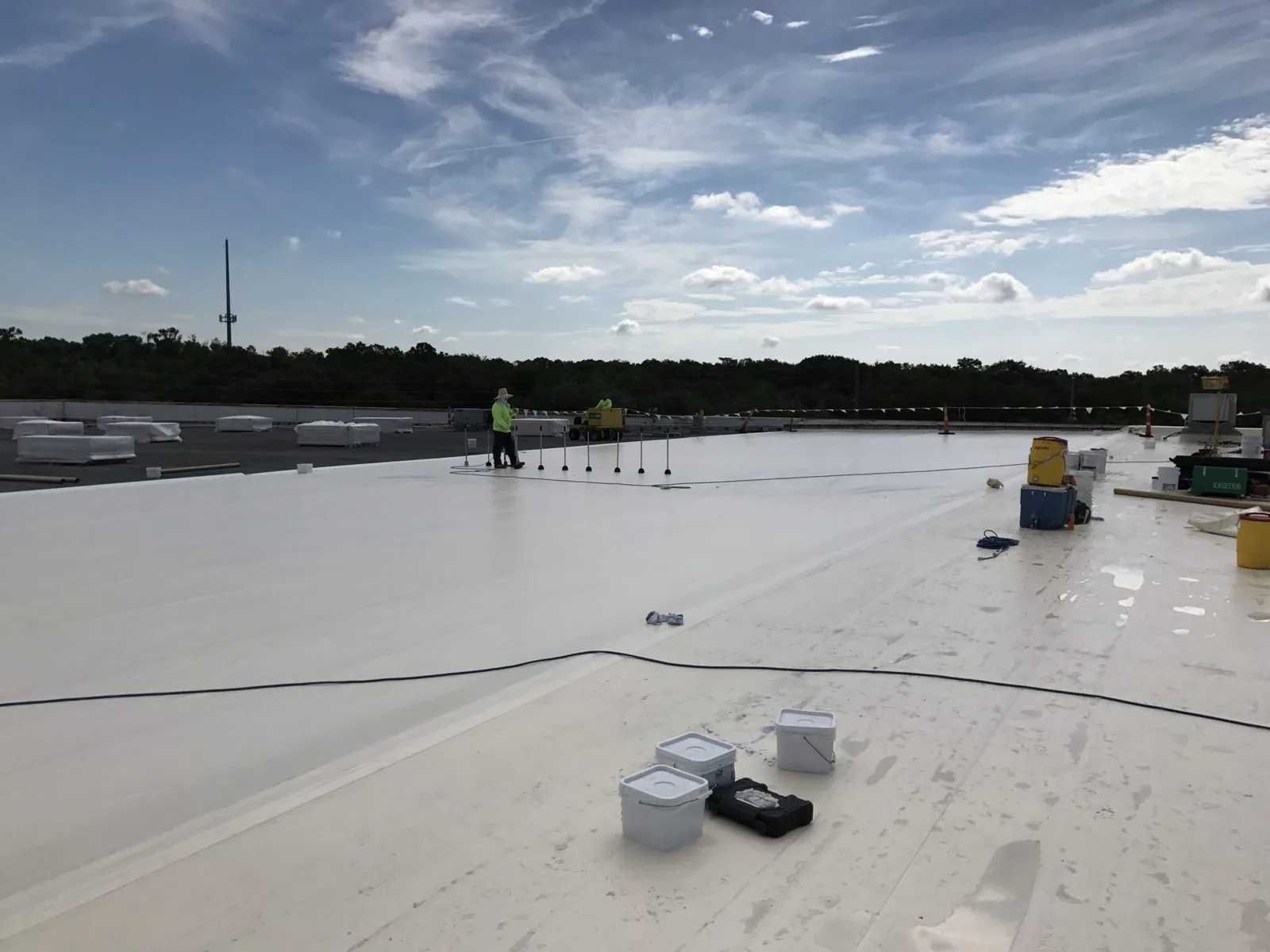
When a seam lifts on an industrial roof, rain gets under the membrane and into the insulation board below. Knowing that the roof is a premium KEE membrane doesn't tell you why the seam opened. KEE roofing in Chesapeake, VA starts with identifying the exact product on your roof and finding the failed seam or flashing. On a manufacturing plant roof, we also ask about exhaust, oils, chemicals or heat coming from the process below, because that affects which membrane holds up best and which repair materials will bond.
Greenbrier North Commerce Park, off Smith Avenue in the Greenbrier Business District, has a mix of industrial and flex buildings, but each roof still has to be checked on its own. Before we recommend a KEE repair or a new KEE roof, we inspect the seams, the flashings around equipment and the insulation near the leak. A loose seam may sit over wet board that needs replacing first. You get our findings with photos, plus the product information for whatever membrane we recommend.
What KEE membrane is
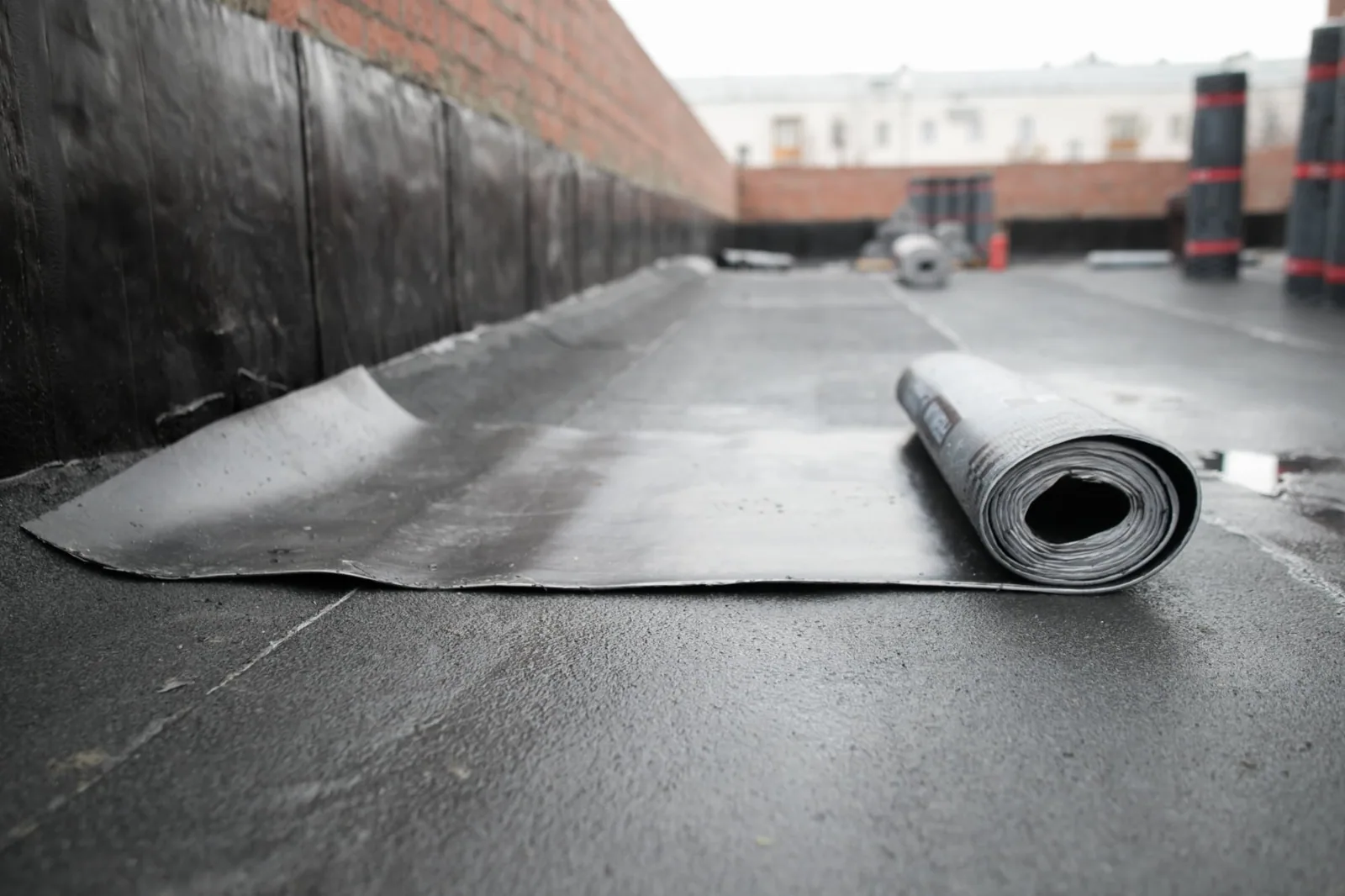
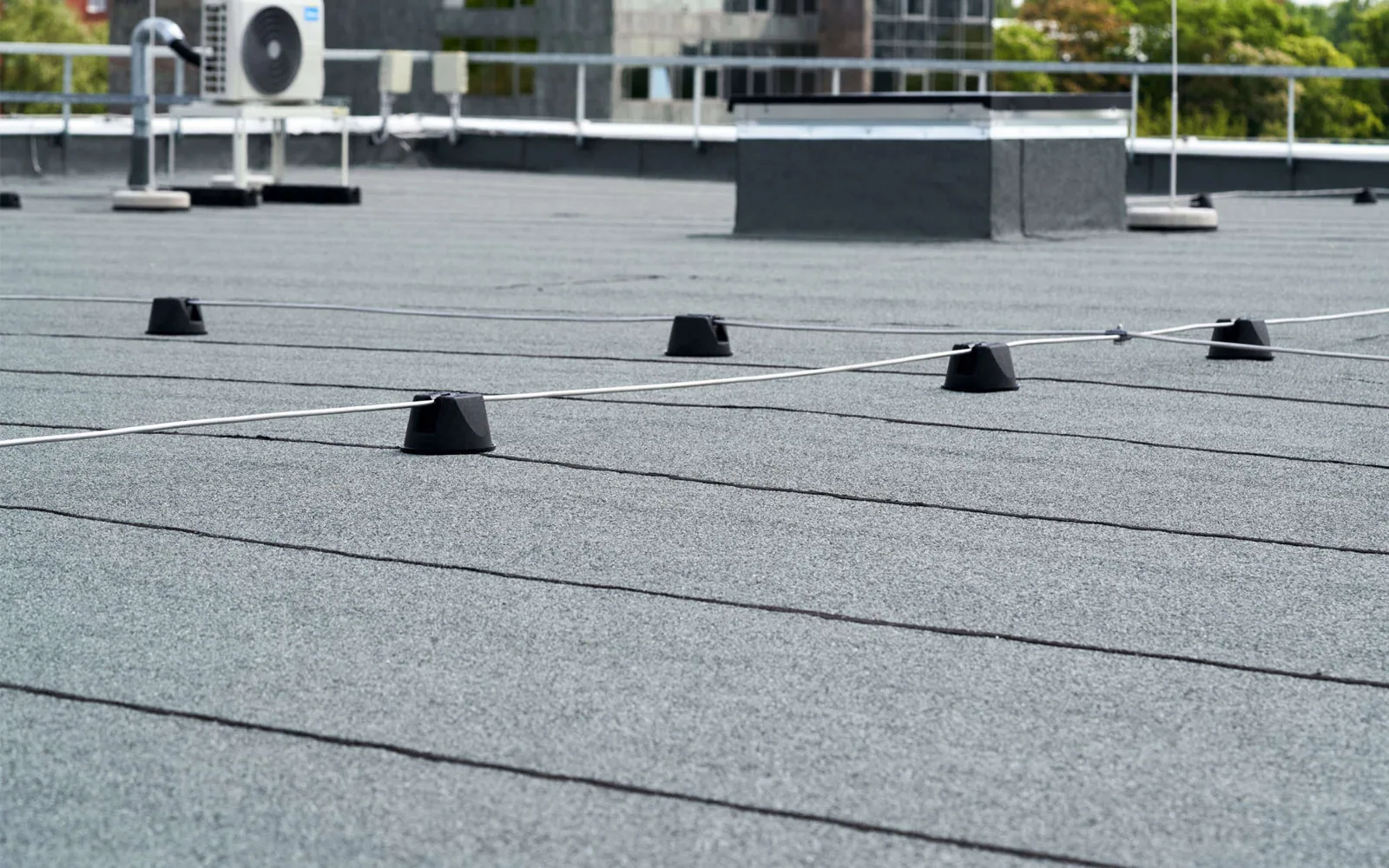
KEE (ketone ethylene ester) is a plasticizer blended into some PVC-based membranes to keep them flexible and resistant to oils and chemicals over time. Not every membrane sold as "KEE" is the same. Formulations, thicknesses and accessories vary by manufacturer. We identify the exact product on your roof, or the one we're recommending, and use the flashing, walkway and seam materials that are approved for it.
Owners often compare KEE with standard PVC roofing. Both are heat-welded thermoplastic membranes and can look identical, but they differ in how they handle long-term exposure and in price. You can't assume their accessories are interchangeable. We price both options with the same roof area, the same insulation work and the same flashing details, so you can see the real cost difference. The membrane is only part of the job. Edge metal, curbs, drains and walls make up much of the labor, and they need to be in both quotes.
Chemical exposure and roof condition
Industrial buildings often vent things onto the roof: cooking oils, process exhaust, solvents or hot air. Before recommending a membrane, we ask what comes out of your rooftop equipment and check the product's published resistance data. No membrane is resistant to everything, and a sales label is no substitute for checking. If a specific exposure is a concern, we'll get the manufacturer to confirm their product is suitable before you commit.
We also look at the roof's overall condition. A commercial roof inspection checks seams, flashings, fasteners, edges and drains. It can also involve core cuts or a moisture scan to find wet insulation. Old repairs matter, because some patch materials won't bond with a new KEE membrane and have to be removed. The membrane you prefer doesn't decide whether the insulation underneath is still usable; testing does. Our report tells you what we confirmed, what still needs checking and how that affects the repair or replacement plan.
When water gets under the sheet
Water that gets under a lifted seam spreads out through the insulation, often beyond the visible damage. We test around the leak to find where the wet area ends. Soaked board gets cut out and replaced, and the new section is tied into dry, sound insulation. Laying a new membrane over wet board traps water, which leads to rot, corrosion and blisters. If we open the roof and find more damage than expected, we show you and agree on a price before expanding the work. The roof is sealed at the end of every day.
A roof replacement with a KEE membrane should spell out which layers come off and what goes back on. Thicker new insulation can raise the roof surface and reduce flashing height at curbs, walls and drains, so those are planned before ordering. If a mechanical contractor needs to raise or move equipment, that's scheduled before we install the flashing. We don't consider a curb complete until the flashing is welded and sealed, even if the rest of the field is done.
KEE vs. TPO, and getting ready to install
TPO roofing is often cheaper than KEE and is also heat-welded, but its resistance to oils and chemicals is generally not as strong. If your roof sees grease or process exhaust, TPO may not be the best fit for those areas. We compare the options based on your actual exposure, using the same scope for both: insulation, edge metal, curbs, drains and building protection. That way, a lower membrane price doesn't hide missing work.
Being ready to install also means the materials are on hand, the weather is right and the building has given us access to the areas we're working on. Before we commit to a schedule, we sort out any questions about insulation, attachment or flashing details. If the plant can only give us certain sections at certain times, each one needs its own setup and tie-in to the old roof, and that cost belongs in the estimate. Choosing KEE doesn't free up equipment or rooms; your operations team does, and we plan each phase around what they release.
KEE roofs around Greenbrier and Great Bridge
Healthcare and industrial buildings both need roof decisions based on their own conditions. Your facility contact tells us which equipment can be shut down, which rooms need protection and when we can work. A roofing project in Greenbrier gets its own inspection and product review. If one curb is blocked by equipment, we keep it on the list and complete the rest of the roof that's ready.
When the job is done, we give you the exact name of the membrane installed, photos of completed seams and flashings, and any seam probe or test results. Anything unfinished, like a unit still waiting to be reset, is listed separately. Warranty terms depend on the specific product and system, and new penetrations or changes may need to be approved, so we'll go over the paperwork with you rather than promise a lifespan. If a new leak shows up later, tell us where and when, and we'll check the records first.
Owners in Great Bridge and Greenbrier sometimes assume their roof is KEE because a neighbor's is. We confirm the actual membrane, insulation and adjacent materials before choosing a repair method. If your roof has another membrane or an old coating next to the KEE area, we document how the two will be joined before any new material goes down.
Commercial Roofing Questions
How do I know if my roof is actually KEE?
We check records and inspect the membrane itself. KEE-modified membranes come from several manufacturers, and the exact product affects which repair materials can be used.
Is KEE resistant to the chemicals our plant vents onto the roof?
It depends on the specific exposure and the specific product. We check the manufacturer's resistance data and, if needed, get written confirmation before recommending it.
Are KEE and PVC membranes interchangeable?
No. They're related, but formulations and accessories differ by product. We compare the specific products and full installation scope, not just the label.
Do you check the insulation before repairing a KEE roof?
Yes. We test around leaks with core cuts or moisture scans. Wet insulation has to be replaced before new membrane goes on.
What records will we get after the work?
The exact membrane product installed, photos of seams and flashings, any test results, warranty documents and a list of anything still open.
Identify the weak line within the specialty membrane option
Tell us what's coming out of your rooftop equipment and send any roof records you have. We'll inspect the roof, confirm the membrane and send photos with a clear repair or replacement plan.