
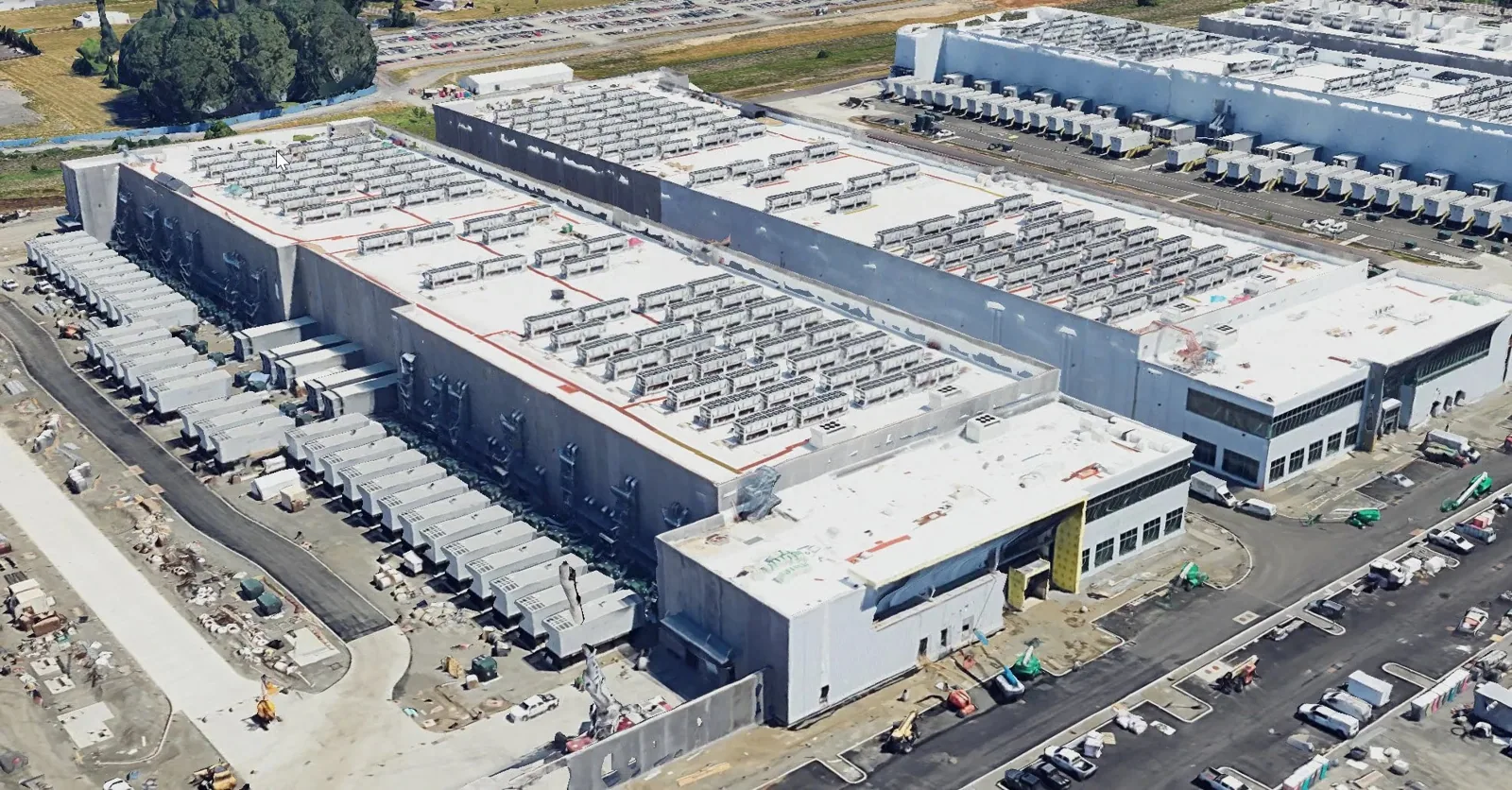
A data center roof has one job above all others: keep water out of rooms full of servers, power equipment and cooling systems. Even a small drip can force a shutdown or damage equipment worth far more than the roof. The roofs themselves are often crowded with cooling units, conduit, pipe supports and penetrations for refrigerant lines and cabling, and the leaks we see in Chesapeake usually start at those penetrations, especially where several pipes or conduits are grouped together through one opening.
Grouped penetrations are hard to flash well. They are often sealed with a pitch pan full of sealant that shrinks and cracks over time, or wrapped with a patch that cannot follow every pipe. Water then runs down the pipes or into the insulation around them. We inspect each penetration, check the insulation for moisture and look at how water moves across the roof toward them. You get photos and a written repair plan, and nothing is opened until the operations team agrees on timing and protection for the rooms below.
Rebuilding grouped penetrations
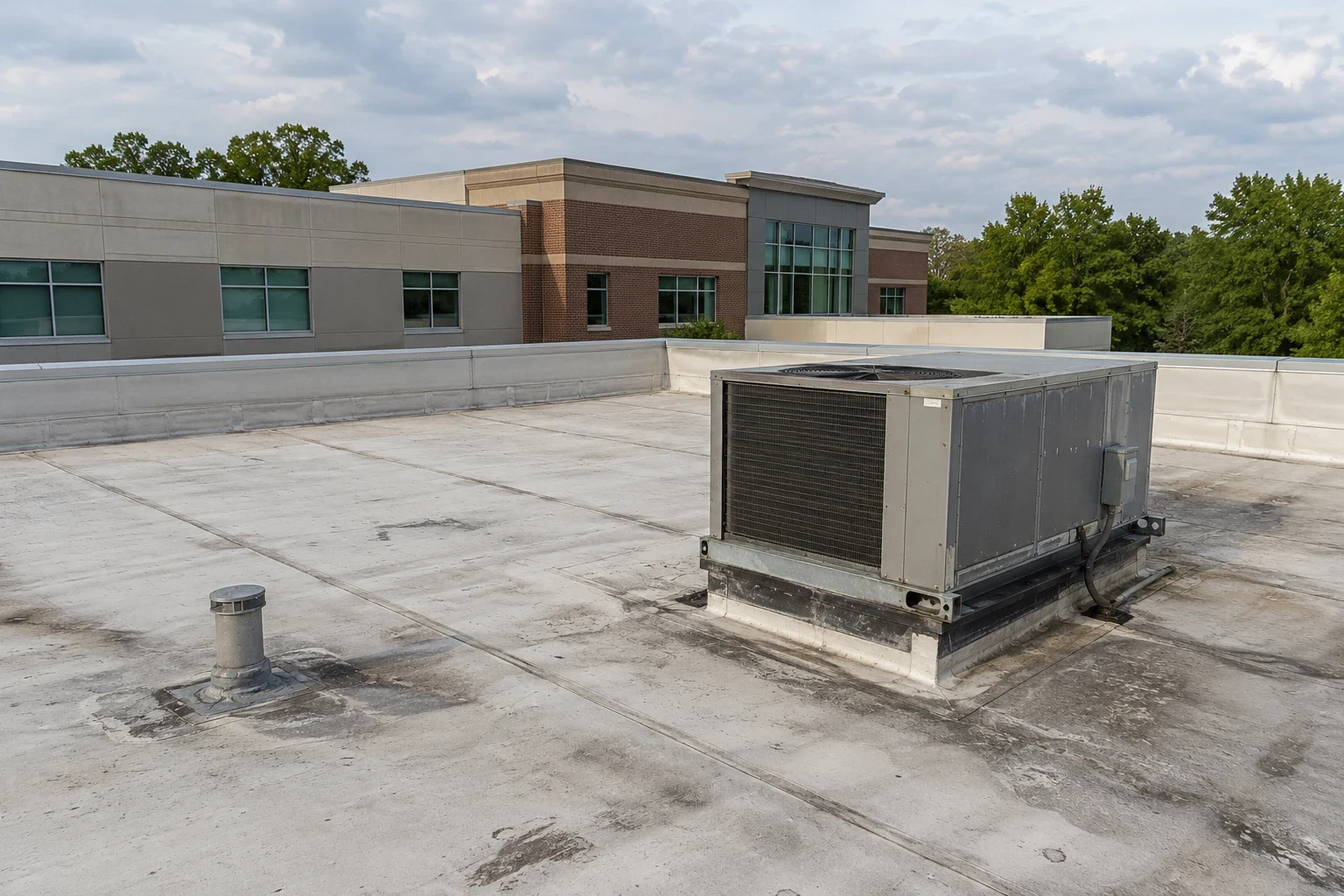
The best fix for a cluster of pipes or conduits is usually to give them a proper curb or a set of individual boots instead of one sealant-filled pan. A curb lets the membrane be flashed up to a solid edge, with the pipes passing through a cap or hood above the water line. Individual boots work well when pipes are spaced far enough apart. Either way, the goal is a detail that sheds water on its own instead of depending on sealant that needs constant attention.
Our penetration and flashing repair work covers removing old pitch pans, rebuilding the roof around the penetration and installing new flashing to the right height above the finished roof. If pipes or conduits need to be moved, rerouted or temporarily supported to make room for a proper detail, that is done by the trade that owns them. We plan the sequence together so the roof is never left open around active equipment.
Who handles the equipment
On a data center roof, the roofing contractor handles the membrane, insulation, flashings and curbs. The mechanical, electrical and controls contractors handle the equipment: cooling units, refrigerant lines, conduit and anything with power running to it. Those lines need to be clear before we can flash properly. Before any work starts, we meet with the facility team to agree on who does what, in what order, and what has to stay running throughout.
Our rooftop curb and equipment support work covers the roof side of cooling units and pipe supports. If a unit sits on a curb that is too short or poorly flashed, we can raise or rebuild it, but lifting the unit is a job for the mechanical contractor and has to be scheduled with operations. Redundant cooling usually makes that possible, but the facility decides when a unit can be taken offline.
We write the scope so the roofing work and the equipment work are listed separately, and nothing is assumed to be covered by someone else.
Finding wet insulation first
Water that gets in at a penetration often soaks the insulation around it before anyone sees a drip. Wet insulation holds water against the deck and can feed a leak long after the opening is sealed. An infrared moisture survey can map wet areas across the roof, but rooftop cooling units and warm exhaust can confuse the readings on a data center. We confirm suspect areas with core samples before deciding how much material to remove.
Once the wet area is known, we cut it out, replace the insulation and bring the new membrane back over dry roof. Any opening is planned with the operations team so rooms below can be protected, and every area is sealed before the crew leaves. If the wet area is large, we compare a focused repair with replacing a larger section, and explain the risk and cost of each option. Temporary protection inside, such as plastic sheeting over racks, is arranged with the facility team before the roof is opened.
Data centers near Greenbrier
Greenbrier North Commerce Park and the wider business district include a range of commercial and technology buildings, each with its own roof and rooftop equipment layout. For data center roofing near Greenbrier North Commerce Park, we inspect the specific building and base the repair on what we find there. The operations contact tells us which rooms are critical, what equipment is on the roof and when work can safely happen.
Data centers stay running during roof work. Our roofing for occupied buildings approach keeps open areas small, schedules work around maintenance windows and seals every section at the end of each shift. Crane lifts are planned so they never pass over critical equipment.
The proposal explains the cause, the roofing repair, any equipment work by other trades and the schedule. Photos and a marked roof plan show exactly where each repair will happen. If the inspection turns up a concern outside roofing, we report it to the facility team separately. That includes things like loose conduit supports, damaged equipment cabinets or blocked condensate lines.
After the work and related buildings
At closeout, you receive photos of each repaired penetration and curb, a roof plan showing where work was done and a list of materials used. That record is valuable when new cooling equipment or conduit is added later, because every new penetration needs to be flashed properly from the start. Office buildings often house small server rooms with the same concerns, and our office building roofing page covers working above occupied office space.
Manufacturing plants share the problem of crowded roofs with lots of equipment and penetrations. Our manufacturing plant roofing page explains how we work around production equipment. On any equipment-heavy roof, the best protection is regular inspection, especially after new equipment is installed and after major storms, so a loose boot or cracked pitch pan gets fixed before water reaches anything important. Short inspection reports after each visit give the facility team a running record of the roof's condition.
Commercial Roofing Questions
Why do grouped penetrations leak so often?
They are often sealed with a pitch pan of sealant that shrinks and cracks. A proper curb or individual boots shed water on their own and last much longer.
Who moves pipes and conduit during roof repairs?
The trade that owns them, usually the mechanical or electrical contractor. We plan the sequence with them so the roof is never left open around active equipment.
Can a data center stay running during roof work?
Yes. We keep open areas small, schedule around maintenance windows, protect critical rooms and seal the roof at the end of every shift.
Are infrared scans reliable on a data center roof?
They help, but warm exhaust and cooling equipment can confuse the readings. We confirm suspect areas with core samples before removing material.
What records do we get?
Photos of each repaired detail, a roof plan of the work and a materials list, plus notes on anything other trades still need to handle.
Have the data center roof penetrations checked
Tell us where the leak or concern is and who manages operations and rooftop equipment. We will inspect the roof and send photos with a plain explanation of the repair and how we will schedule it.