
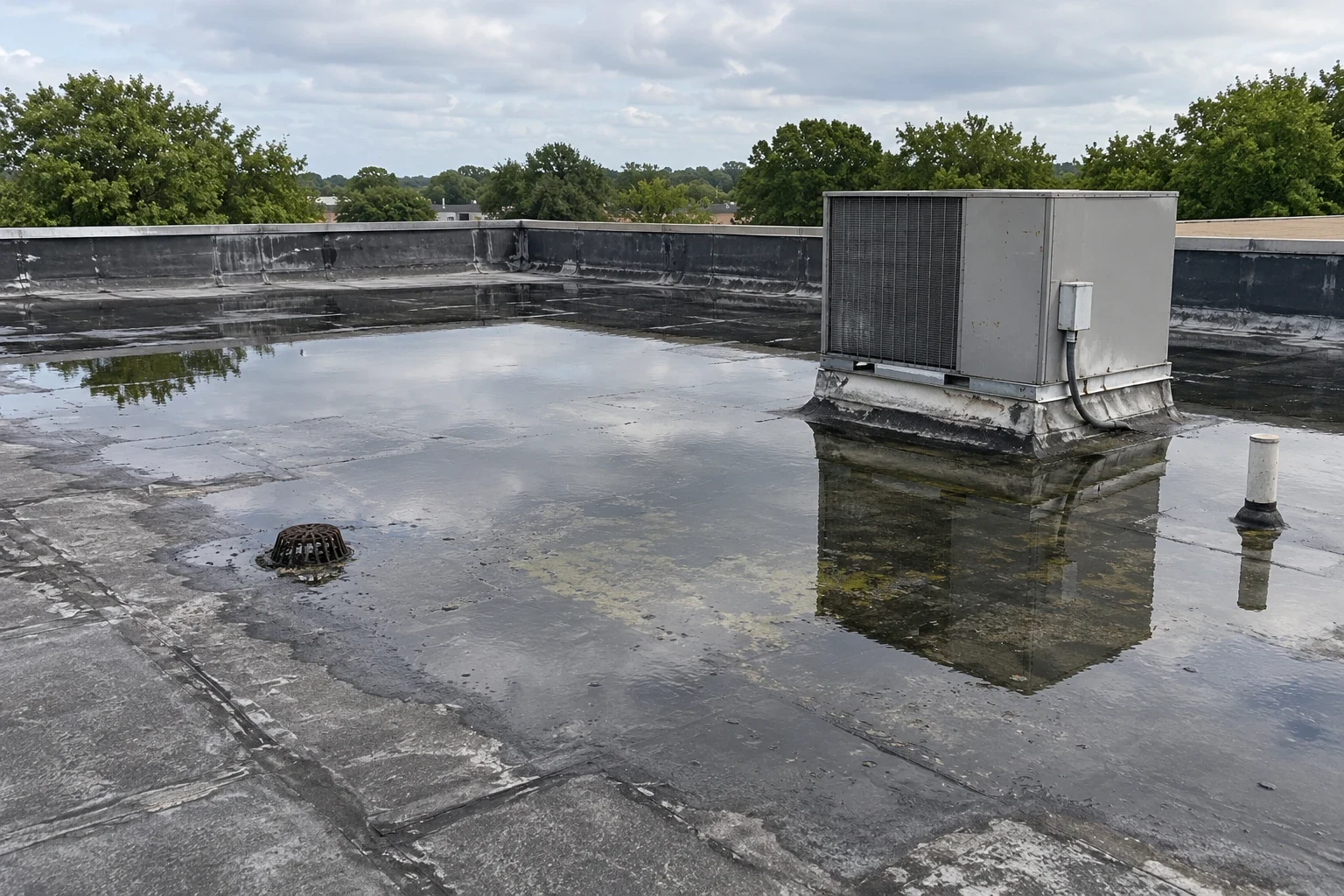
When a drain on a Chesapeake warehouse roof clogs, water backs up over the seams around it. Clearing the drain and repairing any damaged seams are two different jobs, and both may be needed. We fix ponding water on commercial flat and low-slope roofs by following the water from where it collects to where it should drain. We check the membrane wherever standing water sits against seams or penetrations. A wet roof does not explain itself, so we find the cause before recommending a fix. You get the drainage repair and any roof repair laid out together.
In a low-lying, rainy place like Chesapeake, drainage matters on every flat roof, and buildings in Great Bridge and Greenbrier each drain in their own way. We start with your building and the area where water collects, then inspect the slope, drains, scuppers and downspouts. A neighbor's roof does not tell us how yours drains. Send us photos of the ponding and tell us whether any rooms are leaking. We connect the ponding to a specific cause and list any repairs needed around it.
Following the Water to the Drain
Leaves and debris in a drain can slow water down, but they do not explain every low spot. We check strainers, drain bowls and the membrane around each drain. A drain that looks clear on top can still be blocked in the pipe below. We note what we see and handle the roofing work on the roof. Plumbing problems inside the building, such as a clogged or broken drain line, go to a plumber. That way you do not assume the whole drain system is working just because the top of the drain is clear.
Our roof drain and scupper repair covers the drain and the membrane around it. We inspect the flashing at each drain bowl or through-wall scupper. A damaged flashing can leak even after the drain is flowing again, and repairing it means cleaning and tying in to sound membrane. Clearing the drain and repairing the flashing are two separate jobs, and we explain both so you know why getting water moving again may still leave a repair to do.
Why Water Collects in the Same Spot
Water often ponds in a low spot away from any drain. We locate the low area and check the roof around it. The cause may be a sagging deck, crushed or uneven insulation, or a roof that was built without enough slope. We will not diagnose structural problems by eye; if the deck may be sagging, we recommend a structural engineer. Their answer comes before any larger roof change. The fix should address the real cause, not add another layer of material over a low spot no one has explained.
Our insulation and cover board work, including tapered insulation, can build slope back into a roof where the inspection supports it. We mark what comes out, what stays and how the new insulation ties into the existing roof. Drain heights and edge details have to be planned with it. Added slope does not fix every pond automatically, so we show the planned layout and any open questions before materials are ordered.
Seams Under Standing Water
A seam that sits under water for days at a time is much more likely to open. We locate the pond and any open seams or punctures separately. We inspect seams, past repairs and penetrations around the wet area. New seam work needs clean, compatible membrane to bond to, and a smear of sealant on top often hides the problem rather than fixing it. Where wet insulation is found, the repair includes it. Areas we have not yet checked are listed separately.
Our seam failure repair fixes open seams near ponding areas. We check the surrounding membrane and attachment before choosing the method. If the membrane is too worn to bond to, it is cut back and replaced. A sealed seam will not make water drain, so if both a drainage problem and a seam problem exist, we list both and explain what each repair will accomplish.
Wet Insulation Under the Pond
Wet insulation can extend well beyond the spot that leaks. We use core samples to decide what can stay and what has to go. Openings are planned with the building contact so the room below is protected, and each one is sealed the same day. Confirmed wet areas are kept separate from areas not yet checked in our report. A dry membrane surface does not mean dry insulation. We replace what we confirm is wet and list any open questions before materials are ordered.
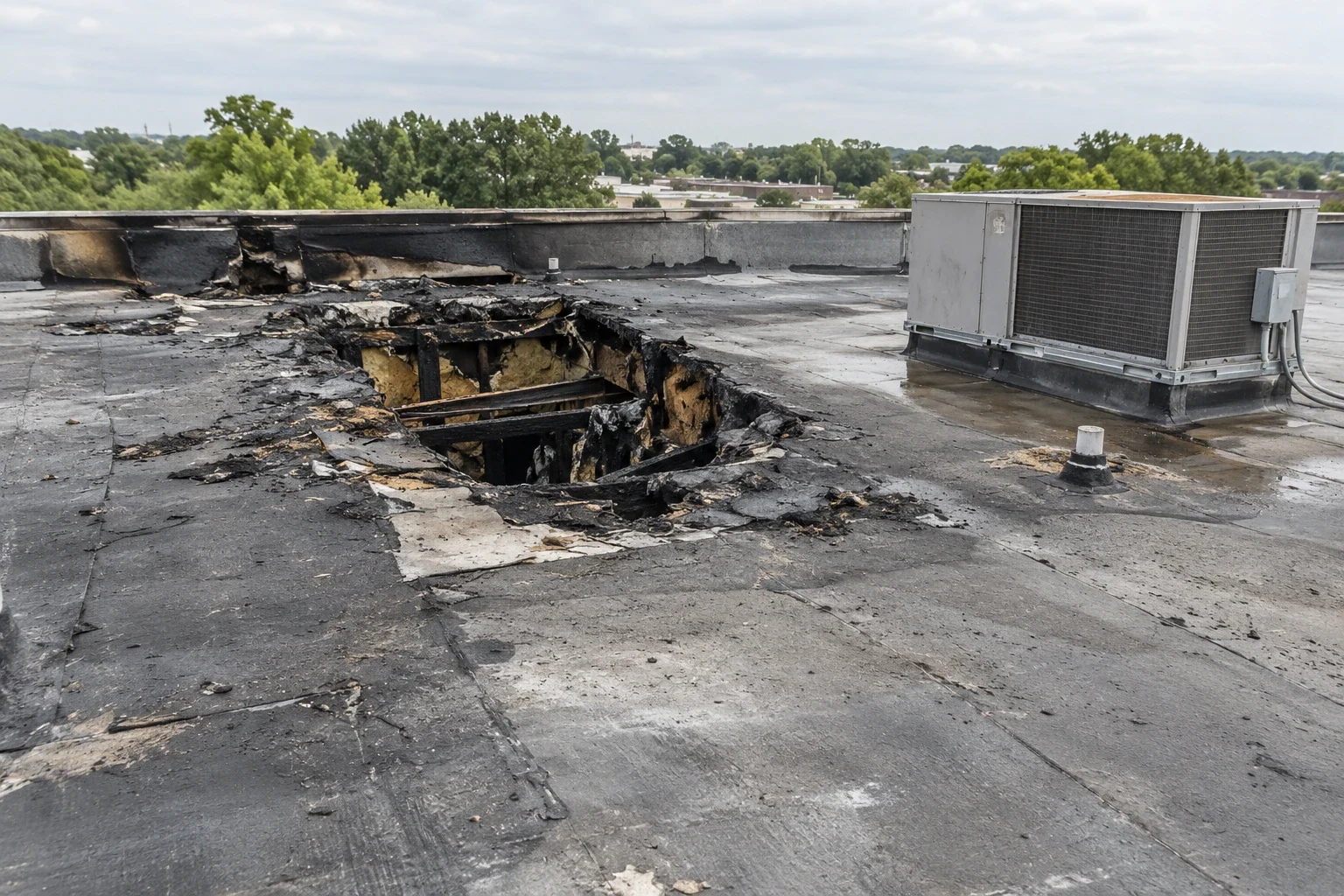
Inspections around ponds sometimes find membrane punctures, often from foot traffic or debris. We locate each one and check the membrane around it. Even a small hole needs a proper patch on sound membrane. If wet insulation is found under it, we add that to the repair. The puncture and the drainage work are recorded separately, so it is clear that not every leak was caused by the same clog.
Coordinating With Building Staff
In healthcare buildings, the facility team needs to tell us which roof areas, equipment and rooms will be affected by the work. A separate Greenbrier commercial property gets its own access approval and drainage inspection. We document where water collects and how it drains, and note any deck or drain questions that still need an answer. The repair follows that building's roof and the areas we are cleared to work in.
An interior stain may come from HVAC condensate or a plumbing leak rather than the roof. We compare when the leak appears with what we find on the roof. A pond above a stain does not prove it is the cause. If equipment or plumbing is involved, we tell you which trade to call. That way the roof repair covers only roof problems, and you are not paying for roofing work that will not stop the leak.
Buildings in Great Bridge and Greenbrier each have their own drainage layout. We inspect ponding areas, drains and downspouts, then compare them with reported leaks. Any area we could not inspect is noted. The scope keeps drain cleaning separate from membrane and drain repairs.
After the Work
When the job is done, we record what was cleaned or repaired at each drain and what roof repairs were completed, with the materials used. Drainage and roof repairs are listed separately. Any open structural or plumbing questions stay on the list for the right trade. We review the warranty for the new work. If a new pond or leak shows up later, we inspect it fresh instead of assuming it is the same old problem.
Regular preventive roof maintenance keeps drains clear and catches problems early. On each visit we check for new clogs, new rooftop equipment and open seams. Past repair locations help us know where to look, but each issue is judged on its own. New equipment can change how water drains, so we inspect around it. That keeps routine cleaning separate from permanent repairs and helps you plan each one.
Commercial Roofing Questions
How long can water stand on a flat roof?
Most manufacturers consider water that is still there 48 hours after rain to be ponding. Repeated ponding speeds up membrane wear and can affect the warranty, so it is worth fixing.
Will cleaning the drain fix the ponding?
Sometimes. If debris is the only problem, yes. If the pond is in a low spot away from the drain, or the drain pipe is blocked inside the building, more work is needed.
Can tapered insulation fix a low spot?
Often, yes. Tapered insulation adds slope so water flows to a drain. If the deck itself is sagging, that should be checked by an engineer first.
Does ponding damage the membrane?
Over time, yes. Standing water stresses seams and speeds up aging, which is why we inspect seams and patches around every pond.
Could the leak come from somewhere other than the roof?
Yes. HVAC condensate lines and plumbing can cause stains that look like roof leaks. We check the roof and tell you if another trade should look at it.
Fix standing water on your roof
Send us photos of where water collects and tell us about any leaks inside. We will find the cause and explain how to fix the drainage and any damaged roofing.