
On a warehouse, a lifted seam at the roof edge lets rain reach the insulation, and wind keeps working it loose long before anyone sees a drip. Commercial roof replacement in Chesapeake starts with understanding why the roof is failing. We trace the problem, check the insulation and deck beyond the obvious damage, and give you a clear plan for what comes off and what goes back on.
A new membrane by itself doesn't fix wet insulation or rotted wood under it. On a warehouse roof replacement, the price should include the insulation repairs and every rebuilt edge and curb, not just the field membrane. That way the decision to replace is based on what's actually wrong.
Hospitals and medical buildings need more planning. We confirm the building, an on-site contact and any areas that can't be disrupted, and we talk through protection for the floors below before we open anything. Rooms, equipment and delivery routes are planned along with each roof section. If water has gotten in at a loose edge or curb, we check the insulation before setting the tear-off line. Having a work window doesn't mean the insulation is dry. Confirmed insulation repair is part of the replacement price, and anything we haven't confirmed is listed before quantities are final.
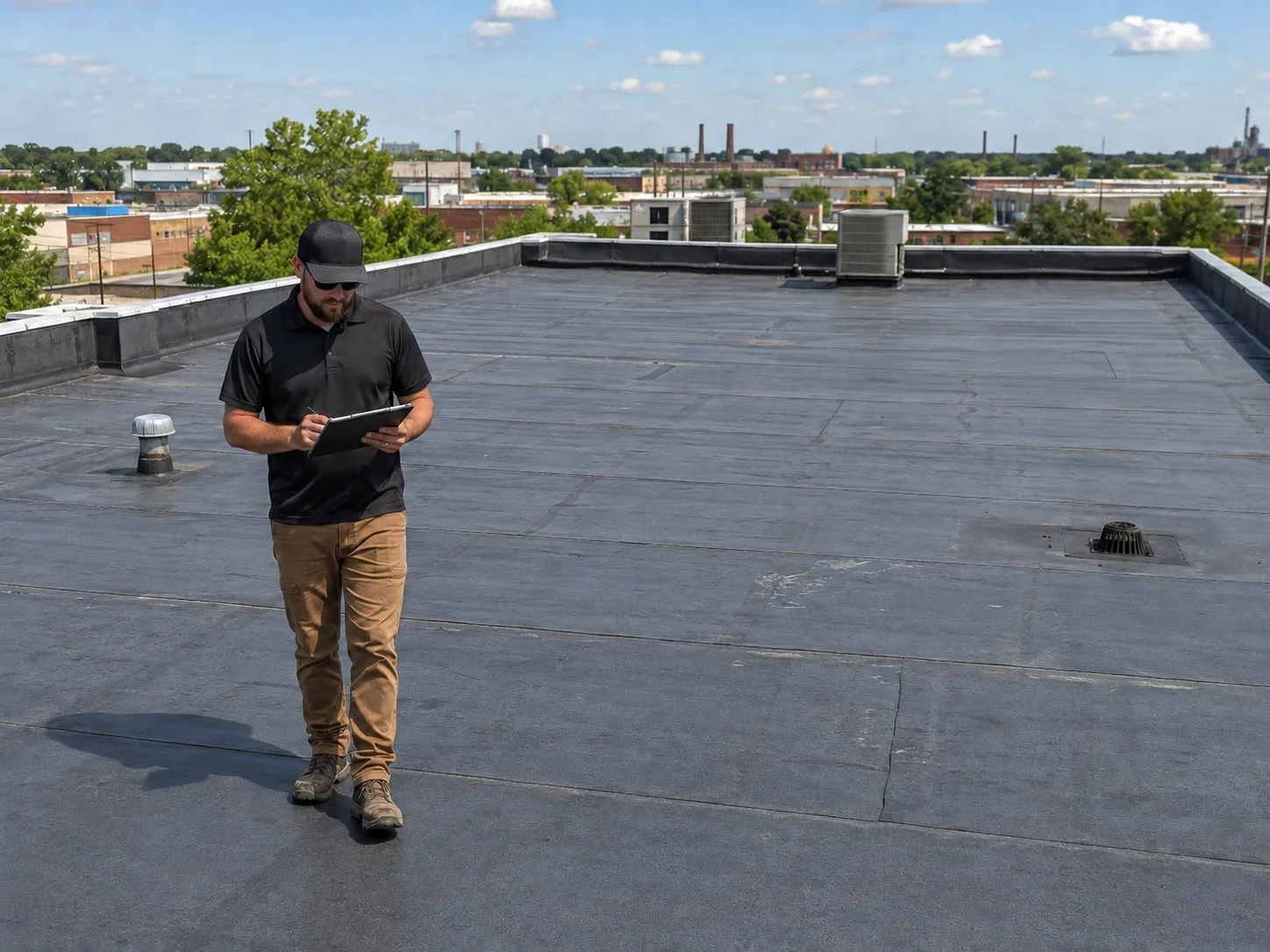
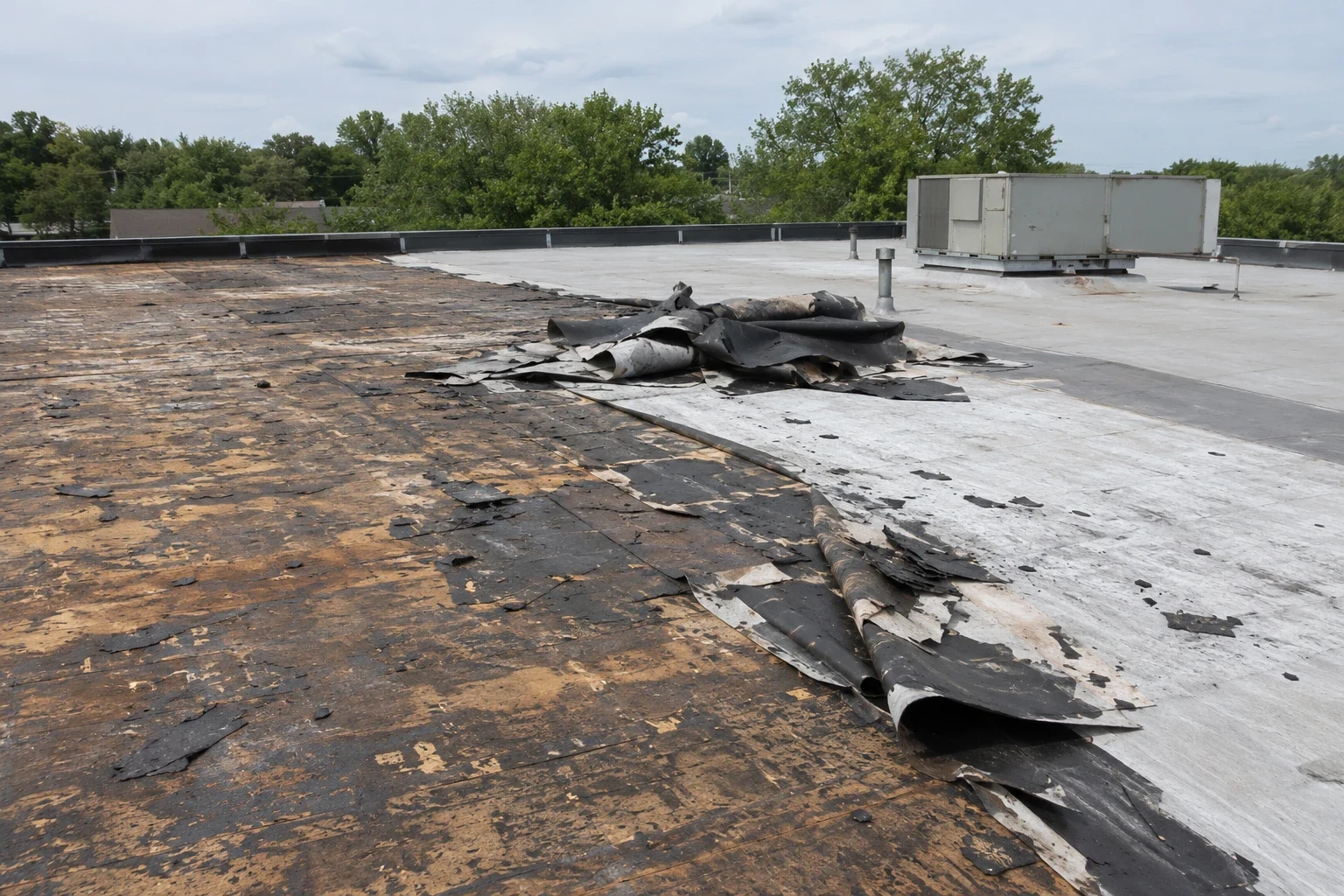
What comes off and what stays
Years of patches often leave the original failed seam or flashing underneath. Water can travel through the old layers well past the visible problem. Before we decide how deep to tear off, we compare what we can see with any records of the existing roof.
Our proposal says which layers come off and what surface stays. Disposal, deck repair and new insulation follow from that. Where we can't see the layers, we say so and list what still needs to be checked. You can compare known quantities without mistaking them for a guarantee.
A roof recover is sometimes an option instead of a full tear-off. It saves disposal, but only works if the existing roof is dry and sound. We confirm that before either option becomes a material order. To compare fairly, both options should include the same edges, curbs and drains. Otherwise one price may simply leave out work the other one includes. The real savings come from keeping a roof that's actually in good shape, not from leaving wet insulation under a new membrane.
Wet insulation and damaged deck
Wet insulation stays wet when another layer goes over it. A replacement has to remove the damaged material we've confirmed. We separate likely wet areas from confirmed ones before setting final quantities. The new system then goes onto a dry, sound surface.
We list the insulation and deck repair separately from the new membrane, so a lump-sum field price doesn't hide the work underneath. The tear-off also includes the edge where the new roof ties into whatever stays in place.
Once tear-off starts, hidden damage can turn up beyond the first opening, such as wet board or a soft spot in the deck. Before work starts, we agree on how extra repairs will be measured and approved. We seal the roof every night while any changes are being discussed. Ask us what would trigger extra tear-off and who signs off on it. A big stain inside doesn't mean every layer on the roof is wet, and a small old patch doesn't mean the damage is small. The plan stays open to adjustment as we find out what's really there.
Edges, curbs, walls and drains
Many leaks start where the roof meets a curb, wall or drain. A new roof is usually thicker than the old one, so we measure each curb, wall and drain against the new roof height before ordering materials. If the new roof leaves too little flashing height, the curb or wall flashing has to be raised.
A TPO roof replacement uses TPO flashings welded to the new membrane. Our proposal covers wall, curb and drain work along with the field roof, because those details are where most leaks start. We check the manufacturer's requirements before ordering.
An EPDM roof replacement has its own seaming and flashing methods. When comparing options, look at the whole roof, not just the membrane type. A smooth-looking field can hide a curb or wall that was never properly flashed. Insulation prep and flashing accessories should be priced with each option. Roofs of the same size don't always cost the same; the materials and labor depend on the details. Each option should spell out its edge, curb and drain work so the new roof actually stops the leaks.
Phasing the work over an occupied building
Tearing off more roof than the building can have open at once creates new risk. We match each day's tear-off to what we can close up that same day. Reroofing over occupied buildings means planning around the rooms below and the hours the operator allows. If a unit has to be lifted or another trade has to finish first, we schedule that before opening the area.
Working in smaller sections can mean more setup, more material moves and more tie-ins between old and new roof. Those costs belong in the price from the start. A single roof date won't work for every part of an occupied building.
We also replace roofs in Great Bridge, where each property's work areas get their own inspection. In the Greenbrier commercial area, a replacement starts with the existing roof on that building. Greenbrier roofing projects still get a building-specific inspection, and we work out the schedule and work areas with the operator. The district doesn't decide what's on the roof. Each section gets its own findings and a plan for closing it up.
Materials on site still need the right weather before installation. One membrane delivery doesn't cover missing insulation or flashing parts. The schedule shows which areas can be finished in each work window and which need another trade first. Each phase has a defined tie-in before tear-off starts. Drains stay working, or we set up temporary drainage. We record deck condition once tear-off exposes it. Deck repair allowances are listed separately from confirmed membrane and insulation quantities. We measure the new roof height before ordering edge metal, compare disposal, crane lifts, access hours and interior protection side by side, and spell out how the next day's work starts after overnight protection.
What you get at the end of the job
The final records should show what failed and what we replaced. We keep photos of the tear-off areas, the new roof and the finished flashings. Any inspections agreed in the contract are completed according to the roof system and project requirements. If an equipment curb is still waiting on another trade, it stays on the punch list after the field roof is done.
Interior repairs follow once the related roof area is finished. A completion date for the roof area doesn't close every task. You can trace the original problem to the work that fixed it, and any concerns outside the project are recorded separately for later decisions.
Warranty questions need the actual warranty documents. The membrane type alone doesn't tell you the term or what's covered. Maintenance instructions should match the installed products. We go over those records before finalizing the price. Prep and flashing parts have to be ready before any seams are made. The closeout describes what was actually completed. It doesn't claim every hidden problem went away with the new membrane, and it helps the next inspection tell finished work from open issues.
Commercial Roofing Questions
When does replacement make more sense than another patch?
When leaks keep coming back and the insulation underneath is wet or damaged. We compare the cost of ongoing repairs with a full replacement.
Can the existing insulation stay?
Only if it's dry and sound. We confirm that with probes or cores before quantities are final, and we list anything we couldn't check.
Why does the new roof change the curb and wall work?
A thicker new roof reduces flashing height at curbs, walls and drains. We measure each one and raise or rebuild them as needed.
What should a phased replacement price include?
The operator's work windows, protection for the rooms below, nightly sealing and the extra setup that comes with working in sections.
What do we get at the end of the job?
Photos and a short summary tying the original problem to the finished work, plus warranty documents and a list of any open items.
Find out why the roof is failing before you replace it
Send us the roof history and any work limits at the building. We'll find what's failing and send a short written explanation with photos.