
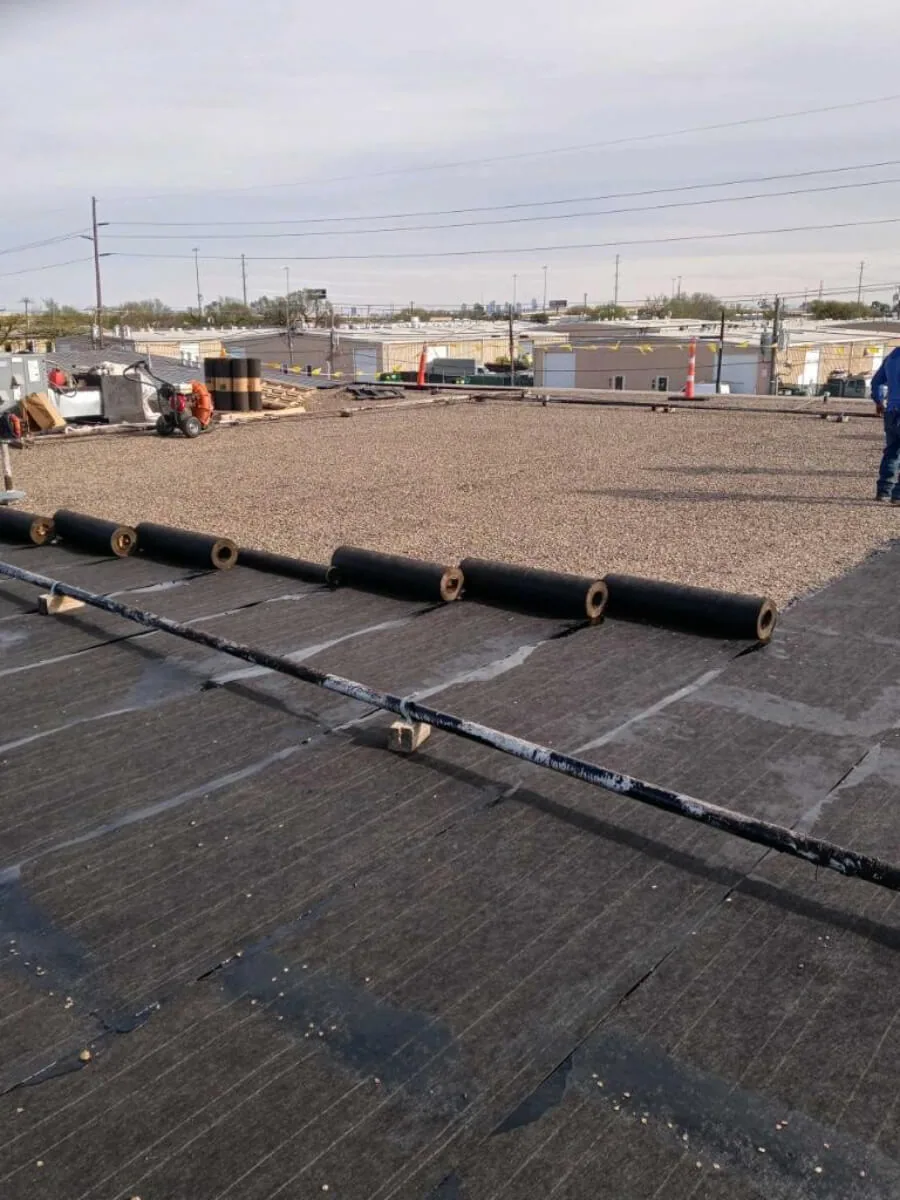
Built-up roofs show up on many older public buildings, schools and commercial properties in Chesapeake, VA. When one of them splits at a wall or a curb, rain runs into the layers underneath and can travel well beyond the crack before it shows up inside. For a government building, we start by finding where the water is getting in and how far it has spread, then plan the repair around the building's hours and how materials can be moved on and off the roof.
Every built-up roof is a little different. Some have three plies, some have four or more; some are surfaced with gravel, others with a cap sheet or coating. We cut small samples where needed to see exactly what's there. On an occupied building, we also ask about rooms that need protection, equipment that can't be shut off and routes we can use for kettles, hoists and debris. If insulation or wood blocking at the leak is soaked, it has to be replaced before the new layers go on. Each night the roof is closed watertight.
What a built-up roof actually is
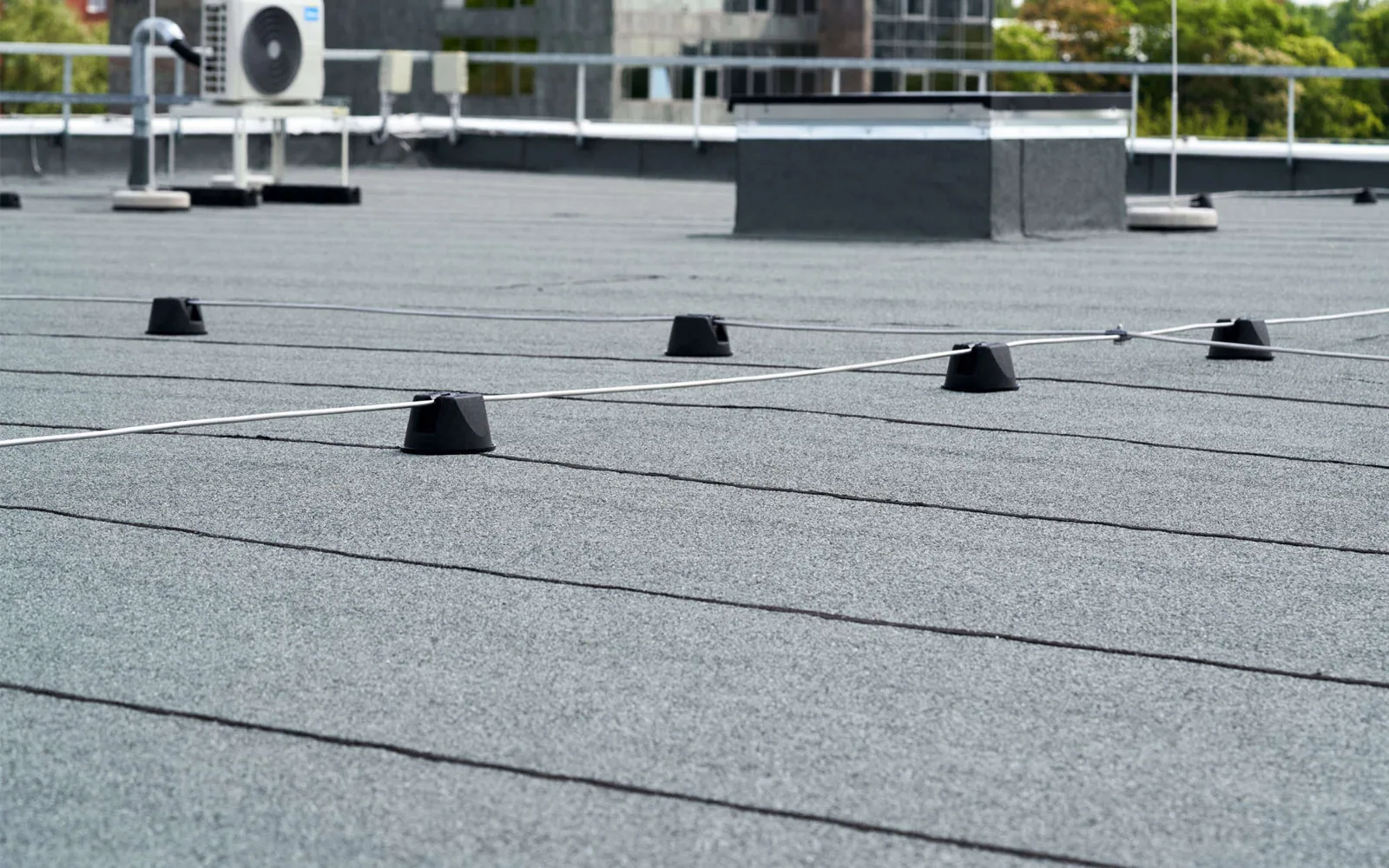
A built-up roof (BUR) is made on site from alternating layers of hot asphalt and reinforcing felt, usually topped with gravel or a mineral cap sheet. That layered build is why these roofs can last for decades, and also why a problem in the lower plies can be hard to see from above. The number of plies, the type of asphalt and the surfacing all depend on the specific system chosen for your building, and the estimate should spell those out, including the flashing at every wall and curb.
A commercial roof inspection on a BUR roof looks for blisters, cracks, bare spots where gravel has washed away, open laps, failing flashing and old patches. We compare what we see with any drawings or past repair records. Old patches tell us where trouble has been, but not how far the damage goes underneath. Core cuts or a moisture scan may be needed before we can say how much of the roof can stay. The inspection report notes which questions are answered and which still need testing before materials are ordered.
Tear-off and what's under it
When a built-up roof needs to come off, the estimate should say exactly how deep the tear-off goes: just the plies and gravel, or the insulation too, all the way to the deck. Leaving the old insulation in place saves money only if it's dry and well attached. If testing shows it's wet, it has to go. Putting new layers over wet insulation traps the water, which leads to blisters, rot and a shorter roof life. Disposal of the old gravel and asphalt is a real cost and belongs in the price.
A roof replacement estimate should also explain what happens if we find more damage after tear-off starts, such as rotted deck boards or rusted steel deck. We agree upfront how that extra work will be measured and priced, and we show you before doing it. Meanwhile, every section opened that day gets sealed before the crew leaves. The goal is a new roof installed on a solid, dry base, not new layers stacked on top of an old problem.
Flashing at walls, curbs and edges
On a BUR roof, most leaks start where the roof meets something else: a parapet wall, an HVAC curb, a pipe or the roof edge. The flat field can look perfect while the flashing at a curb has pulled loose. Repeated patching with mastic at those spots seldom lasts. We strip back the old flashing, check the wood nailers and blocking, and rebuild with new base flashing and counterflashing. If the new roof is thicker than the old one, curbs and door thresholds may need to be raised to keep proper flashing height.
A modified bitumen roof is a common alternative to built-up roofing. It uses factory-made sheets instead of field-built plies and can go down with a torch, hot asphalt, cold adhesive or self-adhered sheets. It's a related system, but not the same one: the prep, flashing details and installation method differ. We price both on the same roof area and the same repairs, so the comparison is fair. Either way, wet insulation and rotted blocking get replaced, and every curb and wall is properly flashed.
Scheduling around the building
Built-up roofing traditionally uses hot asphalt from a kettle on the ground, which brings fumes, heat and a need for safe space below. On an occupied building, we review where the kettle can sit, how materials get to the roof, which air intakes need to be covered, and which rooms might notice the smell. If the building can only give us the roof in short windows, each section needs its own tie-in to the old roof at the end of the day, which adds labor. We price that honestly rather than assume we'll have the whole roof at once.
An EPDM roof is another option that avoids hot asphalt entirely. It has its own seam methods, attachment requirements and flashing details. We compare the two options on the same terms, including disruption, interior protection and the cost of tie-ins. Whatever system you choose, if a rooftop unit needs to be lifted or moved by a mechanical contractor so we can flash its curb, that's coordinated in the schedule. We don't call the roof finished while a curb is still waiting on another trade.
BUR work around Greenbrier and Great Bridge
The commercial buildings around Greenbrier don't share a single type of built-up roof. For built-up roofing in Greenbrier, we check how many plies are on your building, what surfacing it has and what condition the insulation underneath is in. The building manager tells us when we can be on the roof and how materials can move in and out. We start each section only when the materials and access are ready, including flashings at every unit.
On occupied building reroofing, we document each day's work and how the roof was sealed that evening. At the end, you get photos of the new layers and every rebuilt flashing, plus any inspections we performed. Anything left undone, like a curb waiting on HVAC work, is listed separately. Warranty terms depend on the specific system and manufacturer, and we'll review those documents with you rather than promise a lifespan upfront.
Great Bridge has similar older commercial buildings, but the neighborhood doesn't tell us what's on a given roof. We inspect the areas most likely to decide whether repair or replacement makes sense, note any bare felts, splits or old patches, and give you a clear comparison based on what we actually found.
Commercial Roofing Questions
What should a built-up roofing estimate include?
The number of plies, the type of asphalt and surfacing, how deep the tear-off goes, insulation and deck repairs, and new flashing at walls, curbs and edges. It should also explain how any hidden damage will be priced.
How many plies does my roof need?
That depends on the specific system and manufacturer chosen for your building. We'll confirm the ply count and materials before ordering anything.
How do you know if the insulation needs to be replaced?
We test it with core cuts or a moisture scan. A dry-looking surface isn't proof. If the insulation is wet, it has to be replaced before new layers go on.
Why might the schedule affect the price?
If we can only work small sections at a time, each one needs its own tie-in and setup. Kettle placement and material routes on an occupied building can also add labor.
What paperwork should I get at the end?
Photos of the new roof and flashings, a list of materials and inspections, warranty documents, and a separate list of anything still waiting on other trades.
Trace the failure through the layered roof section
Send us your roof history and where you're seeing leaks. We'll inspect the built-up roof, find the problem areas and explain your repair and replacement options with photos.