A recurring school roof drip can persist after the visible patch closes. The inspection must determine what the accessible construction actually shows. Commercial roof inspection in Chesapeake, VA, starts with that condition question. We compare reported symptoms, roof records and the areas available to examine. The owner receives findings tied to a defined decision and scope. A school roof condition request needs the operator’s actual permitted areas identified. An examination is useful when it separates observed defects from unanswered layers. It should not turn a roof walk into concealed certainty.
Greenbrier is a Chesapeake commercial district; inspection still begins with the actual building and condition question. The property contact supplies relevant roof records, access limits and the affected area. We inspect accessible curbs, seams and drainage, then separate visible defects from backing that needs confirmation. An owner can schedule examination around building releases. The report maps observed conditions and states its limits, so conclusions do not extend into unseen construction.
Failure: give the examination a defined question
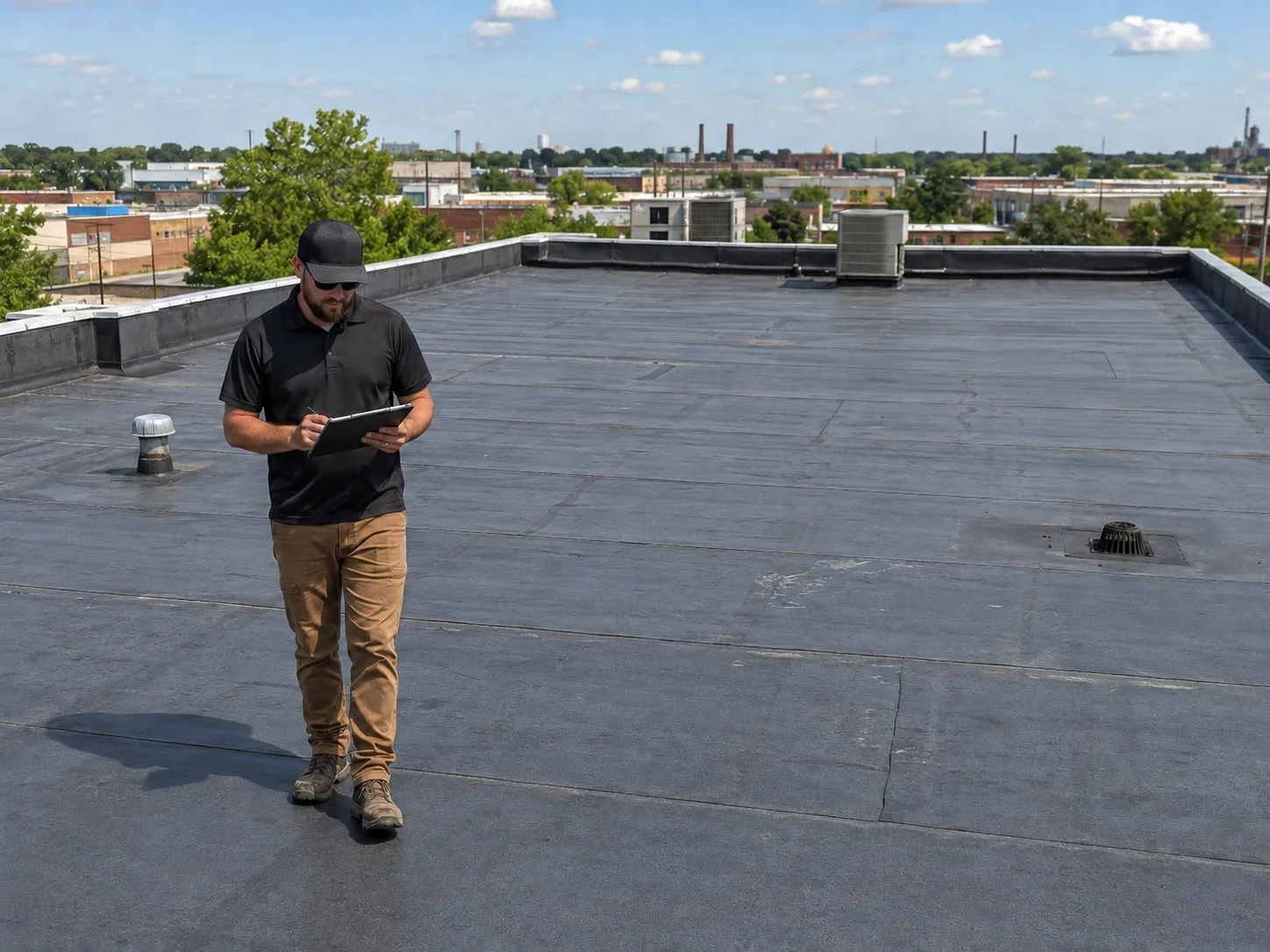
A replacement decision and a leak complaint need different condition information. We identify what the owner needs the examination to resolve. Accessible field, edge and equipment details follow that actual assigned purpose. Roof records can clarify earlier construction without proving present concealed condition. The scope should retain unavailable areas and further questions explicitly. Otherwise a broad inspection label can imply answers never established. An owner needs findings linked to the decision under consideration. That makes the record useful before permanent work or procurement is committed.
A leak origin investigation can focus on the route behind an interior symptom. We compare accessible connections with reported timing and affected room locations. The stain remains evidence of an exit, not automatic entry identification. Observed gaps may guide the investigation while causation still needs examination. Supporting moisture also remains separate from the origin question itself. An owner should see those distinctions in the written findings. The inspection endpoint explains what was established and what remains unresolved. A new patch should follow the assessed weak connection rather than assumption.
Cause: separate observations from concealed condition
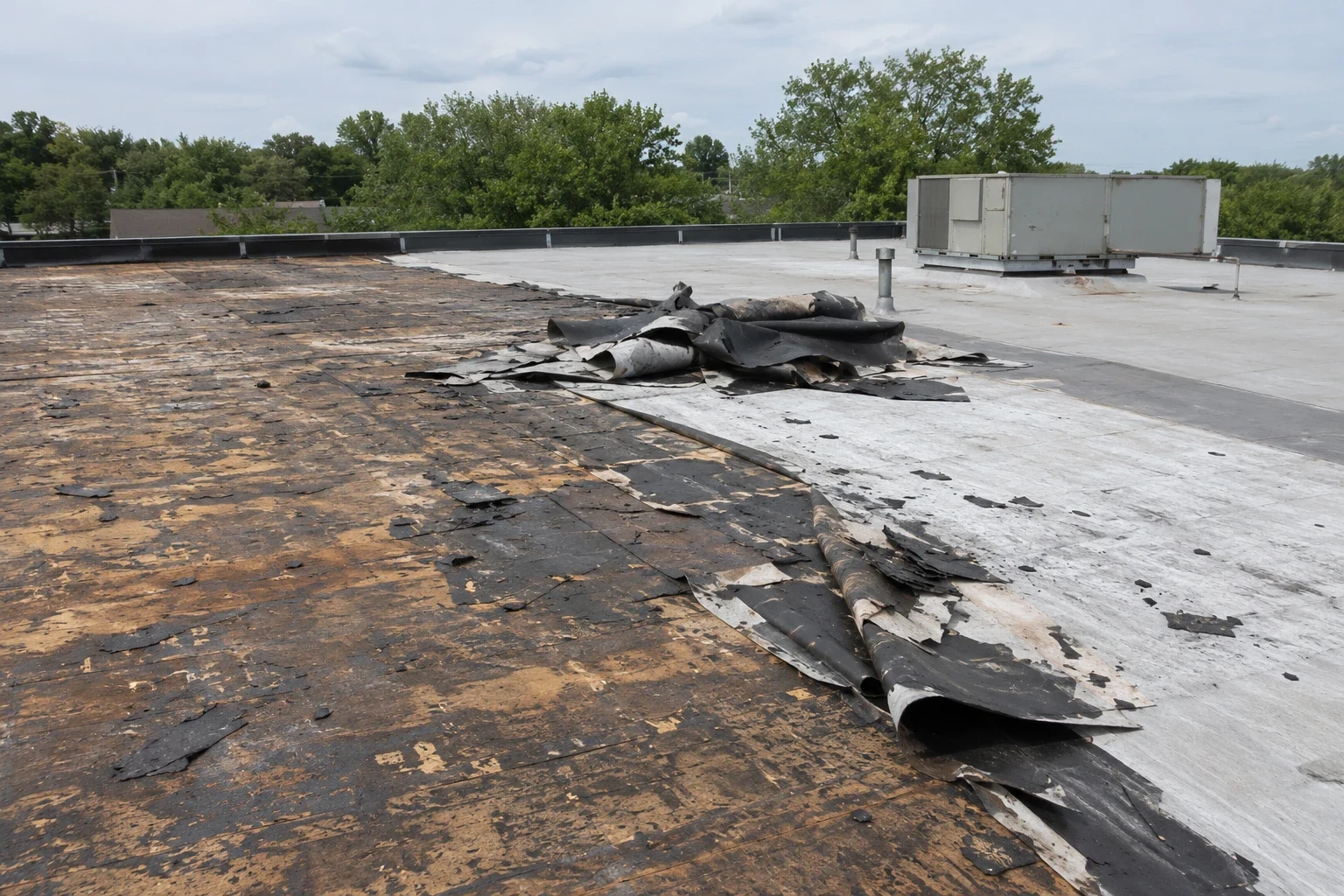
A membrane surface cannot reveal every layer’s moisture or attachment underneath. We state accessible construction and relevant limitations before conclusions are used. Existing patches and worn connections are observations within the examined scope. They do not automatically establish quantities for supporting removal elsewhere. Further appropriate examination may be needed before retention is approved. The owner can then compare known correction with a defined confirmation task. This prevents surface appearance deciding the complete supporting roof endpoint. The record should preserve uncertainty where the actual construction remains concealed.
A supporting moisture survey assignment may help guide checks under suitable conditions. Its indication still requires appropriate confirmation before concealed quantities are final. We explain the decision it is intended to support for this roof. A colorful image cannot establish every material or exact removal line. The owner should retain the relationship between observation, indication and finding. Confirmed damaged support can then carry removal and replacement in scope. The inspection record remains an assessed basis rather than a general label. Each further task should answer the question the initial examination left open.
Water path: examine the detail in its assembly
A lifted lap matters through the construction it connects and supports. We identify accessible membrane and detail material with available records. A TPO condition review should retain actual product and connection questions where relevant. Similar-looking sheets do not establish identical preparation or compatible repair accessories. The inspection can identify the interface requiring further permanent detail review. Supporting correction and geometry may change the eventual repair task. An owner should keep those findings beside the upper surface observation. That connects the defect to a construction question rather than patch size alone.
An inspection of layered roofing needs its own accessible construction and concealed limits. We compare visible details with records without assuming complete layer identity. A continuous upper surface cannot establish every ply or supporting condition. Relevant investigation should precede a construction decision relying on those layers. The owner can review actual findings before selecting a proposed section. Material-family descriptions organize questions without establishing universal repair or retention acceptance. The inspection endpoint remains the condition basis actually observed and appropriately confirmed. It should not replace the selected assembly’s later product and project review.
Fix: turn findings into reviewable next work
A repair scope arising from inspection should name the established defect and intended endpoint. We separate direct correction from further examination still needed beneath it. Supporting removal carries disposal and replacement where condition findings establish them. Suspected extensions remain a review question rather than confirmed damage. An owner can compare next tasks without confusing them with completed inspection. Equipment lifting or other trade work may also affect construction readiness. Those releases belong in the later scope before an opening is committed. The inspection should identify the dependency without pretending to complete it.
Healthcare inspections require the operator to identify rooms, equipment and roof areas available for examination. We document accessible conditions and clearly mark any unit connection or zone that could not be reached. A separate Greenbrier roof inspection follows its own contact and access plan. The report distinguishes observed conditions from questions requiring another visit. This provides a useful inspection boundary without implying that inaccessible construction was evaluated.
The inspection record should help a facilities team decide what to do next. In Great Bridge, as in Greenbrier, the subject building and roof zone must remain clear in photographs and notes. We summarize confirmed defects, accessible support and any blocked areas. Each recommendation identifies whether repair can proceed or a further opening is needed. This turns an inspection into a usable maintenance decision without treating unexamined material as sound or damaged.
Endpoint: retain evidence and unanswered decisions
The final findings should include assigned areas, relevant observations and photos. We describe the construction question each finding supports in plain language. Further checks remain named where the condition basis is incomplete. A general satisfactory label cannot close an unresolved equipment or moisture question. The owner receives a record connected to the actual accessible assignment. Proposed correction stays distinct from work already performed during examination. This lets later pricing follow a concrete decision and supporting basis. It also keeps unknown conditions from disappearing when the inspection visit ends.
Agreed examination methods and checks belong with their actual limits. Applicable warranty notice and alteration questions require the relevant documents reviewed. An inspection alone cannot establish an offered coverage outcome or term. Later permanent work needs suitable preparation and its own compatible materials. The owner can use photographs to follow changes at assigned details. New symptoms should bring their timing and location for further assessment. The record then remains a condition snapshot with explicit remaining questions. Its value comes from defined findings, not a roof-wide promise beyond access.
Commercial Roofing Questions
What should define the inspection request?
State the decision and the areas relevant to it. Bring roof records, symptom timing and actual operator limits.
Does a roof walk confirm concealed layers?
Keep accessible observations separate from supporting confirmation. Define further checks before using retention or removal quantities.
What should a moisture image decide?
Use it to guide appropriate confirmation under suitable conditions. Do not treat image appearance alone as final concealed construction.
How should findings lead to repair?
Name the established defect and permanent endpoint. Separate further investigation and equipment releases from direct correction.
What should the owner receive?
Request photos, clear findings and a short cause explanation. Retain accessible limits and unanswered supporting decisions explicitly.
Define the condition question before the inspection
Share roof history, symptoms and the building’s work limits. We will examine the assigned areas and send a concise explanation with photos.