

Distribution centers in Chesapeake and the rest of Hampton Roads tend to have very large, nearly flat roofs, and on a roof that size, drainage is everything. Water has a long way to travel to reach a drain, and if one drain is blocked or the roof has sagged between supports, water stands for days. Ponding water finds every weak seam and flashing nearby, and leaks over racking or a packing line can ruin product and shut down a work area. With the port and the region's highways close by, many of these buildings run around the clock, which makes downtime expensive.
We start by looking at how water moves across the roof: where it ponds, which drains are slow, whether gutters and scuppers overflow, and how water from one section affects the next. Then we inspect seams, flashings and curbs near the problem areas and check the insulation for moisture. You get photos, a marked roof plan and a written repair plan that fits around your shipping and receiving schedule.

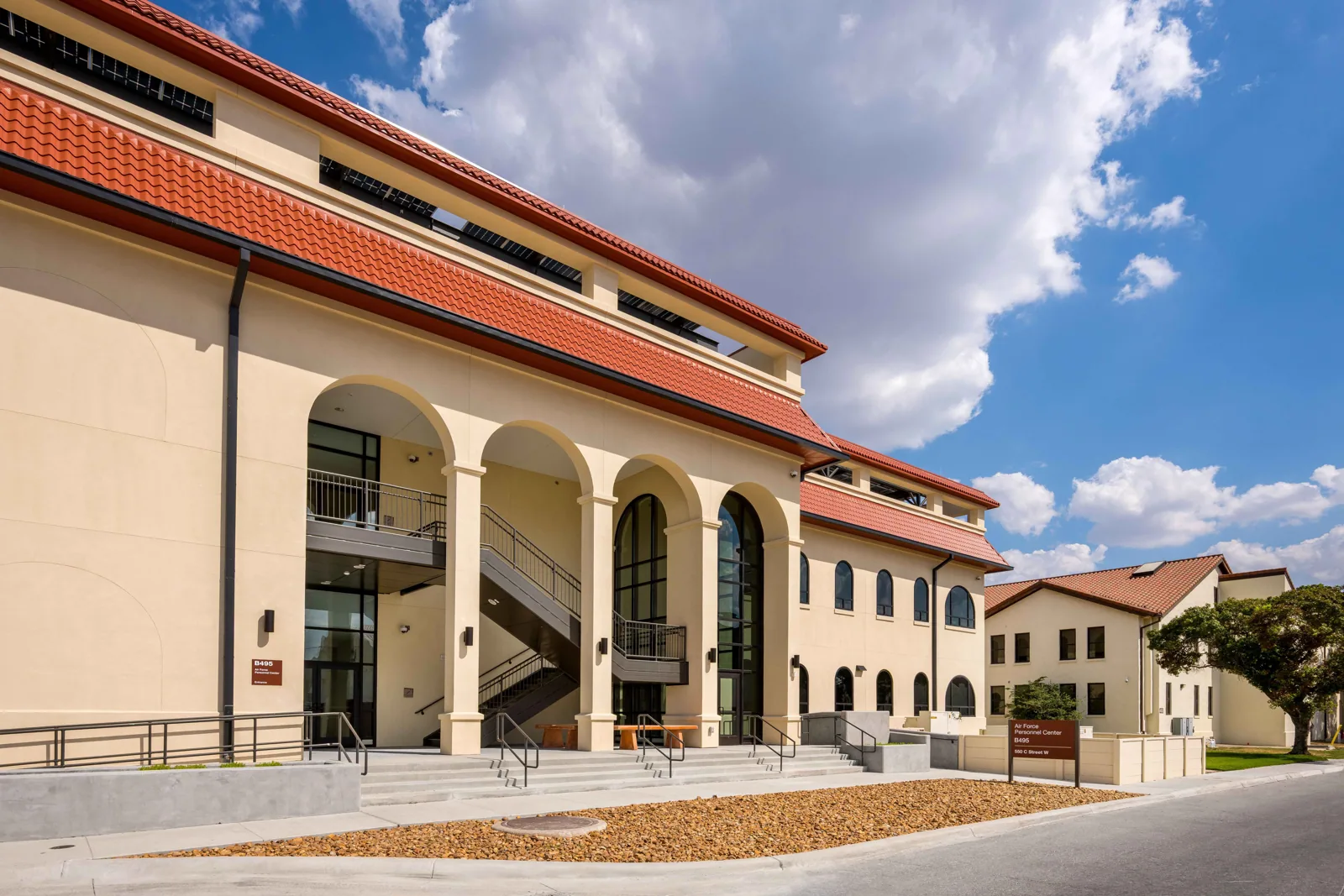
Following the water across the roof
On a large roof, the leak inside is often nowhere near the opening. Water can enter at a seam near a ponded area, travel along the deck flutes and drip out many feet away. And when a repair is done in phases, the water from the rest of the roof keeps flowing toward the work area. Before deciding where to repair or how to stage the work, we look at the whole drainage pattern, not just the spot where the bucket sits. Interior clues help too: stains on joists, rust on the deck and wet spots on the floor after storms all point toward the water's path.
Our roof drain and scupper work covers clearing and repairing drains, rebuilding the roof around drain bowls, replacing strainers and clamping rings, and adding scuppers or crickets where water has nowhere to go. If a drain line is broken below the roof, that goes to a plumber. We also note ponding areas that need tapered insulation or structural review so the facility can plan for them. Ponding that stays more than two days after rain shortens membrane life and adds weight to the structure.
Checking under the surface
A roof can look sound on top while the insulation underneath is soaked from years of slow leaks. Wet insulation is heavy, loses its insulating value and holds water against the steel deck, which leads to rust. Before recommending a repair, recover or replacement, we need to know how much of the roof is wet. Guessing leads to change orders or to new membrane laid over wet material, which fails early. It also leaves the deck rusting under the new roof, out of sight.
An infrared moisture survey is an efficient way to map wet insulation across a large distribution roof, usually in a single evening. We confirm the scan with core samples, since thermal readings can be thrown off by recent rain, gravel or rooftop equipment. With the wet areas mapped, you can compare the cost of replacing those areas and recovering the rest against a full tear-off. On many large roofs, the wet area turns out to be a small fraction of the total, which makes a recover far cheaper than replacement.
Working around goods and forklifts
Distribution operations do not stop for roofers. Before any section is opened, we work with the operations manager to decide which aisles, racks and dock doors sit under each phase and whether product needs to be covered or moved. Debris and fasteners can fall during tear-off, so forklifts and pickers are kept out of the area below active work. We plan crane lifts and material deliveries so they do not block truck courts or dock doors during busy hours.
Our roofing for occupied buildings approach keeps open areas small and seals each section before the crew leaves. Night or weekend work is available when daytime operations are too busy. Temporary protection over racking stays in place until the section above it is closed and checked. Building staff get a short daily update on what is open, what is next and any problems found. Safety rules for the warehouse floor, such as forklift routes and pedestrian lanes, are followed by our crew whenever they are inside.
Distribution buildings in the region
Distribution and logistics buildings across Chesapeake and Hampton Roads vary widely in age, size and roof type. Some are older buildings with built-up roofs that have been recovered once or twice; others are newer tilt-wall buildings with single-ply membranes. We inspect the specific building in the request and base the repair on what we find there. Large tenants and property managers often handle several buildings, so we keep each building's findings separate. That makes it easier to compare buildings, set priorities and spread the cost over several budget years.
To get started, the facility contact tells us where leaks appear, which drains are known problems and when the building is busiest. We inspect the roof, drains and details and check for wet insulation. The proposal explains the cause, the repair and the schedule, with photos and a marked roof plan. Items outside roofing, such as plumbing or structural concerns, are listed separately. If a leak is active, we can make a temporary repair first to protect product while the permanent repair is planned.
Curbs and rooftop equipment
Distribution roofs carry exhaust fans, HVAC units, skylights and sometimes solar equipment. Each curb is a possible leak point, especially where a short curb sits in an area that ponds. Re-sealing the top of the curb flashing does not help if water is washing over it. We check the curb height, the flashing, the counterflashing and the insulation around each curb near the leak. We also look at condensate lines from rooftop units, since a clogged line can dump water onto the roof right beside the curb.
Our rooftop curb and equipment support work covers rebuilding curb flashings, raising short curbs and replacing wet insulation at the base. If a unit needs to be lifted or disconnected, we coordinate with your mechanical contractor and finish the flashing once the unit is back in place. Skylights get the same attention, since a cracked lens or failed curb can leak just as easily as a seam.
Records and related buildings
At closeout, you receive photos of each repair, a roof plan marking every drain and detail we worked on, and a list of materials used. That makes it easy to track whether problem drains stay clear and to plan future work. Leaks reported later can be checked against the plan to see whether they are new or related to earlier work. Warehouses face many of the same issues, and our warehouse roofing page covers protecting stored goods.
Manufacturing buildings add process equipment and exhaust to the mix. Our manufacturing plant roofing page covers those roofs. Grease, chemicals and heat from process exhaust can wear out membranes quickly, so material choice matters there. For any large roof, clearing drains each spring and fall and after major storms is the single cheapest way to prevent leaks. A short walk of the roof after a big storm catches loose flashings and debris before they cause damage inside.
Commercial Roofing Questions
Why does water pond on our distribution roof?
Common causes are blocked drains, too few drains, sagging between roof supports or insulation that has compressed. We find the cause before recommending a fix.
Do you need to scan the whole roof for moisture?
On a large roof, an infrared survey is usually the most efficient way to find wet insulation. We confirm the results with core samples before pricing.
Can the building stay in operation during roof work?
Yes. We work in small phases, keep forklifts clear of active work areas, plan lifts away from docks and offer night or weekend work.
Why do curbs leak in ponded areas?
Short curbs let standing water wash over the top of the flashing. Raising the curb and rebuilding the flashing usually solves the problem.
What records do we receive?
Photos of each repair, a roof plan marking drains and details, a materials list and notes on any items for other trades.
Have the distribution center roof drainage checked
Send the drain layout if you have it, your receiving and shipping hours, and where leaks appear. We will trace the water and send photos with a clear repair plan.