
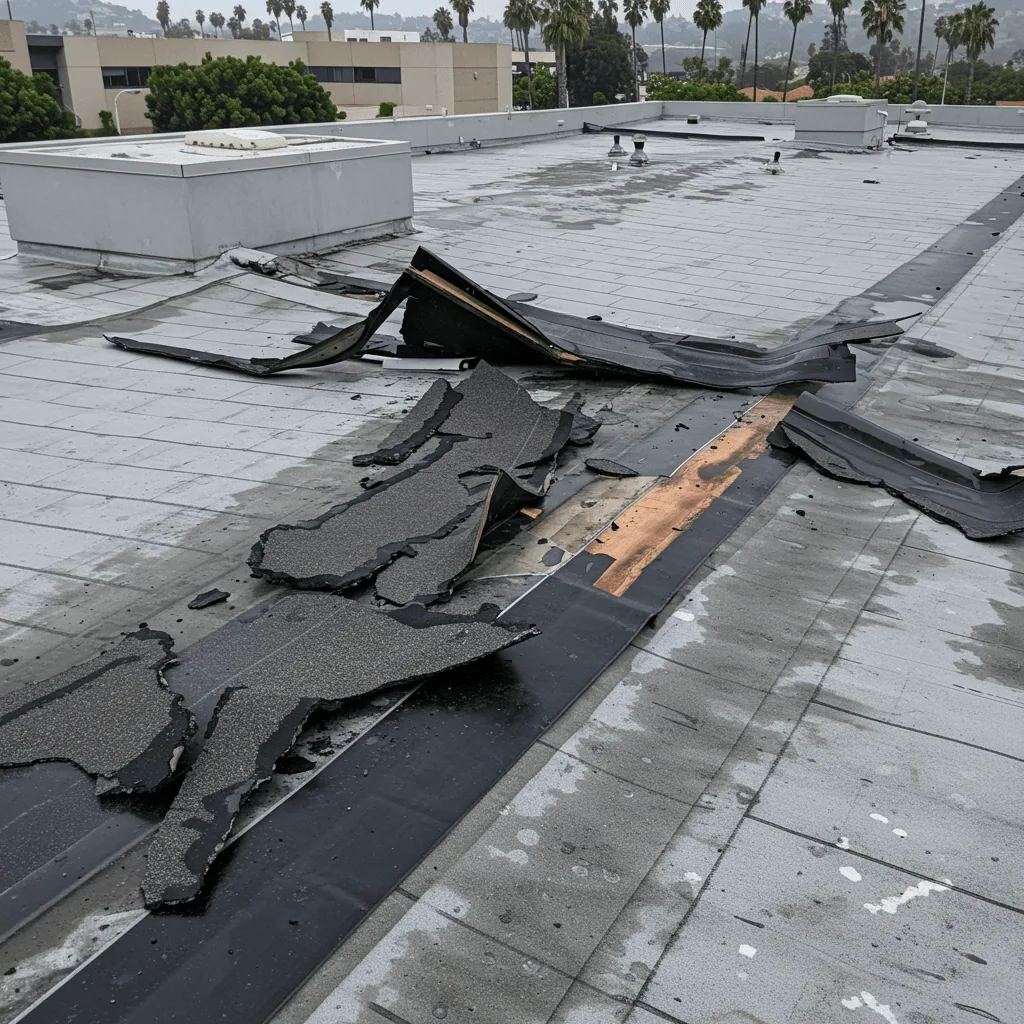
An open flashing on a shop roof can pour rain straight into occupied space. In an emergency, the first job is stopping the water. Emergency roof repair in Chesapeake starts with what you're seeing, how we can get on the roof, and what's at risk below.
When you call, we'll ask where the water is coming in, which rooms are affected and what kind of protection you've already set up. You should know what we'll do on the first visit before anyone knows what the permanent repair will be. For a shopping center roof, tell us about equipment and customer areas under the leak. Weather, roof condition and access all affect what we can do right away. A call marked urgent doesn't make it safe to work on the roof, and it doesn't make a quick patch permanent.
At a hospital or medical building, we need an on-site contact and a clear picture of which areas must stay protected. We confirm conditions, access and any equipment restrictions before we give you an arrival time. The temporary patch has to suit the opening and the existing roof, but it isn't the permanent repair. You tell us who can approve work in the affected area, and afterward we document what we did and what still needs a permanent fix.
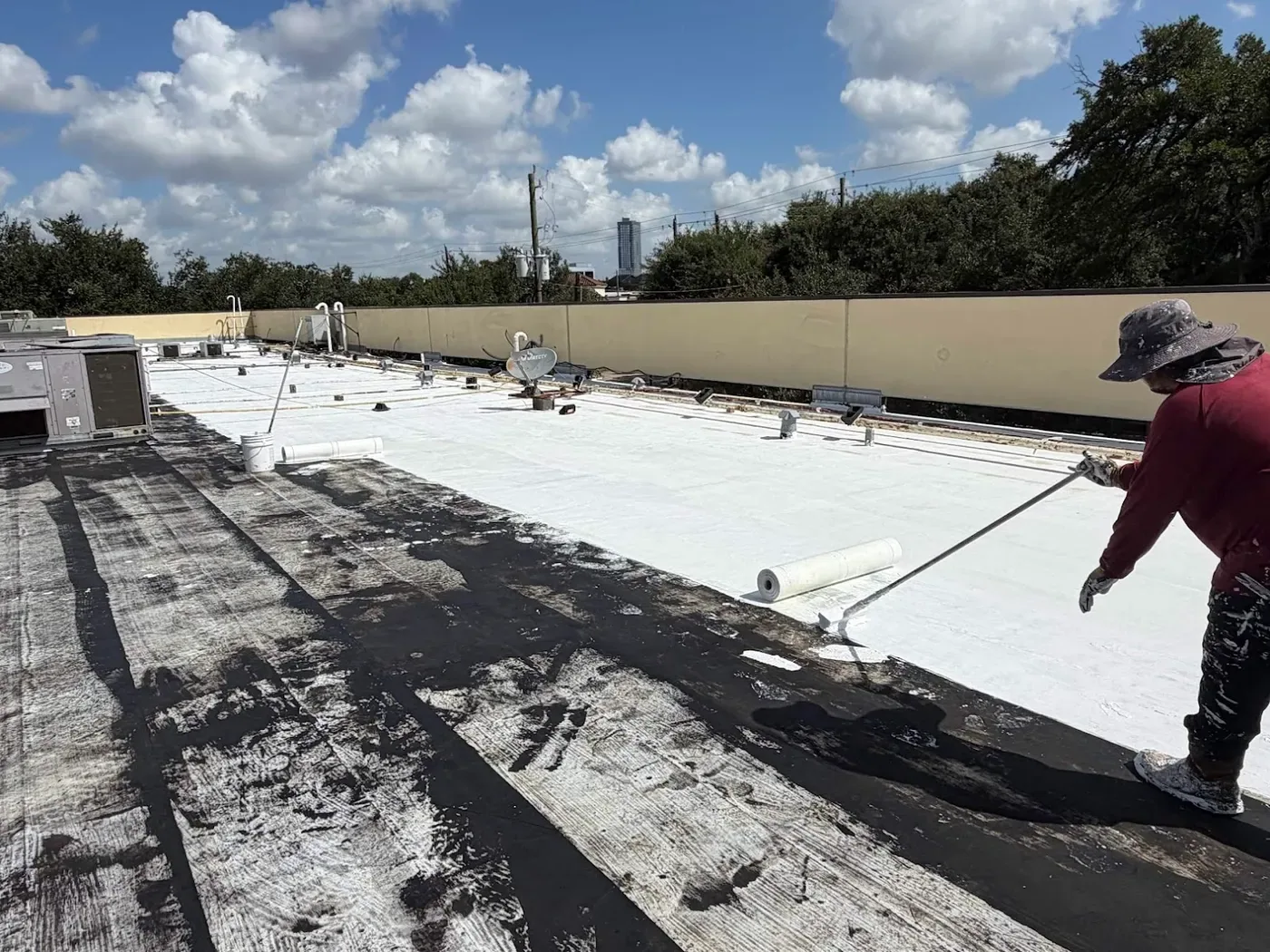

First, contain the leak
Water on a ceiling and a hole on the roof aren't always in the same place. When you call, tell us what you saw, when it started and whether anything changed recently, such as a storm, HVAC work or a delivery on the roof. Photos help us find the spot faster, but they don't show what's under the membrane.
On the first visit we deal with what we can reach and protect. Let us know if roof access or equipment is restricted before we schedule. Calling it an emergency doesn't open every part of the roof. We stay focused on the area that's leaking while we look at the rest.
A full leak investigation may still be needed after the temporary repair. The first visit can close an obvious gap without finding every source. We note what we saw separately from what still needs checking, because water can travel under the membrane and show up in another room. You'll know the limits of the emergency work, so a temporary patch isn't mistaken for a full diagnosis. The permanent repair is based on where the water is really getting in and what condition the roof is in, not on how urgent the call was.
What we can safely reach in bad weather
Storms and high winds limit what can be done safely. Before we go up, we check roof conditions and confirm which areas the building operator has cleared. What we can do on site depends on the weather, the equipment, the shape of the roof and the areas affected below.
Tell us the on-site contact and the routes we can use. We'll work only in the areas we're cleared for and can safely reach. Having a truck ready to go doesn't mean we can get on the roof safely, or that it's dry enough for a permanent repair.
A temporary repair and tearing out wet insulation are different jobs. A visible tear may sit right next to wet or damaged board underneath. We tell you what we can see and what needs checking before we set final quantities. If structural damage is possible, such as a sagging deck, a fallen unit or a collapsed area, we'll recommend an engineer and won't make that call ourselves. Equipment questions go to your HVAC contractor. That keeps the emergency job clear without assuming what's under the roof. Any larger permanent repair is based on what we confirm later.
What the temporary repair covers
After the emergency visit, you'll know exactly what we covered and what we used. We send photos showing the repaired spot and any other problems we noticed. A temporary repair is different from a permanent membrane and insulation fix. Sealing the opening doesn't dry out wet insulation underneath.
You should keep an eye on the temporary repair until the permanent work is done. If equipment is blocking part of the repair, we note it separately. Having a crew on the roof doesn't mean every issue was fixed. Our record says what was covered and what still needs to be looked at.
A permanent TPO roof repair needs the right membrane and matching flashing parts. We check the insulation before committing to that repair, and the roof has to be dry and warm enough to weld. During a storm we may only be able to put down a temporary patch. You can compare the permanent repair against the temporary fix, which makes ordering and scheduling easier. Membranes that look alike may not work together, so the permanent repair uses the right materials for the roof. We note the temporary materials used and what would trigger the next inspection. Weather and safe access decide what we do first.
Moving from temporary to permanent repair
A permanent commercial roof repair after an emergency should cover the wet insulation and flashing work we confirm. If insulation is damaged, the price includes removal, disposal and new board. If more damage turns up, we agree on how it will be measured and approved, and the roof gets sealed at the end of each day.
You can compare any extra work with what we actually found, not an emergency allowance. If a rooftop unit has to be lifted for the final repair, that's scheduled with your HVAC contractor before we open the roof. The temporary patch doesn't hide the work still needed.
On an EPDM roof, the permanent repair has its own seam and insulation requirements. We check the prep and parts before ordering. Old patches on the membrane may not bond with new material. The full repair includes any wood or fastening work needed. We list it separately from the emergency work already done. One part arriving doesn't mean the whole repair is ready to go. Access approval and the right weather are part of being ready. You'll have a clear plan for moving from the temporary patch to the finished repair.
After the emergency visit
Every commercial building in Greenbrier gets its own emergency access plan. For emergency roof repair in Greenbrier, tell us the building, where the water is coming in and which rooms are affected. We look past the torn surface to check whether the insulation or fasteners also need repair. If one area is blocked, we work on what's ready elsewhere. The permanent repair waits until the base is solid and the prep is done.
Our emergency record lists what we saw, what we installed and what still needs follow-up, with photos tying the leak to the work. When the permanent repair is done, we document it the same way. Warranty notice requirements come from your warranty documents; a membrane brand doesn't tell you what's covered after an emergency repair. Interior repairs follow once the roof is sealed. You get a short summary of where the roof stands, and any unsolved causes or equipment work stay on the list.
Once the leak is contained, you need a clear plan for the permanent repair. We record what was used for the temporary patch, which area of the roof is still exposed and what access we'll need next time. Equipment and interior repairs are listed separately from the roofing work. The follow-up scope names the fastening, flashing or insulation question that still needs answering, so an emergency visit isn't mistaken for a finished repair. Great Bridge is another Chesapeake district we cover, and we confirm roof conditions building by building.
Commercial Roofing Questions
What should we tell you when we call with an emergency?
Where water is coming in, which rooms are affected, how we get on the roof, any equipment restrictions and who can approve the work.
Is the temporary repair permanent?
No. It keeps water out until we can check the insulation and make a proper repair with matching materials.
Can you give us an arrival time from a photo?
We'll give you an estimate, but we confirm it after talking through the weather, roof conditions and access.
What happens after the emergency visit?
We list the likely causes and anything still unchecked, then plan the permanent repair and any equipment work before ordering materials.
What does the emergency record include?
What we found, what temporary repair we installed, photos of both, and what still needs to be done.
Roof leaking right now?
Tell us which rooms are affected, who can give us access and send any photos you have. We'll talk through the situation and send a short summary of the work.