

On a Chesapeake, VA shopping center, a leak reported by one tenant often starts somewhere else. Long strip-center roofs are broken up by parapet walls and firewalls between storefronts, and the flashing along those walls is one of the first things to fail. When it lets go, water runs under the membrane and can come through the ceiling of the store next door. Patching the roof directly above the wet ceiling tile often misses the real entry point entirely.
When you call, tell us which tenants are reporting water, when it happens (every rain, only in wind-driven storms, only after heavy downpours) and whether any spaces were recently remodeled. Tenant build-outs add rooftop units, exhaust fans and pipe penetrations, and each one is a possible leak. We walk the walls, seams, curbs and drains around the reported area. If the roof is actively leaking, our crews respond nights, weekends and holidays to stop the water while store staff move merchandise. If water has reached lights or electrical panels, the tenant should call an electrician before anyone touches them.
Tenant firewalls: where leaks cross from one store to the next
Firewalls and parapets that divide tenants take a beating from wind and sun. When we inspect failed wall flashing, we look at the termination bar, the counterflashing and the wood nailer behind it. Old repairs are common here: layers of mastic and patch fabric that look sealed but have let water in behind them for years. We cut those back until we reach membrane that will take a good bond. If the nailer is rotted, it gets replaced, so the repair can run a few feet longer than the visible crack. Your estimate will say so before work starts.
Some walls move. Expansion joints between buildings, or walls built at different times, can crack flashing over and over. Where that's happening, a stiff patch won't last, and the right answer may be an expansion joint cover or a wall detail designed for movement. If a structural question comes up, such as a cracked parapet or a wall pulling away, we'll recommend having an engineer look at it. And if a rooftop unit sits too close to the wall for us to flash it properly, the HVAC contractor may need to shift it first.
Rooftop units left behind by old build-outs
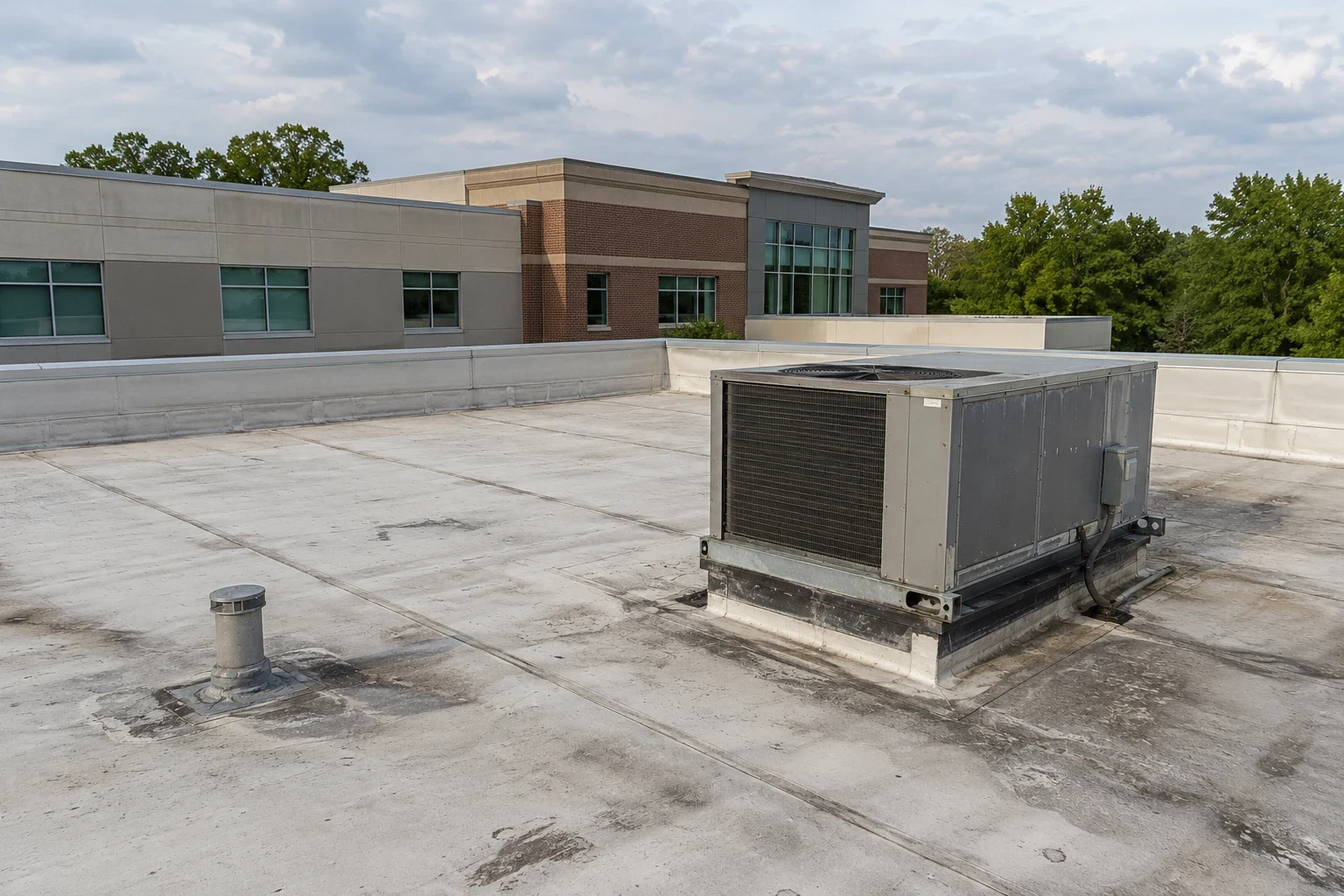
Every tenant that moves in seems to add something to the roof: a new HVAC unit, a grease exhaust, a sign bracket, a rooftop condenser. Many of those were installed by trades who cut the hole and left the flashing to someone else. When we inspect rooftop equipment curbs and supports, we look at whether each curb is tall enough, whether it was flashed with the right materials and whether old abandoned curbs are still sitting on the roof collecting water. Abandoned openings should be removed and the deck patched.
Not every drip near a unit is a roof leak. Clogged condensate lines and bad duct seals can put water into a store, and those belong to the tenant's HVAC contractor. We'll tell you which is which. When a tenant plans a new unit, get us involved before the hole is cut. A new penetration can block drainage or end up too close to another curb to flash, and heavy equipment may need an engineer to confirm the roof framing can carry it. Planning that up front costs far less than fixing a leak around a curb installed in the wrong spot.
Keeping stores open while the roof is worked on
Most shopping center owners need every store open during roof work. When a section needs reroofing while tenants stay open, we plan around their hours. We set the crane or material lift away from store entrances and keep parking and walkways open, usually by working early mornings and staging in the back lot. Debris comes down in chutes or enclosed bins, not over the front of the building. If a tenant has a busy season, such as a restaurant on weekends or a retailer around the holidays, we work their section of roof at a quieter time.
Sometimes the old roof comes off and the insulation underneath is wet farther than expected. That can push the work area over a store that wasn't part of the original plan. When that happens, we stop, show the property manager what we found and agree on how to protect the new space before we keep going. The roof is sealed watertight at the end of every day. Changes in scope get priced and approved in writing first, so there are no surprises on the final invoice.
Shopping centers around Greenbrier and Great Bridge
The Greenbrier Business District, including Greenbrier North Commerce Park off Smith Avenue, has a mix of retail centers, offices and flex buildings. A shopping center there still gets judged on its own roof: its age, its system and how it has been maintained. For shopping center roofing in Greenbrier, we start with the property manager, a roof plan if one exists, and a list of tenants who have reported leaks.
If you manage several centers, we can inspect them on the same trip, but each gets its own report and estimate. One center's lease terms, tenant hours and access rules don't carry over to another, and neither does its roof condition. We confirm the existing membrane and deck at each property before recommending a repair or replacement system.
Great Bridge has its own commercial strips with similar challenges: busy parking lots, mixed tenant hours and roofs that have been patched many times. Before work begins, the property manager tells us which storefronts sit under the work area, when deliveries come and which doors must stay clear. If we uncover more damage than planned, we get approval before expanding. At closeout, you get photos and a marked-up roof plan showing every repair, which helps when the next tenant calls about a leak.
Drains and the stores next door
Strip-center roofs often drain to a few internal drains or scuppers along the back wall, and one clogged drain can pond water across several tenants' roof sections. We check roof drains and scuppers for debris, broken strainers, failed clamping rings and damaged flashing around the drain bowl. If the drain line inside the building is blocked or cracked, a plumber needs to handle that part. When we plan reroofing in stages, we make sure each stage still drains while it's open, even if that means the stage lines don't match the tenant walls below.
Bigger anchors bring their own needs. Big-box retail roofs cover huge open spans with heavy rooftop equipment, while restaurant roofs deal with grease exhaust that breaks down some membranes. We look at each use before recommending a system. When a job is finished, the property manager gets a record of what was repaired, the materials used and any areas we noticed that weren't part of the job but should be watched. If a tenant reports a leak later, that record shows exactly where to start looking.
Commercial Roofing Questions
Does the wall between two stores mark where the roof repair stops?
Not necessarily. Water can run under the membrane past a tenant wall. We trace the leak to its actual entry point, and the repair area follows the damaged roof, not the lease lines.
How should new tenant equipment be handled on a shared roof?
Call us before the hole is cut. We'll recommend a curb location that keeps drainage clear and leaves room to flash it properly, and flag whether an engineer should check the framing for heavy units.
Why does the crane location matter in a roofing estimate?
Where we lift materials affects store entrances, parking and fire lanes. If the best spot is restricted, we may need a different lift, more handling or smaller work stages, and that changes cost and schedule.
Why might another tenant's space be affected once tear-off starts?
If the old insulation is wet beyond the planned area, the work has to expand to reach dry material. We show the property manager what we found and agree on protection for the added space before continuing.
Who fixes a clogged drain on a shopping center roof?
We clear the drain at roof level and repair the flashing and clamping ring around it. If the line inside the building is blocked or broken, that's a job for a plumber.
Have us follow the shopping roof junction
Tell us which tenants are seeing leaks and whether any rooftop equipment has been added recently. We'll find where the water is getting in and send photos with a clear repair estimate.