
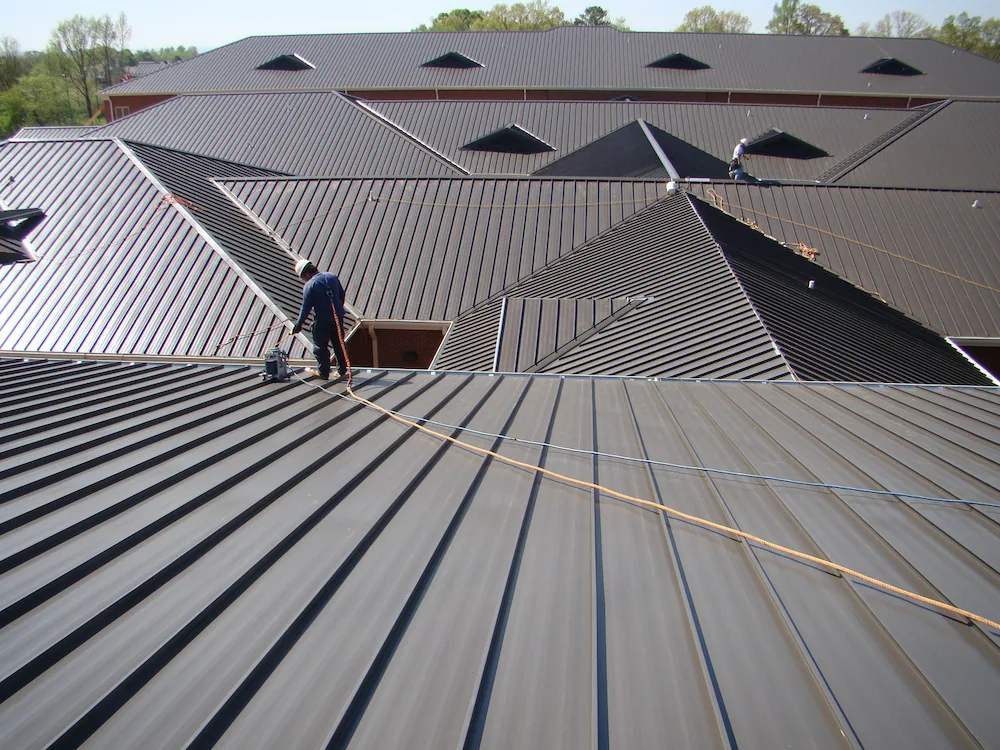
On a standing seam metal roof over a warehouse, leaks usually show up at the panel ends, the ridge, the eaves or where the roof meets a wall. The panels themselves can be in great shape while a closure or end lap has worked loose and stopped sealing. Standing seam metal roofing in Chesapeake, VA starts with identifying the panel type and finding that weak spot. For a warehouse roof, we also review drawings and plan around rooftop equipment and the operations below.
Healthcare and other occupied buildings need the same attention, plus careful scheduling around patients, staff and equipment. We inspect the seams, clips and closures at walls and edges before recommending a repair. The building manager tells us what areas we can access and when. Old roof drawings help, but only if they match what's actually on the roof; if they don't, we measure the panels and check the attachment before ordering parts. That way, replacement panels, trim and closures actually fit when they arrive, and the crew isn't stuck waiting on the right pieces.
Panel profiles and clip systems
Standing seam panels come in many profiles, with different seam heights, widths and locking methods. Many use concealed clips that hold the panels down while letting them expand and contract with temperature changes. Panels and clips from one manufacturer generally don't fit another's, so we identify the exact profile on your roof before ordering any replacement panels, trim or closures. A similar-looking panel that doesn't match will leak at the seams.
A metal roof inspection looks at the seams, clips, fasteners, closures, flashing and any rust or damage. From the surface we can't see every clip, so if we suspect loose or broken clips, we may need to open a seam or remove a panel to check. Old repairs with sealant or patching tape often hide the real problem. Our report tells you what we confirmed, what still needs a closer look and whether repair or replacement makes more sense. We don't let a good-looking panel field hide a failing clip or closure underneath.
Clips, fasteners and rooftop equipment
A standing seam roof holds together through three connections: panels to clips, clips to the structure and the structure itself. A loose closure might just be a bad fastener, or it might point to clips that have pulled loose or framing that has moved. If there's any question about whether the roof is properly attached for wind loads, a structural engineer should review it. Repairs follow the manufacturer's requirements for your panel type, not a generic screw-it-down fix. Adding exposed screws to a concealed-clip roof can stop panels from moving properly and create new leaks.
Rooftop equipment and walls can block access to the panels. If an HVAC unit needs to be lifted or disconnected, your mechanical contractor handles that while we repair the roof around it. Between those visits, we protect any open panels and the rooms below. We confirm the measurements and materials before the crew arrives. If one curb isn't ready yet, we finish the panels that are and keep that detail on the list. We don't call the roof done until every connection is sealed.
Panel ends, walls and edges
Water often gets in at the panel ends, where the roof meets a wall or at the eaves, even when the field of the roof is fine. These spots depend on closures, flashing and sealant installed the right way for the specific panel profile. Smearing sealant on a loose closure might stop a leak for a season, but a lasting fix means refastening or replacing the closure, repairing any damaged support behind it, and resealing with the right materials. We check the panel shape and the wall or eave detail before deciding what's needed.
Edge metal, coping and gutters often tie into the panel ends, so we look at those together. Sometimes the problem is the gutter or the wall itself, such as a cracked coping or a gutter that overflows behind the trim. If the wall needs masonry or siding repair, or if drainage needs a bigger fix, we'll tell you and recommend the right trade. Our estimate spells out exactly which roof details we're fixing, so it's clear what's included and what isn't.
Standing seam vs. retrofit or TPO
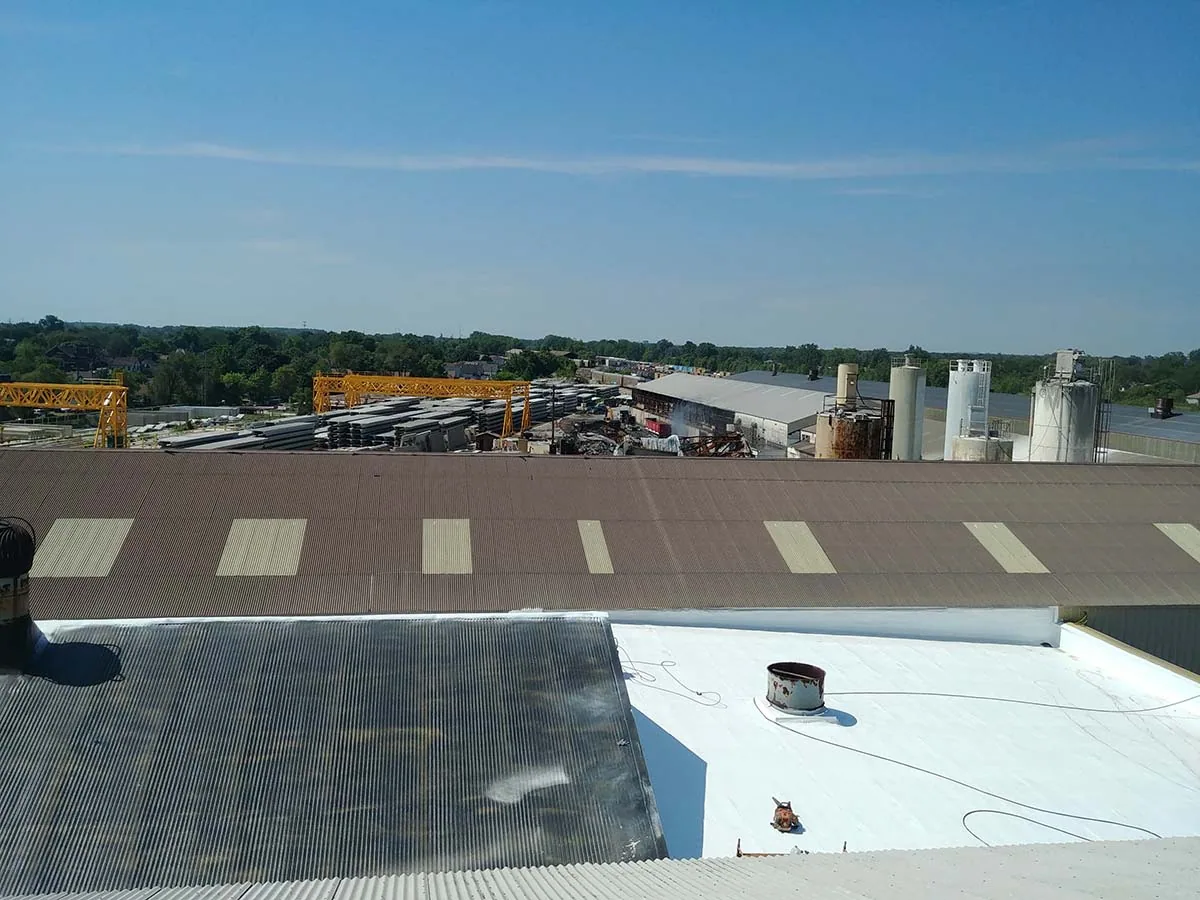
A metal roof retrofit installs a new roof over the existing metal instead of removing it. That can save tear-off costs and avoid exposing the building, but only if the old panels and framing are sound enough to stay. A retrofit also raises the roof, which changes the details at walls, curbs and gutters. We compare a retrofit with panel repair or replacement on the same terms, including the details, so a lower demolition cost doesn't hide extra work elsewhere.
TPO roofing is a single-ply membrane that can be installed over insulation, or over existing metal in a retrofit. It needs different attachment, seams and flashing than a standing seam roof. We price both options with the same scope, including building protection and equipment coordination. Standing seam roofs have a long service life and handle steep slopes and wind well, while TPO may cost less upfront. The right choice depends on your building's slope, budget and long-term plans. Either way, materials go on only when the weather and site are ready.
Standing seam work around Greenbrier and Great Bridge
Greenbrier has buildings with every kind of metal roof, so the area doesn't tell us what's on yours. For metal roofing in Greenbrier, we check the panel profile, attachment and edge details on your building. The building manager tells us how we can get on the roof and when. Clips, closures and trim are on site before we start. If a detail can't be finished yet, it's listed separately instead of hidden in a general completion date.
For occupied buildings, we describe how each day's work is protected and sealed. When the job is done, you get photos, the panel profile and products installed, any checks we performed and a list of anything still open. Warranty terms depend on the specific system, and later changes like new penetrations may need approval, so we review that paperwork with you instead of promising a set number of years.
In Great Bridge and Greenbrier, we always compare drawings with the actual roof before ordering parts. We record seam shape, clips, penetrations and terminations at the repair area. If a wall closure can't be reached, we note that and keep it out of the confirmed repair until we can check it. That keeps the wrong panel from showing up on site.
Commercial Roofing Questions
What should a standing seam estimate identify?
The exact panel profile, clip system, closures and trim, plus any repairs to the structure underneath. Parts from different manufacturers usually aren't interchangeable.
Can you tell how well the panels are attached just by looking?
Not completely. Clips are hidden under the panels. If we suspect a problem, we open a seam or remove a panel to check before committing to a repair.
How should a leaking panel end be fixed?
By refastening or replacing the closure, repairing damaged support and resealing with the right materials for the panel type. Sealant on its own usually doesn't last.
How does a retrofit compare with replacing the panels?
A retrofit installs new roofing over the old panels, which saves tear-off but requires sound existing panels and framing. We compare both options with the same detail work included.
What records should I get after the metal roof work?
Photos, the panel profile and products used, any checks performed, warranty documents and a list of anything still pending.
Trace the gap beside the standing-seam panel
Send us any roof drawings and tell us where the leak is. We'll inspect the panels and closures and explain the right repair with photos.