

A torn pipe collar above a Chesapeake classroom can drip onto ceiling tiles and desks every time it rains. The rubber boot or flashing around the pipe fails, and water gets into the insulation below. We repair school district roofs and explain the permanent fix for leaks above occupied classrooms. We check whether the problem is the collar itself, movement in the pipe or damaged insulation underneath. If the pipe or vent needs its own repair, the right technician handles it. Photos give the district a clear picture of what failed and how far the repair needs to go.
District roof work in Chesapeake, from Great Bridge to Western Branch, starts with the facilities contact and the specific school. District staff set access rules, room uses and safe routes for each phase of work. We inspect the roof before deciding which flashing or seam needs repair, and we compare what we find with leak reports from inside. Drawings help when they match the current roof. A district program can coordinate inspections across schools, but each campus keeps its own access rules, schedule and findings, and each repair is approved on its own.
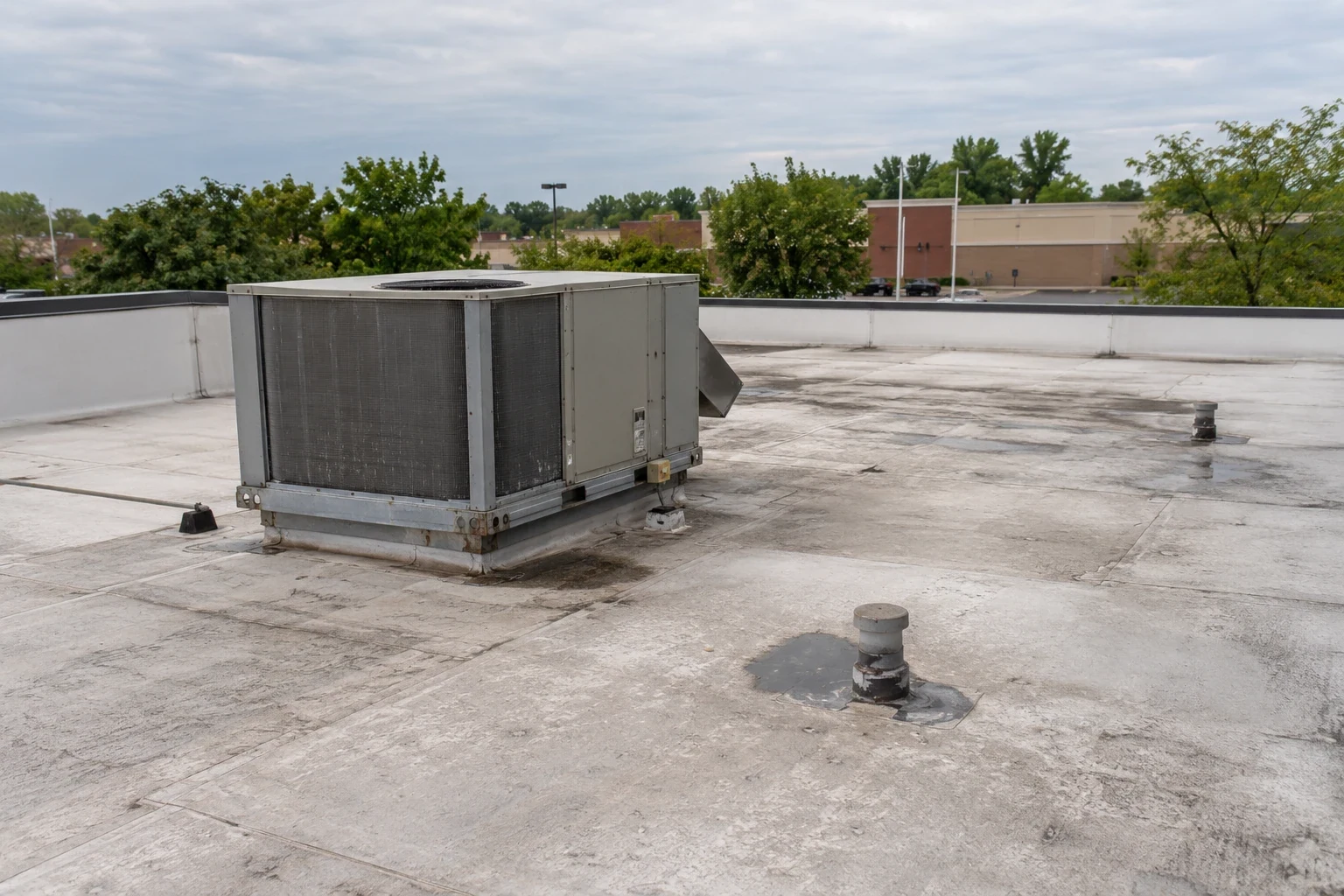

Finding the Failed Collar
A pipe collar seals the roof membrane around a vent, drain line or conduit that passes through the roof. A tear or separation can let water in even when the rest of the roof is sound. We inspect the collar and the membrane around it before choosing a replacement. If the pipe moves or its surface is damaged, the new flashing may not seal properly, so the right technician checks the pipe first. We note that before opening the roof, and the repair is matched to the actual opening and pipe we find.
Our school roofing inspections focus on the penetrations above classrooms, gyms and cafeterias. District buildings in Indian River get their own access and inspection. A ceiling stain shows where water came out, not necessarily where it got in, so we compare it with when the leak happens and what got wet first. Open questions about the pipe are noted, and photos tie the roof opening to the repair above the classroom.
Wet Insulation Around the Pipe
Rain that gets in at a torn collar can soak the insulation around the pipe. The tear does not show how far the water spread. We check with methods suited to the school's roof, and a moisture scan can show where to cut a core. Confirmed wet insulation is replaced, and areas still in question are listed. New flashing needs solid insulation and decking beneath it, so that prep comes first.
Our insulation and cover board replacement around leaking penetrations follows what we find. For other public buildings, our public agency roofing work uses the same approach. More damage found when we open the roof is photographed and added to the repair. Sound insulation stays. If new insulation changes the height at the pipe, we plan the flashing for it, rather than sizing parts from photos alone.
Protecting Students and Staff
Districts control access around students, staff and classrooms below roof work. Facilities staff confirm the rules and safe routes for each job. Material handling is planned around occupied rooms, and entrances or service paths may need to be closed off before work begins above them. Plans are based on how the building is actually being used, not just the school calendar. If water has reached ceilings or wiring, the right trades inspect those, and we coordinate with them and the district's facilities team.
Our occupied building reroofing plans each phase around school activities. Each day's work is closed up with temporary dry-in. New collars, replacement insulation and any pipe repairs are scheduled together. If work has to pause, we explain why, and district staff provide access when we return. Temporary protection is clearly noted, and photos help interior crews decide when ceiling repairs can go ahead.
Rebuilding the Collar
A new penetration flashing has to seal to both the pipe and the roof membrane. We check the existing membrane and old repairs before choosing the method. The pipe surface also needs to be clean and sound where the flashing meets it. Old sealants or loose material may need to be removed. The method depends on the membrane type and pipe material, not a one-size-fits-all product. Where a bond is in doubt, a small test can settle it. We use the test results only for the surfaces we tested.
Our skylight and penetration flashing work handles the pipe and membrane together. New insulation can change the height at the pipe and affect the collar size. The technician confirms the pipe is ready before we finish. The new flashing ties into sound membrane outside the repair area. Corners or nearby equipment may need extra prep, and we explain that before extending a patch across another problem.
Records for the District
When the work is done, we check the seals around the new penetration flashing and the tie-in to the existing membrane. Photos show replaced materials and the roof around the collar. Pipe or interior issues are listed for the right trade. We give the district guidance on protecting the new flashing during future service work. If a new leak appears, we inspect the roof as it is then, rather than assuming it is the same problem. Records keep the repair separate from other roof areas.
Our roof condition reports explain what we found and fixed. On larger projects, general contractors coordinate their work around the roof repair. District staff stay in charge of building access and room use. Ceiling repairs can go ahead once the roof is watertight. If a classroom leak appears on a weekend, tell us what got wet and when. We confirm our response based on the problem and the access available.
Commercial Roofing Questions
Can you repair the roof while school is in session?
Often, yes. We plan work around class schedules and close off areas with district staff. Larger projects are usually scheduled for summer or breaks.
Why is the leak not directly under the pipe?
Water often runs under the membrane before dripping. We trace it back to the actual opening on the roof.
Do you replace wet insulation around the collar?
Yes. We confirm what is wet and replace it before installing new flashing, so the repair has a solid base.
Who repairs the pipe itself?
The district's mechanical or plumbing contractor handles the pipe. We repair the roof flashing around it and coordinate timing.
What records does the district get?
Photos, a description of the repair, materials used and any open items for other trades.
Stop classroom roof leaks
Tell us which school and rooms are affected and who coordinates facility work. We will inspect the roof and explain the repair with photos.