
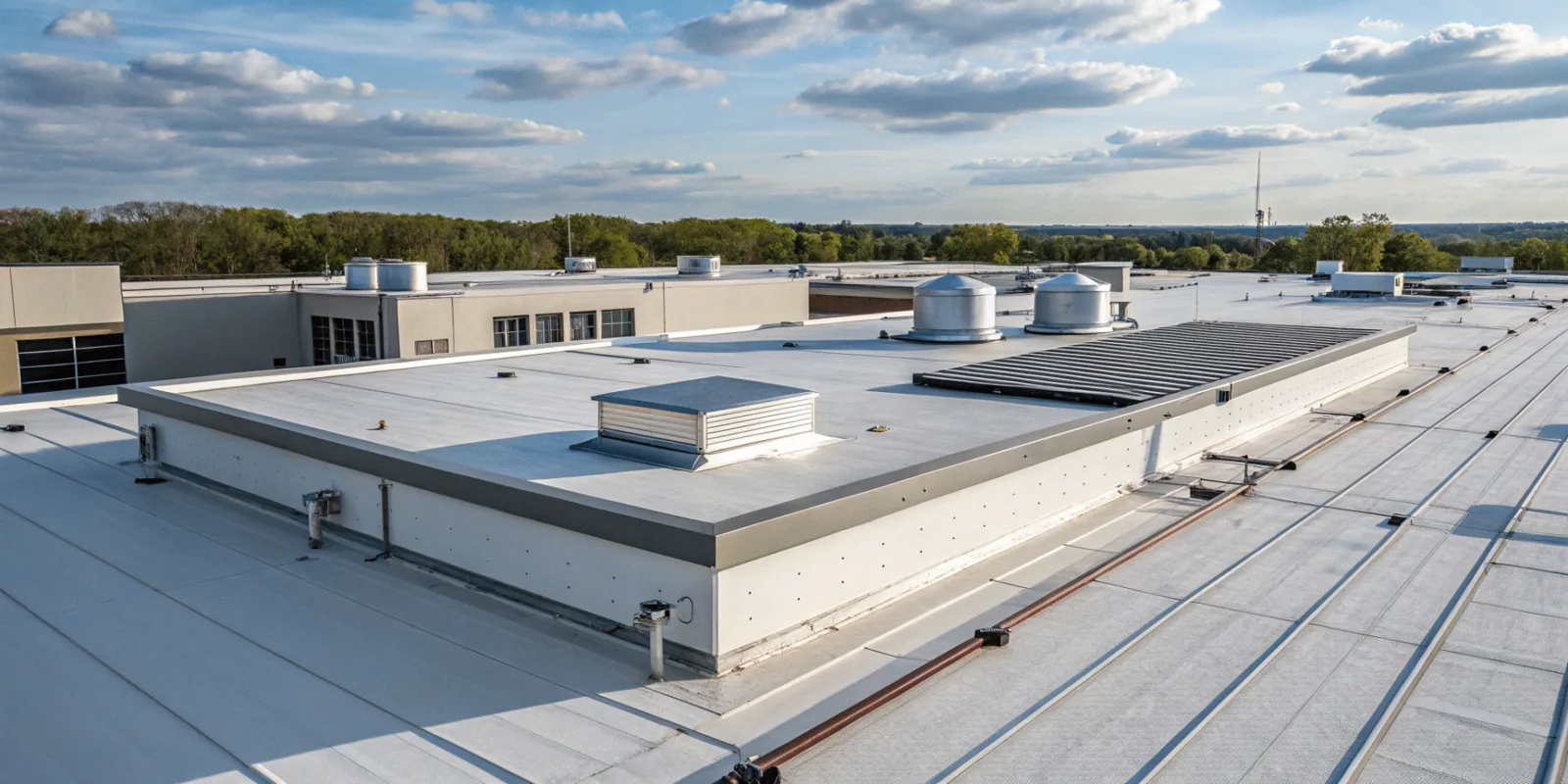
A split seam on an office roof can let rain soak the insulation while the membrane around it still looks fine. Whether you can recover that roof, putting a new membrane over the old one, depends on what's underneath. Roof recover and overlay in Chesapeake starts by checking under that seam.
We look at where water has been getting in and at the existing roof you'd be keeping. You need that information before accepting a smaller tear-off price, because a new membrane won't dry out wet insulation trapped underneath. On an office building roof, the recover plan should connect what stays with what gets repaired, so one visible seam doesn't decide what happens to every layer.
Greenbrier North Commerce Park is in the Greenbrier business district, but the neighborhood doesn't tell you whether a roof can be recovered. We inspect the building and review any records of what's on the roof. A recover near a drain has to keep water flowing and sit on a sound base. The operator tells us which rooms and equipment are below. Work proceeds only in areas we've checked, with attachment and flashing details confirmed before the new roof goes on.
A smooth surface can hide wet insulation
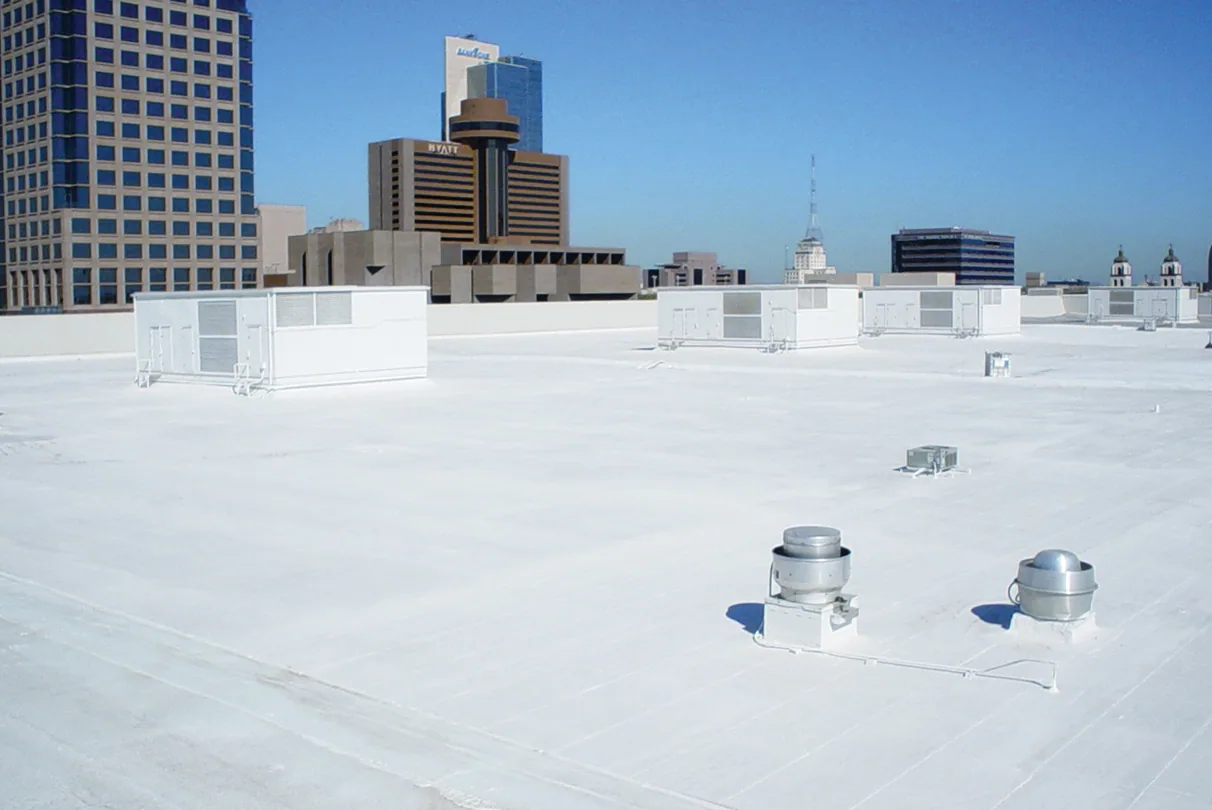
A smooth, continuous surface can hide wet insulation near an old leak. How the membrane looks doesn't tell you the insulation is dry across the roof. We compare what we see with any records and list the checks still needed, along with the decision each one supports.
Insulation that stays has to be confirmed sound before quantities are final. Suspected wet areas are kept separate from confirmed ones, so you can compare known repairs with open questions. The decision to recover follows those findings, before anything is ordered.
A commercial roof inspection for a recover states which areas we can reach and what we couldn't check. We describe what we saw without treating the visit as proof of what's hidden. If more testing is needed, we say so before ordering. The real question is whether the existing roof can support the new system. A general condition rating can't answer that for every detail and layer. Old repairs and known leak spots get checked, and their water paths guide where we cut cores without deciding hidden damage in advance.
What the new roof will sit on
A recover puts a new roof on top of the layers you keep, so those layers have to suit the new system and how it's attached. We identify the surface the new roof will go on and the prep it needs. Existing layers don't get to stay just because removing them costs more. Review the roof system and project requirements together.
Lower disposal costs only matter if the existing roof is actually sound. Known insulation replacement belongs in the price next to the new membrane, not as a surprise later under a roof everyone assumed could be covered.
An infrared moisture survey can help locate wet insulation when weather conditions are right. Its results need to be confirmed with core cuts before we decide what stays and what comes off. Water can travel between layers, so the wet area may be bigger than the seam suggests. The repair boundary follows what we confirm, not the colors on the scan. You'll see how those checks set the insulation quantities, and the new membrane goes over a roof we've actually checked.
Added height at curbs, walls and drains
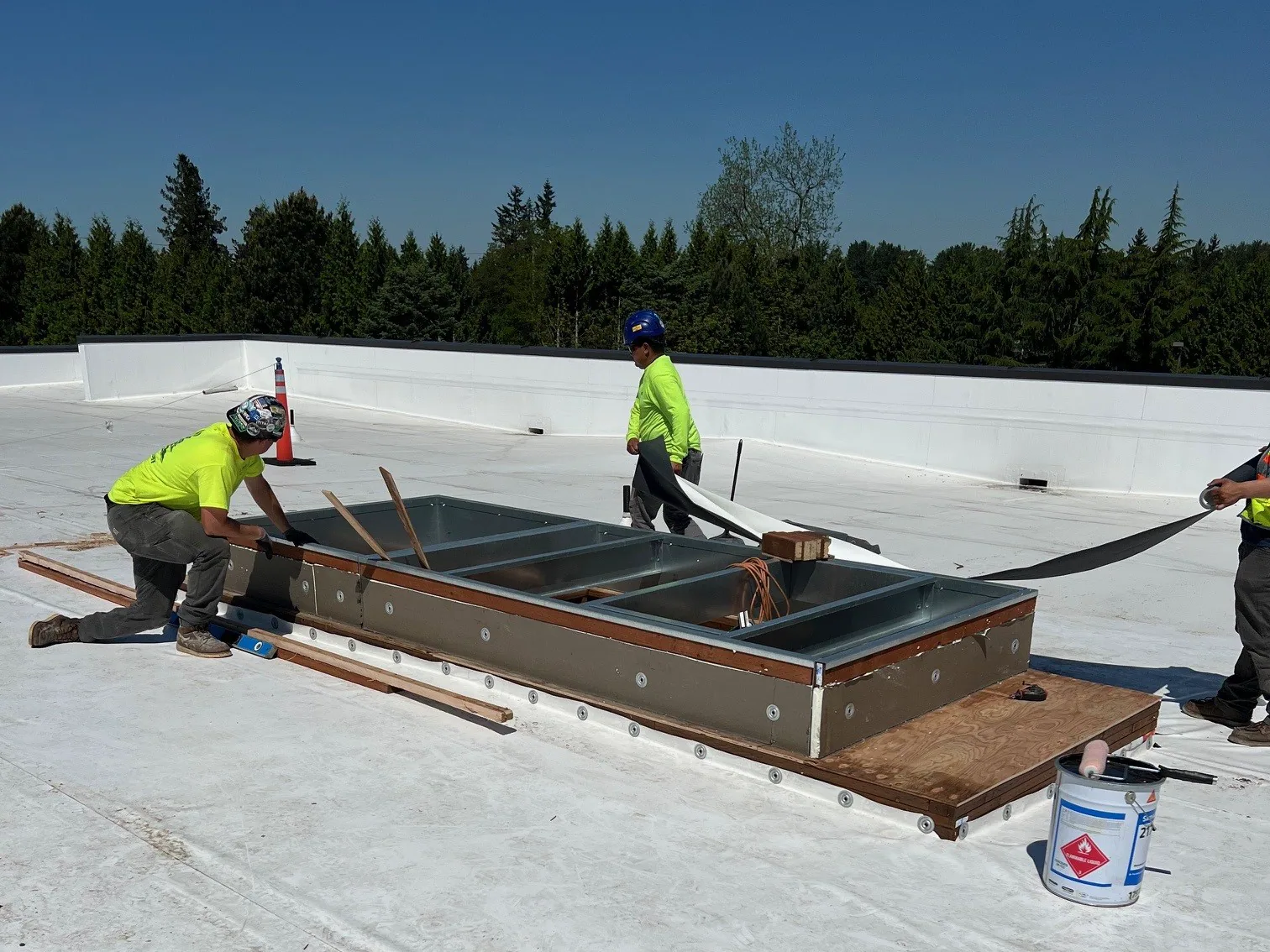
Adding insulation and a new membrane raises the roof surface next to curbs and walls. Even if the roof area doesn't change, the flashing work can. We measure curb and wall heights against the planned recover. A TPO recover needs its insulation layers and flashing details spelled out. The new roof shouldn't eat up flashing height without the details being reviewed. The price includes any curb or wall rebuilding along with the membrane, which keeps a new weak spot from being buried under the recover.
A PVC recover has its own prep and seaming requirements. We compare full roof systems rather than assuming the same field area means the same job. New flashing parts have to work with the existing roof, so we identify the actual products. Roofs that look similar don't always use the same parts. You can compare changes in flashing and prep work alongside the price. Insulation repair stays in every option where we've found it's needed, and each option should end with the same finished roof and details. Otherwise a cheaper price just leaves work undone.
When tear-off is the better answer
If part of the existing roof isn't sound, it has to be fixed before the new roof goes on. We list removal, disposal and new insulation for the areas we've confirmed, plus the tie-ins to the roof that stays. We also explain how any extra damage will be measured and approved, and the roof gets sealed every night while changes are pending. A recover isn't just covering up whatever is there; the goal is a sound base under a fully flashed new roof.
If too much of the existing roof is in poor shape, commercial roof replacement deserves a full comparison. We spell out the different base and disposal costs for each option. Either way, the new roof needs proper flashings and protection for occupied areas, so compare finished results, not just how much gets torn off. A smaller tear-off doesn't mean fewer equipment problems; curbs may still need another trade to lift units under either option.
Our recover checklist: count the existing layers where records and access allow, confirm how the old roof is attached before choosing new fasteners, measure drains and edges against the new build-up, bring in a design professional for structural capacity when needed, list areas that stay separately from areas being removed or repaired, and include patching test cuts in the scope.
What the recover record should show
Hospitals and medical buildings need their own review of the roof and operations before a recover is proposed. Roof recover work in Greenbrier starts with the building and its operator. We discuss patient-area protection and any equipment shutdowns. The existing surface has to suit the new system. The membrane alone doesn't mean the insulation or accessories are ready. Ordering and nightly sealing follow the details that are approved and prepped.
The closeout lists the layers left in place separately from replaced insulation. We record the installed products, finished flashings and agreed inspections, with photos tying the original leak to the finished repair. Problems elsewhere on the roof don't disappear when the recover is finished. Warranty terms and rules about later changes come from the actual documents; a product name doesn't tell you what's covered over existing layers. You get a clear list of what was installed and what's still open, so later maintenance can tell the old roof from the new work.
Whether a recover makes sense depends on the existing roof's condition, how it's attached and how it drains. We inspect sample areas and the transitions most likely to affect the new system. If we can't confirm a layer, we say so instead of assuming it's sound. The operator tells us about rooms, equipment and work hours. Our recommendation compares a recover with a tear-off, showing prep, flashing height and detail work for each.
Commercial Roofing Questions
When is a recover worth considering?
When the existing roof is dry, well attached and drains properly, and the new system's flashing and code requirements can be met.
Can an inspection confirm every layer is fine?
Not from the surface. We confirm with core cuts or a moisture survey before counting on any layer to stay.
Why check curbs before a recover?
The new roof adds height, which reduces flashing height at curbs and walls. Some may need to be raised before the recover goes on.
If the moisture scan shows wet areas, does the whole roof come off?
Not necessarily. We confirm the wet areas with cores and replace those, then decide whether the rest is sound enough to recover.
What should the closeout show?
The layers left in place, insulation replaced, finished flashings, photos, inspections and the warranty paperwork.
Find out what the new roof would cover
Send us any records on the existing roof and the spots that keep leaking. We'll explain whether a recover makes sense, with photos.