
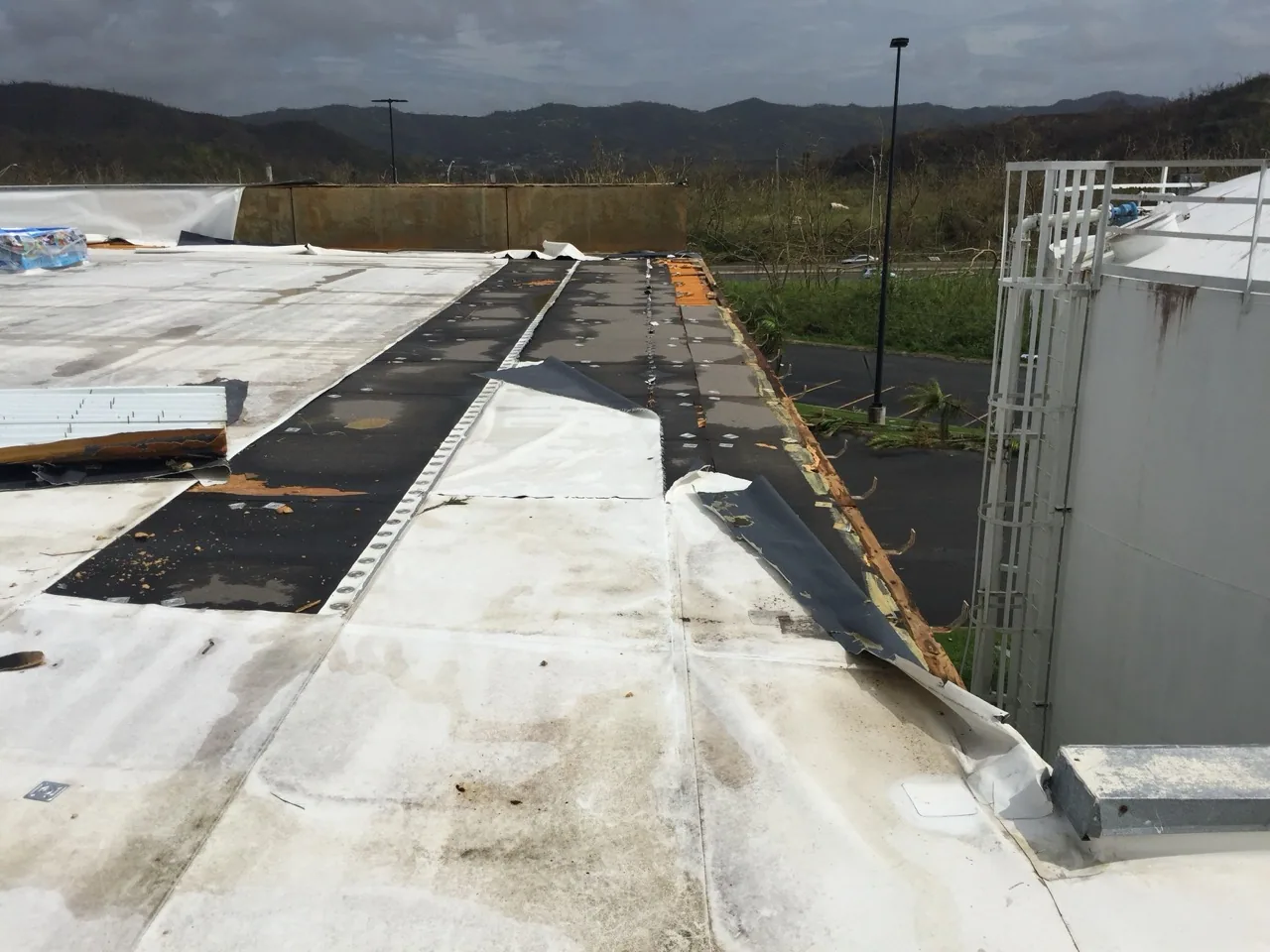
When a hurricane or tropical storm pushes through Hampton Roads, the damage on a commercial roof is usually a combination of problems. A loose edge on a Chesapeake warehouse can let wind-driven rain under the membrane, while an overflowing drain on the same roof creates a second leak. We inspect commercial roofs after hurricanes and tropical storms and repair what we actually find. That means checking edges, membrane, flashings and drains, then deciding what needs a temporary fix now and what needs a permanent repair. The storm's name does not tell us what is damaged; the roof does.
Chesapeake has seen what heavy storm rain can do. During Hurricane Matthew in October 2016, the National Weather Service recorded just over 10 inches of rain near Deep Creek in two days. Rainfall like that tests every drain, seam and flashing on a flat roof. After a storm, tell us the building address and where water is showing up inside. We compare those leaks with what we find on the roof. Each property, whether in Greenbrier or anywhere else in the city, gets its own inspection, and the scope separates confirmed damage from things that still need checking.
The Post-Storm Inspection
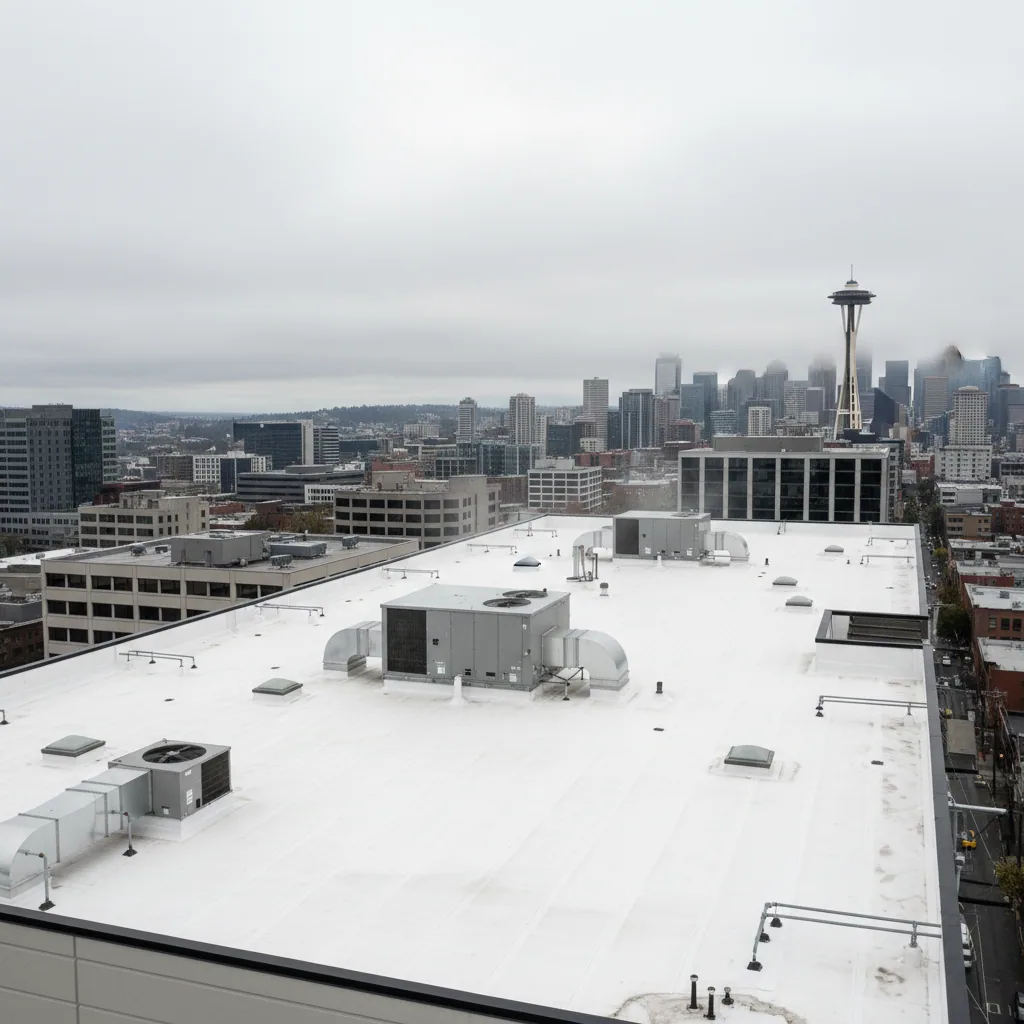
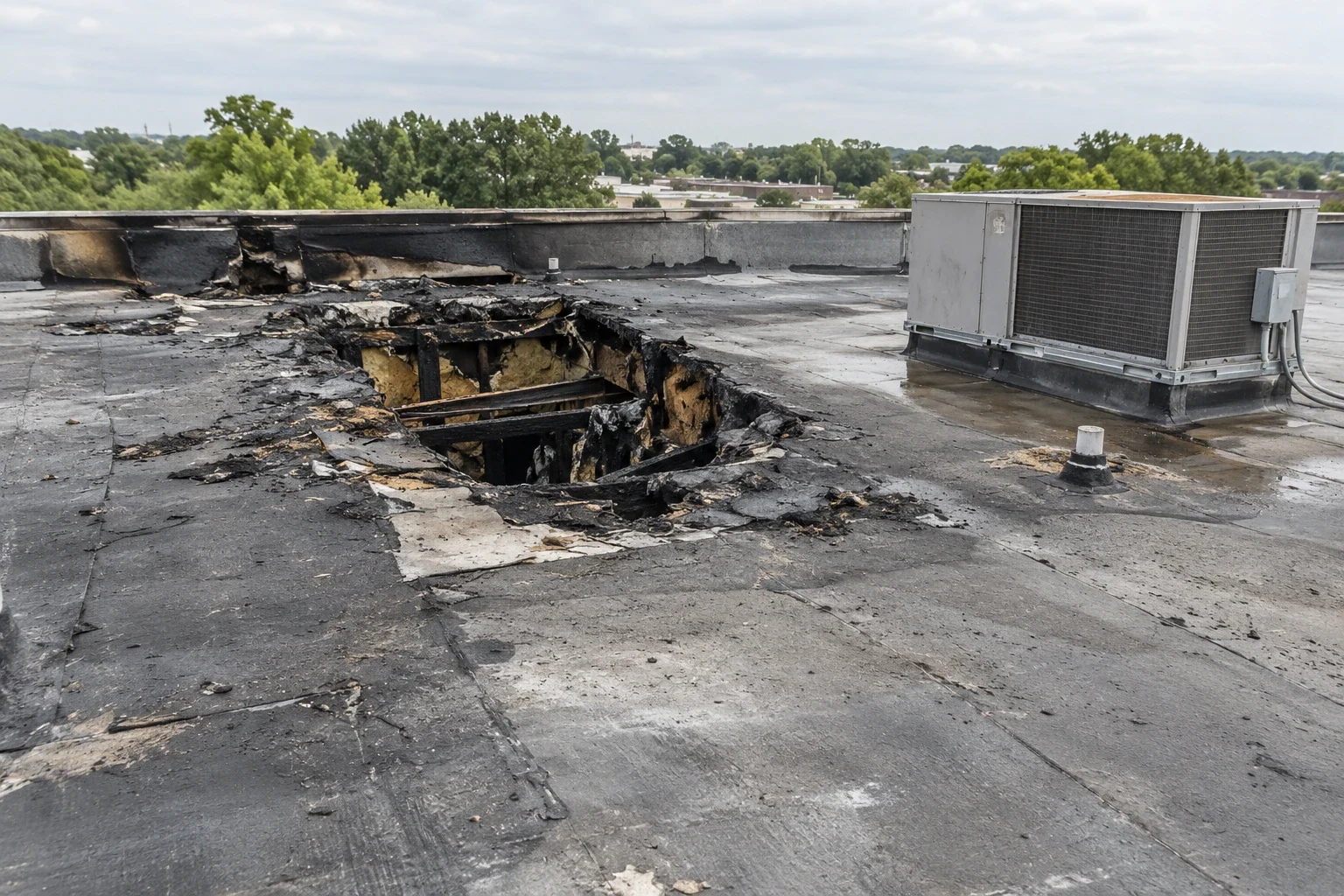
After a hurricane, loose metal and debris can make parts of a roof unsafe to walk. We work with the building contact to reach the roof safely and decide which areas we can inspect. Our report notes where we went and what we could not reach, and photos show every opening we find. Areas we could not get to are flagged for a second visit. That way an early report is still useful without suggesting that every part of the roof has been checked.
Our storm damage roof repair inspection treats each problem on its own. We note edge damage, membrane tears and drain issues separately. The storm tells us when the damage likely happened, but the roof tells us what needs to be repaired. Some interior leaks after a storm come from HVAC units, windows or plumbing, and we point those out for the right trade, so you do not pay for roof repairs that will not stop the water.
Edges and Coping
Hurricane winds pull hardest at roof edges and corners. Loose coping or edge metal can expose the top of the membrane and loosen the wood nailer it is fastened to. We inspect cleats, metal joints and the membrane at the edge together. Bent metal is the visible part; the real question is whether the nailer and fasteners beneath it are still sound. If they are not, new metal will just blow off again, so we fix the base first and explain why a wider area may need to be opened.
Our wind damage roof repair work addresses the edges, corners and attachments that failed. We tie new metal and membrane into sound existing roof. A hurricane does not prove that every remaining edge is weak, but we check before closing it up. If there are structural concerns, such as a damaged parapet, we bring in a qualified engineer. That way the permanent repair holds up to the next storm, and the reason for each part of the work is clear.
Drains and Standing Water
Storms fill drains with leaves and debris at exactly the moment the roof needs them most. Sometimes a clogged drain causes water to back up over a seam that was already weak. We inspect each drain and the membrane around it separately. Clearing a drain restores flow, but it will not repair a damaged seam. If the drain pipe inside the building is damaged or clogged, that is a plumbing job, and we say so instead of hiding it under a general drain cleaning.
Our ponding water roof repair looks at where water collects and how it reaches the drains. A low spot can come from a sagging deck, crushed insulation or poor original slope, and the fix depends on which one it is. We recommend checks before major changes. Damaged membrane near the pond gets its own repair. You can then handle the drainage fix and the roof repair together, without assuming one solves the other.
Wet Insulation
Rain that gets through an open seam or edge can soak insulation well beyond the visible opening. When the condition of that insulation would change the repair, we take core samples. Openings are planned with the building contact so rooms below are protected, and each one is sealed the same day. A dry-looking surface does not mean dry insulation. We report confirmed wet areas separately from areas not yet checked, so removal is based on findings rather than a guess about how far the storm reached.
Our insulation and cover board replacement covers the wet layers we confirm. We mark where the wet insulation ends and sound roof begins. Deck or structural questions go to the right professional, and their answer may change how big each work section is or how the new roof is attached. Materials are ordered for confirmed areas, and any remaining areas are checked before a larger purchase is made.
Insurance Documentation
A clear storm timeline helps when you file an insurance claim. We document what we found on the roof and the repairs we recommend. Photos show the location and condition of each problem, but they do not decide what your policy covers. That decision belongs to the insurer and adjuster. The repair plan stands on its own regardless of the claim outcome, and you can approve temporary protection and further inspection while the claim is being reviewed.
Our roof insurance claim assistance provides the roofing findings an adjuster needs, along with any areas we could not inspect. Temporary repairs are listed separately from permanent ones. If a later inspection finds more damage, it is documented with its own location. For buildings near Deep Creek, we inspect the roof itself, since past storm totals cannot replace actual evidence from your building.
When the Repairs Are Done
When the roof work is finished, we document every repaired edge, seam and flashing, along with the materials used. Photos show the completed repairs. Any open plumbing or structural questions are listed for the right trade. We review the warranty for the new work. If a leak shows up after a future storm, we compare it with these records and inspect the roof as it is then, rather than assuming it is the same problem.
Hurricanes often leave opened seams across the roof. Our seam failure repair cleans and rejoins those seams to sound membrane. Punctures from flying debris are repaired separately in the same work period. The final record shows why each repair was done, so future equipment changes or new leaks can be checked quickly. That makes the record useful long after the storm cleanup is over.
Commercial Roofing Questions
What should we do first after a hurricane?
Make sure the building is safe, note where water is coming in and call us. We can install temporary protection to stop further damage while a full inspection and repair plan are put together.
Can a clogged drain cause a hurricane leak?
Yes. Debris can block drains, causing water to back up over seams and flashings. We clear the drain and also check the membrane around it, since both may need attention.
Why test insulation after a storm?
Water can soak insulation far from the visible opening. Core samples tell us exactly how much is wet so the repair covers it without replacing sound insulation.
Will you work with our insurance adjuster?
We provide photos, measurements and a written description of the roof damage and repairs. Coverage is decided by your insurer, and we do not promise a particular result.
How do you handle damage we find later?
Any new damage is inspected, photographed and documented with its location. It is added to the repair plan on its own merits.
Get storm damage on your roof assessed
Tell us your building address and where water is coming in. We will inspect the roof, install temporary protection if needed and send photos with a clear repair plan.