
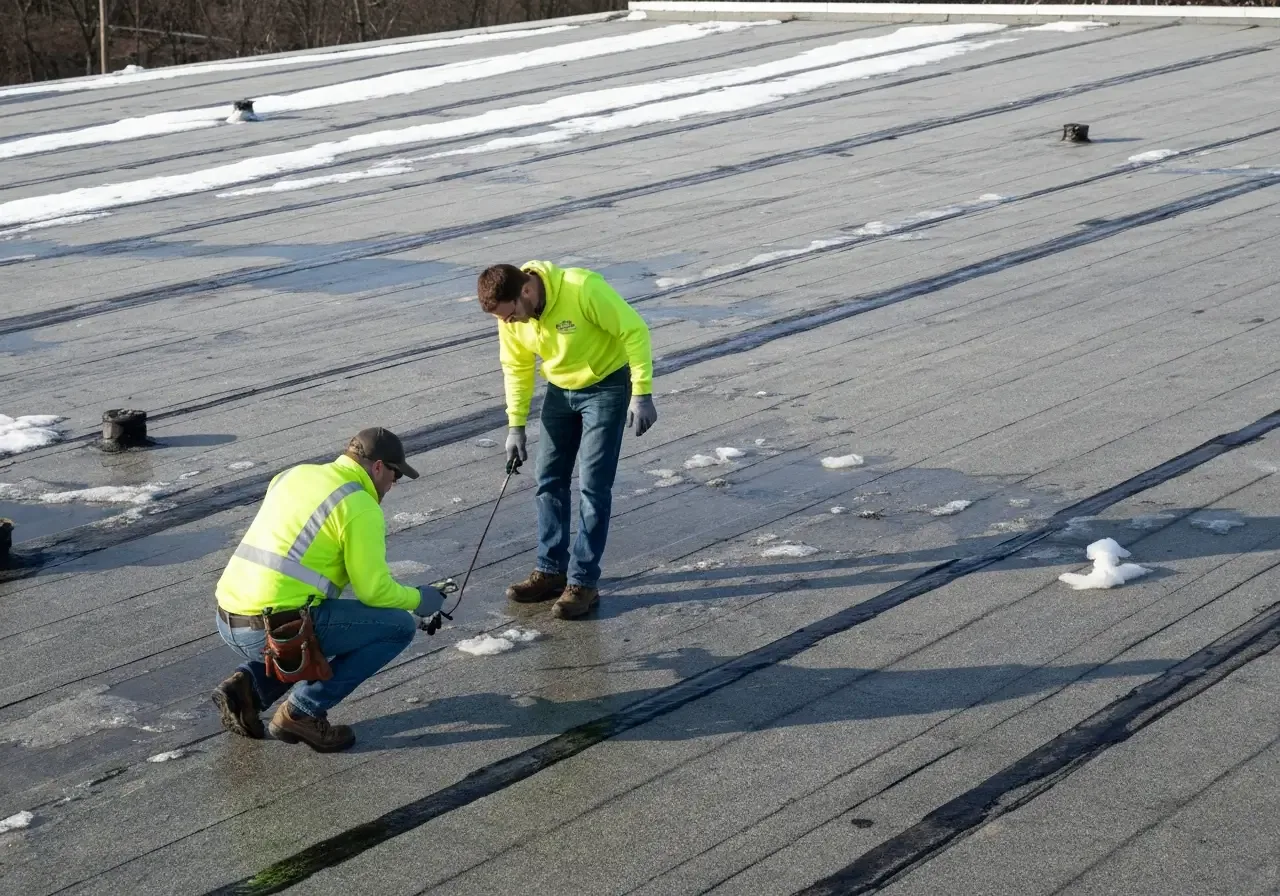
A loose flashing on a warehouse wall lets wind-driven rain in behind the membrane, and the drip may show up 20 feet away. Commercial roof repair in Chesapeake starts with finding where the water gets in. Before you approve another patch, you should know what actually failed.
We inspect the roof, find the problem and price a permanent fix, including any wood or insulation that needs replacing underneath. For a warehouse roof, it helps to know which bay is leaking and whether forklifts or racking limit where we can work below. That keeps the repair focused on the real problem, not just the symptom.
Hospitals and medical buildings need more planning. We confirm the building, an on-site contact and which areas can't be disturbed, and we schedule any equipment shutdowns ahead of time. Flashing at a curb usually needs the wood behind it checked before it's rebuilt. The operator may limit when we can work above patient rooms. We only open what we can close that day, with materials and access lined up first.
Find the detail that actually failed
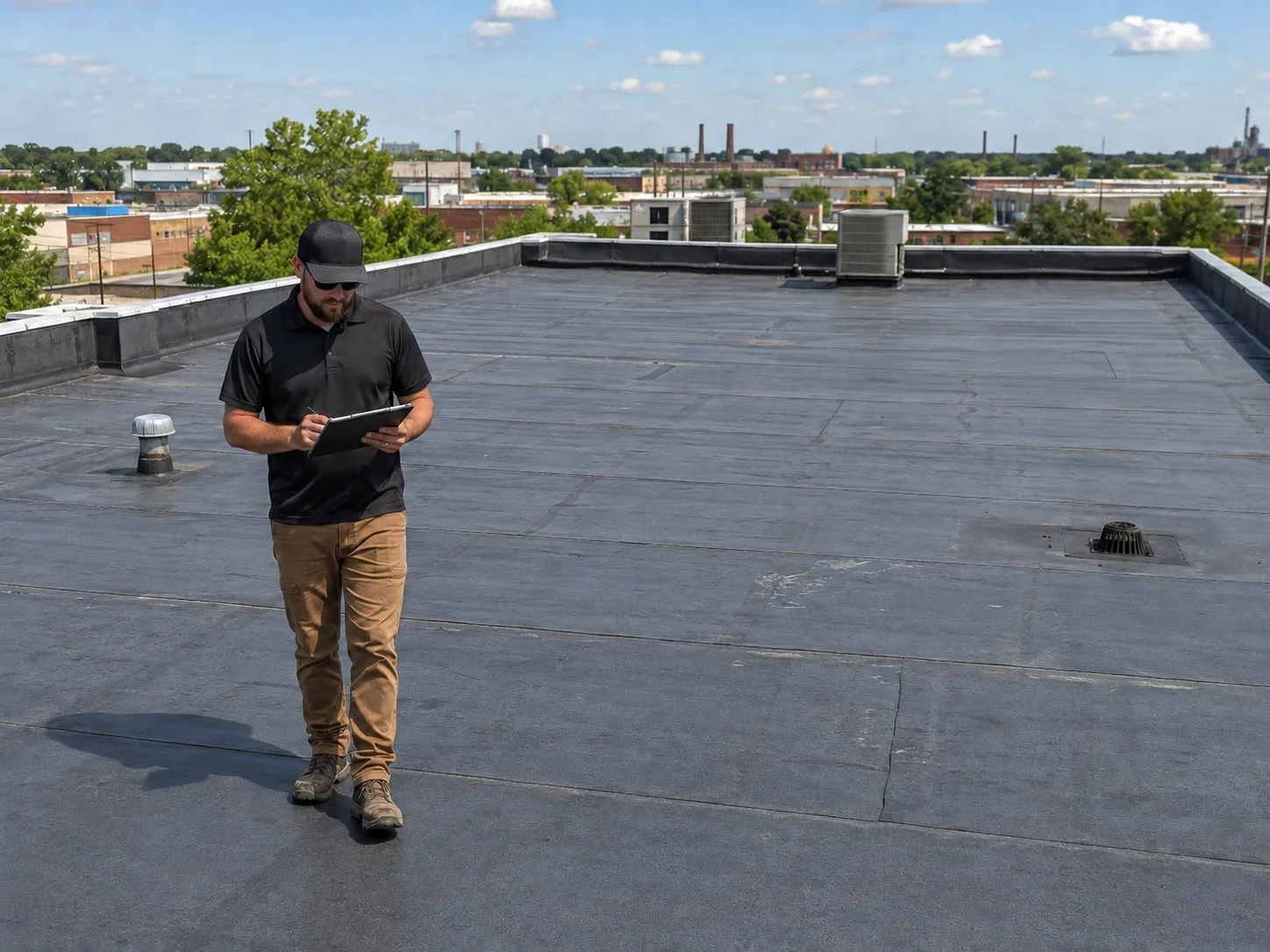
A cracked patch on top of the membrane often hides a loose seam or flashing underneath. Every time it rains, water finds that gap. We look at the detail itself, compare it with any earlier repairs and tell you what we found and what still needs a closer look.
Counting the pipes and curbs on a roof doesn't tell you how much repair each one needs. We figure out how far the damage actually goes before we lock in a price. Known damage and suspected damage are listed separately, so you're not paying for guesses.
If the source isn't clear, a leak investigation may be the right first step. We compare what we see on the roof with what's happening inside and when it happens. A ceiling stain points us in the right direction but doesn't prove where the water came in, since water often runs along the insulation or deck before dripping. If we still can't pin down the cause, the next step stays in our proposal. You can approve a defined job without assuming every drip is connected, and we find the actual problem before covering it with new material.
Fix what's underneath, not just the surface
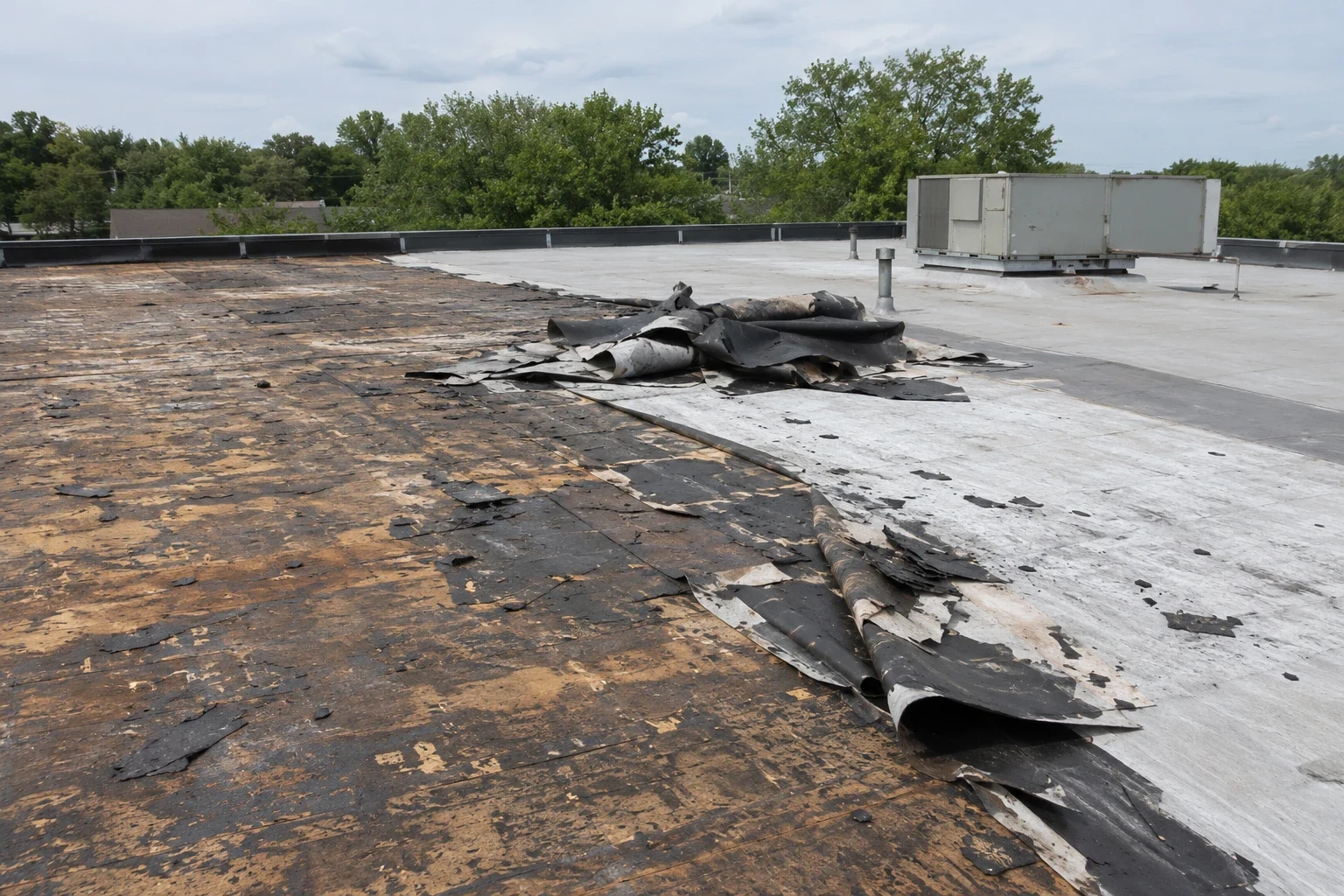
Wet or damaged insulation and rotted wood under a failed detail have to be fixed before the new flashing or patch will last. We check what we can reach and tell you what still needs confirming once we open it up.
When we confirm damage, the repair includes removing it, hauling it off and replacing it with new material. That work is part of the repair, not an extra on top of a patch. A fresh layer on top doesn't dry out soaked board underneath. You'll see how far the insulation repair goes, so a small visible problem doesn't hide a bigger job.
If we need to open more than planned, we explain how the extra work will be measured and approved before we start. We still seal the roof at the end of each day. A suspected wet area only becomes extra work once we've actually confirmed it. Ask us what would make the repair grow, so there are no surprises. The repair also has to tie into sound roof around it, or the new patch just meets the problem at its edge. You can compare any added work against what we actually found.
Use repair materials that match the roof
Before ordering parts, we identify what the existing roof is made of. Membranes that look alike can need very different repair products and prep. A TPO roof repair uses TPO flashing and patches welded to clean, sound membrane, and the insulation underneath has to be solid. We spell out the cleaning, base repair and welding in the proposal.
Knowing the type of membrane isn't enough. Older roofs can be too worn or dirty to take a good bond without extra prep. When you compare bids, compare the finished repairs, not just the size of the patches.
An EPDM roof repair uses different adhesives, tapes and primers. We identify the existing roof and the repair products we plan to use. The fact that two roofs look the same from above doesn't mean you can use the same materials. If the flashing or fasteners have failed, we include fixing them, which may be a bigger job than the top patch suggests. We check the product requirements before ordering. Prep has to remove old residue without damaging good membrane nearby. Each repair should spell out how far it overlaps the existing roof and how it ends. If we find a different material once we open the roof, we note it. Temporary patches are listed separately from finished repairs.
Repairs around rooftop equipment
A unit on a curb can block a proper repair until the HVAC contractor lifts or disconnects it. We spell out what we'll do on the roof and what the mechanical contractor needs to do. Any limits on shutting down equipment need to be known before we open anything. Our rooftop equipment curb and support work separates lifting the unit from the roofing work. We also agree on who protects the area if there's a gap between visits.
Having our crew available doesn't mean the unit can be shut down. You can schedule repairs for the areas that are ready and leave the rest until the equipment is free. Anything left unfinished is clearly marked while we work elsewhere.
Greenbrier and Great Bridge are both Chesapeake districts, but every repair is planned around a specific building. Commercial roof repair in Greenbrier depends on access, the space under the leak and how materials get to the roof. A loose attachment may run farther under the edge than it looks. We measure the wood and insulation repair separately from the top layer and note anything we still need to check. Great Bridge has busy commercial corridors, and we start each job with the property contact, when the leak happens, the affected room and the roof area. We check the reported detail and the material around it. If there could be other leaks, we list them separately instead of expanding the repair on a guess. When we're done, the report lists the permanent repair, any temporary patches and anything that needs a follow-up.
What the finished repair should look like
The final report should connect the problem we found with the repair we made. It lists the locations, any wood or insulation we replaced and the finished flashing or patch. Photos show the leak point and the finished repair. Any checks we agreed on are done according to the products and job requirements.
If there's a problem outside the repair area, we note it separately. Interior repairs follow once the roof is done. A patch date doesn't close out equipment work that's still waiting. You get a clear record of what was fixed, not a blanket statement that the whole roof is fine.
We spell out what each repair covers before you approve the price. Temporary patches and permanent repairs are listed separately. If your roof is under a manufacturer's warranty, check its notice and repair requirements before work starts. The membrane brand alone doesn't tell you what's covered or how long the repair will last. Any maintenance concerns are tied to the specific area where we saw them. Our report separates finished repairs from open questions elsewhere on the roof. Repairs only go on when the weather is right and the materials match, which keeps the focus on fixing what actually failed.
Commercial Roofing Questions
What should a roof repair proposal include?
The actual problem, any wood or insulation repair underneath, and how the new material ties in. Anything we couldn't confirm should be listed separately.
Is the patch size the full price?
Not usually. Wood, insulation and flashing work under the patch can be a big part of the job, and it should be in the price.
What if we don't know where the leak is coming from?
Start with a leak investigation. We separate the stain inside from the entry point on the roof before recommending a repair.
Who handles rooftop units during a repair?
The building operator and the HVAC contractor schedule any shutdown or lift. We handle the roofing and keep the roof sealed between visits.
What should the repair photos show?
The problem we found and the finished repair, plus any open issues or equipment work still pending.
Find the problem behind the repair request
Tell us where the problem is and share any past repair records. We'll find the cause and send a short written explanation with photos.