
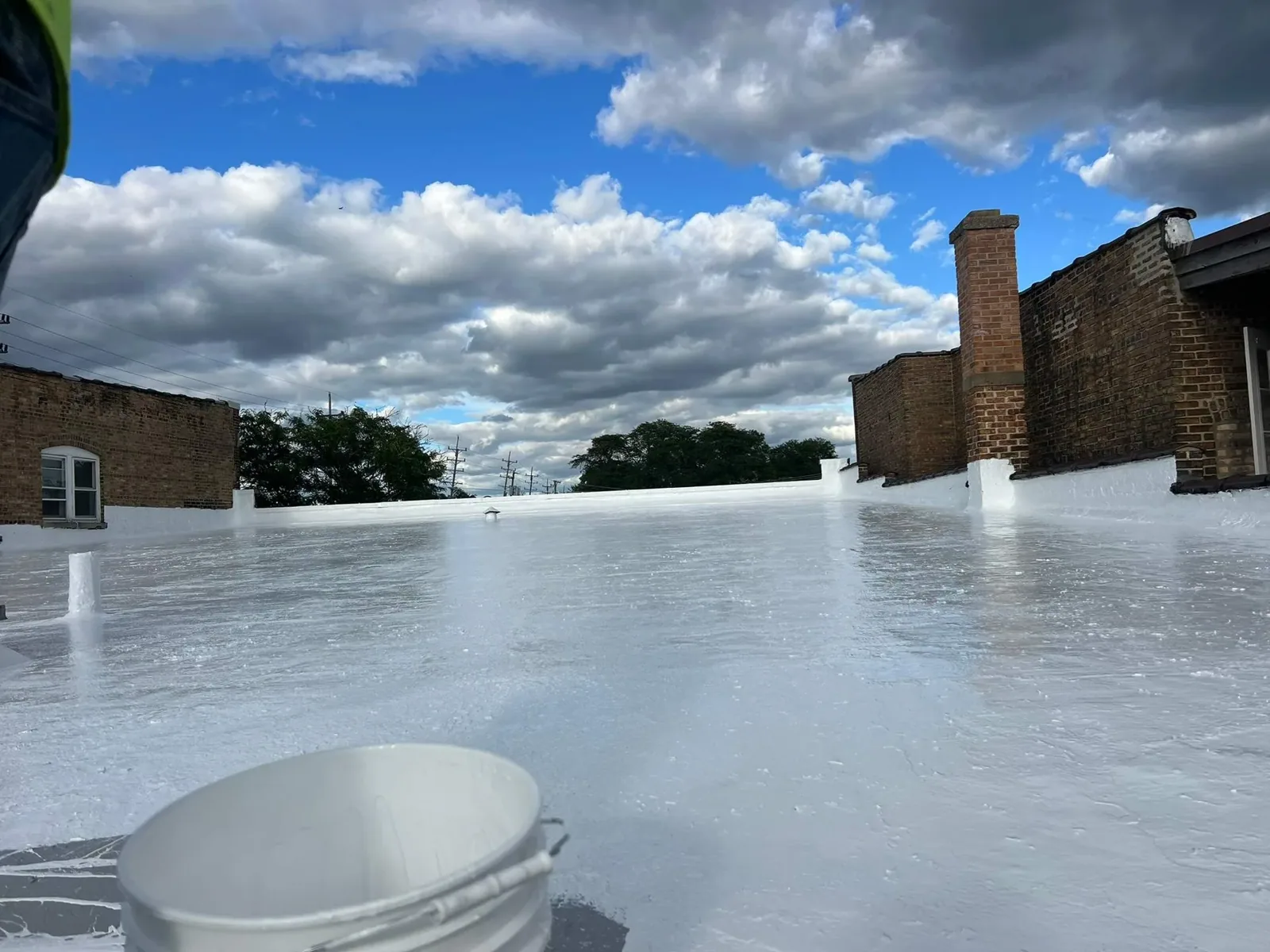
When silicone coating starts peeling around a drain on a retail roof, the roof underneath is left exposed to sun and water. Spraying more silicone over a loose edge won't make it stick. Silicone roof coatings in Chesapeake, VA can be a great way to restore an aging roof, but the job starts with figuring out why the old coating let go. On a shopping center roof, we also plan the work around store hours and tenants below.
Healthcare and other occupied buildings need the same careful approach. We check which rooms and equipment sit below the area being coated. If there's a stain inside, the water may be coming from a curb, pipe or wall rather than the coated field, so we trace it before quoting. We also need access that won't disrupt patients or staff. A coating can't fix wet insulation hiding under the surface, so we check for that too. Before ordering any material, we mark which areas are ready to coat and which need repairs first, and the estimate spells out both.
Why old coatings peel
A coating only works if it stays bonded to the roof. Peeling usually comes from one of a few things: the surface wasn't cleaned well enough before the last application, the coating went on in bad weather, water got under it from a leak, or it was applied over a material it doesn't stick to. We check the edges of the peeling area to see whether the coating itself failed or the roof under it did. Those two problems need different fixes.
Silicone also limits what can go on top of it later. Most other coatings, sealants and patching materials won't stick to old silicone, so recoating usually means more silicone after a thorough cleaning. We look at what's already on your roof, including old patches, and choose primers and products that are approved for that surface. On many jobs, we run an adhesion test patch first. If loose coating has to be removed, that labor goes in the estimate. A fresh coat over a few loose spots can look good for a season and then fail across the whole roof.
Coatings don't fix moving flashing
Many leaks on coated roofs come from curbs, pipes and walls, where the roof moves with heat and building settling. Coating over a split flashing can hide it for a while, but it won't hold the joint together. We rebuild those details first, using reinforcing fabric and compatible repair materials, and make sure the roof underneath is solid enough to support them. Then the field coating goes on. If a seam is open or the insulation under a curb is soft, that gets fixed before any silicone is sprayed.
Penetration and skylight flashing repairs often involve other trades. If an HVAC unit needs to be lifted or disconnected so we can reach its curb, your mechanical contractor handles that while we handle the roof. We plan the coating schedule around them. We won't coat around a curb that hasn't been fixed and call the roof done. That detail stays on the list until it's properly flashed and coated. A shiny new coating doesn't mean the equipment work underneath is complete.
Check for wet insulation first
Water from an old leak can stay trapped in the insulation for a long time, even after the surface looks dry. Coating over wet insulation seals the moisture in, which can lead to blisters, rot and a deck that weakens over time. We check roof records and walk the roof, and where needed, run tests to find wet areas. Any soaked insulation is cut out and replaced before coating. That repair cost belongs in the estimate, along with the coating itself.
An infrared moisture survey can map likely wet areas across the whole roof. We confirm suspect spots with small core cuts, which we patch the same day. That tells us how much insulation needs replacing before anyone orders coating. If we find more damage during the job, we show you and agree on the cost before expanding the work. The roof stays sealed in the meantime. A dry-looking surface doesn't prove the layers underneath are dry, which is why we test rather than guess at a percentage.
Silicone vs. acrylic vs. a new roof
Acrylic roof coatings are another option. Acrylics are often less expensive and easier to recoat later, but they don't handle ponding water as well as silicone. Each needs its own primers, repair materials and weather conditions. We compare them on the same roof area with the same repairs, so you're looking at a fair difference in price rather than one quote that left out prep work.
Sometimes a coating isn't the right answer at all. If the roof is badly worn, heavily wet or full of failed seams, a new roof such as TPO roofing may be the better investment. Replacement means tearing off or covering the old roof, new insulation and rebuilt flashing at curbs and drains. We give you an honest comparison: what each option costs, how long the work takes, how much it disrupts the building and what condition the roof needs to be in for a coating to make sense. Both options include the same building protection and equipment coordination.
Silicone coating projects around Greenbrier and Great Bridge
For silicone coating projects in Greenbrier and Great Bridge, we inspect each building on its own. We keep overspray away from cars, windows and air intakes, and only apply coating when the weather and surface meet the manufacturer's requirements. An adhesion test only tells us about the area tested, so we check other surfaces too. If a curb can't be reached yet, it stays on the list. The neighborhood doesn't decide which product to use; your roof does.
When the job is done, you get a short write-up explaining why the old coating failed, what we repaired and what we applied, with photos. It includes the products used, the prepared areas and any test results. If anything was left for later, such as a unit waiting on an HVAC contractor, it's listed clearly. Warranty terms depend on the specific product and system, so we'll review that paperwork with you instead of promising a lifespan. Keep these records for your next inspection.
Commercial Roofing Questions
Can a silicone coating stop an active leak?
Not by itself. We find where the water is getting in and fix that first, whether it's a curb, a seam or wet insulation. The coating then protects the repaired roof.
What do you need to know about the roof before coating?
What the roof is made of, what coatings or patches are already on it and what condition it's in. That decides the cleaning, primer and products we use.
What happens if the insulation is wet?
Wet insulation has to be cut out and replaced before coating. Coating over it traps moisture and causes the new coating to fail early.
How does silicone compare with acrylic?
Silicone handles ponding water better. Acrylic is usually cheaper and easier to recoat later. Compare quotes on the same repairs and roof area to see the real difference.
What should I get when the job is done?
Photos, the products used, the areas prepped and repaired, any test results and a list of anything still pending. Keep them with your warranty documents.
Find the cause of the peeling roof covering
Send us photos of the peeling coating and any roof records you have. We'll inspect the roof, find out why it failed and send a clear estimate with photos.