
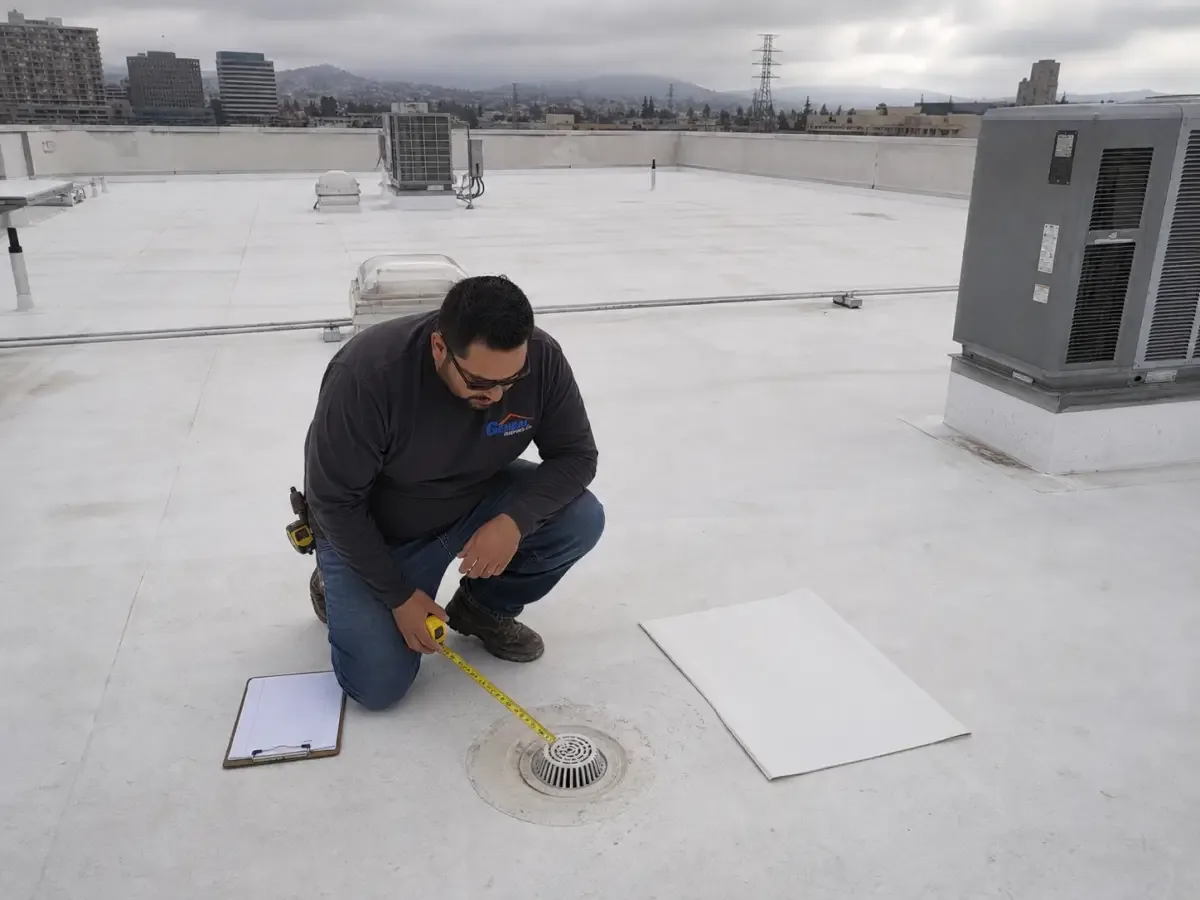
On a medical office roof, a PVC leak usually starts at a welded lap around rooftop equipment, not in the open field. The rest of the membrane can be in great shape while water gets in at one curb or pipe boot. PVC roofing in Chesapeake, VA starts with finding that exact spot and confirming which PVC product is on the roof. For a medical office building, we also check which rooms and equipment sit below the leak so we can protect them while we work.
Healthcare buildings need careful planning before any roof work begins. Facility staff tell us which rooms are occupied, which units can be shut down and when. If the insulation around a leaking curb is wet, it has to be replaced before the flashing is rebuilt, and our estimate includes that. Roof records help us confirm what was installed originally, though we still verify it on site. We only open as much roof as we can close and seal the same day. Our report separates what we confirmed from anything we still need to open up or test before the new PVC goes in.
Know the membrane before you repair it
Not all PVC membranes are the same. Manufacturers use different formulations, thicknesses and accessories, and old patches may be made of something else entirely. We check roof records and look at the membrane itself to confirm what's there. That matters because new flashing, boots and patches need to weld properly to the existing sheet. If an old patch is the wrong material, it has to be cut out before a lasting repair can be made.
PVC seams are joined with hot air, which fuses the two sheets into one. A good weld depends on clean surfaces, the right temperature and speed for the specific product and the day's weather. We run test welds at the start of each day and probe finished seams to check for gaps. Those settings come from the manufacturer's instructions for the exact membrane, not from a rule of thumb. A properly welded detail is stronger than the sheet around it. A poorly welded one is just another leak waiting to happen, which is why the prep and testing belong in the estimate.
What's underneath the PVC
A visible split in the membrane is only part of the story. Water that's been coming in for a while may have soaked the insulation underneath, or loosened the fasteners holding the roof down. We check those things before quoting. If old repairs used the wrong materials, those need to come out too. The membrane you choose doesn't make wet insulation dry; any soaked material has to be removed and replaced, and the new section tied into dry, solid insulation around it.
A PVC roof inspection covers welded seams, flashings, curbs, drains, edges and the condition of the membrane. If we suspect hidden moisture, we may recommend core cuts or a moisture scan. Our report tells you which areas are confirmed sound, which are confirmed damaged and which still need testing. That way, the repair or replacement estimate is based on real findings, not guesses. Materials are ordered only after we know how much insulation and membrane actually need replacing, so you're not paying for product that sits on a pallet.
Rebuilding curbs and penetrations
Water through a bad weld spreads through the insulation, sometimes far beyond the visible gap. We test to find where the wet area ends before cutting anything out. New membrane over wet insulation traps moisture and leads to rot, rust and blisters. If we find more damage once the roof is open, we stop, show you and agree on the extra cost before going further. Each section is sealed watertight before the crew leaves for the day.
Penetration and skylight flashing is where most PVC leaks start, so these details get extra attention. If new insulation raises the roof surface, curbs and skylights may need to be raised to keep proper flashing height. We measure those before ordering. If an HVAC contractor needs to disconnect or lift a unit so we can reach its curb, we schedule around them. A curb isn't finished until the flashing is welded and tested, even if the rest of the roof is done. Until then, it stays on our open-items list.
PVC vs. KEE and TPO
KEE membranes are PVC-based sheets with an added plasticizer that helps them stay flexible and resist oils and chemicals over time. They're often used where roofs see grease or process exhaust. But "KEE" on a label doesn't make every product interchangeable. We identify the exact product and compare it with standard PVC on the same roof area, insulation work and flashing details. That way, the price difference reflects the materials, not a difference in what each quote includes.
TPO roofing is another heat-welded single-ply option, generally less expensive than PVC but with lower resistance to oils and chemicals. TPO and PVC look similar but don't weld to each other, so you can't patch one with the other. We price both with the same edge metal, curb flashing and building protection. The right choice depends on what your roof is exposed to, how much foot traffic it gets and your budget. Either way, we confirm the specific product and its requirements before ordering.
PVC projects around Greenbrier and Great Bridge
We work on PVC roofs across Great Bridge and Greenbrier, but the right product and method always depend on the specific building. For a PVC roof in Greenbrier, we inspect the actual roof, check the existing membrane and find out when and how we can access it. Welding needs a dry surface and the right conditions, so weather affects the schedule. We make sure insulation, flashing and accessories are on site before starting, so the crew isn't waiting on missing pieces. If equipment blocks a curb, we keep it on the list and finish the rest. Neighboring buildings may have PVC too, but we never assume yours matches theirs.
When the job is finished, you get the exact product name, photos of completed seams and flashings, and the results of our seam checks. Anything still pending, such as a unit waiting to be reset, is listed separately. Warranty terms depend on the specific system, and later changes like new penetrations may need manufacturer approval, so we go over that paperwork with you. If a new leak shows up later, tell us when and where, and we'll check it against the records first.
Commercial Roofing Questions
Why does it matter which PVC product is on my roof?
New flashing and patches need to weld to the existing membrane. Formulations vary, so using the wrong product can lead to weak seams and repeat leaks.
Does a good weld mean the insulation underneath is fine?
No. A weld only tells you the seam is sealed. We check the insulation separately with core cuts or a moisture scan.
Can I patch a PVC roof with TPO or KEE material?
Not automatically. TPO won't weld to PVC, and KEE products vary. We use repair materials approved for your specific membrane.
Why do curbs sometimes need to be raised?
New insulation can raise the roof surface, which shortens the flashing height at curbs and walls. Raising the curb keeps the flashing high enough to stay watertight.
What records should I get after PVC work?
The product name, photos of seams and flashings, seam test results, warranty documents and a list of anything still waiting on other trades.
Find the weak detail within the actual PVC system
Send us any records of your PVC roof and tell us where it's leaking. We'll find the problem, check the insulation and send photos with a clear repair plan.