
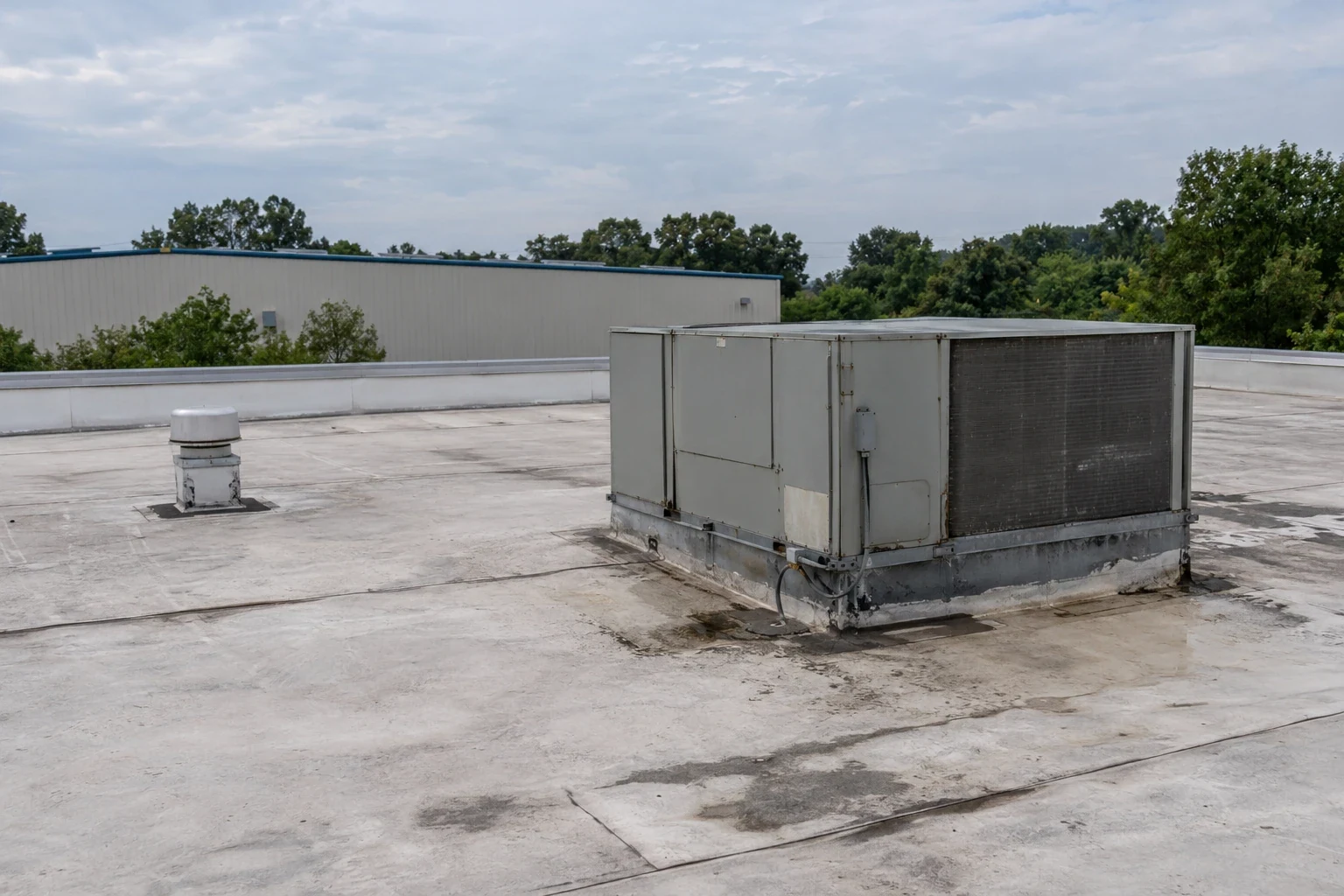
A leak in a manufacturing plant can stop a production line, damage machinery or controls, or ruin raw materials and finished product. Plant roofs in Chesapeake usually carry a lot of equipment: exhaust fans, dust collectors, make-up air units, process vents and piping. Maintenance crews and contractors walk the roof often, and each piece of equipment is a potential leak point. The leaks we are called about most often start at equipment curbs and supports, or at punctures and cuts in the membrane near busy service areas.
We start by finding the actual source, which is often some distance from the drip on the plant floor. Water can run along the deck, a pipe or a beam before it falls. We inspect the curbs, penetrations and membrane near the problem area, look at drainage and test the insulation for moisture. We also look for signs of process exhaust damage, since grease, oils and chemicals from some processes break down certain roof membranes. You get photos and a written repair plan that accounts for production schedules and plant safety rules.
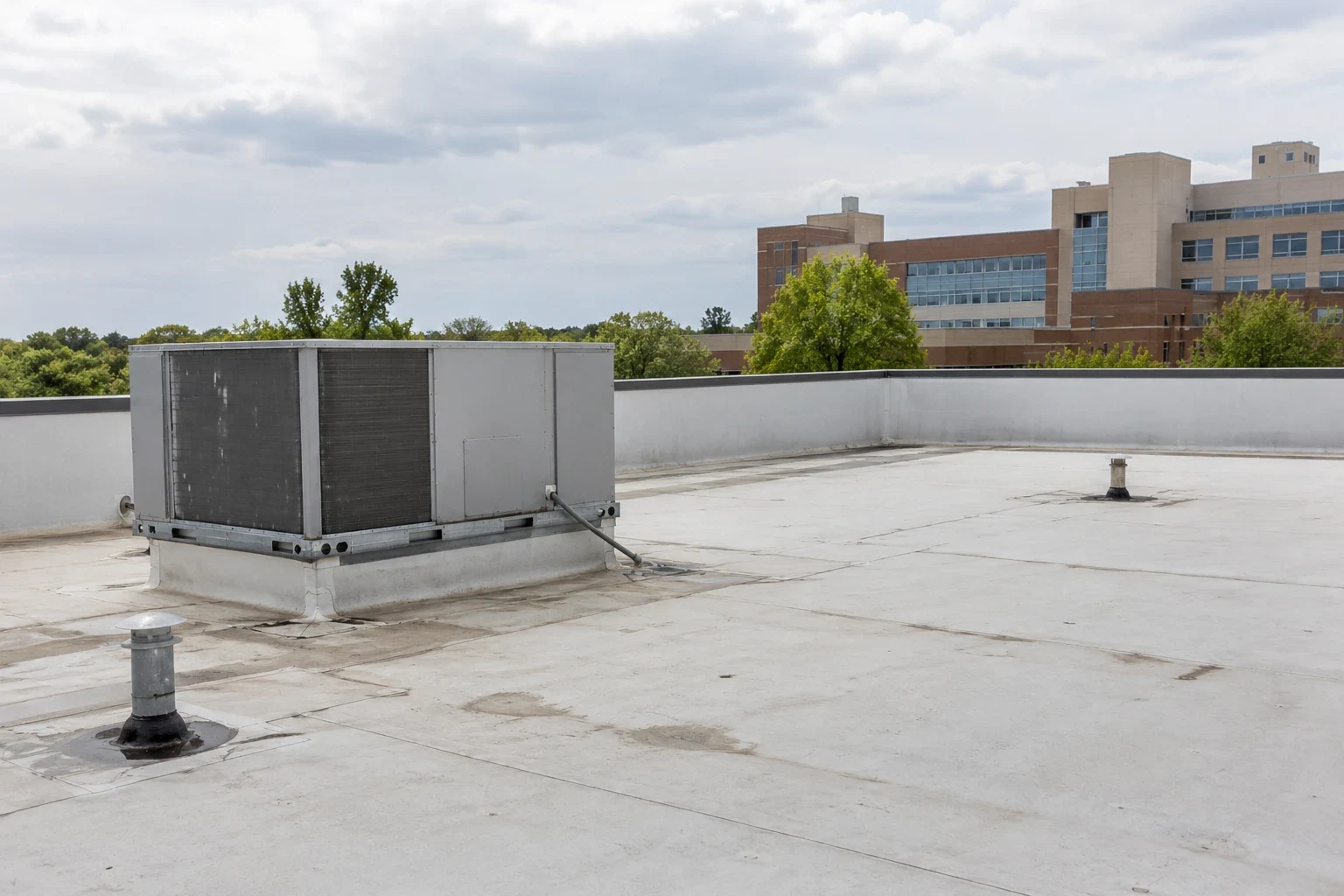
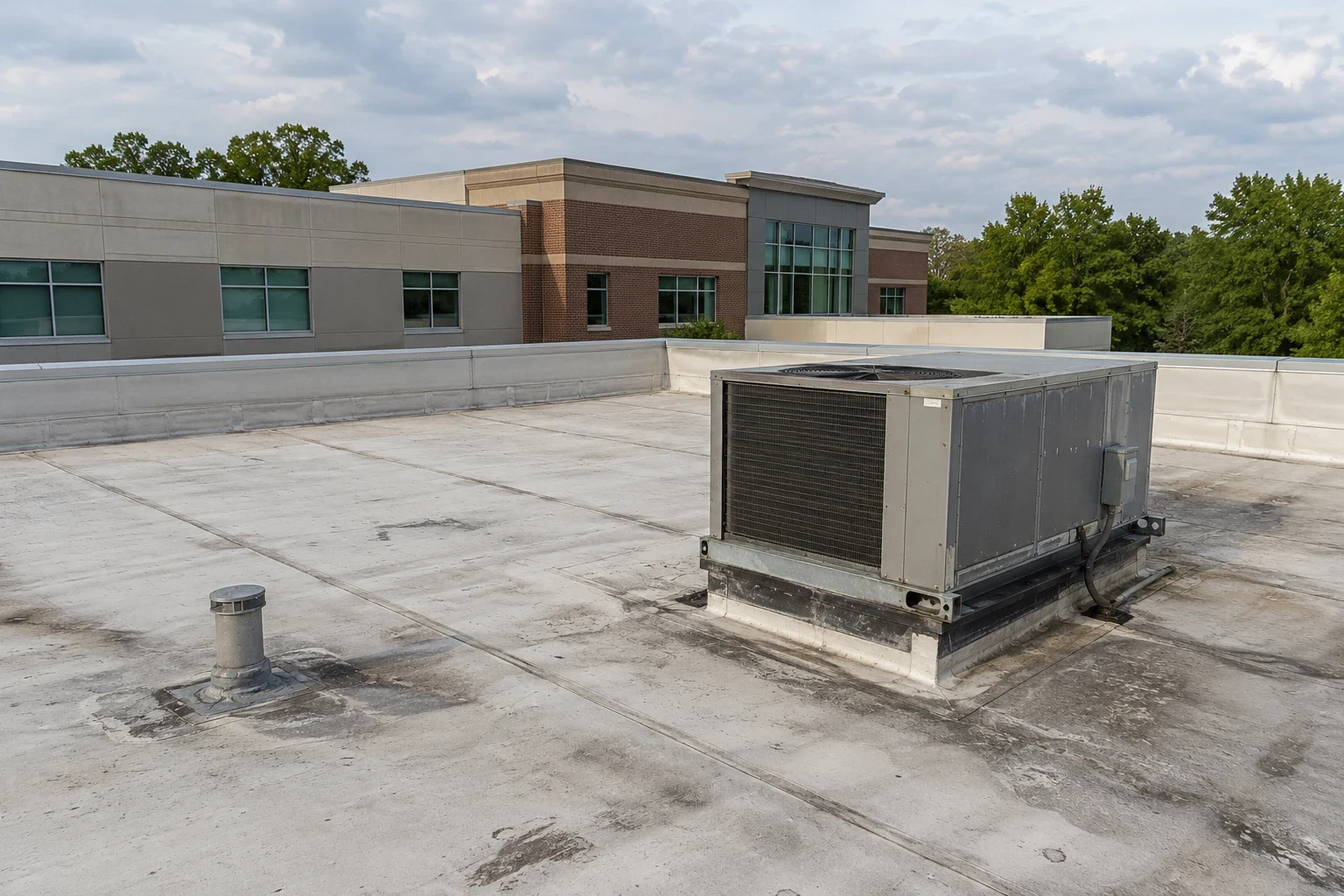
Getting clear access to the equipment
A proper curb flashing needs room to work. If a unit sits too close to the curb edge, if ductwork blocks one side, or if a pipe rack runs right over the detail, the roofer cannot reach the base of the curb to flash it correctly. Patching around equipment that is in the way usually leads to another leak. Before we start, we identify any equipment that needs to be moved, lifted or disconnected and work out the sequence with your maintenance team or mechanical contractor.
Our rooftop curb and equipment support work covers rebuilding curb flashings, raising short curbs and replacing pipe and duct supports that have worn through the membrane. Shutdowns are scheduled with the plant so production is not interrupted unexpectedly. Lockout procedures and other safety requirements are followed, and nothing is disconnected by our crew. The roof is flashed once the equipment is set, so the detail is complete instead of worked around.
Punctures and damaged membrane
On a busy plant roof, punctures are common. Dropped tools, sharp metal scraps, screws from equipment panels and heavy foot traffic all damage the membrane. A small hole may let in more water than you'd expect, and it soaks the insulation around it before anyone notices. Patching the hole without checking the insulation leaves wet material in place. That wet board keeps the leak going, rusts the deck and adds weight to the roof.
A proper membrane puncture repair cleans the membrane, checks the insulation for moisture, replaces anything wet and installs a patch that matches the roof and extends past the damage to sound material. Where process exhaust has softened or degraded the membrane around a vent, the repair may need to extend further or use a membrane that resists those chemicals.
We often recommend walkway pads along the routes maintenance crews use most and around equipment that is serviced often. They cost little compared with repeated puncture repairs and help keep the membrane intact between inspections.
Drainage during repairs
Plant roofs are often large, and water has a long way to go to reach a drain. A blocked drain or a low spot can send water toward an open repair area or let it stand around equipment. Before dividing the job into phases, we look at how water flows across the roof and plan each section so water from the rest of the roof keeps draining away from the open area.
Our roof drain and scupper work covers clearing and rebuilding drains, replacing strainers and adding scuppers where needed. Debris from process exhaust, such as dust or fibers, can clog drains quickly, so we recommend a regular cleaning schedule. If a drain pipe is broken inside the plant, that goes to a plumber. Every section of roof is sealed before the crew leaves each day. If heavy rain is forecast, we limit how much roof is opened that day.
Plants in Chesapeake
Manufacturing buildings across Chesapeake, including those in business parks around Greenbrier and the industrial areas closer to the river, range from older steel-framed buildings with built-up roofs to newer tilt-wall plants with single-ply membranes. Each has its own roof, equipment and processes. We inspect the specific building and base the repair on what we find there, not on what another plant had. Some plants have been expanded several times, with different roofs on each addition.
The plant contact tells us where leaks appear, which equipment or areas are most sensitive, and what safety rules apply to contractors. We inspect the roof, curbs, drains and membrane, and test the insulation. The proposal explains the cause, the repair, the schedule and any equipment work needed from your maintenance team or contractors. If we notice something outside roofing, such as structural concerns or equipment problems, we list it separately. Photos are included so plant managers can see exactly what we found.
Choosing materials and planning ahead
Material choices matter more on plant roofs than on most buildings. Some membranes resist grease, oils and chemicals better than others, and areas near process exhaust may need a different material than the rest of the roof. When a section is replaced, we also think about future access: leaving room around curbs for maintenance and planning where new equipment might go. Distribution buildings share many of the same drainage and size issues, and our distribution center roofing page covers them.
Flex buildings that combine light manufacturing with offices are covered on our flex industrial roofing page. At closeout, the plant receives photos, a roof plan of the work, a list of materials and notes on any items for other trades. Regular inspections in spring and fall, and after major storms or new equipment installs, keep small problems from interrupting production. A short report after each visit gives plant management a running record of the roof.
Commercial Roofing Questions
Why does the curb under our exhaust fan keep leaking?
Vibration opens the flashing over time, and short or crowded curbs are hard to flash properly. Often the curb needs to be rebuilt with clear access around it.
Can process exhaust damage the roof?
Yes. Grease, oils and some chemicals soften or degrade certain membranes. Areas near those vents may need a more resistant material.
Do you shut down our equipment for roof work?
No. Your maintenance team or contractor handles shutdowns and disconnections. We schedule our work around them and follow plant safety rules.
How can we reduce punctures on the roof?
Walkway pads along common service routes and around frequently serviced equipment protect the membrane from tools and foot traffic.
What records do we receive?
Photos, a roof plan of the repairs, a materials list and notes on any items for your maintenance team or other contractors.
Have the plant roof leak traced
Tell us which equipment or area is affected and when the leak appears. We will inspect the roof and send photos with a short written repair plan.