
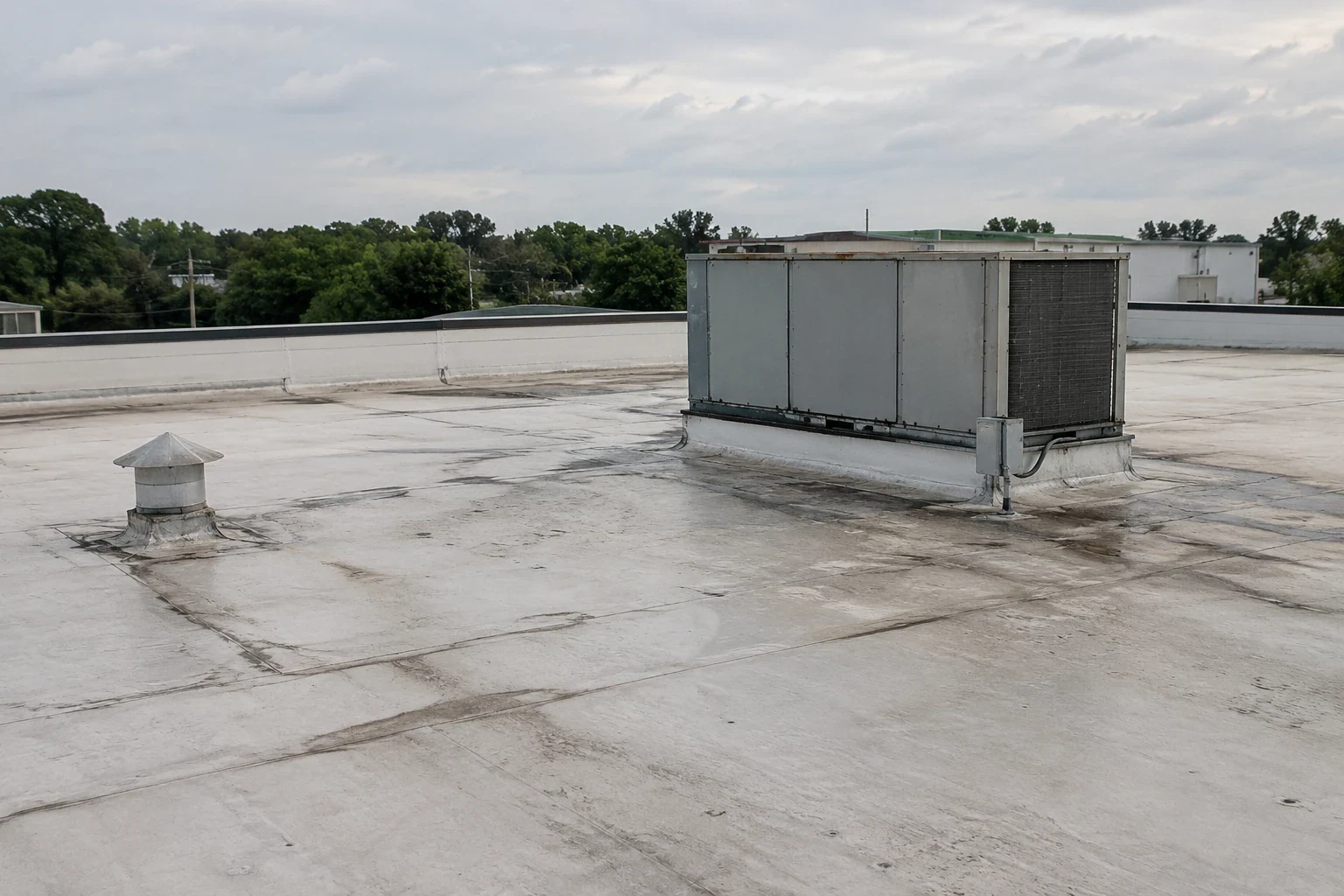
Moisture inside a cold storage building does not always mean the roof is leaking. Water can come in from outside through a failed flashing or seam, but it can also form inside when warm, humid air gets into the cold room through a gap in the vapor barrier or wall panels and condenses on cold surfaces. In Chesapeake's humid summers, condensation problems are common, and they look a lot like roof leaks. Ice on the ceiling, dripping at panel joints or frost around a penetration can come from either source, and the fixes are completely different.
We start by figuring out which one you have. We inspect the roof seams, curbs and penetrations above the problem area and compare them with when and where the moisture shows up. If it appears in dry weather, or changes when equipment cycles, that points to air leakage or condensation rather than rain. When a roof leak is active, we can make a temporary repair right away to protect product. We take emergency roofing calls nights, weekends and holidays. The facility arranges access and protection for stored goods, and refrigeration and electrical work stay with those contractors.
Roof leak or air leak
A roof over refrigerated space has more layers than a typical roof, and they have to work together. The membrane keeps rain out, the insulation keeps the cold in, and a vapor retarder keeps warm, humid air from moving into the cold assembly. Our roof insulation and cover board work covers replacing insulation that has been soaked or iced, but we also check whether the vapor control layer has gaps. A new membrane will not fix a vapor barrier that has been cut or never sealed at the walls.
Pipes, refrigeration lines and equipment supports often pass through the roof, and each one breaks the insulation and vapor retarder. Our rooftop curb and equipment support work seals those penetrations on the roof side with proper flashing. Moving or adjusting refrigeration lines is the refrigeration contractor's job, and we coordinate the sequence so they can do their part before we flash around it.
When we find a gap that lets air into the cold room but no rain, we report it separately so the right contractor can seal it.
Wet insulation under a cold roof
Once water or condensation gets into the roof insulation over a cold room, it can freeze, expand and break down the insulation board. Wet or iced insulation does not insulate well, so the refrigeration system works harder and energy costs climb. An infrared moisture survey can help locate wet areas, but thermal scans over refrigerated space are trickier to read than on an ordinary roof. Cold rooms create temperature patterns of their own, so we always confirm with core samples before deciding how much to remove.
Once the wet area is known, we cut out the damaged insulation, replace it and bring the roof back over dry, solid material. If the deck is damaged, we report it with photos and get approval before going further. Any opening into the roof is planned with the facility so product below can be protected or moved. We compare a focused repair with a larger replacement when the wet area is extensive, and lay out the cost and disruption of each.
Drains over refrigerated space
Drains and scuppers on a cold storage roof face an extra challenge: in winter, water near a drain over a cold room can freeze and back up. A slow drain or a cracked drain body lets water pond and work its way into the roof. Our roof drain and scupper work checks both whether the drain flows freely and whether the roof around it is sealed. If the problem is inside the drain pipe, that goes to a plumber.
When the roof is being repaired in sections, we plan the phases so water from the rest of the roof still drains away from the open area. The cold room layout below may not line up with the roof drainage, so we check which rooms sit under each phase and agree with the facility on protection for product and equipment before each area is opened. Every section is sealed watertight before the crew leaves. Temporary repairs are kept separate from permanent ones on the roof plan, so nothing gets forgotten.
Cold storage near Greenbrier
Greenbrier North Commerce Park and the surrounding business district include a range of commercial and industrial buildings, some of which have refrigerated space. For cold storage roofing around Greenbrier North Commerce Park, we inspect the specific building named in the request and base the repair on what we find there. The facility contact tells us which rooms are refrigerated, what equipment is on the roof and when we can safely get access.
Every refrigerated building is different. Room temperatures, insulation thickness, panel systems and roof assemblies vary, and a repair that worked on one building may not suit another. We measure and inspect the actual roof, check the insulation and penetrations, and write the proposal for that building alone.
Before we begin, the refrigeration operator needs to be part of the plan. We identify any equipment connections, temperature-sensitive rooms and approvals needed to change operations. The plan states which rooms get protection and how each opened area will be closed up at the end of the day. Roofing findings are kept separate from refrigeration performance questions. At closeout, you receive a record of the repaired details and any equipment-side items that remain for the facility team.
Related buildings and project closeout
Standard warehouses do not have the vapor and temperature issues of a cold room, so their roofs can be repaired differently. Our warehouse roofing page covers those buildings. Grocery stores often combine both, with refrigerated cases and freezers in one part of the building and general sales floor in another. Our grocery store roofing page explains how we treat those areas differently. If something new turns up during the work, we review it and update the plan before going further.
At the end of the job, we give you photos of the repairs, a roof plan showing where work was done and a list of the materials used. Air leaks, vapor barrier issues or refrigeration problems we noticed are listed separately so the right contractor can follow up. If new penetrations are added later, the roof around them needs the same care, and our records make it easier to check whether a future leak is new or related to earlier work.
Commercial Roofing Questions
How can you tell a roof leak from condensation?
We compare when and where moisture appears with the condition of the roof above. Moisture in dry weather or that changes with equipment cycles usually points to condensation or air leakage, not rain.
Can an infrared scan find wet insulation over a cold room?
It can help, but cold rooms create their own temperature patterns. We always confirm thermal findings with core samples before deciding what to remove.
Who fixes gaps in the vapor barrier?
It depends where the gap is. We seal roof-side penetrations and flashings; wall panel and interior vapor barrier gaps usually go to the enclosure or panel contractor.
Why plan roof phases around the cold rooms?
The rooms below may not line up with the roof drainage. We check which rooms sit under each phase so product can be protected before the roof is opened.
What records do we get after the work?
Photos, a roof plan of the repairs, a materials list, and a separate list of any air leaks or equipment issues for other contractors to follow up on.
Find out whether it is a roof leak or condensation
Tell us which rooms have moisture, when it appears and send any drawings of the roof or walls. We will inspect the roof and send photos with a plain explanation of what we found.