
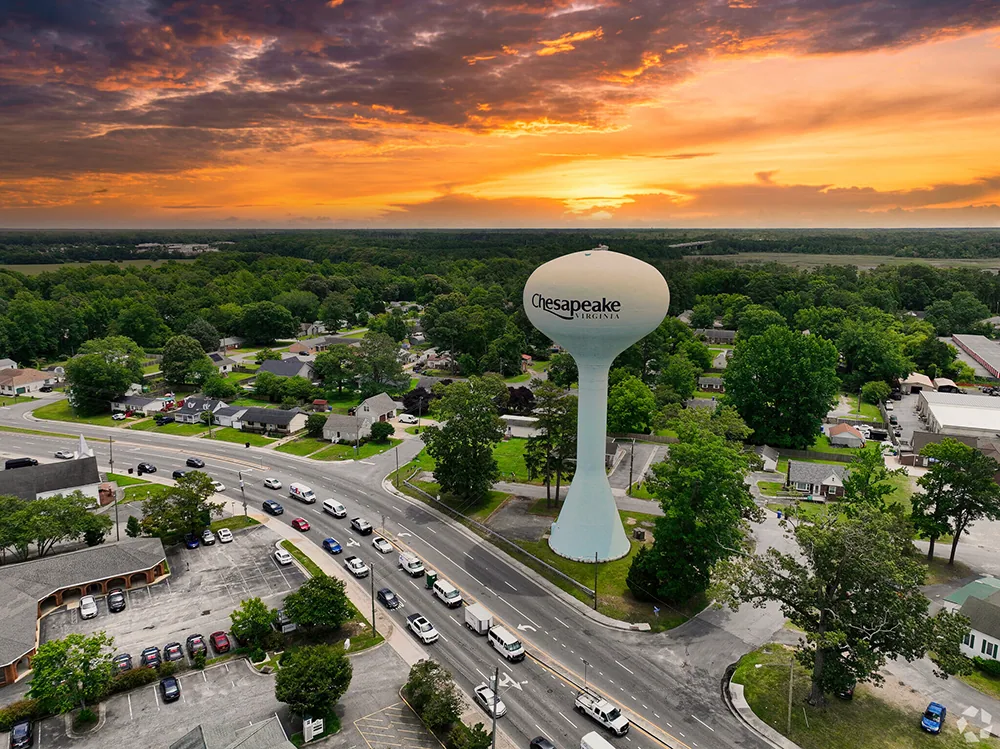
Repeated seam openings above Indian River service space admit water. Another exterior cover cannot restore damaged supporting layers by hiding them. We inspect and renew commercial roofing in Chesapeake, VA. Membrane and metal findings establish which construction can remain useful. Recovery is assessed against retained moisture, support and connection readiness. Local correction remains possible where the actual assembly supports repair. Suitable protection limits exposure while the wider permanent decision is prepared.
Indian River Road, also designated SR 407, runs from Norfolk into Chesapeake and crosses a Norfolk Southern rail line. That corridor gives the district a recognizable route, but it does not identify a particular roof or property. The operator supplies access and room restrictions. We inspect the assigned assembly, compare visible drainage and seams with the reported water path, and explain what remains uncertain before choosing permanent reconstruction.
Repeated seam: Establish the defect before selecting wider material
An opening beside an old patch may have a changed cause. Service damage or another failed joint can admit water nearby. We inspect the present interface and useful retained material around it. Maintenance timing can direct that investigation without deciding the cause alone. Water may travel underneath before reaching the affected interior space. Permanent repair needs a compatible joining boundary beyond the failed connection. The retained base must be adequate for the construction proposed above it.
Our investigation of a returning Indian River seam concern follows current damage. Work in Greenbrier receives its own symptom and assembly findings. Previous compounds can obscure preparation at the useful joining perimeter. We identify additional examination where concealed support remains uncertain beneath them. Equipment discharge or piping may require another responsible trade's assessment. The owner receives that task beside confirmed roofing damage and limits. Wider material selection then follows the physical correction actually established.
Retained assembly: Assess whether recovery has useful support
A wider cover needs a suitable roof assembly beneath it. Existing moisture, inadequate attachment or deteriorated backing can change that option. We examine accessible support and describe concealed checks still required. Useful retained construction may support an appropriate project-specific recovery method. Unsuitable material needs reconstruction rather than another surface concealing its condition. The proposed detail connections must also fit the actual assembly. We explain those requirements before permanent procurement commits the wider material.
Our assessment of retained construction for an Indian River recovery distinguishes options. A property in Great Bridge uses independent moisture and supporting checks. Localized defects may permit repair on adequately prepared useful material. More distributed deterioration can favor wider removal and supporting replacement. The owner receives the physical reason beside each viable task. That gives the construction comparison supporting depth and permanent details. An apparent surface difference alone cannot establish the adequate option underneath.
Concealed wet layer: Confirm the material remaining below
Water beneath recurring seams can leave damp insulation beyond visible gaps. We examine suspect layers before establishing permanent retained limits or removal. Suitable surveys may guide confirmation on an appropriate roof assembly. Their indications are interpreted against construction and equipment conditions observed. Further checks can be necessary to establish uncertain depth underneath. Confirmed damage is explained separately from supporting condition still requiring examination. New permanent construction needs an adequate base for its chosen connection.
Our moisture assessment before a retained-roof decision helps locate useful checks. Additional deterioration found during opening is documented before removal expands. We describe the supporting reconstruction and useful protection remaining meanwhile. The owner can review the added task against its physical reason. Suitable material remains where the proposed construction method permits it. Another surface cannot dry or reconstruct affected layers by concealing them. The permanent recommendation includes that supporting requirement with useful detail preparation.
Confirmed depth influences the materials required before the wider stage begins. We identify backing and accessory dependencies beside those layer replacements. An altered perimeter may require further measurements for permanent component fitting. The owner receives that preparation before committing an occupied-room work date.
Wider opening: Select a stage that can close securely
Removing supporting layers adds water and debris exposure beneath construction. We review the protected room and handling route with its operator. Relevant interior personnel assess ceiling or electrical concerns below the task. Temporary closure needs suitability for the exposed assembly and retained transition. We establish a secure stopping point before removal becomes broader. Material and component participation must be ready for useful permanent closure. The stage follows those requirements as well as exterior construction dimensions.
Through wider reconstruction coordinated with Indian River service interiors, access accompanies exposure. For an assigned institutional retained-roof task, the actual contact supplies permissions. Component preparation can proceed while construction stays closed where practical. Joining-area moisture and temperature are examined before permanent installation proceeds. The chosen system's requirements establish whether that installation can continue. A necessary hold includes suitable weather protection and its resumption condition. Nearby equipment service follows actual readiness around the affected area.
Renewed limits: Preserve retained and reconstructed boundaries
The finished account distinguishes the new area from construction retained. Supporting replacements and rebuilt weather details are located beside those boundaries. Practical service guidance helps equipment personnel avoid damaging the useful transitions. The maintenance record can retain observed outlet and traffic concerns. The relevant personnel retain responsibility for separate component or interior work. They receive roofing status when evaluating affected-room moisture and safety readiness. Each restoration responsibility stays visible alongside the permanent construction actually completed.
Our retained-roof findings for an Indian River owner recommendation provide understandable locations. Later water entry receives fresh inspection beside those finished work limits. New handling damage or component discharge may require another correction. We explain the current weather route and supporting preparation needed. Roof concerns can be reported on weekends, during holidays or overnight. Response timing is confirmed for the address and available property access. Suitable temporary closure can precede additional investigation or permanent material readiness. Wider work follows present defects and the roof's actual repairability.
The recorded boundaries also help identify a later component service alteration. We assess its current impact before automatically repeating an older patch. Permanent joining material follows the useful retained assembly now found. The next protected work stage carries those construction requirements for the owner.
The road and rail crossing create a useful reminder to plan crew arrival and delivery routes around the property's actual gate and traffic pattern. For distribution buildings in this area, identify whether the reported leak sits above a dock, conveyor, office or storage zone; protection below changes with the use. Trace roof water to the nearest drain or edge instead of assuming the symptom is directly beneath the entry point. The final work record should state any loading interruption, safe access route and temporary measure that remains after the permanent repair.
Commercial Roofing Questions
Can another cover settle recurring Indian River seam damage?
Examine the current weather opening and supporting construction. Recovery requires useful retained layers and appropriate permanent detail connections.
Which retained condition can change the wider roofing option?
Confirm moisture, support and attachment suitability. Damaged material receives reconstruction before a new surface is considered useful.
Do moisture indications establish every layer that can remain?
Interpret suitable findings and confirm uncertain depth. We distinguish established damage from supporting checks still needed.
How is wider removal kept useful above service rooms?
Set a secure closure and protected route with the operator. Materials and component readiness determine the stage that can finish.
What should the record distinguish after roof renewal?
Locate retained boundaries beside rebuilt details and supporting replacements. Separate component and interior responsibilities stay assigned with roofing status.
Recurring seam: Assess the useful retained base
Send the Indian River address, recurring symptom and earlier treatment history. We will trace the weather failure and provide photos with a short explanation of useful permanent roof renewal.