
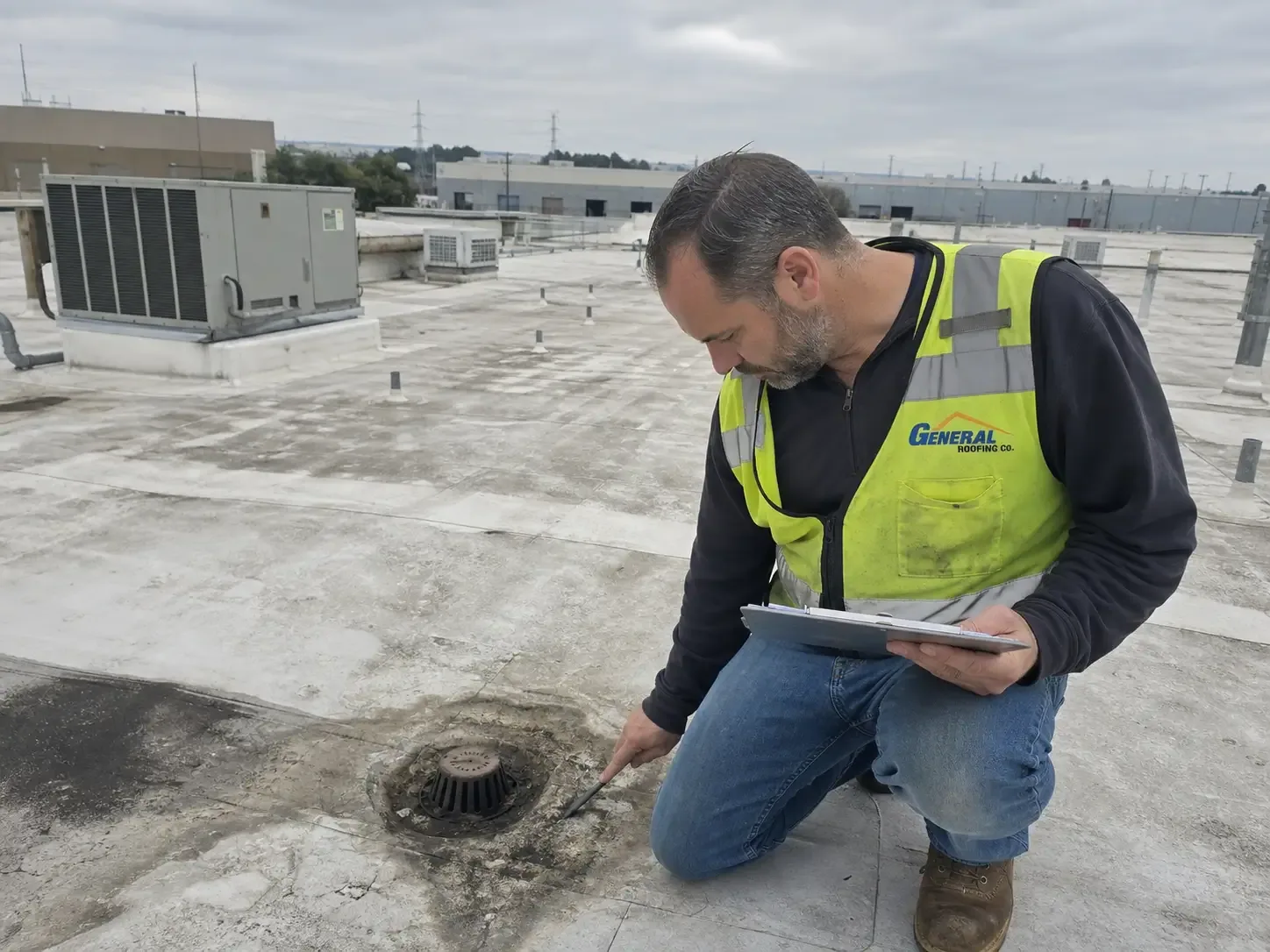
A new patch on a warehouse roof can sit right on top of soaked insulation. The patch closes the hole, but the wet board underneath stays wet. Roof insulation and cover board work in Chesapeake deals with that hidden damage.
We check the insulation, confirm what's wet and replace only that. You'll see the layers we remove and the new layers going in. On a warehouse roof, the repair should connect where water got in with how far the insulation is damaged. The size of the patch doesn't tell you how much insulation needs replacing; the repair follows what we confirm underneath.
At hospitals and medical buildings, we plan protection and coordinate with staff before removing any insulation. We identify the affected room, inspect the roof and explain what we need to confirm about the insulation. A detail that leaks again and again can soak insulation well past the visible gap. You'll know how far we plan to investigate before removal quantities are set. Roof records help us understand the existing roof, and each new layer and flashing is installed only when we can close up that area.
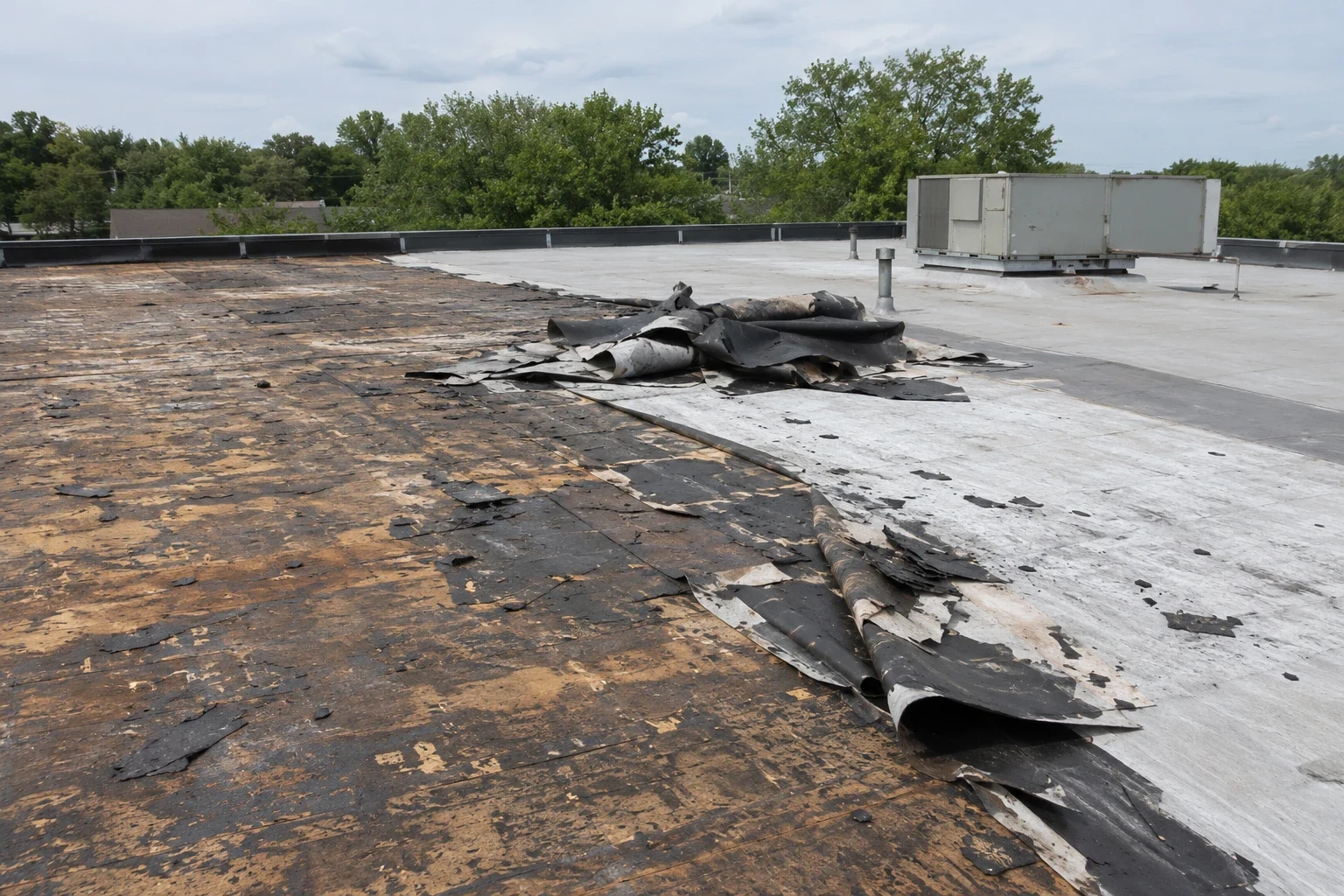
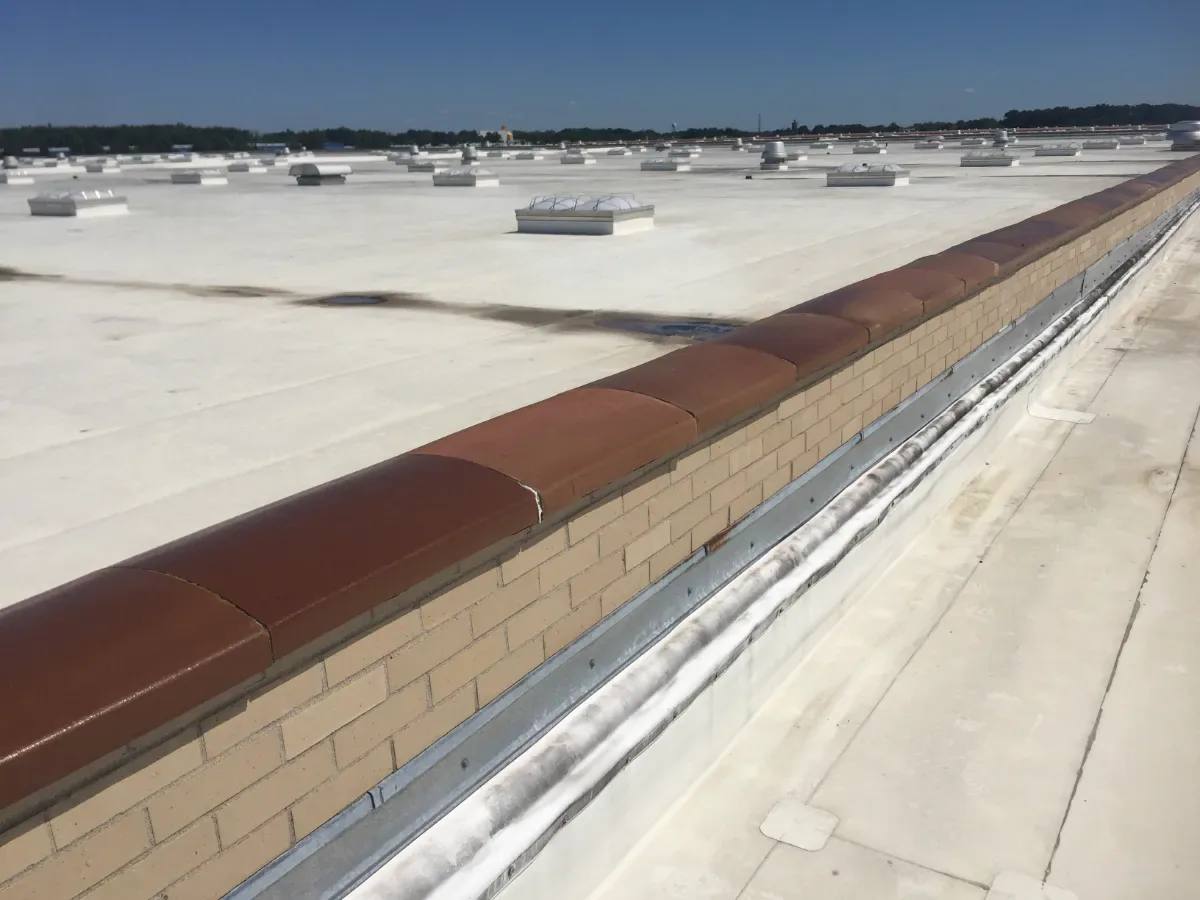
The patch on top vs. the damage underneath
A torn seam shows where water got in, but not every layer it reached. Water can spread under membrane that looks fine. We compare the roof records with what we see and confirm with cores or probes. Suspected wet areas are kept separate from confirmed ones, and you see that difference before approving final quantities.
Otherwise the patch outline ends up deciding the insulation repair, which is usually too small. Confirmed repairs include disposal and new insulation that matches the roof. The repair follows what's under the membrane, not what it looks like on top.
An infrared moisture survey can help us find wet insulation when weather conditions are right. The scan alone doesn't tell us exactly how wet the board is or how much to remove. We confirm with cores before deciding. Likely wet areas stay separate from confirmed ones. The membrane type doesn't tell you every layer underneath or how it's attached, so more checks may be needed before deciding what stays. Our report lists any open questions, and replacement quantities follow what we find on your roof.
Insulation, cover board and how they fit together
Insulation and cover board do different jobs. Insulation provides the R-value. Cover board sits on top and gives the membrane a hard, even surface that resists foot traffic and hail. We identify the actual roof build-up rather than lump the layers together, and we name what comes off and what the new layers go on.
A board count alone doesn't tell you every fastener or adhesive needed. Prep is defined before new layers are ordered, and the new layers have to tie into the existing roof and its flashings. That makes the insulation repair easy to review as a complete job under the membrane.
A roof replacement scope should separate what comes off from what stays. We compare what we can see with the proposed roof and note anything that still needs checking. Insulation that stays needs to be confirmed sound before tear-off quantities are final. Compare the insulation repair alongside the new membrane price. A new membrane won't fix wet insulation under it, so a lump-sum field price shouldn't hide the work underneath. The roof system follows what the insulation needs, not just the membrane you prefer.
Matching the roof system
A TPO roof needs the right insulation, cover board, fasteners or adhesive, and matching flashing parts. We compare the proposed roof with the surface it's going on. The membrane name doesn't tell you every board or accessory needed underneath, and approval questions are settled before ordering.
Insulation repair belongs with the flashing work around it. Two roofs of the same size don't always need the same insulation or prep. The full roof follows the product and project requirements, which gives the membrane a solid base.
An EPDM roof has its own materials and installation requirements. We describe any changes to insulation or attachment for each option. Roofs that look alike can't always use the same parts. You can compare full roofs with prep included in each. If existing insulation is staying, we confirm it's in good shape. The roof has to be dry and warm enough before we fasten or adhere new materials, and one delivery of board or membrane doesn't mean every part is ready. Each part matches the roof system approved for installation.
Roof height, flashings and transitions
Thicker new insulation changes the height of the roof at curbs, walls and drains. We measure those heights against the new roof build-up and plan any rebuilds before ordering flashing parts. A roof with the same footprint doesn't always have the same flashing heights after the work.
Penetration and skylight flashing around the rebuilt area needs matching prep and enough flashing height. If a rooftop unit has to be lifted or moved by another trade, that's planned before we open the roof. The insulation and flashing work finish together.
Every commercial building in Greenbrier needs its own roof, access and insulation check. For insulation and cover board work in Greenbrier, we confirm the roof build-up and the operator before planning material moves. If hidden damage extends further, we agree on how it will be measured and approved, and the roof is sealed every night while changes are reviewed. You can compare extra work with what we actually found.
We map height changes at curbs and drains. Fasteners must suit the deck and the roof system. Boards that stay are tracked separately from boards approved for replacement, and the repair has a measured boundary and a clean tie-in to the existing roof. Before we start, we identify the space below, the material route and any equipment blocking access. We photograph the exposed roof so you can compare what came out with what's going in. If nearby insulation looks wet, we stop and confirm before the job grows. The final record says what we replaced and what's still unknown under the membrane. Buildings in Great Bridge get the same building-by-building review.
What the insulation repair record should show
The closeout should list the insulation we removed and the new layers installed. We keep photos of the finished tie-ins and flashings, along with any inspections agreed for the roof system. A membrane completion date doesn't close out insulation or equipment work that's still open.
You get a clear repair area and a record of what was installed. Any insulation questions outside that area are noted. Interior repairs follow once the new insulation and flashing are done, and the record ties the original leak to the insulation repair we completed.
Check maintenance records and warranty requirements for the installed roof. R-values and other ratings come from the actual product data and project requirements, and we review those before the job is priced. If the roof is changed later, the new work should start from the current layers. You can then compare the change with what's already installed. Confirmed repairs stay separate from anything that still needs checking elsewhere, and a short summary with photos keeps that clear for the next inspection.
Commercial Roofing Questions
What should an insulation repair quote list?
The layers coming off, the new layers going in, the repair area, disposal and how the new insulation ties into the existing roof.
Does the patch size show how much insulation is damaged?
No. Water spreads under the membrane, so we confirm the wet area with cores or probes before setting quantities.
Does the membrane type tell you what insulation to use?
Not by itself. We follow the full roof system and product requirements, including fasteners or adhesive.
What happens when the new insulation is thicker?
Curb, wall and drain heights change. We measure them and plan any flashing rebuilds before ordering parts.
What should the repair record include?
The layers replaced, photos of the tie-ins and flashings, and any open questions or equipment work outside the repair area.
Find the wet insulation under the leak
Send us your roof records and where the leak was found. We'll check how far the insulation damage goes and explain the repair with photos.