
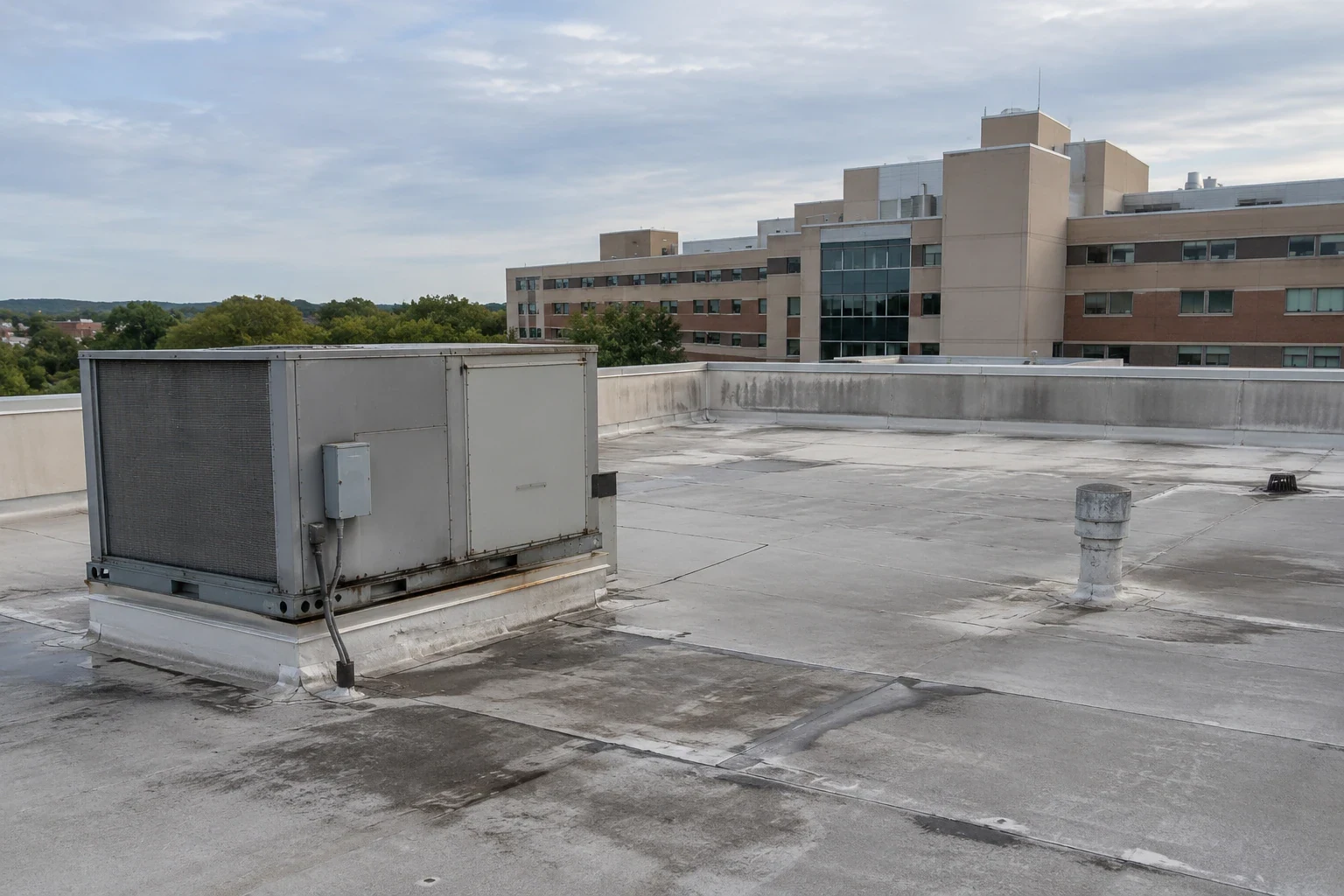
VA clinics and medical buildings in Chesapeake, VA carry a lot of rooftop equipment: air handlers, exhaust fans, medical gas vents and the curbs that hold them. The flashing around those curbs is where most leaks start. The metal cap may look fine while the membrane underneath has pulled away, or the wood nailer inside the curb has rotted, leaving nothing solid for the flashing to hold onto. Another coat of sealant on top doesn't fix that. The flashing has to be stripped back to solid material and rebuilt.
If water is coming into a clinic, let us know which rooms are affected and which units sit above them. Send roof drawings if you have them. Water can travel along the deck and show up a room or two away from the curb that's actually leaking, so we check every curb, seam and drain in that area. We can put temporary protection in place right away, and our crews respond nights, weekends and holidays. Your facility staff schedule our access and handle clinical requirements. If water has reached electrical equipment, have an electrician check it before it's used.
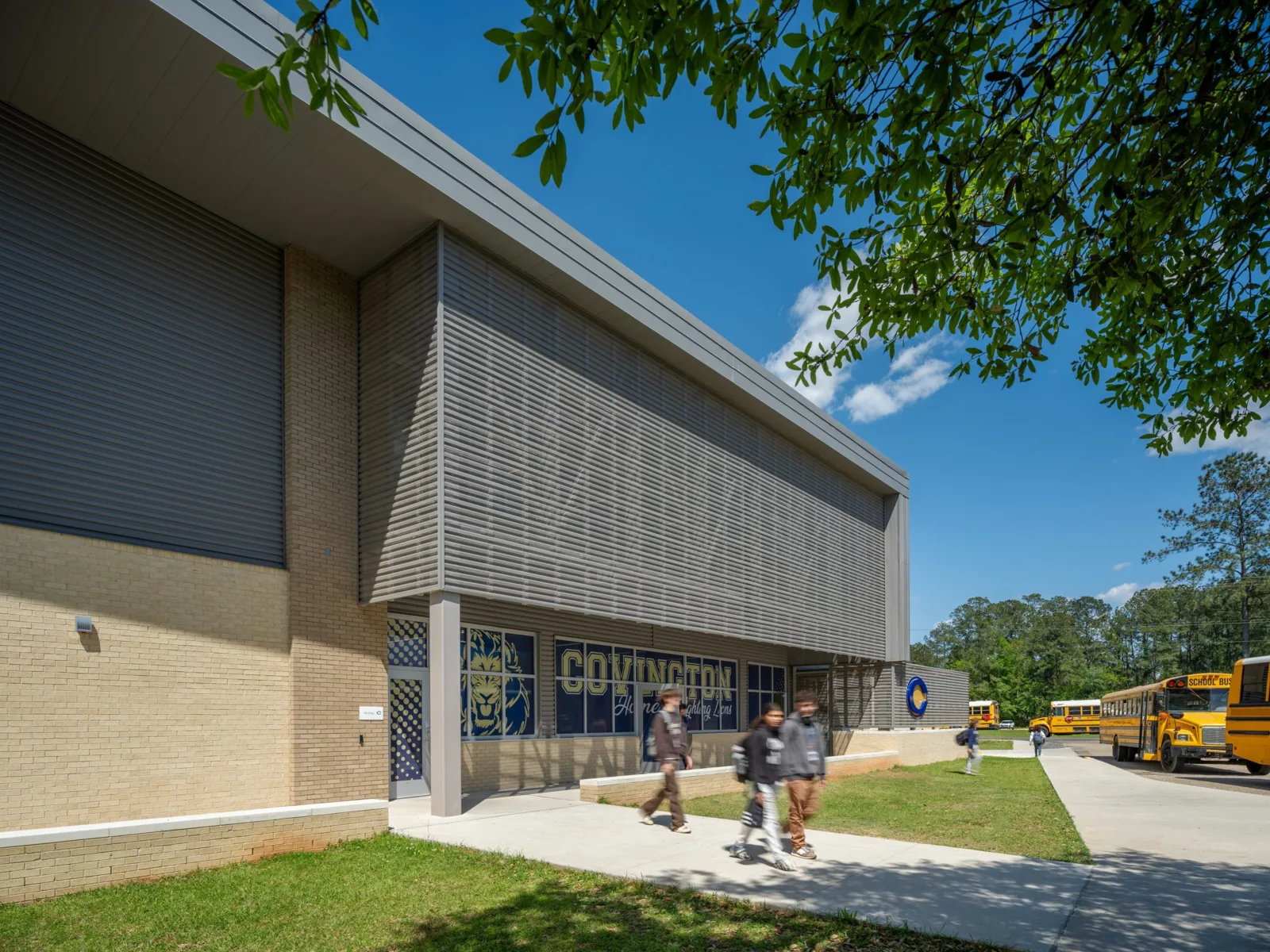
Equipment curbs and flashing
Many curb leaks can't be fixed properly without moving the equipment. A unit sitting low on a short curb or crowded against another one can block access to the flashing underneath. On equipment curb repairs, we work with your mechanical contractor, who disconnects and lifts the unit while we rebuild the curb flashing and raise the curb if needed. They are responsible for the unit; we're responsible for keeping water out around it. If the curb or its supports look structurally questionable, we'll recommend an engineer review them.
Pipe penetrations, vents and skylights need the same attention. During penetration and skylight flashing repairs, we often find the insulation around the base is wet well beyond the visible crack. We cut a small test opening to see how far it goes, patch it the same day and protect the room below while it's open. If a wall or a piece of equipment has to be dealt with first, the estimate spells out that order so the new flashing isn't installed and then torn out again.
Working over clinical spaces
An exam room, a pharmacy and an administrative office each need different protection when work happens overhead. For reroofing over occupied clinical spaces, your clinical and facility staff decide which rooms can be closed, when, and what infection-control or dust measures apply. We give them our schedule, the crane location, how debris comes off the roof and how air intakes will be protected from fumes and dust. Those details often decide the work schedule more than the roof itself.
Sometimes we open the roof next to a curb and find the insulation or deck damaged farther than anyone expected. That can extend the work over rooms that weren't part of the original plan. When it happens, we stop, close the roof watertight, and show facility staff exactly what we found so they can arrange protection for the new area. If the deck needs structural repair, an engineer may need to sign off before we continue. You get a revised scope and price before anything changes, not after.
Finding wet insulation before choosing a fix
A roof can look sound from above while the insulation underneath has been soaking up water around the equipment for years. An infrared moisture survey scans the roof after sunset and maps areas that hold heat differently, which usually means wet insulation. We then confirm suspect areas with small core cuts, which we patch the same day. Drawings tell us what was originally installed, but only testing tells us what condition it's in now.
That information decides the repair. If the wet areas are small and isolated, we replace just those sections. If they're spread across the roof, replacement is the better investment. Coatings can extend the life of a roof that is dry and well attached, but they won't fix loose curb flashing or wet insulation; those have to be repaired first. A thicker new roof system can also raise the roof surface enough to shorten curbs and flashing heights at drains, so equipment changes should be planned before we install. Each option we price includes the room protection and schedule it requires.
VA clinics around North Battlefield and Oak Grove
The North Battlefield VA Clinic on Knells Ridge Boulevard is one of the VA outpatient sites in Chesapeake. For any VA or other federal medical building, we start by identifying the building, the rooms that are leaking and the rooftop equipment above them. Your facility contact provides access, security requirements and any drawings. For buildings in the Oak Grove area, we inspect the curbs and flashing first, then recommend a repair based on what we find.
If you manage more than one medical building, we can schedule inspections back to back, but each gets its own findings and its own estimate. One building's roof condition and clinical schedule don't apply to another. Where we can't see under the membrane without opening it, our report says so and explains how a test cut could change the scope.
Before roof work starts, we confirm the building, rooms, equipment and work windows with the clinical staff responsible for that space. We describe how each opening will be protected and closed at the end of the day. When the job is done, the facility receives photos of the repaired curbs and flashing, notes on which rooms were protected, and a list of anything that should be checked before future work.
Other medical buildings
Medical office buildings deal with the same kinds of curb and equipment issues, often on a smaller scale. The roof assemblies, though, can be very different from one building to the next, even when the use is similar. We inspect the actual roof each time and don't assume the same fix applies. Your HVAC and equipment contractors stay responsible for servicing and running their units, and our estimate shows any equipment work that has to happen before or during the roof job.
Hospital roofing brings around-the-clock operations, more critical equipment and stricter infection control. VA buildings follow their own security and access procedures, and we work within them. We keep temporary leak repairs clearly separate from permanent ones in our records, and we list any remaining items, such as a structural question, an interior repair or an equipment fix, with the trade that should handle it. Maintenance staff get photos of every repaired curb and drain, so if a leak shows up in a clinic room later, they know exactly where to check first.
Commercial Roofing Questions
Will rooftop equipment need to be serviced before the curb is repaired?
Often, yes. If a unit blocks access to the curb flashing, your mechanical contractor disconnects and lifts it while we rebuild the flashing. They handle the unit; we handle keeping the roof watertight around it.
Who decides how treatment rooms are protected during roof work?
Your clinical and facility staff set those rules. We give them our schedule, debris plan and how air intakes will be protected, so they can close or protect rooms as needed.
Can a roof coating be applied over wet insulation near equipment?
No. Wet insulation has to be removed and replaced first, and loose curb flashing must be rebuilt. Coatings only work on roofs that are dry and well attached.
What happens if the damage turns out to be bigger once the roof is opened?
We stop, close the roof watertight and show your facility staff what we found. They arrange protection for any newly affected rooms, and you approve the revised scope and price before we continue.
How do we keep track of roof repairs versus equipment repairs?
Our closeout report covers the roof work with photos and materials used. Anything left for other trades, such as equipment service, interior repairs or structural review, is listed separately so it doesn't get lost.
Trace the VA roof equipment connection
Tell us which building and rooms are affected and what equipment sits above them. We'll inspect the curbs and flashing, then send photos and a clear repair plan.