
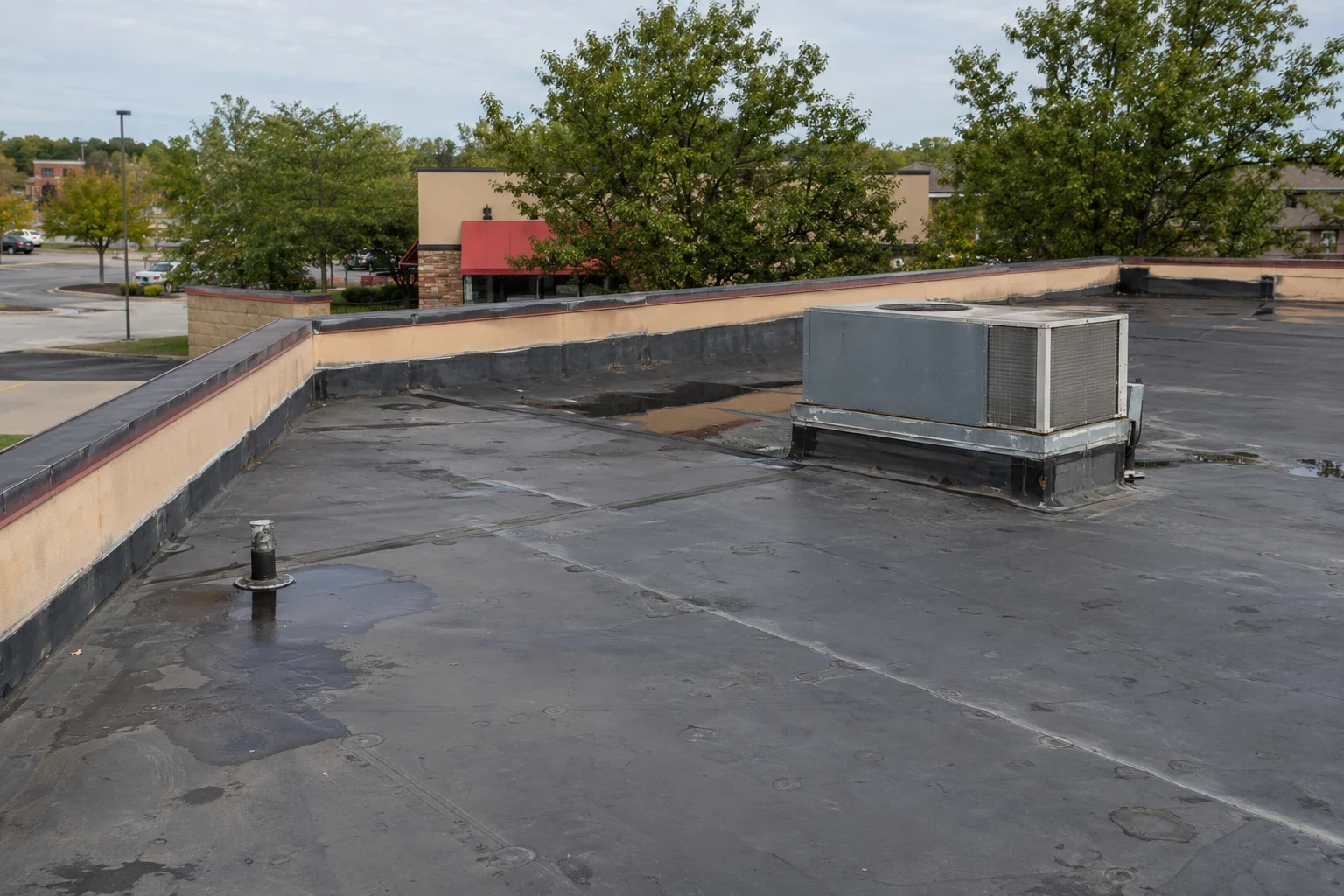
Restaurant roofs have a problem most other buildings don't: grease. Kitchen exhaust fans push hot, greasy air onto the roof every day, and over time that grease builds up around the fan curb, runs across the membrane and collects at drains. Many common roof membranes soften, swell or crack when grease sits on them. In Chesapeake, the restaurant leaks we see most often start right next to the exhaust fan, where the membrane has broken down, or at a drain that is clogged with grease and debris.
A leak in a restaurant also means more than a wet ceiling. Water over a kitchen, a prep area or a dining room can force a health inspection, close part of the restaurant or ruin food and equipment. We inspect the exhaust curb, the membrane around it, the drains and any other rooftop equipment, and test the insulation for moisture. You get photos and a written explanation of the cause and the repair, along with a schedule that avoids lunch and dinner service. If the leak is active, we can make a temporary repair right away so the kitchen can keep operating while the permanent fix is planned.
Grease-damaged membrane
New roofing material will not bond to a surface coated in grease, and patching over grease-damaged membrane usually fails within weeks. Before any repair, the contaminated area has to be cleaned thoroughly, and membrane that has softened or cracked has to be cut out and replaced. The new material around the exhaust fan should be a type that resists grease and oils, which may differ from the membrane on the rest of the roof. Some restaurants end up with a grease-resistant section around the kitchen and a standard membrane everywhere else, which is a sensible way to control cost.
A proper commercial roof repair around a kitchen exhaust starts with cleaning and removing damaged membrane, then checking the insulation underneath, since grease and water often soak it. Wet or contaminated insulation is replaced. The new membrane is tied into sound, clean roof well beyond the damaged area. We also recommend a grease containment system at the fan, which catches grease before it reaches the roof and needs regular emptying. Without one, the same damage comes back no matter how good the repair is.
The exhaust fan curb
Kitchen exhaust fans sit on curbs, and the flashing around those curbs takes a beating from heat, vibration and grease. Flashing that is too low, cracked at the corners or pulled away from the curb lets water in. Hood and duct cleaning crews also work around the fan regularly and can damage the flashing without realizing it. We check the curb height, the flashing on all four sides, the counterflashing and the condition of the curb itself. Hot exhaust can also dry out and crack nearby sealants, so we look at pipe boots and vents near the fan as well.
Our rooftop curb and equipment support work covers rebuilding exhaust curb flashings with grease-resistant materials and raising short curbs. Where the flashing has failed at other walls or details, a flashing failure repair rebuilds those as well. If the fan needs to be lifted to reach the curb, that is coordinated with your hood cleaning or HVAC contractor, and the fan is reconnected before the next service. The finished detail leaves room for cleaning crews to work without stepping on the flashing.
Keeping drains clear
Grease and food debris carried onto the roof by exhaust end up in the drains and gutters, where they combine with leaves and dirt and form clogs. A clogged drain lets water pond on the roof, and ponding water over a grease-softened membrane is a fast route into the building. Before we divide the work into phases, we look at how water leaves the roof and make sure it keeps draining while each section is open.
Our roof drain and scupper work covers clearing and rebuilding drains, replacing strainers and fixing the membrane around the outlet. Drains near the exhaust fan may need more frequent cleaning than the rest of the roof, and we recommend a schedule. If the drain line is clogged with grease below the roof, that goes to a plumber. Gutters at the back of the building, near the kitchen, are checked for the same buildup.
Restaurants around Greenbrier
Greenbrier and the rest of Chesapeake have restaurants in strip centers, freestanding buildings and mixed-use developments. Each has its own roof, kitchen layout and exhaust setup, and in a shopping center, the restaurant often shares a roof with other tenants. For restaurant roofing around Greenbrier, we inspect the specific building and base the repair on what we find there. If you are a tenant, we work with both you and the landlord so it is clear who is responsible for which repairs, since lease terms often split roof and equipment duties.
Restaurants rarely close for roof work, so timing matters. Our roofing for occupied buildings approach schedules work for early mornings or between services, keeps the open area small and seals each section before the crew leaves. Odor-producing adhesives are kept away from fresh-air intakes, and nothing is opened over the kitchen or dining room during service. Entrances and parking stay clear for customers and deliveries. The manager gets a short update each day so staff can plan prep and deliveries around the crew.
After the repair and related buildings
Grocery stores with delis and bakeries share the grease problem, along with refrigeration equipment and merchandise below. Our grocery store roofing page covers those roofs. Restaurants in shopping centers often share walls and roofs with neighboring tenants, and our shopping center roofing page explains how we coordinate work across multiple businesses. Grease from one tenant's exhaust can damage the roof over the neighbor's space, which is worth sorting out early.
At closeout, the restaurant receives photos of the repairs, a roof plan of the work, a list of materials and notes on anything other trades still need to handle, such as hood cleaning or HVAC. We keep the roofing repair separate from equipment items so it is clear what was completed and what still needs attention. Regular inspections, especially around the exhaust fan, and cleaning grease containment and drains on a set schedule are the best ways to keep a restaurant roof from leaking.
Commercial Roofing Questions
Why does the roof leak next to our kitchen exhaust fan?
Grease from the exhaust softens and cracks many roof membranes, and the curb flashing takes heat and vibration. Both need to be repaired with grease-resistant materials.
Can you patch over the greasy area?
No. New material will not bond to grease. The area has to be cleaned and damaged membrane cut out before a lasting repair can be made.
What is a grease containment system?
It is a unit at the exhaust fan that catches grease before it reaches the roof. It needs regular emptying but greatly reduces membrane damage.
Can the restaurant stay open during roof work?
Yes. We work early or between services, keep open areas small, keep fumes away from air intakes and never open the roof over the kitchen during service.
What records do we receive?
Photos, a roof plan of the repairs, a materials list and notes on any hood cleaning, HVAC or plumbing items for other contractors.
Have the restaurant roof leak inspected
Tell us where water is showing up and what exhaust equipment is on the roof. We will inspect the area and send photos with a plain explanation of the repair.