
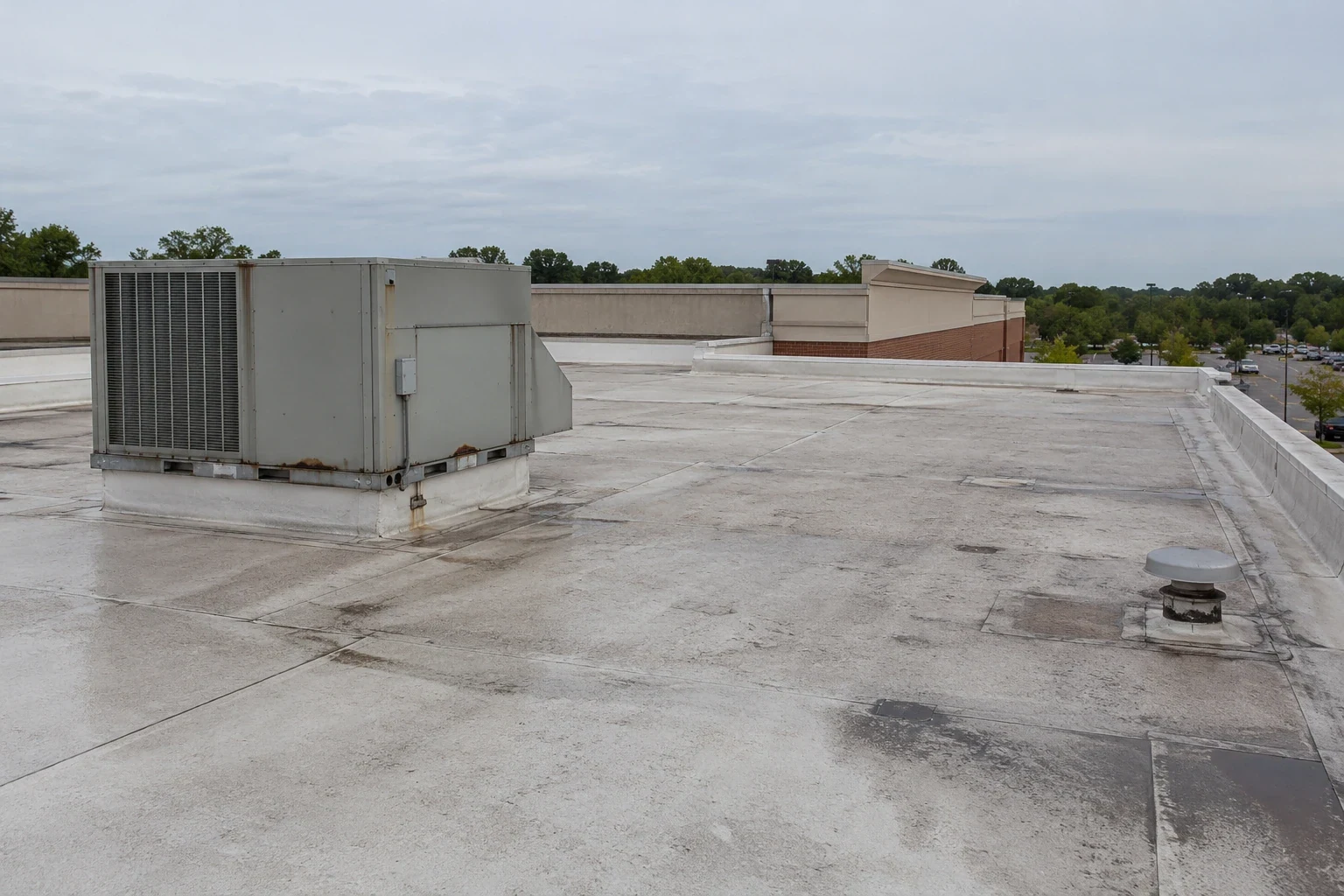
A leak in a grocery store is never just a maintenance problem. Water over produce, the deli or a frozen food aisle can mean thrown-out product, a closed section and a food-safety concern, and a puddle on the sales floor is a slip hazard for shoppers. Grocery roofs in Chesapeake also carry a lot of equipment: refrigeration condensers, HVAC units, exhaust fans for the bakery and deli, and plenty of pipe and conduit. Technicians walk the roof often to service that equipment, and dropped tools, screws and sharp metal scraps lead to punctures in the membrane.
We start by tracing the leak back to its source, which is not always directly above the drip. Water can run along the deck or a pipe before it falls. We check the membrane for punctures and cuts near the equipment, inspect curbs and penetrations, look at the drains and test the insulation for moisture. You get photos and a written explanation of what failed, how far the damage goes and what a lasting repair involves, along with a plan to keep the store open and the food safe during the work.

Punctures and cuts
A puncture from a dropped screwdriver or a sharp piece of sheet metal can be tiny on the surface but let in a surprising amount of water over time. The water soaks the insulation around it, and on a roof with lots of equipment there are often several small punctures in the same area. A patch over the visible hole may stop that one, while the wet insulation underneath keeps feeding a leak somewhere else.
A proper membrane puncture repair means cleaning the membrane around the hole, checking the insulation for moisture and replacing anything wet, then installing a patch that matches the roof material and extends well past the damage. On older membranes, the sheet near the hole may be too weathered to bond, and the patch has to extend further to reach sound material.
On grocery roofs, we often recommend walkway pads along the routes service technicians use most. They protect the membrane from foot traffic and dropped tools and cost far less than repeated puncture repairs.
Cold areas and general areas
A grocery store is several buildings in one. The refrigerated and frozen sections, walk-in coolers and freezers behave very differently from the dry grocery aisles and the front-end offices. Over a cold room, moisture can come from the roof, but it can also come from condensation when warm, humid air gets into the cold space. We check which is which before recommending a repair, because a new roof will not fix a condensation problem.
Our cold storage roofing page goes into more detail on roofs over refrigerated space. For the rest of the store, our roofing for occupied buildings approach keeps open areas small, schedules noisy or odor-producing work for early morning or after hours, and protects merchandise below each phase. Food areas get extra care so no debris or dust reaches open product. Where needed, sections such as produce or the deli are covered before the roof above is opened, and we check with the store manager before uncovering them.
Equipment curbs and drains
Refrigeration and HVAC units sit on curbs, and curbs are a common leak point. Vibration opens the flashing at the base, short curbs let water wash over the top in heavy rain, and refrigerant lines running through the roof are often sealed with mastic that cracks. Before we close up a curb or penetration, any equipment work needed has to be done by the refrigeration or HVAC contractor, so the flashing can be completed properly instead of worked around the equipment.
Our rooftop curb and equipment support work covers rebuilding curb flashings and replacing worn pipe supports. Drains matter just as much, and our drain and scupper repair service makes sure water leaves the roof instead of ponding around equipment. Condensate lines from rooftop units that dump onto the roof should be piped to a drain, since constant water wears out the membrane. We also check the drain bodies and strainers near equipment, because leaves, packaging and debris collect there quickly.
Grocery stores near Greenbrier
Greenbrier and the rest of Chesapeake have grocery stores in shopping centers, freestanding buildings and newer mixed-use developments. Their roofs vary by age, material and how much equipment has been added. We inspect the specific store and base the repair on what we find there rather than assuming it matches another location. Stores that have been remodeled may have newer equipment on an older roof, with penetrations added years after the original roofing.
The store or facilities contact tells us which departments are affected, when leaks appear and who services the refrigeration and HVAC equipment. We inspect the roof, check for punctures, curbs and drain problems, and test the insulation for moisture.
Our written proposal covers what caused the leak, how we will fix it, when the work will happen and how shoppers and merchandise stay protected. Equipment issues are listed separately for the refrigeration or HVAC contractor. If the store is part of a chain, we keep the findings for each location separate and easy to file, so the facilities team can compare stores and plan budgets. Active leaks can get a temporary repair right away to protect product while the permanent fix is scheduled.
After the repair
Big box retailers face many of the same issues: large sales floors, merchandise below and lots of rooftop equipment. Our big box retail roofing page covers those buildings. Night work and phased repairs are common on both. Grocery stores with in-house bakeries and delis also share concerns with restaurants, especially grease from kitchen exhaust, which damages some membranes. Our restaurant roofing page explains how we handle exhaust curbs and grease.
At closeout, the store receives photos of each repair, a roof plan showing the work, a list of materials and notes on any equipment items still to be handled. Those records help when equipment is replaced or new units are added later, since every new penetration needs proper flashing. Regular inspections in spring and fall and after major storms catch punctures and loose flashings before they turn into wet insulation and lost product. A short report after each visit helps store managers and the facilities team track the roof over time.
Commercial Roofing Questions
Why does our grocery roof get punctured so often?
Technicians walk the roof often to service equipment, and dropped tools and sharp metal scraps puncture the membrane. Walkway pads along service routes help a lot.
Is moisture over the freezer section always a roof leak?
No. It can be condensation from warm, humid air getting into the cold space. We check the roof first and tell you if condensation is the more likely cause.
Can the store stay open during roof work?
Yes. We keep open areas small, protect merchandise and food areas below, work early or after hours when needed and seal the roof every day.
Who handles the refrigeration equipment during repairs?
Your refrigeration or HVAC contractor. We coordinate with them so the flashing can be done properly once equipment work is finished.
What records do we receive?
Photos, a roof plan of the repairs, a materials list and a separate list of any equipment issues for other contractors.
Have the grocery store roof leak traced
Tell us which department is affected and when the water appears. We will inspect the roof above it and send photos with a plain explanation of the repair and any equipment questions.