
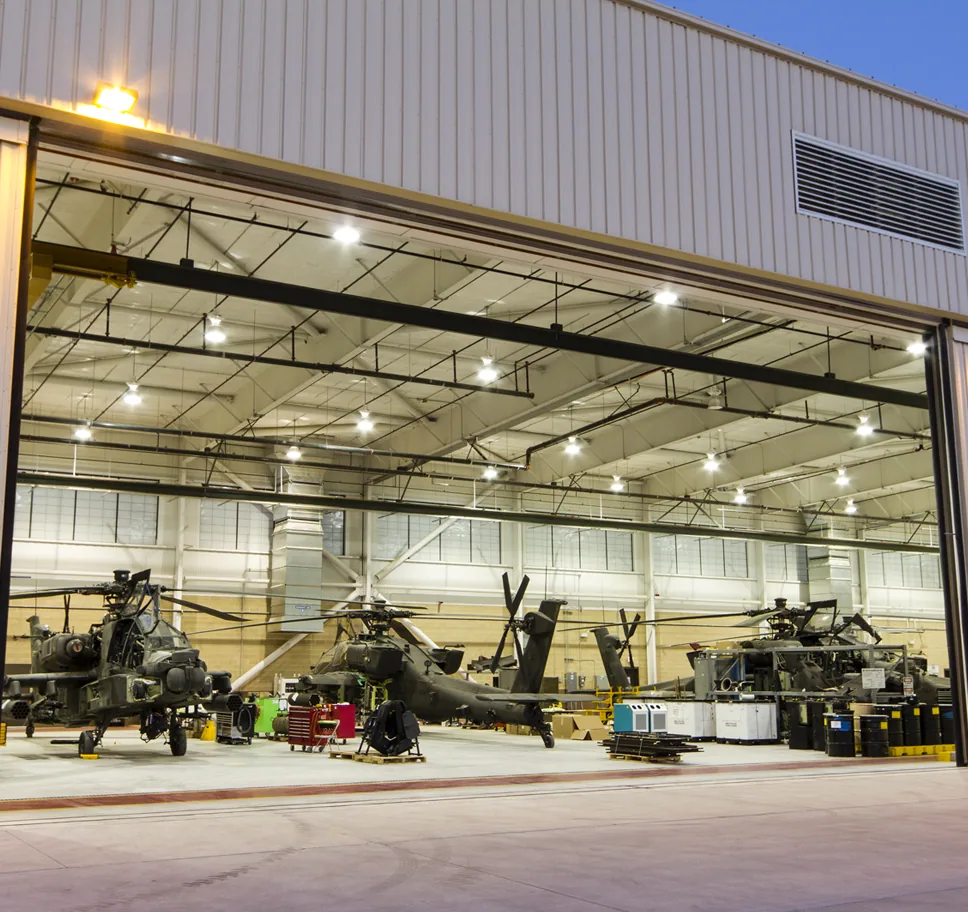
Military hangars and maintenance facilities protect aircraft, engines, avionics, test equipment and tools worth far more than the building around them. A leak onto an aircraft in maintenance can mean rework, corrosion concerns or a delayed mission. These buildings also have some of the most demanding roof details anywhere: huge door openings with heavy door headers, long runs of metal panels or large low-slope roofs, and penetrations for exhaust, fire protection, lighting and ventilation. In Hampton Roads, coastal wind and rain add to the strain.
The leaks we are asked about most on these buildings come from the transition between the roof and the hangar door header, from panel laps on metal roofs, and from penetrations added over the years for new equipment. Each needs a different repair. We inspect the problem area from the roof and, where possible, from inside the hangar, trace the water back to its source and test the insulation for moisture. You get photos, a written explanation and a plan that fits the facility's mission schedule and access rules.

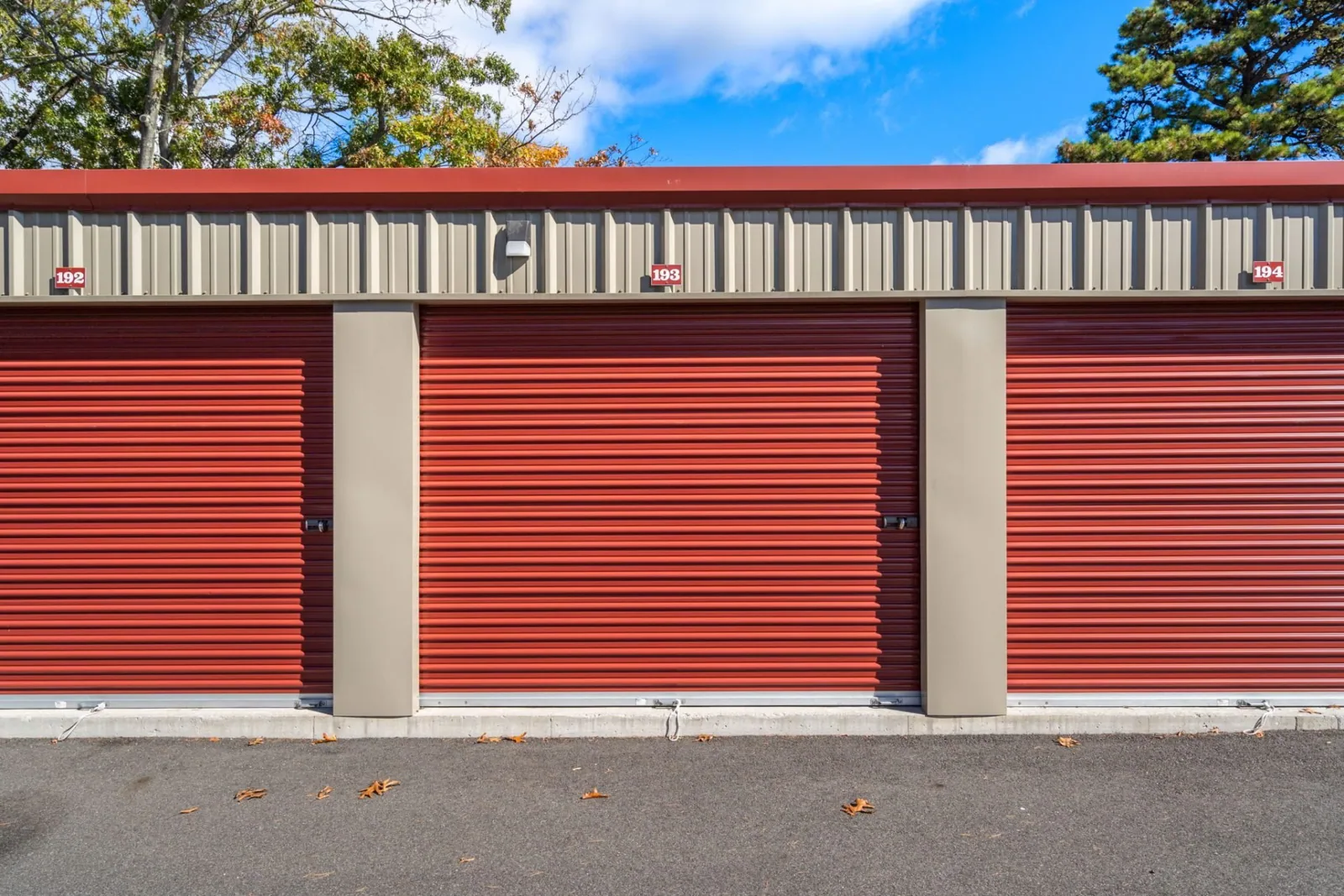
The door header and roof transition
The door header has to carry the roof edge over a very wide opening, and the door structure moves as it opens and closes and as temperatures change. The flashing between the roof and the header has to allow that movement while keeping wind-driven rain out. When it fails, water often runs along the header and drips onto aircraft or equipment parked just inside the door. Door contractors working on tracks and guides can also damage the flashing without realizing it. Gutters above the door often overflow in heavy rain and send water straight into the joint.
Our flashing and penetration repair work covers rebuilding the transition with materials that allow movement, and resealing penetrations near the door. Wet insulation along the header is replaced through our roof insulation and cover board work before new flashing goes on. Any door system adjustments are handled by the door contractor, and we sequence our work so their equipment is accessible before and after we finish. The finished detail is built so the door can be serviced later without tearing it apart.
Metal panel laps
Many hangars have metal roofs with long panel runs. Those panels expand and contract with every temperature swing, and on a big building the movement is significant. Leaks start where fasteners have loosened, washers have worn out, or end laps and side laps have lost their sealant. Near the coast, rust at panel ends and around fasteners speeds things up.
On a standing seam metal roof, we check seams, clips and end laps and make repairs that keep the panels free to move. Locking panels together with rigid patches or extra fasteners usually causes new leaks nearby. Where fasteners are the problem, we replace them with the correct size and washer, and we treat rust before it spreads. Skylight panels and translucent strips in the roof get checked too, since they crack and leak more often than the metal around them.
If the roof has widespread rust or fastener failure, we explain the options for larger repairs or a retrofit, so the facility can compare cost and disruption before deciding.
Protecting aircraft and tools
Before any roof area over a hangar or maintenance bay is opened, we agree with facility staff on where aircraft and equipment will be during the work. Debris, fasteners and old sealant can fall, so aircraft are moved or protected and tool areas below the work are cleared. Foreign object debris is a serious concern around aircraft, so our crews clean up continuously, not just at the end of the day, and all tools and materials are accounted for.
Our military installation roofing page explains how we handle base access, worker clearances, vehicle approvals and safety plans. Crane lifts are planned with the facility so they never pass over aircraft. If the mission schedule changes, we can stop work and close up the roof quickly. Each section is sealed before the crew leaves. Facility staff get a short daily update, and any unexpected condition is reported the same day with photos.
Hangars at Joint Base Langley-Eustis and nearby
Joint Base Langley-Eustis includes aircraft maintenance hangars, including hangars that support F-22 operations, along with shops, offices and storage buildings. Every hangar has its own construction and history, and access and security requirements can vary from one area of a base to another. We inspect the specific facility named in the request and base the repair on what we find there.
For hangar roofing coordinated near Hampton, the facility contact identifies the building, the leak location and any restrictions on timing, access or equipment. We confirm the roof system, measure the details that need repair and check the insulation for moisture. Where drawings exist, we compare them with the roof today, since hangars are often modified for new aircraft and equipment.
The proposal spells out the roofing work, the materials, any items that depend on other trades and how aircraft will be protected. Structural questions, door systems and fire protection go to their own specialists. If the approved design does not match what we find once the roof is opened, we document it and get a decision before changing the work. The result is a scope the contracting office can review, compare and approve.
Related buildings
Civilian and business aviation hangars share the same door-head and panel issues without the base access requirements. Our aircraft hangar roofing page covers those buildings, including corporate hangars around Chesapeake. The core approach is the same: find the real source, allow for movement and protect the aircraft below. What changes is the paperwork, the access process and the security rules.
Military warehouses and depots on base often sit near hangars and store parts and equipment. See our military warehouse roofing page for how we protect stored equipment and plan deliveries on base. At the end of every hangar project, the facility receives photos, a roof plan of the work, a list of materials and notes on anything other trades still need to handle. Inspections after major storms are especially worthwhile on hangars, because wind loads at the door header and roof edges are high. A small gap caught early is a far easier repair than a peeled panel or a soaked header.
Commercial Roofing Questions
Why does the hangar leak above the door?
The door header carries a wide opening and moves with door operation and temperature. The roof-to-header flashing has to allow that movement, and when it fails, wind-driven rain gets in.
Can metal panel laps just be re-caulked?
Only as a short-term fix. Loose fasteners, worn washers and rust usually need to be addressed, and repairs must let the panels keep moving.
How are aircraft protected during roof work?
Aircraft are moved or protected, tool areas below are cleared, debris is cleaned up continuously, and crane lifts never pass over aircraft.
Who handles the hangar door during repairs?
The door contractor. We schedule our work so they can reach their equipment before and after we finish the flashing.
What records does the facility receive?
Photos, a roof plan of the repairs, a materials list and notes on items for other trades such as door, structural or fire protection work.
Have the military hangar roof inspected
Tell us which facility and whether the leak is at the hangar door, a roof joint or a penetration. Once access is approved, we will inspect it and send photos with a plain repair plan.