
A small cut next to rooftop equipment on a Chesapeake warehouse can let a surprising amount of water into the building. To fix it properly, the patch has to extend well past the hole onto clean, sound membrane. We repair punctures on commercial roofs, checking the damaged area, the membrane around it and the insulation underneath. A small cut does not always mean a small repair. We explain what prep is needed before the patch goes on, and if equipment or another defect is part of the problem, we point that out instead of covering it with a bigger patch.
Great Bridge and Greenbrier are both in our service area, but every roof and every puncture is different. For a repair in Greenbrier or anywhere in Chesapeake, we confirm the building, inspect the membrane around the damage and trace the leak. Send us photos and tell us where water is showing up inside. The building contact handles access and protection below. Our findings separate the visible hole from any wet insulation that still needs to be checked.
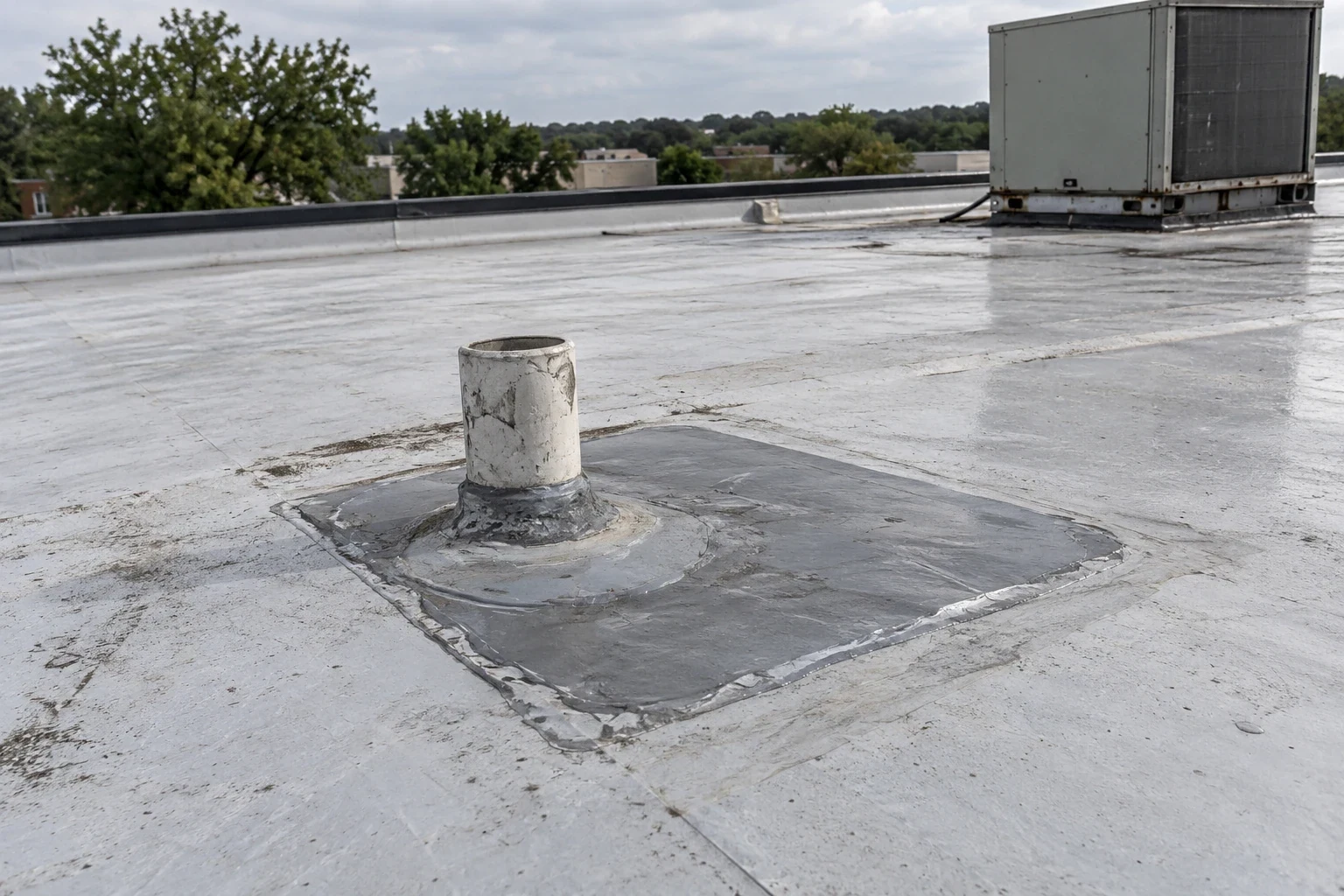
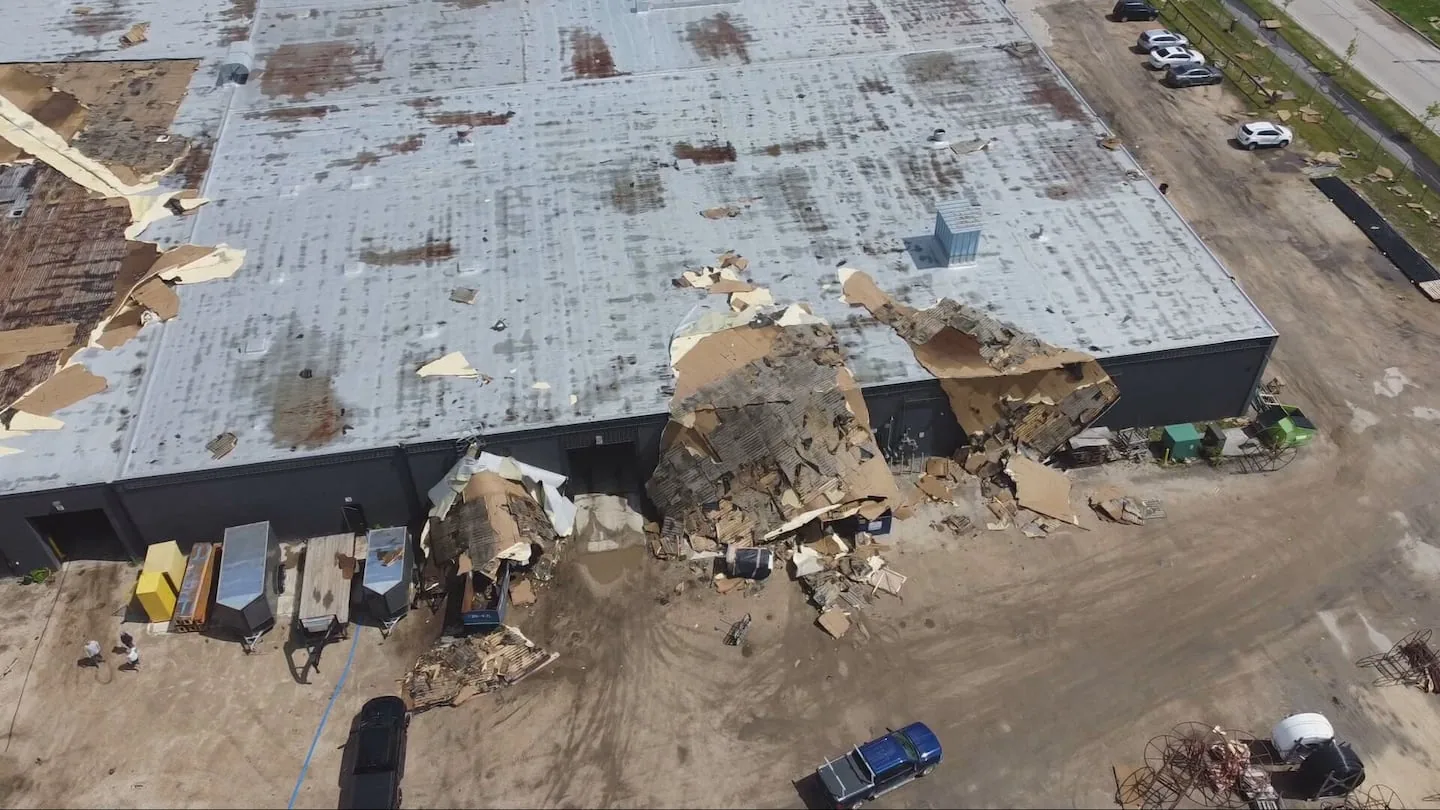
Finding Sound Membrane Around the Hole
A tear may run farther than it looks in the first photo. We inspect the membrane around the puncture and check whether it is clean and sound enough for a patch. Dirt, old coatings or previous repairs can all get in the way of a good bond and increase the area that needs prep. The patch has to be the right material for your roof and applied the right way. We explain how big the repair needs to be based on the condition of the surrounding membrane, not just the size of the hole.
Our commercial roof repair crews work with the membrane on your building. We check the seam method and nearby details. Knowing the membrane type, such as TPO, PVC or EPDM, is a start, but older or coated surfaces may need extra cleaning or prep. The repair size reflects how much sound membrane is needed for a good bond. That way the owner understands why a small hole may need more prep than expected before the patch is installed.
Stopping the Cause
A sharp equipment support, loose screw or dropped tool can keep damaging the roof after it is patched. We look for whatever caused the puncture. The hole does not tell us who or what made it, and we do not guess. If equipment needs to be moved or supports changed, we bring in the mechanical contractor before opening the roof. A good repair means fixing the hole and the reason it happened, so the patch is not punctured again a few weeks later.
Many punctures happen around rooftop equipment curbs and supports. We inspect the flashing and attachments around the equipment as well as the puncture. If the unit needs to be shut down or the supports changed, that is arranged with the right people. A service visit from the HVAC contractor does not mean the equipment is ready to move. We schedule the roofing work around what is actually ready, so the repair is done right the first time.
Checking the Insulation Below
Water that gets through a puncture can soak the insulation below, even if the membrane looks fine around it. When that matters for the repair, we take a small core sample. The building contact helps protect the room below, and the opening is sealed the same day. Confirmed wet areas are replaced, and areas we have not checked are noted. A dry surface does not prove the insulation is dry, so we base the repair on what we find.
Our insulation and cover board replacement covers any wet layers under the puncture. We mark the wet area and the edge of the sound insulation. Areas we have not checked are listed before quantities are set. The new insulation must be in place and solid before the new membrane goes on. The written plan explains this order, so a patched surface does not hide wet insulation underneath.
Nearby Seams and Edges
A puncture close to a seam may cross into the seam itself. We check how close the two are before treating them as separate patches. Sometimes one repair covers both, with clean, sound membrane around each. An old edge or corner nearby may also need attention. We show all of this in the repair plan, so you can review the full scope before materials are ordered. Fixing the hole and leaving a failing seam right next to it would just lead to another leak.
Our seam failure repair addresses the seams around a puncture. We check for roof movement or loose attachment that could affect the seam. If the cause of the seam failure is unclear, we note it and recommend a check. A damaged seam and a hole are recorded separately, even when they are repaired at the same time. That makes it easier to track the roof's condition and spot problems at future inspections.
Protecting Occupied Rooms
In healthcare buildings, the facility contact needs to approve access and any openings made during the repair. We explain where the puncture is, which rooms are below and whether equipment is involved before we cut anything out. The facility decides when and how we can work. A separate Greenbrier roof repair follows that building's own approvals. Every repair is based on the membrane and insulation we actually inspected, with interior protection in place before the roof is opened.
A leaking room may need interior cleanup while we work out the roof repair. We explain what we found and what our temporary repair will do. We take emergency calls in the evening, on weekends and on holidays, and what we can do depends on the weather and safe access. Temporary repairs are recorded separately from the permanent patch, so the remaining work stays on the list instead of being forgotten after the leak stops.
After the Repair
When the repair is complete, we document where the puncture was, how big the patch is and what nearby areas were included. We record the materials and prep used. Any equipment or support changes still needed are listed separately. We review the warranty for the repair. A photographed patch does not mean the HVAC contractor's work is done, but it does give you a clear record to compare with future leaks.
Sometimes a puncture repair uncovers a ponding water problem on the same roof. We inspect clogged drains and low spots separately. Fixing a hole does not fix poor drainage. Each problem is recorded on its own, so future inspections can check each location. A new hole, changed equipment or a recurring pond gets inspected on its own instead of being treated as the same old repair.
Commercial Roofing Questions
Why does a small puncture need a bigger patch?
The patch has to bond to clean, sound membrane on all sides. Old coatings, dirt or aged membrane around the hole may need to be cleaned or cut back, which makes the repair area larger than the hole.
Can you find out what caused the puncture?
We look for sharp supports, loose fasteners, debris and signs of foot traffic near the hole. We describe what we find but do not assign blame without clear evidence.
Do you check the insulation under a puncture?
When it matters for the repair, yes. A small core sample tells us whether water has reached the insulation, and the opening is sealed the same day.
What if a seam is close to the puncture?
We check whether the two overlap. If they do, we repair them together with sound membrane around both; if not, each gets its own repair.
Can you make an emergency repair?
Yes. We take calls on evenings, weekends and holidays and install temporary repairs when it is safe, followed by a permanent patch.
Get a roof puncture repaired
Send us photos of the damage and tell us where water is coming in. We will inspect the roof, find the cause and repair the puncture properly.