
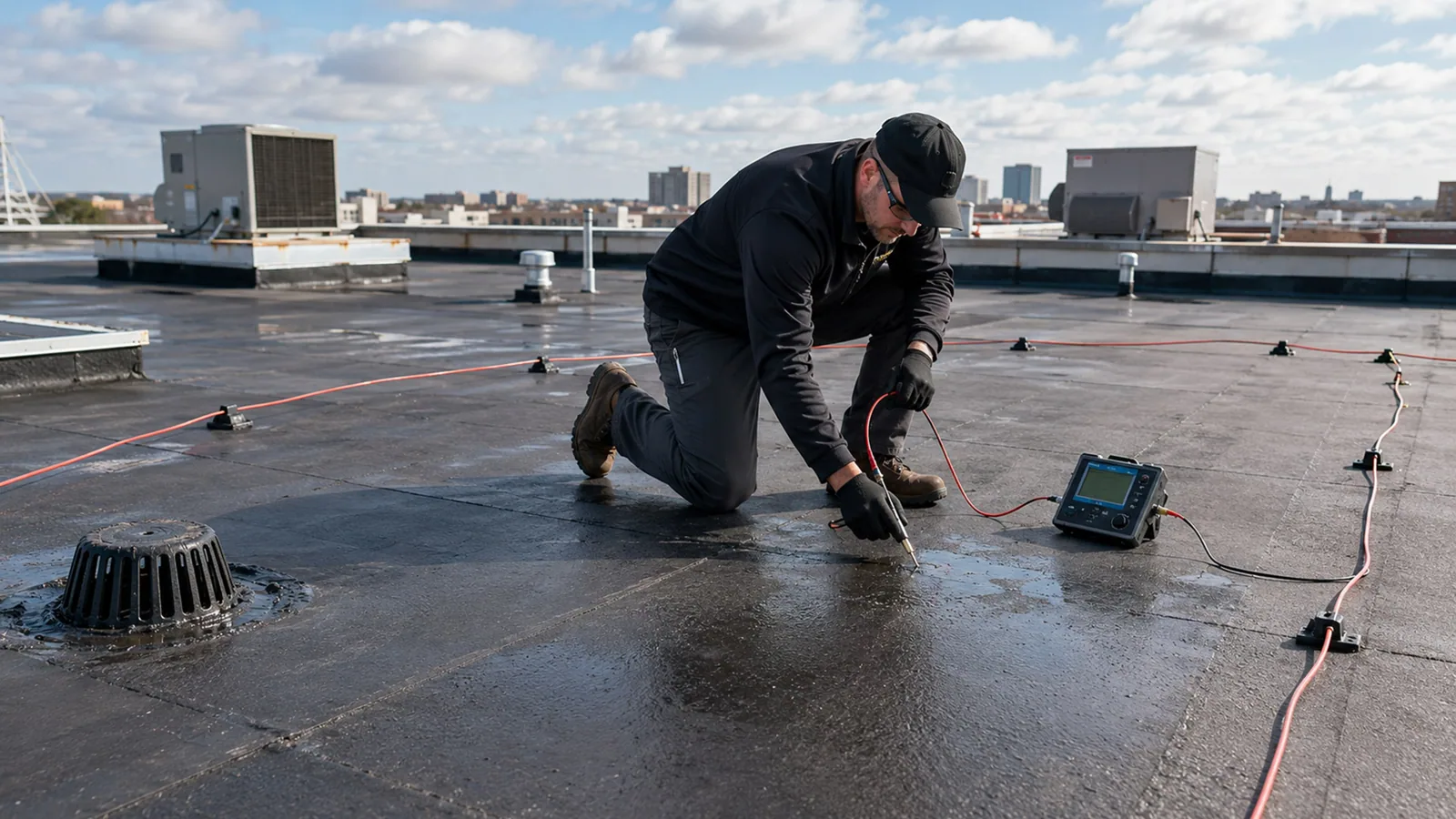
When a commercial building is under contract, the roof is usually one of the biggest unknowns in the deal. A loose piece of edge metal on a warehouse can look minor from the parking lot and still be letting water under the membrane every time it rains. We perform due diligence roof surveys in Chesapeake, VA, for buyers, lenders and owners who need a straight answer before closing: what the roof is made of, what condition it is in, what needs attention now, and what can wait. Just as important, we tell you what we could not see, so a guess never gets passed off as a finding.
Properties around the Greenbrier Business District and Great Bridge vary widely in age, use and roof type, and two buildings on the same street can have very different roofs. We start with whatever drawings, warranties and repair history the seller can provide, then walk the roof and check it against those records. What we actually find on the roof drives the recommendation. Your report separates confirmed problems from areas that need a closer look, so you can negotiate price, credits or repairs with real numbers behind them.
Roof Edges and Perimeter Metal
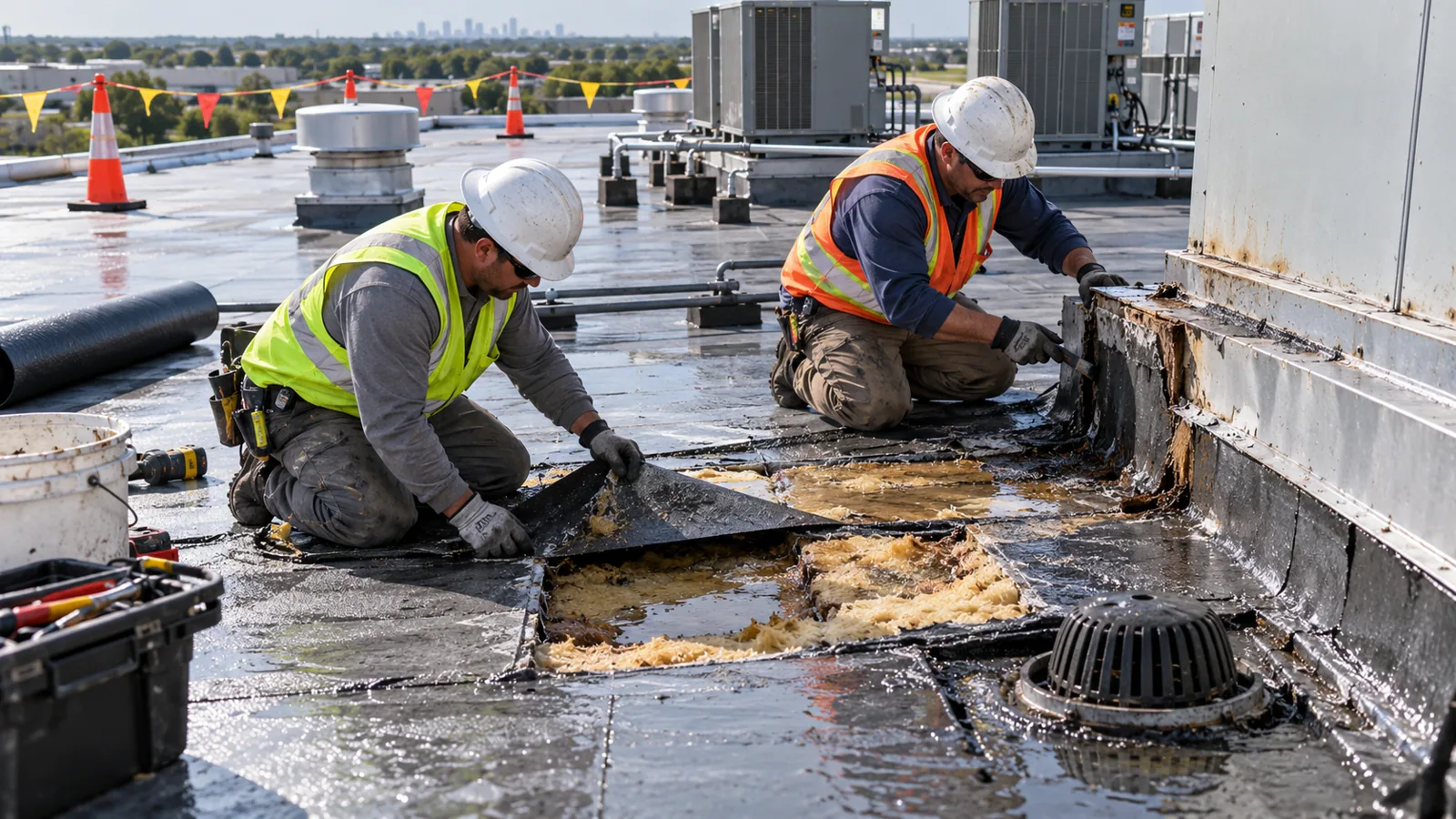
Edge metal, coping and gutters fail at the fasteners and the wood nailer behind them long before the metal face looks bad. On a survey we check whether the edge is tight, whether the nailer is sound, and whether wind has started to peel the membrane back from the perimeter. Rusted or enlarged fastener holes usually mean the attachment needs to be rebuilt, not just re-screwed. If a question goes beyond roofing, such as a structural concern with a parapet, we flag it for the right engineer rather than guess.
When perimeter work is needed, we note the location, the likely fix, and whether it can be handled as a repair or belongs in a larger project. Our edge metal and coping work always starts with the wood and membrane underneath, because new metal on a rotten nailer will not hold. If part of the edge could not be reached safely during the visit, the report says so and lists it as a follow-up item instead of assuming it is fine.
What Lies Beneath the Membrane
A roof can look intact on top while the insulation under it is soaked from years of small leaks. Wet insulation adds weight, loses its R-value and slowly rots the deck. When the condition of those hidden layers would change the price or the plan, we recommend core cuts or a moisture scan in specific spots. Any opening we make is small, planned with the owner, and patched the same day so the building below stays dry.
Results from those checks go straight into the scope. If the insulation is dry and solid, it may stay in place under a recover or a new membrane, which saves real money. If it is wet, our insulation and cover board replacement becomes part of the estimate. Adding insulation can also raise the roof height at curbs, doors and walls, so we point out those details early. A buyer should know before closing whether the replacement budget includes tearing off wet layers or just installing a new sheet on top.
Drainage and Ponding
Standing water on a flat roof can come from a clogged drain, a drain set too high, a sagging deck, or simply not enough slope. Each cause has a different fix and a very different cost. During the survey we look at where water collects, check the drains and scuppers, and note any low areas that point to deck deflection. Clearing debris is cheap. Rebuilding a drain or adding tapered insulation is not, and the report makes that distinction clear.
Our drain and scupper repair covers the drain body, the flashing around it and the membrane leading into it. If a sagging deck or a broken pipe inside the building is part of the problem, we say so and recommend the right trade, because no amount of roofing will fix a crushed drain line. That way the buyer is not surprised by a plumbing or structural bill after the roof is supposedly taken care.
Areas We Could Not Reach
Not every part of a roof is easy to inspect. Tenants may limit access, mechanical units can block flashing details, and some sections may be unsafe to walk. Occupied buildings such as medical offices often have rooms and equipment that cannot be disturbed on short notice. We work with the property contact to see as much as possible, and anything we could not inspect is marked on the roof plan with the reason, so nothing gets quietly left out of the report.
A drone roof inspection helps on large or hard-to-reach roofs and gives a clean overhead record of the whole property. It is a useful tool, but a photo from above cannot tell you whether a seam is bonded or a curb flashing is sealed. We use aerial images to cover ground quickly and then walk the areas that matter. If something still needs a hands-on look, it goes on the follow-up list.
One Building, One Report
Each building gets its own survey, even in a portfolio purchase. Two warehouses built in the same year by the same developer can have very different roofs depending on how they were maintained. We document each roof separately, with its own photos, measurements and list of repairs. If tenant operations limited what we could see, that limit is written into that building's report rather than averaged across the portfolio.
Our roof condition reports include a roof plan, labeled photos, a summary of each defect and a rough priority for repairs. Buyers use them to negotiate, lenders use them to size reserves, and new owners use them as a starting point for maintenance. Because each report is tied to one building, it stays useful years later when someone needs to know what the roof looked like at the time of purchase.
Our Recommendation and Next Steps
The survey ends with a plain recommendation: repair, restore, recover or replace, and roughly when. For replacement, we spell out whether existing layers come off, whether wet insulation needs to go, and what flashing and edge work comes with it. That level of detail helps with roof capital planning after the sale, because the budget reflects the whole job, not just new membrane. Any quantity we could not confirm is listed so it can be checked before a contract is signed.
For properties around Greenbrier and across Chesapeake, we can usually schedule a survey quickly to fit a due diligence window. If we find an active leak during the visit, we can arrange a temporary repair, including nights and weekends, to keep the building dry while the deal moves forward. Temporary work is kept separate in the report from the permanent fix, so everyone knows what was done and what is still needed.
Commercial Roofing Questions
What should a due diligence survey check at the roof edge?
More than the look of the metal. We check whether the edge is fastened tight, whether the wood nailer behind it is solid, and whether the membrane is pulling away at the perimeter. New metal on a rotted nailer will not hold.
Can a roof that looks fine on top still have hidden problems?
Yes. Insulation can be wet under an intact membrane. When it would affect price or scope, we recommend core cuts or a moisture scan in targeted spots so the estimate reflects what is actually there.
What happens if part of the roof cannot be inspected?
We mark it on the roof plan, explain why it was not inspected, and list it as a follow-up item. You can schedule that check before closing instead of assuming the area is in good shape.
How do you handle ponding water in a survey?
We look for the cause: clogged drains, drains set too high, low spots in the deck or poor slope. Each has a different fix and cost, and if a plumbing or structural issue is involved, we tell you which trade to bring in.
Will the report say what is still unknown?
Yes. Any quantity or condition we could not confirm is listed clearly, along with the check that would answer it. That keeps unknowns out of the purchase price and in front of the buyer.
Get the roof checked before you close
Send us the property address, any roof records and your closing timeline. We will inspect the roof, photograph what we find and give you a clear written summary of repairs, costs to plan for and anything that still needs a closer look.