
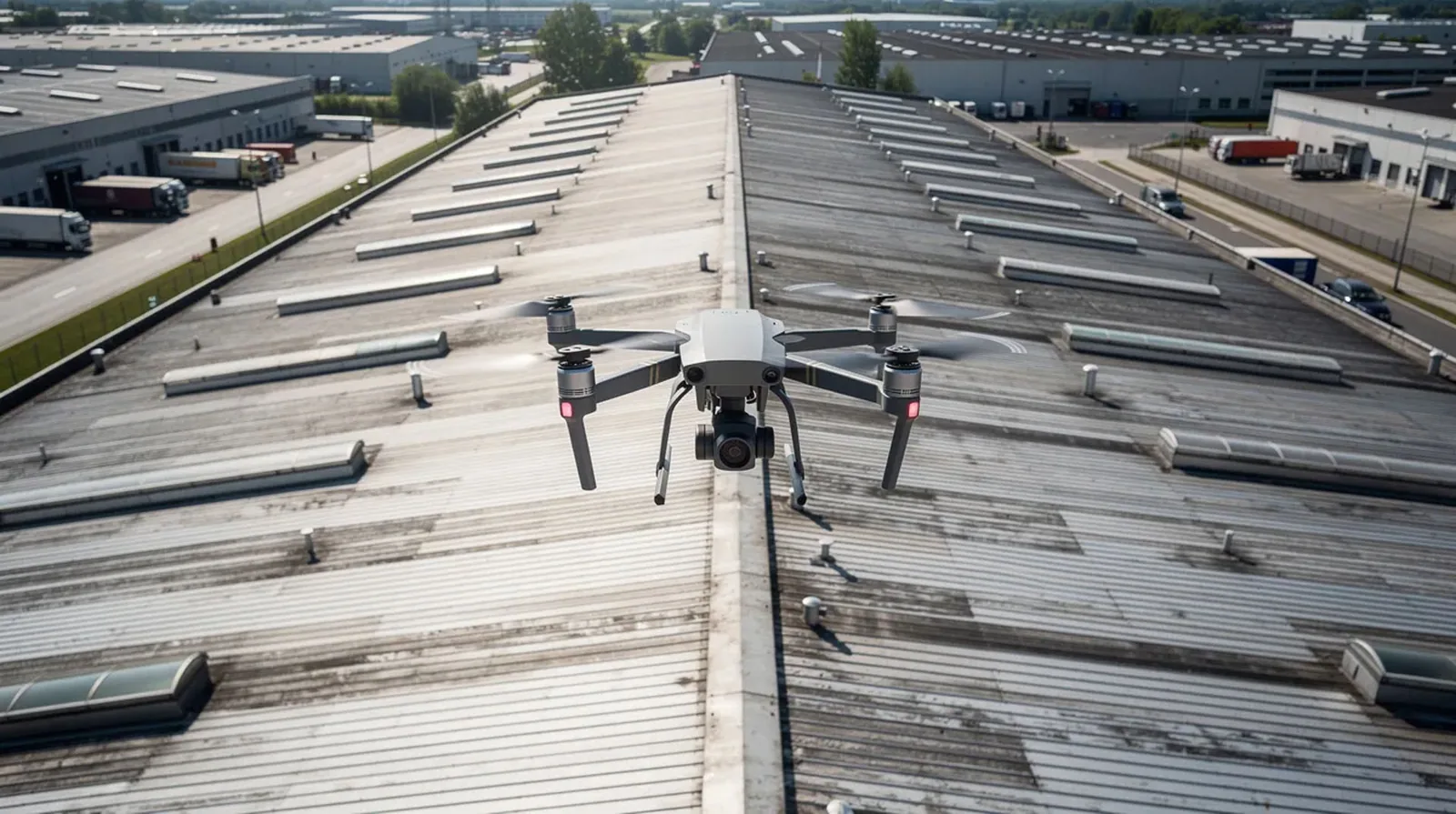
A loose warehouse edge often runs farther than anyone can see from the parking lot. A drone gives us a quick overhead look at the whole roof and helps us spot the areas that need a closer inspection.
Drone roof inspection in Chesapeake starts with a clear question: Is the edge loose? Where is the storm damage? Which section has the most patches? We talk through the roof, which areas you want covered and the flight conditions before we fly. For a warehouse roof, we also go over any site rules from the operator.
Drone photos show what's visible on the surface. They can't tell us whether the insulation is wet or whether the wood behind an edge is rotted, so a leak or weak spot still needs a hands-on check before repair. Greenbrier and the rest of Chesapeake have all kinds of commercial buildings, and we confirm the exact roof and the areas you want photographed. The property contact confirms site access and any flight limits. Building height, rooftop equipment and nearby activity can block some views, and our report notes any areas we couldn't see and where an on-roof inspection is still needed before relying on the photos.
Start with a clear question for the flight
An aerial photo can show a split seam or a torn flashing, but it can't tell you why it failed. Before we fly, we agree on what we're looking for and set the coverage to match. Areas we can't capture are noted on the roof plan.
Past repair records and leak reports help us decide where to focus. You should know ahead of time what the photos are meant to document. "Drone survey" can sound like it covers everything, and it doesn't. Photos are useful when they're tied to a specific decision about the roof, and the report still lists the questions about insulation and materials that photos can't answer.
A commercial roof inspection on the roof itself may still be needed at the spots we flag. We compare what the drone sees with what we can check from the ground or on the roof. Rooftop units, parapets and camera angle can hide parts of the roof. Those gaps go in the report before anyone sets repair quantities, along with a plan to check the areas we couldn't see. A visible mark on the membrane doesn't tell you how far the damage goes underneath, and the repair depends on what we find up close.
What a drone photo can't show
A roof can look fine from above while the insulation underneath is wet. A regular drone photo can't show hidden moisture, and we won't treat a clean-looking surface as proof that the roof is dry. If another method is needed, we say so and agree on what it should answer.
That way you can get the right test done before deciding whether the existing roof can stay. Surface damage and hidden wet insulation are separate findings. A photo-only report shouldn't decide how much roof gets torn off. Our report shows which photo supports each finding.
An infrared moisture survey is a separate service with its own equipment and weather requirements. It usually has to be done on a clear evening after a sunny day, so it's not part of an ordinary photo flight. We explain the difference before you rely on the images. Even a thermal scan shows likely wet areas, not confirmed ones, so we confirm with core cuts before final decisions about insulation. A standard photo can't tell you which insulation is wet. The next step should answer whatever the photos couldn't.
Reading membrane and metal roofs from the air
A loose edge or seam shows where rain might be getting in. Photos show where it is, but the repair prep still has to be decided on the roof. On a TPO roof, we check the membrane records if there are any, since a photo from 100 feet up can't tell you every product or accessory installed.
We keep what we see in the photos separate from what we need to know for the repair, like which membrane and flashing products will bond. Two white roofs can look the same from above and still need different repair materials. The fix depends on the actual roof at that spot.
On a standing seam metal roof, drone photos can show loose panels, bent seams and damaged trim. They can't show hidden clips or fasteners. Panel laps and equipment flashings are often hard to see from the air because of the roof shape, and we note those spots. A closer look may be needed before we define the repair. A run of panels that looks fine in a photo can still have a fastener problem underneath. The photos guide the repair decision, but they don't replace an inspection.
Flight conditions, access and coverage
Weather and flight rules come first. Wind, rain and airspace limits can all affect what we can fly and when, and we talk through those before scheduling. Permission to get on the roof isn't the same as permission to fly over the site. Nearby activity, trees, power lines or tall buildings can also limit coverage.
You should tell us the site contact and the area you want photographed. If we can't capture a section, we'll note it and recommend another way to inspect it. A scheduled flight doesn't guarantee every surface gets documented, and the usefulness of the photos depends on the coverage we actually get.
Hospitals and medical buildings need the operator to set site access, any equipment limits and sensitive areas before we fly. For a drone roof inspection in Greenbrier, an angled shot may show a loose edge but not the wood behind it. We note what we captured and what was blocked, then mark where a closer inspection is needed. We review blocked views before interpreting the photos, and a follow-up visit on the roof confirms any details that need material checks.
Great Bridge and Greenbrier are separate Chesapeake service areas, and the neighborhood doesn't tell you which parts of a roof a drone can safely photograph. Before a visit, we confirm the property contact, the areas you want covered and any rules that could limit coverage. We sort photos by roof section and label each finding with its viewing angle, which makes later comparisons easier and keeps a drone photo from being mistaken for a close-up inspection of attachment or hidden layers.
From drone photos to a repair decision
A commercial roof repair based on drone findings still needs the damage and any hidden insulation problems checked up close. We explain which photos call for a closer look. Repair quantities are based on the actual roof, not a photo outline. If insulation needs replacing, the price includes removal, disposal and new material tied into the existing roof.
If the damage could spread beyond what we can see, we agree on how extra work will be measured and approved. Rooftop units may still need to be lifted by the HVAC contractor before we can work around them. Drone photos help find the problem; the inspection and repair fix it.
Our report lists which areas we photographed and what we saw. Each photo is tied to the question it answers, and areas we couldn't see are noted. Open questions about insulation are stated clearly, not hidden behind a set of nice-looking photos. Warranty questions need the actual warranty documents; a photo can't tell you what's covered. Any later repair needs the right prep and matching materials. You get a short written explanation of what we found and what still needs deciding. The inspection is complete for what we agreed to look at, and anything else is listed for follow-up.
Commercial Roofing Questions
What should we ask the drone inspection to answer?
Name the roof and the specific concern, such as a loose edge or storm damage. We'll go over site limits and coverage before scheduling.
Can drone photos show wet insulation?
No. Regular photos only show the surface. If you need to know about moisture, we'll recommend an infrared survey or core cuts.
If we give roof access, can you fly?
Not automatically. Flight rules, weather and site conditions are checked separately, and we note any areas we couldn't capture.
Can a photo tell us how big the repair will be?
Not by itself. We use the photo to find the problem, then inspect the detail up close to size the repair.
What comes with the photos?
A short written summary of what we saw, which areas we couldn't capture, and what still needs to be checked or decided.
Get the right photos for your roof question
Tell us which roof you need photographed, what you're concerned about and any site rules. We'll explain what a flight can cover and send a short summary with the key photos.