
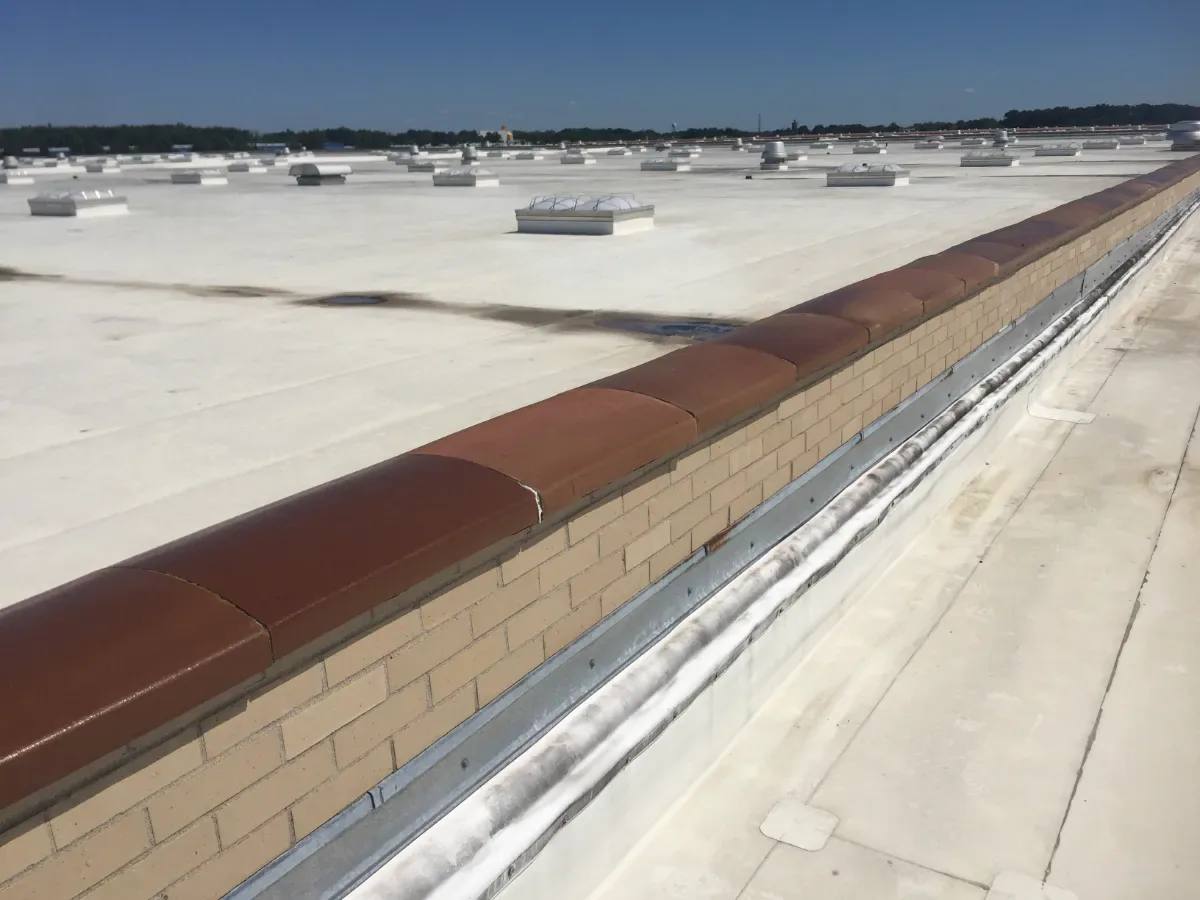
Loose coping on a retail parapet lets rain in at the top of the wall, and the movement can tear the roof membrane right next to it. Edge metal, coping and gutter work in Chesapeake starts there: where the metal meets the wall and the membrane. We check the fasteners and the wood blocking behind the metal before recommending a repair.
A proper repair covers the metal and the membrane together. On a shopping center roof, we also need to know where customers walk and how materials can get to the roof. Swapping out a bent section of metal won't solve a rotted nailer underneath. The repair should fix whatever is making the edge move.
Hospitals and medical buildings need extra coordination around equipment, access and occupied rooms. We inspect the wall flashing, the exposed blocking and the membrane nearby before choosing replacement metal or flashing. The operator tells us which areas we can work in and what protection is needed below. If the blocking is damaged, we fix it before installing the new metal. Measurements are taken from the actual edge, not an assumed length.
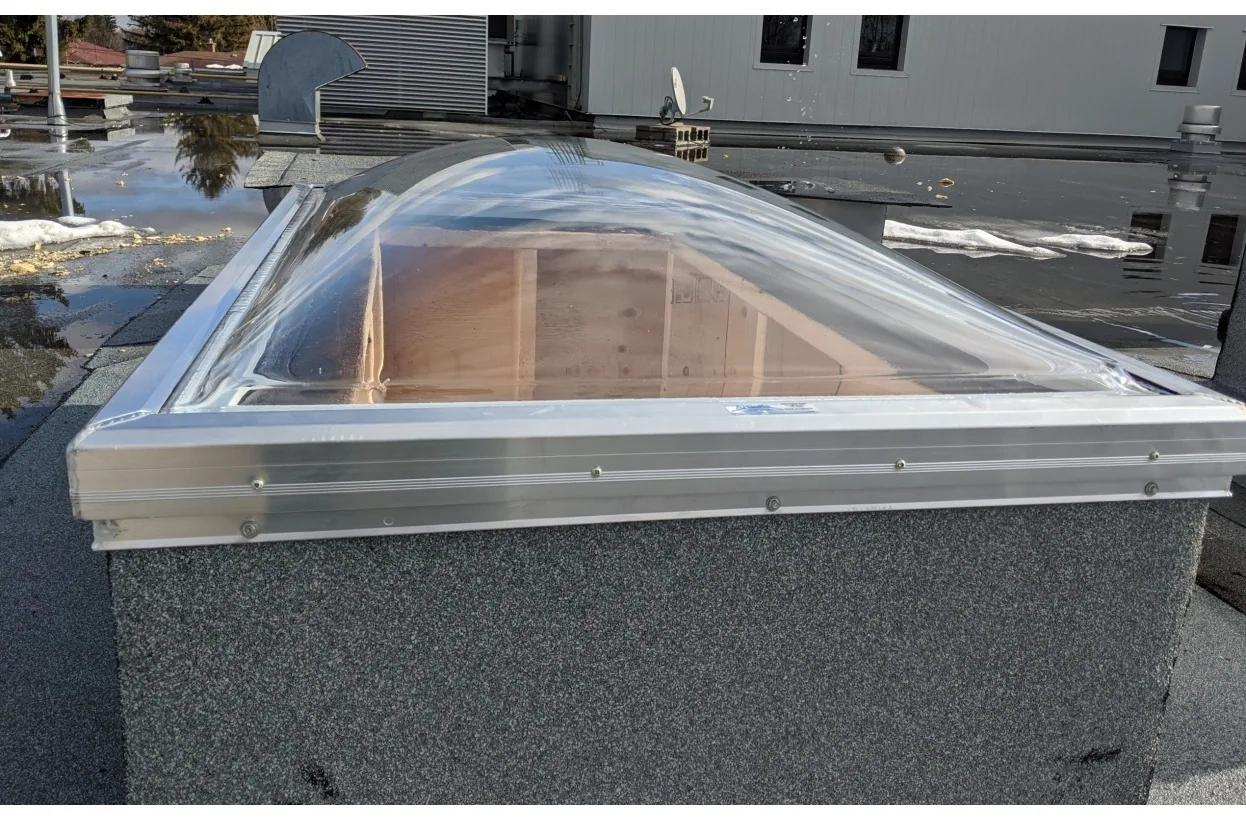
Edge metal, coping and gutters do different jobs
Edge metal holds the membrane down at the roof perimeter. Coping caps the top of a parapet wall. Gutters carry water off the roof. Each does a different job, and we look at the actual detail and its condition before setting quantities.
A loose coping joint can expose the wood under it or pull on the membrane flashing beside it. Those repairs belong in the price alongside the metal. The linear footage alone doesn't tell you how many corners, splices, cleats or new pieces of wood you'll need. Project and product requirements are part of the job too. Every location should have a clear finished result.
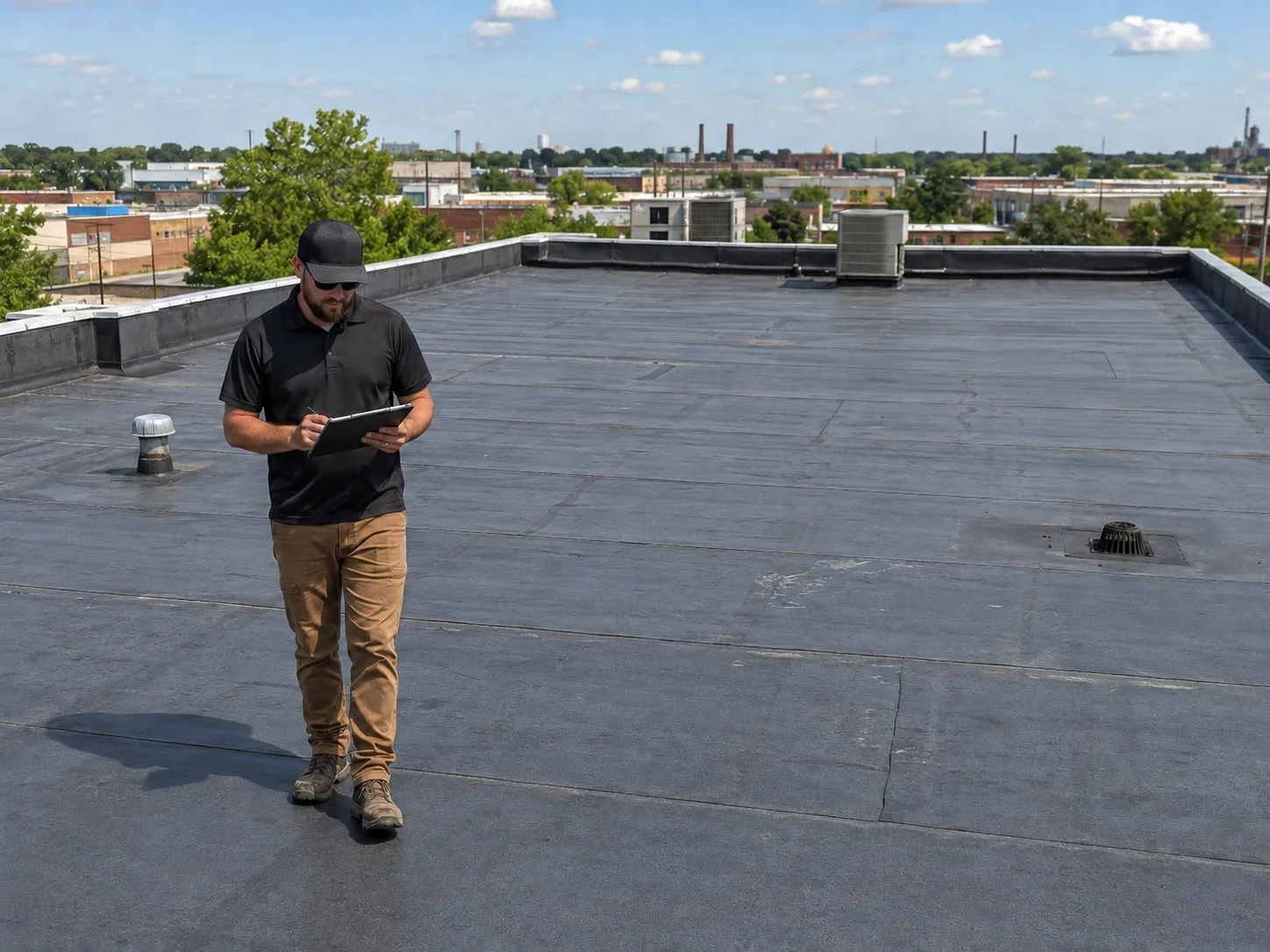
A commercial roof inspection of the perimeter can document what we see and what still needs checking. We compare the edge with any roof or wall records. A straight-looking run of metal doesn't prove it's fastened well. If we can't check the wood without pulling metal, we say so and propose a way to confirm it. You can compare the repairs we've confirmed with what still needs checking. Suspected rot doesn't become a fixed quantity until we see it.
Fasteners and blocking behind loose metal
When metal moves, it works the fasteners loose over time. The repair has to look at the wood blocking and how the metal is attached, not just the metal. A new piece of metal over rotten wood won't stay put.
If the blocking is bad, the price includes replacing it, along with removal and the tie-in to the existing roof. The fastener pattern is set by the project requirements and the edge system we install, not by a rule of thumb. Wind exposure, building height and the edge system all play a role, so we follow the product requirements rather than guessing.
Wet insulation near the edge may also need to be replaced beyond the metal. We separate what looks wet from what we've confirmed with cores or probes. The price shows disposal, new insulation and the tie-in to existing roof clearly. If damage turns out to extend farther, we measure it and get approval before opening up more, and the roof is sealed each night while changes are discussed. That keeps the metal price tied to the full repair. We check fastener rows, laps, corners and the wood behind the metal. The new metal has to tie back into the roof membrane, and our closeout shows finished edges before other work starts nearby.
Tying the metal into the membrane
Rain can get behind a loose metal joint and into the membrane flashing under it. On a TPO roof, the edge flashing is TPO welded to the field membrane, with the metal installed over or under it depending on the detail. If the roof is getting new insulation, the added thickness changes the edge height, and we account for that before ordering metal.
A price for the field membrane doesn't cover all the edge pieces. We review product and project requirements for the full detail. The finished edge has to close the leak path behind the metal.
On an EPDM roof, the edge strip-in uses EPDM tape or flashing with its own primer and prep. Two edges with the same dimensions may still need different parts. We describe the changes in material and blocking for each option, so you can compare the finished edge, not just the metal and membrane quantities. If earlier repairs used unknown materials, we confirm what's there before choosing new ones. The weather also has to be right for the membrane seal. New metal shouldn't cover up an unfinished membrane seal; both have to be done before the edge is finished.
Gutters, drainage and other trades
A clogged gutter and a failed edge flashing are different problems. We check what can be cleared and what needs to be rebuilt. Roof drains and scuppers along the edge get checked at the same time. A clear gutter doesn't prove the downspout or underground pipe is clear, and we'll tell you if the drainage needs a closer look from a plumber or site contractor.
Replacing edge metal doesn't include redesigning the drainage or rebuilding the wall unless we agree on it. The proposal lists exactly which edges and details we're fixing.
Greenbrier's commercial buildings each need their own edge inspection. Edge metal work in Greenbrier depends on roof access, the wall connection and occupied areas next to the edge. If wall work is holding up one section, we keep working on other sections that are ready. The owner coordinates protection between the trades and our crew. Being ready means solid wood and all the edge parts on site, not just the metal.
Great Bridge and Greenbrier both have busy commercial corridors, but the neighborhood doesn't tell you what coping or edge is on a building. We measure the existing profile and check the wood before ordering metal. We coordinate around any wall or equipment that affects removal. Our record shows how the new edge ties into the existing membrane, where blocking was replaced and which sections were left alone. That helps with later inspections and maintenance.
What the edge repair record should show
A finished commercial roof repair at the edge should list the blocking, the fastening and the finished metal and flashing separately. We keep photos that tie the original loose detail to the finished repair. Any inspections we agreed on follow the installed system and project requirements.
Wall or drainage problems outside our work are noted separately. Interior repairs follow once the related edge is finished. You get a clear record of what we fixed, not a blanket claim that the whole roof is fine. If a unit or another trade is still holding up part of the edge, that stays on the list.
Product information for the installed metal and flashing goes into your maintenance file. Warranty notice and alteration requirements come from the actual documents. The roof type alone doesn't tell you what's covered for edge work. Any open items are listed. If the edge moves again later, compare it with the photos. If a new leak appears, note when and where before assuming what caused it. The short written summary describes exactly what was finished at each edge.
Commercial Roofing Questions
What should an edge metal price include?
The metal, the wood blocking, the fasteners and the membrane flashing. Any blocking that needs replacing should be in the price.
If the metal looks straight, is it fastened well?
Not necessarily. We check the fasteners and the wood behind them, and if we can't see them, we propose a way to confirm.
Is there a standard fastener spacing?
No single one. Spacing depends on the edge system, the building and the project requirements, and we follow those.
What isn't part of edge metal work?
Drainage redesign, wall repairs and equipment work, unless we agree on them. The proposal lists exactly which edges and details we're fixing.
What should the photos show at the end?
The original problem, the replaced blocking and the finished metal and flashing, plus any open items.
Find out why the edge metal is moving
Tell us which part of the roof edge is loose and share any roof records. We'll check the edge and send a short explanation of the repair with photos.