
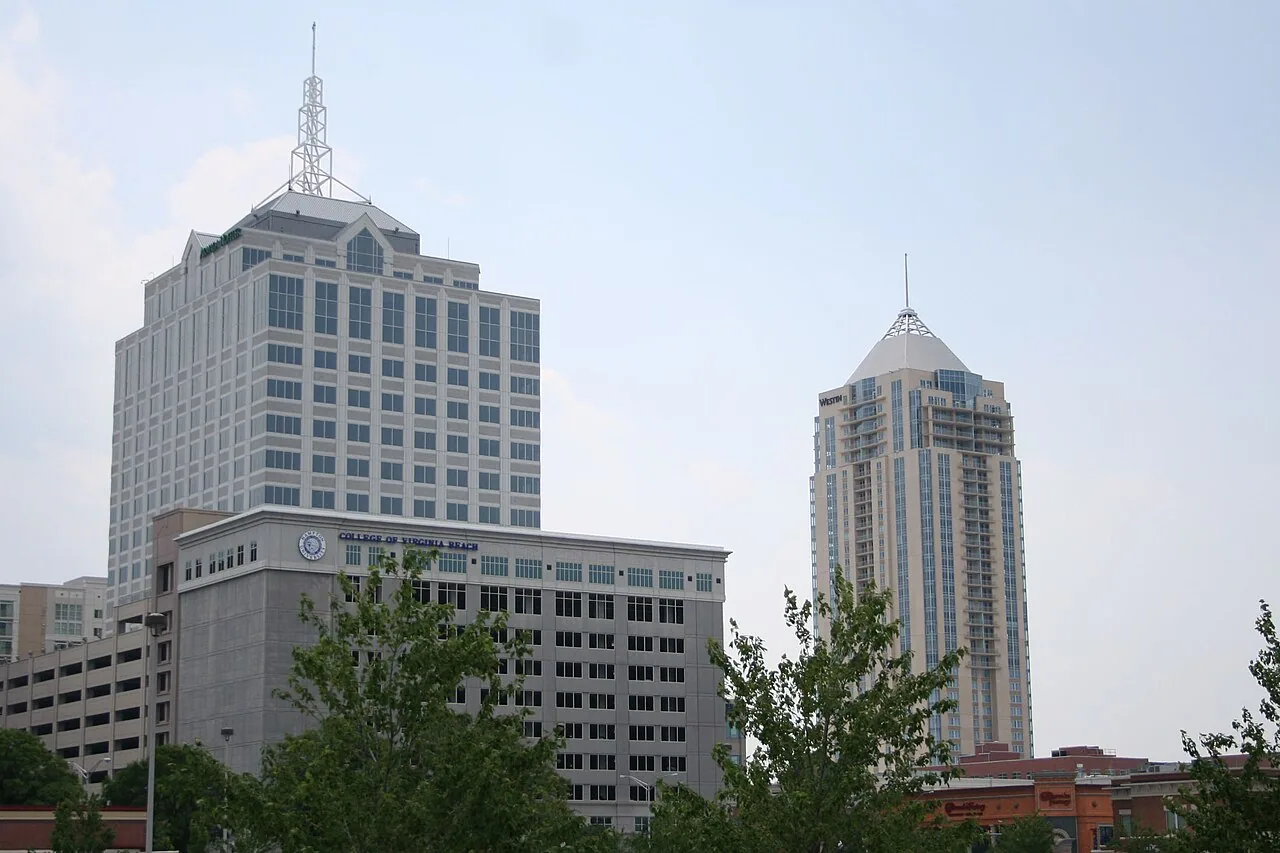
Loose edge metal or coping on a commercial roof near Virginia Beach Town Center is more than a cosmetic problem. When the metal starts to move, the membrane underneath it gets pulled and torn, and wind-driven rain gets in behind it. A strong gust can peel back a whole section of edge.
We repair membrane and metal roofs across the Chesapeake and Virginia Beach area. On an edge or coping job, we check the wood blocking the metal fastens to, the membrane where it turns up the edge, and the insulation behind it. If the blocking is rotted, new metal fastened to it won't hold. We measure the new pieces only after the base is solid.
Town Center sits in Virginia Beach's Central Business District, inside the Pembroke area along Virginia Beach Boulevard and Independence Boulevard. Building managers there usually have specific access rules, and we confirm them before we arrive. If rooftop equipment is near the edge, we coordinate with the HVAC contractor. Tell us the address and when you first noticed water inside. While we sort out the repair, we can put a temporary seal on the damaged edge to keep water out.
Loose edge metal: check the wood behind it first
Edge metal and coping are fastened to wood blocking along the roof perimeter. When the blocking rots or the fasteners pull out, the metal starts to flex and lift. That movement often tears the membrane at the edge, too, so we look at both together.
Solid blocking can stay. Rotted or soft wood gets replaced before we measure new metal. Otherwise, the replacement pieces may not fit once the base is rebuilt. You'll see why the wood repair is part of the job, not an add-on.
Our edge metal, coping and gutter work covers the full edge. Properties elsewhere in Virginia Beach get the same inspection. Old caulk and roof cement around the edge usually have to be removed so the new membrane flashing can bond. We confirm what's under the existing metal before we finalize prep or order new pieces. The new flashing has to match the existing membrane. If we can't check the blocking without removing the metal, we'll put down a temporary seal while we do it. The new metal only goes on once the base underneath is solid.
Getting measurements right before metal is fabricated
When we replace blocking, the height or width of the edge can change slightly, and edge metal fabricated to the old dimensions may not fit. So we measure after the new wood is in place, then order the metal. That avoids a delivery of pieces that are an inch off.
If a wall, rooftop unit or another trade's work is near the edge, we schedule them alongside our work. Having a new roof membrane on site doesn't help if the edge metal isn't ready, so we coordinate the order before we open up.
Our rooftop equipment curb and support work covers any units we need to work around. A building in Norfolk may have different service and access rules, and we plan accordingly. We go over the operator's schedule along with the measurements and the blocking work. If we find more rot after opening up, we stop, explain what we found and get your OK before going further. In the meantime, we keep that section sealed. Materials are chosen to work with the existing roof, and you'll know about the metal lead time before we start.
Finding every leak near the damaged edge
A loose edge isn't always the only leak. We also check the seams, pipe boots and curbs nearby, since water from any of them can show up in the same place inside. Condensate lines from rooftop units can cause interior stains, too, and we'll flag those for the HVAC contractor.
Knowing when the leak appears helps us narrow down where to look, but it doesn't tell us the whole story. Water often runs through the insulation before dripping through the ceiling. We'll tell you what we confirmed and what still needs a closer look. The repair goes where the water is actually getting in.
Our commercial roof leak repair service checks all of this before we recommend a fix. Old patches can hide the original seam or flashing, and those need to be cleaned up before we can make a proper repair. We check the membrane around the damaged area before choosing a repair method. A patch over damaged blocking won't last. If we can't confirm what's under the membrane without opening it, we'll say so. You'll get photos tied to each finding.
Wet insulation along the roof edge
Water getting in at a loose edge usually soaks the insulation along the perimeter. The edge may look fine once it's fastened back down, but wet board underneath keeps causing problems. We check for wet insulation with probes, test cuts and, where the roof allows it, moisture scanning, then confirm with core cuts.
If we find more wet board than expected, we explain it before cutting further. Dry insulation in good shape stays. Our roof insulation and cover board replacement covers this part of the work. Replacing insulation can change the edge height, which affects the size of the new metal, so we sort that out before ordering.
Covering wet insulation with a new membrane doesn't fix it. The new insulation also has to tie in smoothly with the dry roof next to it. We check where the repair area meets the existing roof before ordering insulation and edge pieces, because those heights decide how the membrane flashing ties together. All of that goes into the proposal before any metal is ordered.
Working above Town Center tenants
Opening up an edge or replacing insulation means part of the roof is exposed for a short time. Before we start, the operator tells us which areas below need protection and how we can move materials and debris. Ceiling or electrical damage from past leaks is handled by the right trades.
We put a temporary seal at the end of each workday and only open what we can close the same day. Edge metal and membrane need to be on site before we start. We check surface moisture and temperature before installing; if conditions aren't right, we wait and tell you why. Our occupied building reroofing crews follow this approach on every job, and on office building roofs near Town Center we work around tenant hours and building rules.
When the job is done, you get photos and notes showing the new edge metal, replaced blocking and anything left in place. Service techs get guidance so they don't damage the new edge. Interior trades can use our report to decide when to start their repairs. We take leak calls overnight, on weekends and over holidays and confirm a response time based on the address and access. If a new leak appears later, we inspect it fresh. Before every job we confirm the building and an access contact, since a district boundary tells you nothing about the roof. Each repair gets its own marked area and photos.
Commercial Roofing Questions
What decides whether loose edge metal can be refastened or needs replacing?
The condition of the wood blocking and membrane behind it. If the blocking is rotted, it has to be rebuilt before new metal goes on.
Why replace the blocking before ordering new edge metal?
New blocking can change the edge dimensions, so we measure after it's installed to make sure the new metal fits.
Does the interior stain show where the edge is leaking?
Not always. We check nearby seams, boots and curbs too, because water travels before it drips through.
What if you find more wet insulation once the edge is opened?
We take photos, explain how much more needs replacing and get your approval before going further. The area stays sealed in the meantime.
How do tenant schedules affect the work?
We plan around them with the building operator, only open what we can close that day, and make sure materials are on site first.
Loose edge metal or coping near Town Center?
Send us the Town Center property address and photos of the edge or coping that's causing trouble. We'll inspect the edge and the wood behind it and send photos with a short repair plan.