
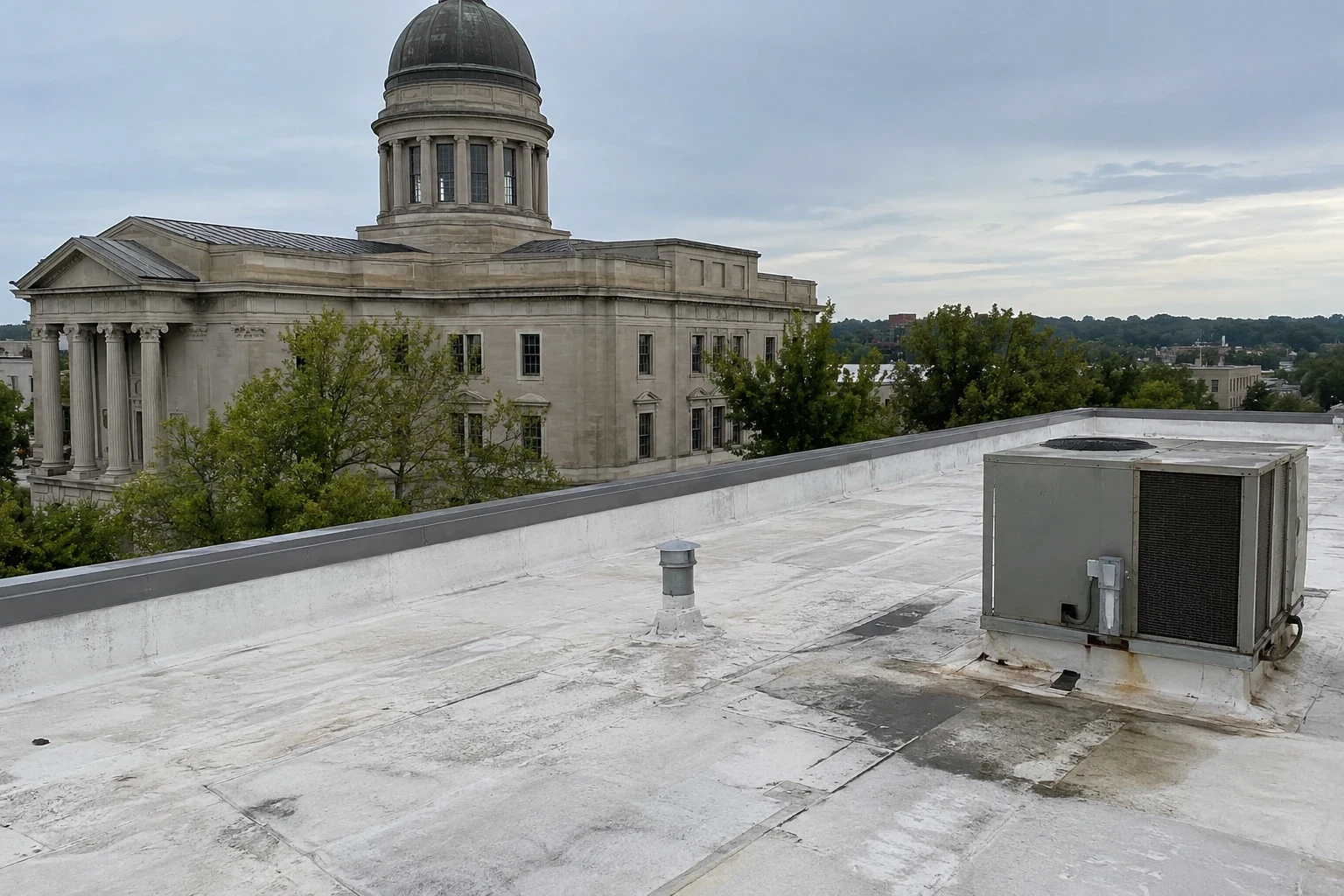
Public buildings in Chesapeake, from city offices and courts to libraries, community centers and public works facilities, usually have low-slope roofs that have been repaired many times and are expected to last as long as possible on a limited budget. One of the most common leak sources we find on these roofs is the drain. A drain that is partly clogged, has a loose clamping ring or has a cracked bowl lets water back up and get under the membrane right at the outlet. The leak shows up in an office ceiling, often near a column where the drain pipe runs down.
Government roofing also comes with its own process. Work needs to be scoped clearly enough to bid, approved through the right channels and done while the building stays open to staff and the public. We inspect the drain, the roof around it and the insulation underneath, and write up what we find in plain language with photos. That gives facility managers and procurement staff a clear description of the problem and the repair, so bids can be compared fairly and nothing important is left out.
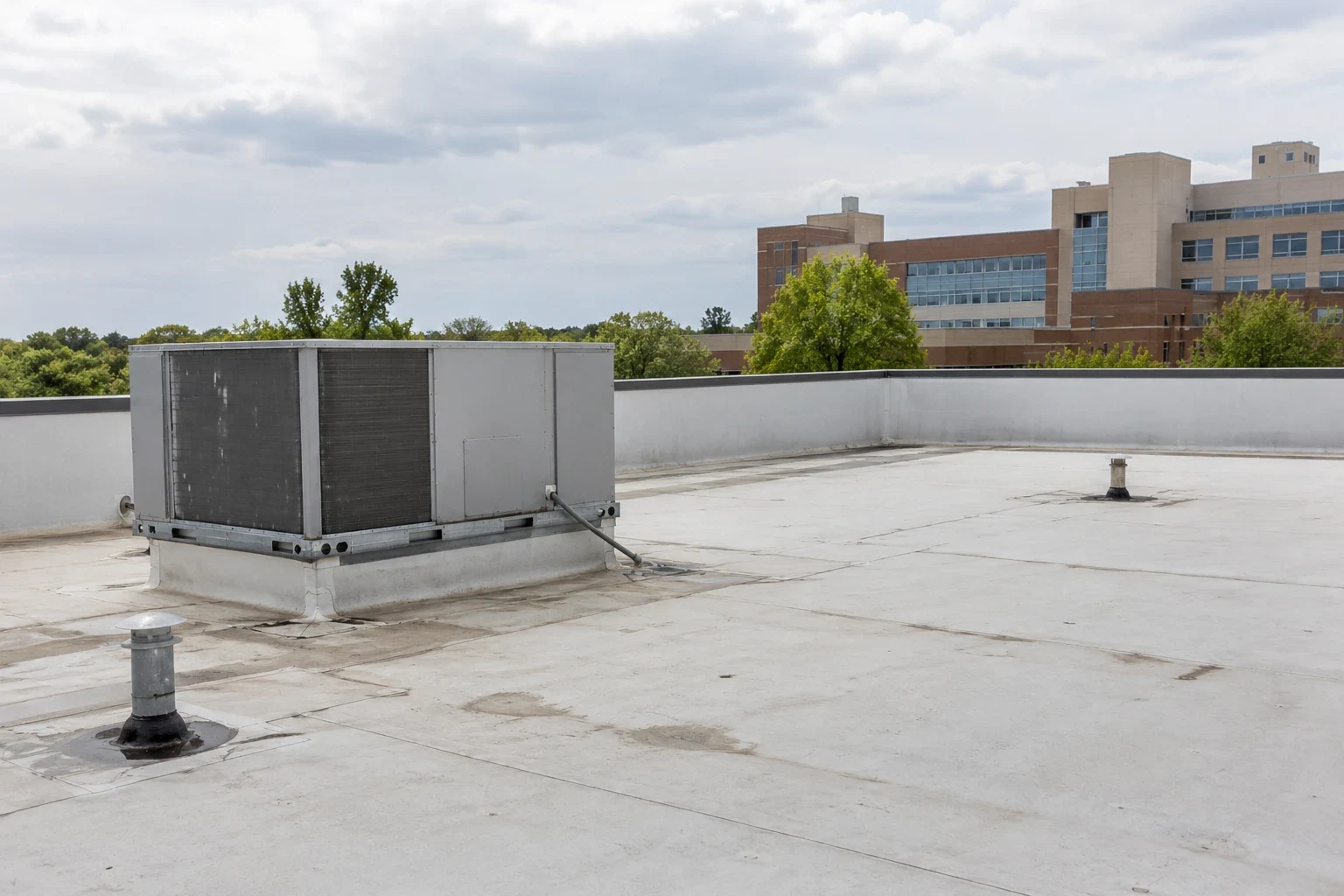
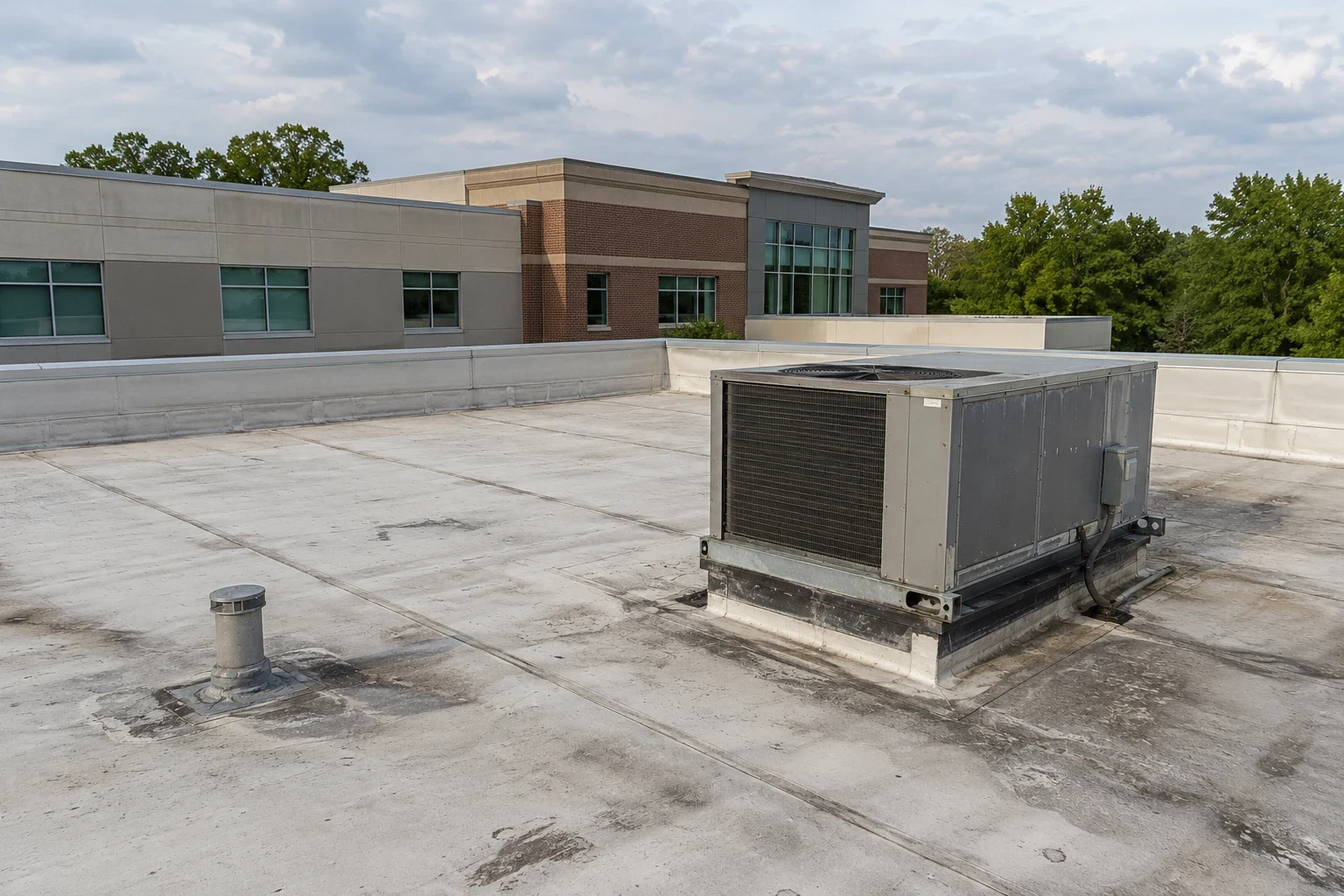
Clogged drain or failed drain
A drain that holds water may simply be blocked with leaves and debris, and clearing it restores flow. But many drains on older public buildings have deeper problems: the clamping ring that holds the membrane is loose or missing, the membrane around the drain has split, the drain bowl is cracked, or the insulation around the drain has crushed and left the outlet sitting higher than the roof around it. Clearing the strainer does not fix any of those.
Our roof drain and scupper repair work covers rebuilding the roof at the drain, replacing clamping rings and strainers, and resetting drains so water flows in instead of pooling around them. Water that gets in at a drain usually soaks the insulation nearby, and an infrared moisture survey can show how far it has spread. We confirm the results with core samples so the repair area is based on real conditions. If the drain pipe below the roof is broken, that goes to a plumber.
Working while the public is inside
Government buildings rarely close for roof work. Staff need to keep working, residents need to reach service counters, and meetings and hearings go on as scheduled. Before any area is opened, we work with the facility manager to identify which rooms sit under each phase, which need protection, and which events cannot have noise or crews overhead. Entrances and walkways under the work are protected or rerouted with clear signs.
Our roofing for occupied buildings approach keeps open areas small and seals every section at the end of the day. Noisy work and odor-producing adhesives are scheduled for low-traffic times, and air intakes near the work are noted. Rooms with records, computers or court equipment get extra attention. Facility staff receive a short daily update so they can keep employees and the public informed. If a public event or emergency meeting comes up, we can pause work or shift to a different section of the roof on short notice.
Writing a complete scope
Public bids are often compared on price alone, so the scope has to be complete enough that every bidder is pricing the same work. A bid that covers new membrane but leaves out wet insulation, drain rebuilding or flashing at walls and curbs may come in low and then grow through change orders. We write scopes that list the membrane, insulation, drains, flashings, edge metal and any allowance for unknown wet areas, with quantities and locations marked on a roof plan.
Our roof insulation and cover board work is often the part that gets underestimated. When we know how much insulation is wet, we include it in the scope. When we can't know until the roof is open, we include a unit price for extra replacement, so the cost of surprises is agreed before the job starts. That protects the agency's budget and keeps bids comparable. It also gives the inspector or project manager a clear basis for approving the finished work.
Public buildings around Cedar Road
The City of Chesapeake's municipal offices are located on Cedar Road in the Great Bridge area, and public buildings across the city range from older brick buildings to newer facilities with single-ply roofs. Each has its own roof history and its own decision makers. For government roofing in Great Bridge, we inspect the specific building named in the request and base the repair on what we find there.
The facility contact tells us where leaks appear, which rooms are most sensitive and what the approval and procurement process looks like. We inspect the drains, seams, flashings and insulation around the problem area and photograph everything. Where older drawings or previous bid documents exist, we compare them with the roof today.
The written report explains the cause, the recommended repair, the materials and a realistic schedule. If the agency needs a scope for public bidding, we can provide one that is clear and complete. Items outside roofing, such as plumbing, structural or HVAC concerns, are listed separately so they can be assigned to the right department or contractor.
Related buildings and closeout
Many public buildings are essentially offices, with staff, computers and files under the roof. Our office building roofing page covers working above occupied office space. Public works yards and municipal storage buildings are closer to warehouses, and our warehouse roofing page explains how we protect stored equipment and materials during roof work. Vehicle bays and shops often have exhaust and heaters that need careful flashing.
At the end of the job, the agency receives photos of every repair, a roof plan showing where work was done, a list of materials used and notes on any remaining issues. Those records help with future budgets and capital planning, and they give the next contractor a clear starting point. For public roofs, cleaning drains each spring and fall and checking after major storms is the least expensive way to avoid emergency repairs. A short inspection report after each visit makes the case for maintenance funding much easier.
Commercial Roofing Questions
Why does the leak show up near a column?
Drain pipes often run down along columns, and water that gets in at a failing drain follows the pipe down. The drain itself is usually the source.
Is clearing the drain enough?
Sometimes. But if the clamping ring is loose, the membrane is split or the bowl is cracked, the drain needs to be rebuilt, not just cleared.
Can the building stay open during roof work?
Yes. We keep open areas small, protect entrances and sensitive rooms, schedule noisy work for quiet times and seal the roof every day.
How do you handle unknown wet insulation in a public bid?
We include known wet areas in the scope and a unit price for any extra found when the roof is opened, so surprises are priced in advance.
What records does the agency receive?
Photos, a roof plan of the work, a materials list and notes on remaining issues, which help with budgeting and future repairs.
Have the government building drain leak inspected
Tell us which building and which rooms are affected. We will inspect the drain and the roof around it and send photos with a written scope you can use for bidding or approval.