
When an old coating starts cracking and peeling over an office hallway, the first question isn't which new coating to buy. It's why water is getting through. Acrylic roof coatings in Chesapeake, VA can add years to a sound roof, reflect summer heat and cover weathered seams, but only if the roof underneath is in good enough shape to hold them. On an office building roof, we start by finding the actual leaks and checking which rooms and rooftop units sit below them.
The same applies to medical offices and other occupied buildings. We look at the roof edge, the curbs, the drains and the field before recommending a coating. Loose edge metal or a failed curb flashing has to be rebuilt before any coating goes down, and those repairs belong in the coating estimate, not as an add-on later. Weather matters too: acrylics need dry surfaces, mild temperatures and time to cure before rain. And a nice-looking top layer of old coating tells us nothing about whether the insulation underneath is dry, so we check before we quote.
Cracked coating vs. an open seam underneath
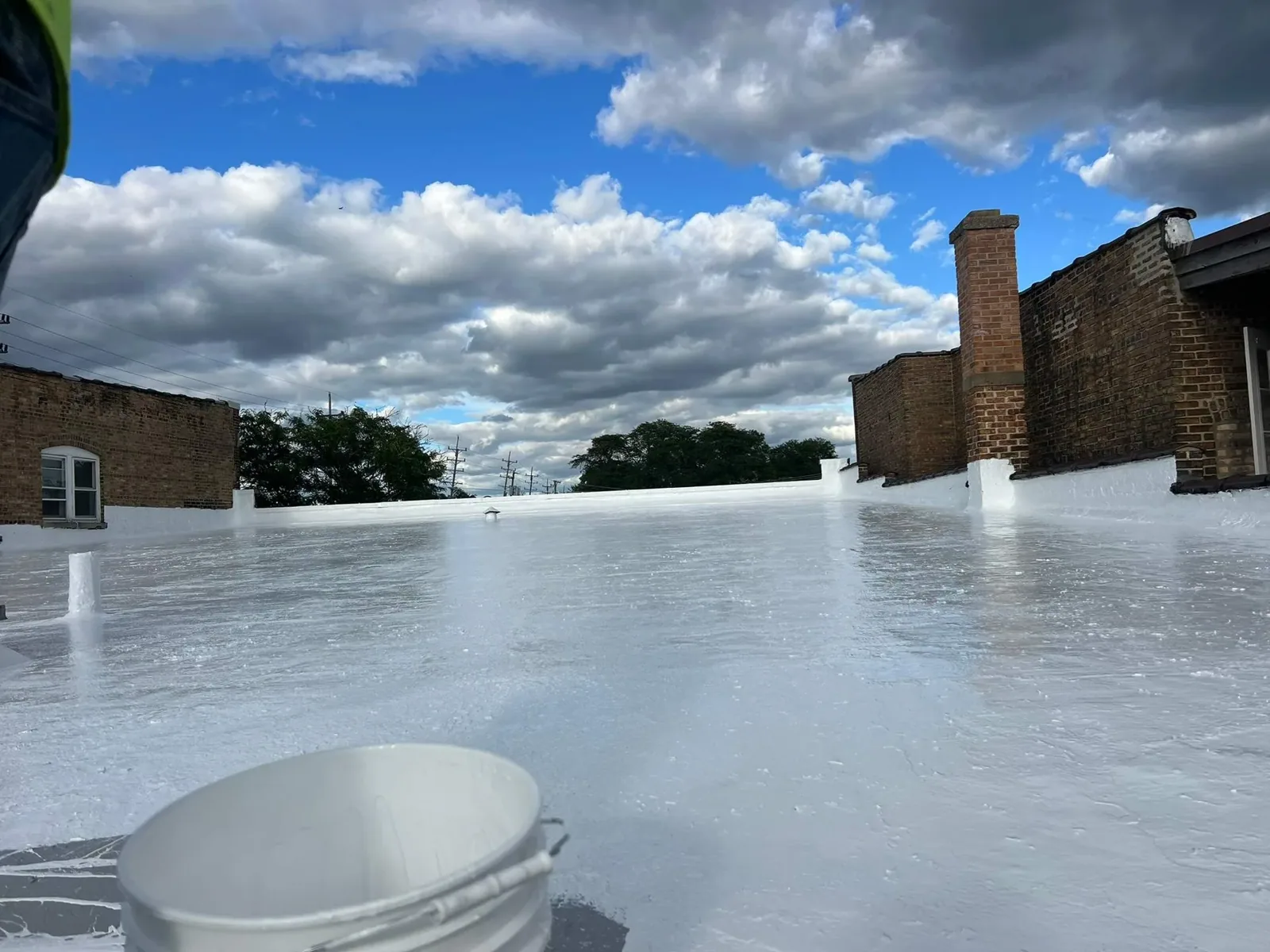
Hairline cracks in an old coating and an open seam in the membrane below are two different problems. The first is cosmetic until it lets water through; the second is a direct path into the building. We inspect both. We also need to know what the roof actually is: an older acrylic coat, a modified bitumen roof, a single-ply membrane or a metal roof all prepare differently, and not every coating sticks well to every surface. If past coatings are peeling, they have to come off before anything new goes on.
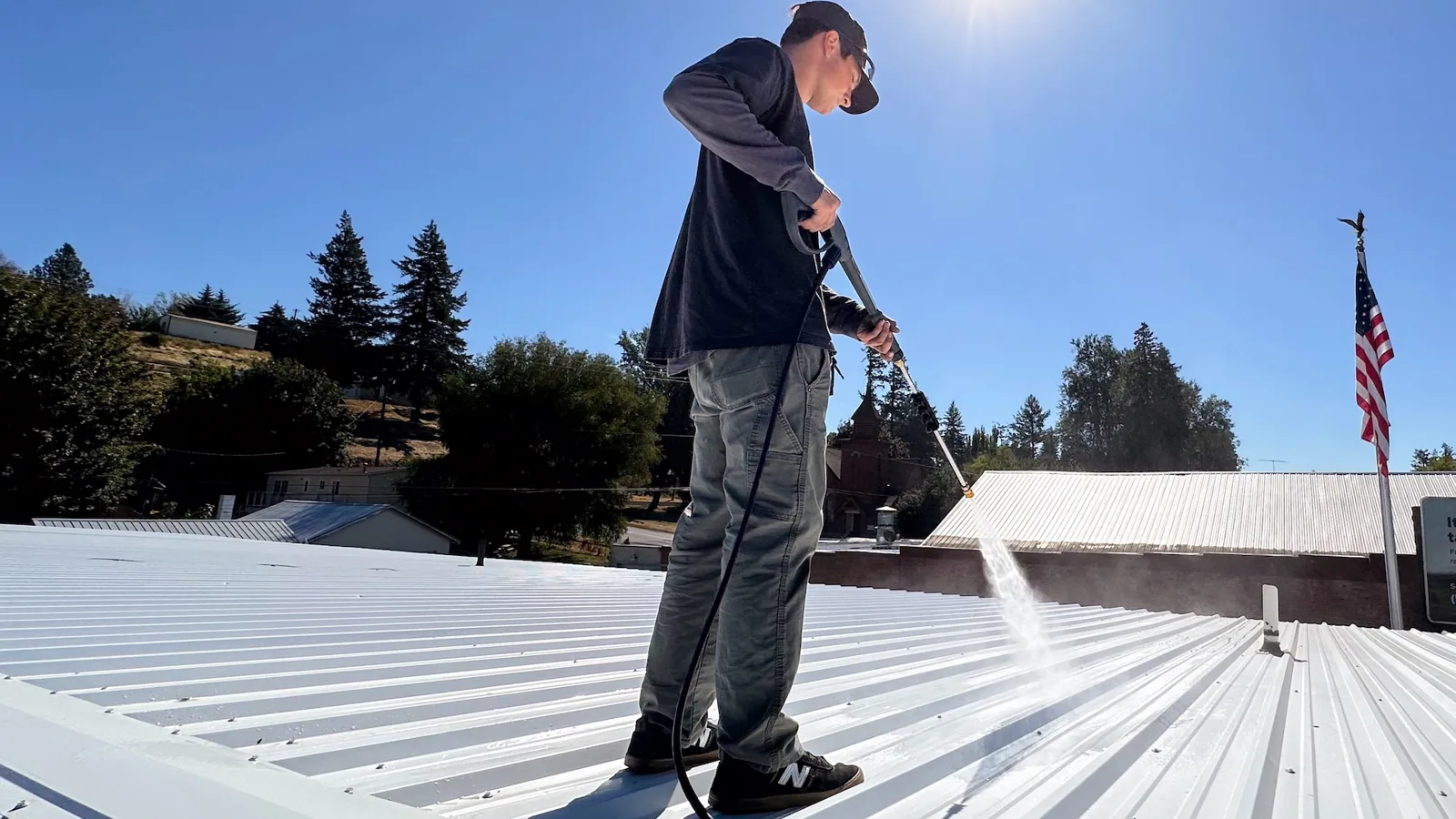
Preparation is where coating jobs succeed or fail. That usually means power-washing, removing loose material, repairing seams and blisters, and priming where the manufacturer calls for it. On some roofs we run an adhesion test patch first to confirm the coating will bond. Your estimate should list every one of those steps, not just gallons and square footage. If a section of the roof isn't ready, such as a curb waiting on an HVAC contractor, we hold it out and coat it later rather than coat around the problem and call it done.
Fix the details before the field gets coated
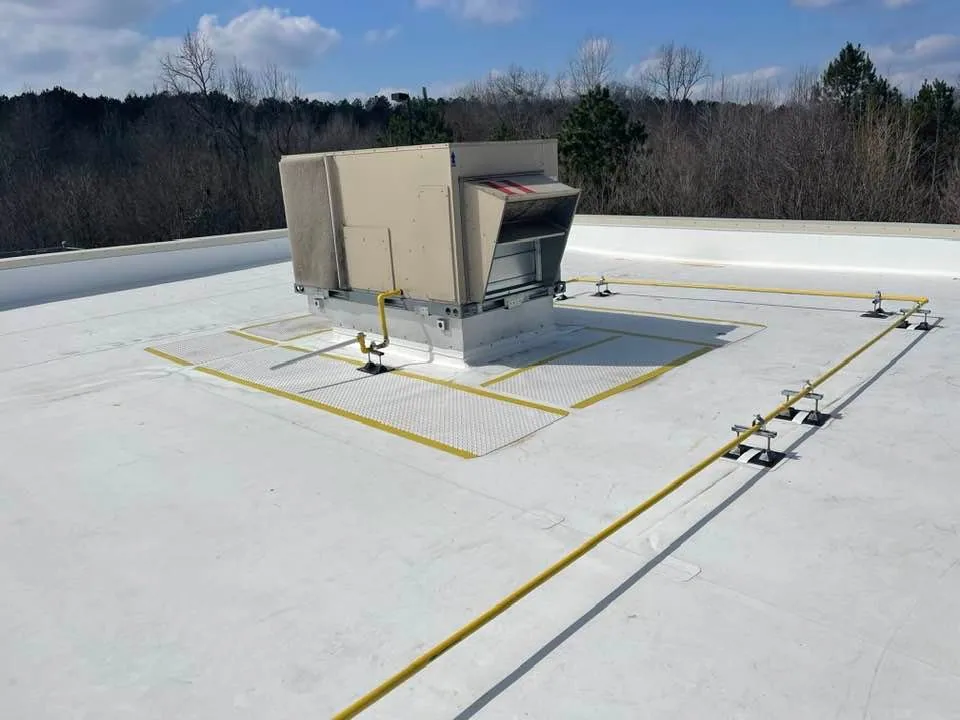
Leaks rarely come from the open middle of the roof. They come from pipes, curbs, vents and drains, where materials meet and the building moves. A coating can't hold together a penetration flashing that's already split. Each of those details gets rebuilt first with the reinforcing fabric and repair materials the coating manufacturer specifies for that type of roof. Then the field coating goes over the top. Skipping that step is the most common reason a new coating starts leaking within a year or two.
Drains deserve special attention. If water sits around a drain for days after a storm, our roof drain and scupper repairs look at why. It may be a clogged strainer, a sagging deck or a drain set too high. Coating over a drain doesn't make water flow to it any better. We clear or rebuild the drain flashing first and tell you if a plumber needs to check the line below. And if a mechanical contractor needs to move a unit before we can reach the flashing around it, we schedule around them so that detail gets done properly instead of skipped.
Wet insulation and ponding water
Water that gets in through a split seam doesn't stay put. It spreads into the insulation, sometimes far from the leak. A dry surface after a sunny day doesn't mean the insulation underneath is dry. Before quoting a coating, we use roof records, a walk of the roof and, where needed, an infrared scan or core cuts to find wet areas. Wet insulation has to be cut out and replaced; coating over it traps the moisture, which can blister the new coating and keep rotting the deck.
A full roof coating restoration estimate ties all of that together: the areas being kept, the repairs, the wet insulation being replaced and the coating itself. If we find more wet material once work starts, we show you before we expand the job, and the roof stays sealed in the meantime. Remember that adding insulation or thickness can shorten flashing heights at curbs and doors, so those details are planned ahead.
Acrylics also don't handle standing water well. Areas that pond after rain need to be fixed or handled with a different product before we choose acrylic.
Acrylic, silicone or foam?
Acrylic isn't the only option. Silicone roof coatings handle ponding water better and are often used on roofs with low spots, while acrylics are generally easier to recoat later and hold up well on roofs that drain freely. They need different primers, repair materials and application conditions, and they don't bond well to each other, so the choice affects future maintenance. We compare both on your roof with the same scope of repairs, so you see a fair difference in price rather than a cheap number that left out the prep.
Spray polyurethane foam is a different animal: it adds insulation and can rebuild low spots, but it's a full roof system with its own coating on top, not just a surface treatment. It needs a clean, dry, solid surface and careful detail work. Foam, acrylic and silicone all cost differently per square foot, and they disrupt the building differently while the work is done. Whichever option you choose, our estimate includes the same detail repairs, interior protection and coordination with other trades, so you're comparing like with like.
Coating projects around Greenbrier and Great Bridge
For coating projects in Greenbrier or Great Bridge, we look at each building on its own. Two office buildings on the same street can have completely different roofs underneath. We work around your tenants' hours, keep coating overspray away from cars and air intakes, and only apply when the weather and the surface meet the manufacturer's requirements. Any curb or unit we can't reach yet stays on the list until it's done, so a finished-looking roof doesn't hide an open detail.
When the job is done, you'll get a short write-up of what was wrong, what we repaired and what we applied, with photos. It includes the areas we prepped, the products used and any adhesion or thickness checks we performed. If anything was left for later, like a wet section that needs replacement or a unit waiting on a mechanical contractor, it's listed clearly. Warranty terms depend on the specific product and system, and we'll go over those documents with you rather than promise a number of years upfront. Good records make the next inspection or recoat faster and cheaper.
Commercial Roofing Questions
What should an acrylic coating estimate include?
It should name the coating products, list the repairs to seams, flashings and drains, describe surface prep and any wet insulation replacement, and then give the coating quantity. If it only lists square footage, it's missing the work that makes coatings last.
Can you tell if the roof underneath is sound just by looking at it?
No. Wet insulation can sit under a surface that looks fine. We use a roof walk, infrared scans or core samples to check before we recommend coating.
What happens at drains during a coating job?
We clear the drain, rebuild the flashing around it if it's damaged and make sure water flows to it. If the pipe below is blocked, a plumber handles that part.
How do I compare acrylic and silicone quotes?
Make sure both quotes cover the same repairs, prep and roof area. Then compare the products themselves: silicone handles ponding water better, while acrylic is often easier to recoat later.
What records should I get when the job is finished?
Photos, a list of repairs, the products and coverage used, and any items left for later. Keep these with your warranty paperwork for future inspections.
Trace the weakness beneath the cracked protective film
Send us photos of the cracked coating or leak area and any roof records you have. We'll inspect the roof, tell you whether coating makes sense, and send a clear estimate.