
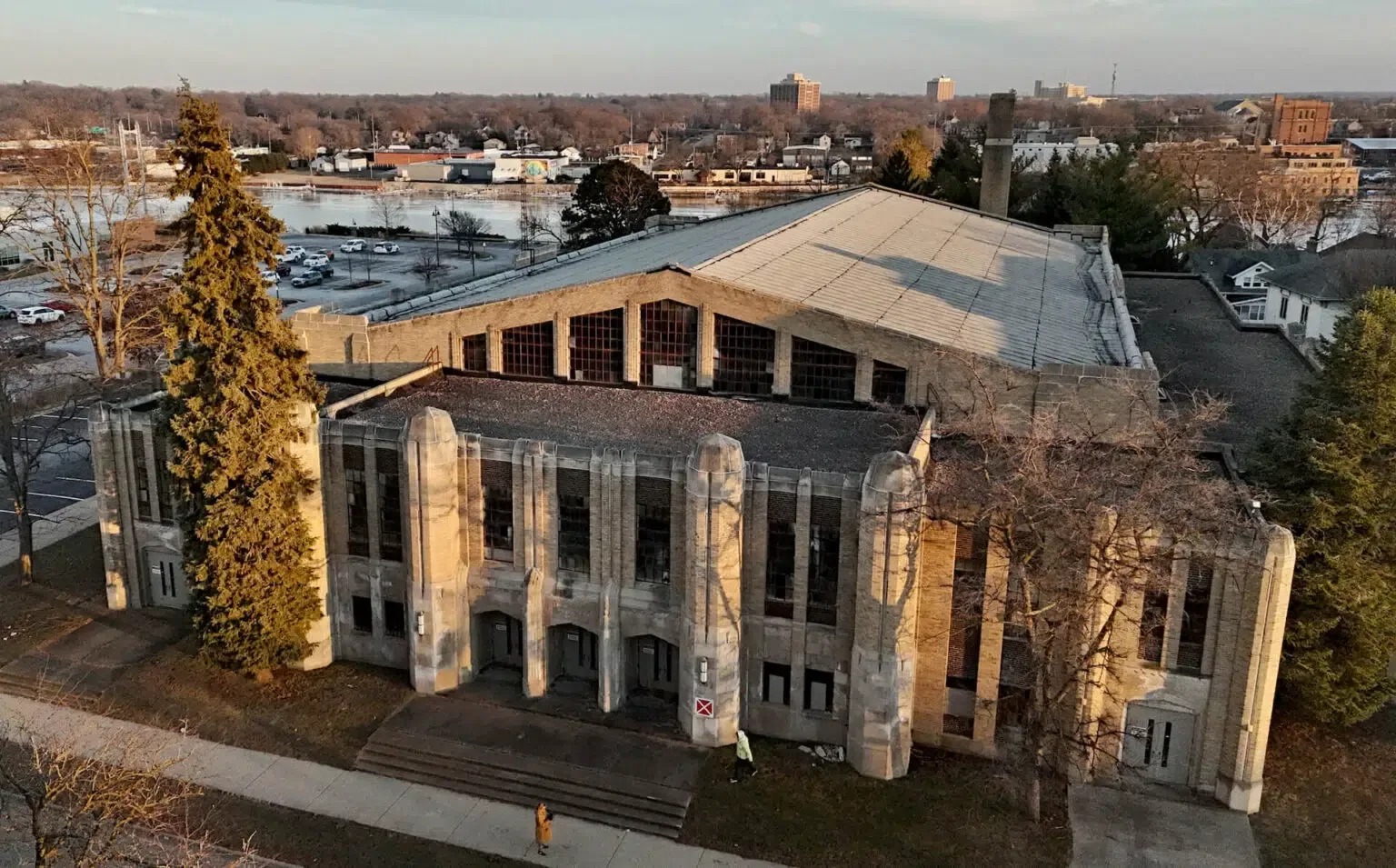
Armories are working buildings. They hold drill halls, offices, classrooms, supply rooms, vehicle bays and secure storage, and many have been expanded several times over the decades. Each addition usually meets the original building at an expansion joint or a raised wall, and those junctions are where armory roofs most often leak. The joint cover splits, the flashing at the raised curb pulls loose, or water from a higher roof pours onto a lower one and overwhelms the detail.
Because water that gets in at a joint can travel along the deck or inside the wall, the stain in the drill hall may not line up with the opening above. We inspect the joint and the raised details on both sides, look at how water drains toward them from the surrounding roofs and test the insulation for moisture. You get photos and a written repair plan, scheduled around drill weekends, training and the facility's access rules. If part of the problem lies in the wall or structure, we say so clearly so the facility can bring in the right specialist.

Expansion joints that have to move
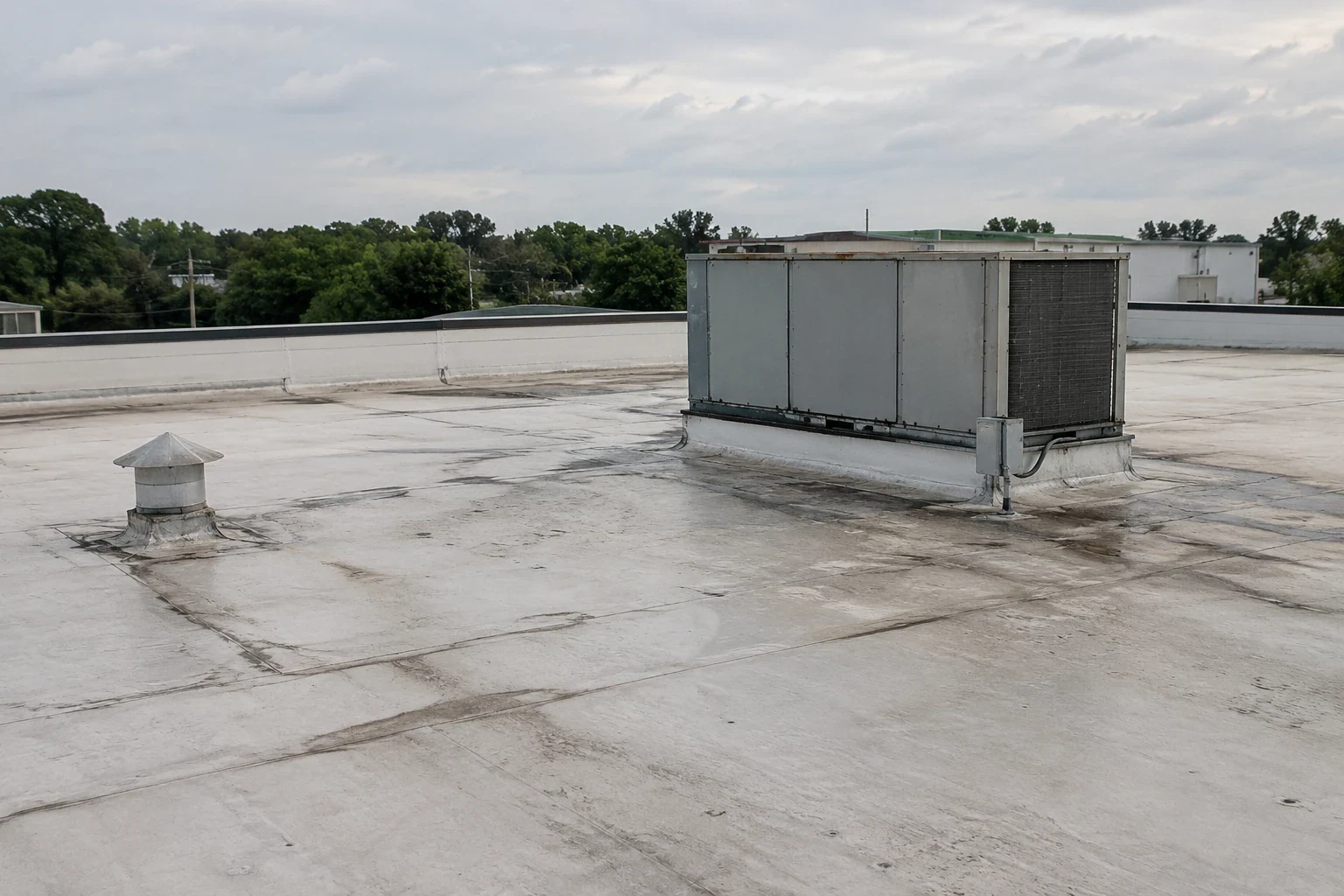
An expansion joint lets two parts of a building move independently as temperatures change and the structure settles. The roof over that joint has to move too. A properly built joint has raised curbs on each side and a flexible cover that bridges between them. Over time, the flexible material splits, the edges pull away from the curbs, and sealant cracks. A rigid patch over the joint will crack again almost immediately, because the building keeps moving. Many armory joints have been patched this way more than once, which is why they keep leaking.
Our flashing and raised-detail repair work covers removing the failed joint cover, checking the curbs on both sides and installing a new flexible cover designed for the movement. If the curbs are too low, rotted or damaged, we rebuild them first.
Water that has been getting in at the joint usually soaks the insulation on both sides. Our roof insulation and cover board work replaces that wet material before the new joint goes on, so the repair sits on dry, solid roof. Any deck damage under the joint is photographed and reported before the work expands.
Water from neighboring roofs
Additions are often built at a different height from the original armory. When a higher roof drains onto a lower one, a lot of water lands in one place, sometimes right at the joint or the base of a wall. Gutters and downspouts from the upper roof can overflow in heavy rain and send water straight into the detail. Before repairing the joint, we follow the water from every roof that drains toward it.
Our roof drain and scupper work can extend downspouts, add splash protection on the lower roof, clear or rebuild drains and add scuppers where water has nowhere to go. Improving drainage near the joint takes pressure off the new detail and helps it last. We mark ponding areas and drainage problems on the roof plan so the facility can see where water collects after storms. Debris from trees and from the upper roof tends to collect at the joint, so we also recommend how often it should be cleared.
Working around drill and training
Armories are busiest on drill weekends and during training periods, and some areas, such as arms rooms and secure storage, have strict access rules. Before scheduling, we go over the training calendar with the facility manager and agree on when crews can be on the roof, which rooms sit under each phase and what protection is needed below. Noisy work is scheduled for quieter weekdays where possible.
Our military and government facility roofing page covers worker clearances, vehicle access, safety plans and coordination with facility staff. On the roof, we keep the open area small and seal every section at the end of the day. Drill halls and vehicle bays below the work are cleared or protected as agreed, and the facility gets a short daily update. Vehicles and equipment parked in bays under the work are moved or covered before the roof above is opened, and any unexpected condition is reported the same day with photos.
Armories around Norfolk
The Virginia National Guard's armory in Norfolk, named the Arnold Lindblad Armory in 2019, is one example of the many Guard facilities in Hampton Roads. Each armory has its own history of additions, roof systems and repairs, so we inspect the specific building and roof detail named in the request rather than relying on how another armory was built.
For armory roofing coordinated near Norfolk, the facility contact identifies the building, the leak location, the rooms below and any access or security requirements. We confirm the roof systems on each side of the joint, measure the curbs and joint opening and check the insulation for moisture.
The proposal explains the cause, the repair, the schedule and how training areas below will be protected. Structural questions about the joint or the building go to the facility's engineers. If conditions differ from what was expected once the roof is opened, we document them with photos and get a decision before changing the work. You end up with a scope that can be reviewed, budgeted and approved without guesswork.
Related military buildings
Army installations in the region have barracks, offices and training buildings with similar wall flashing and joint problems. Our Army installation roofing page covers repairs on those buildings, including recover decisions and drainage changes. Naval buildings near the water add salt air and coastal storms to the mix. Our naval facility roofing page explains how we handle drains, wet insulation and occupied rooms there. Corrosion-resistant metal and fasteners are a must on those roofs.
At the end of every armory project, the facility receives photos, a roof plan of the work, a list of materials and notes on anything other trades still need to handle. Those records help the next maintenance cycle and make it easier to check whether a future leak is new. Inspecting expansion joints and drains in spring and fall, and after major storms, is the cheapest way to keep them working. A short report after each visit gives the facility a running record of the roof.
Commercial Roofing Questions
Why does the armory leak where the addition meets the original building?
The two parts of the building move independently at an expansion joint. When the flexible joint cover splits or pulls loose, water gets in. Rigid patches crack again because the movement continues.
Can the joint be sealed with caulk?
Only briefly. The joint needs a flexible cover on raised curbs so it can move with the building without opening up.
Why does drainage matter for joint leaks?
Water from higher roofs often lands right at the joint. Extending downspouts, adding splash protection or improving drains takes pressure off the new detail.
Can work be scheduled around drill weekends?
Yes. We plan around the training calendar, keep noisy work to quieter days and coordinate access to secure areas with facility staff.
What records does the facility receive?
Photos, a roof plan of the repairs, a materials list and notes on any structural or other trade items still to be addressed.
Have the armory roof joint inspected
Tell us where the joint or leak is and which rooms below are affected. Once access is arranged, we will inspect the detail and send photos with a plain repair plan.