
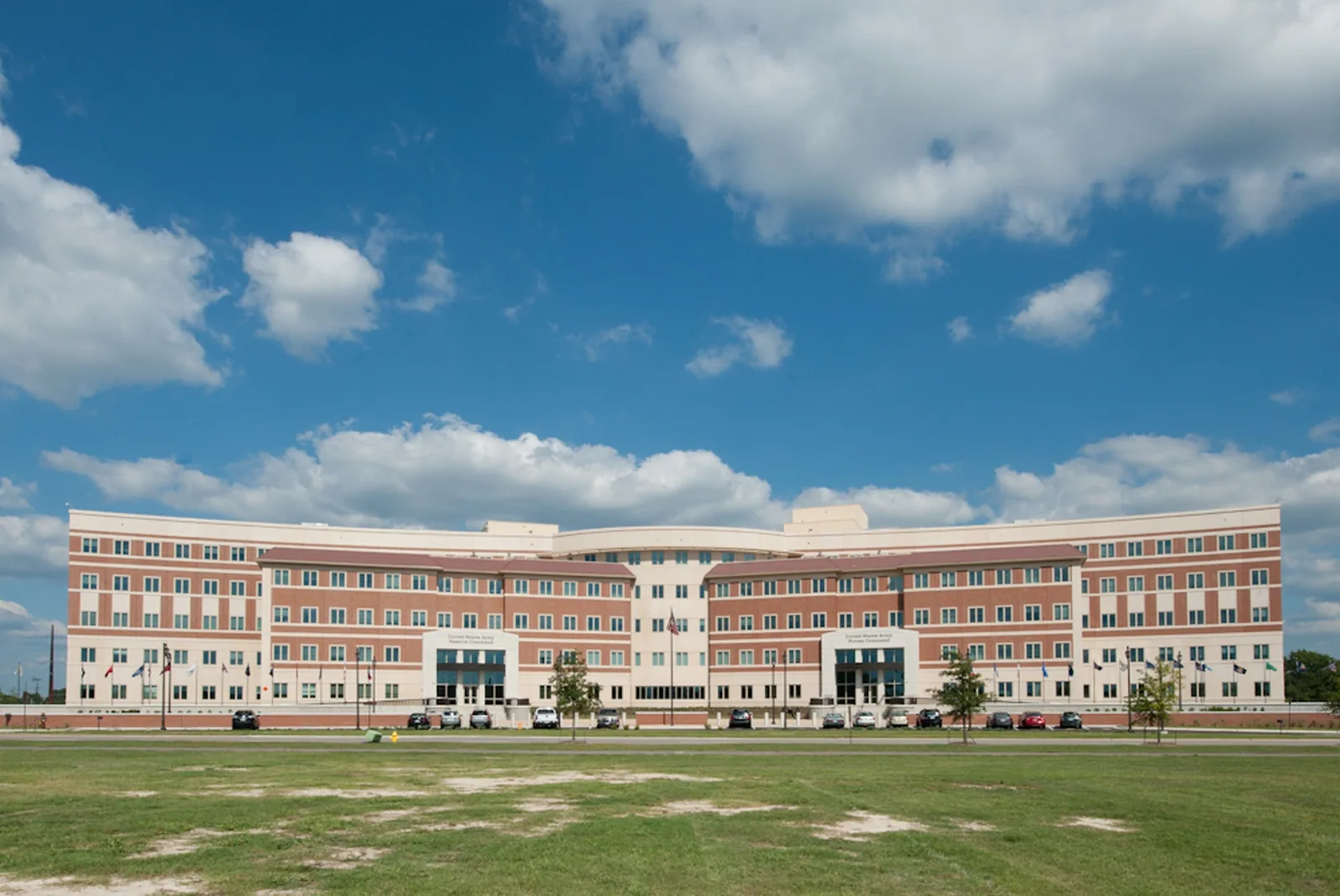
Army buildings in Hampton Roads range from barracks and offices to motor pools, training buildings and storage. Many have low-slope roofs that have been repaired several times over the years. The leaks we are asked about most often come from raised details: the flashing where the roof meets a parapet or higher wall, curbs around rooftop units, and the transitions between roof sections at different heights. These details take the brunt of wind-driven rain, and water that gets behind them can travel inside the wall before it shows up in a room.
Fixing these leaks properly means more than caulking the top of the flashing. We open the detail, check the wall and the insulation behind it, and find how far water has spread. Then the flashing is rebuilt so it sheds water instead of relying on sealant. On an installation, we also plan around access rules, occupied rooms and the approved design for the building. You get photos and a written scope that facility staff and contracting officers can review.
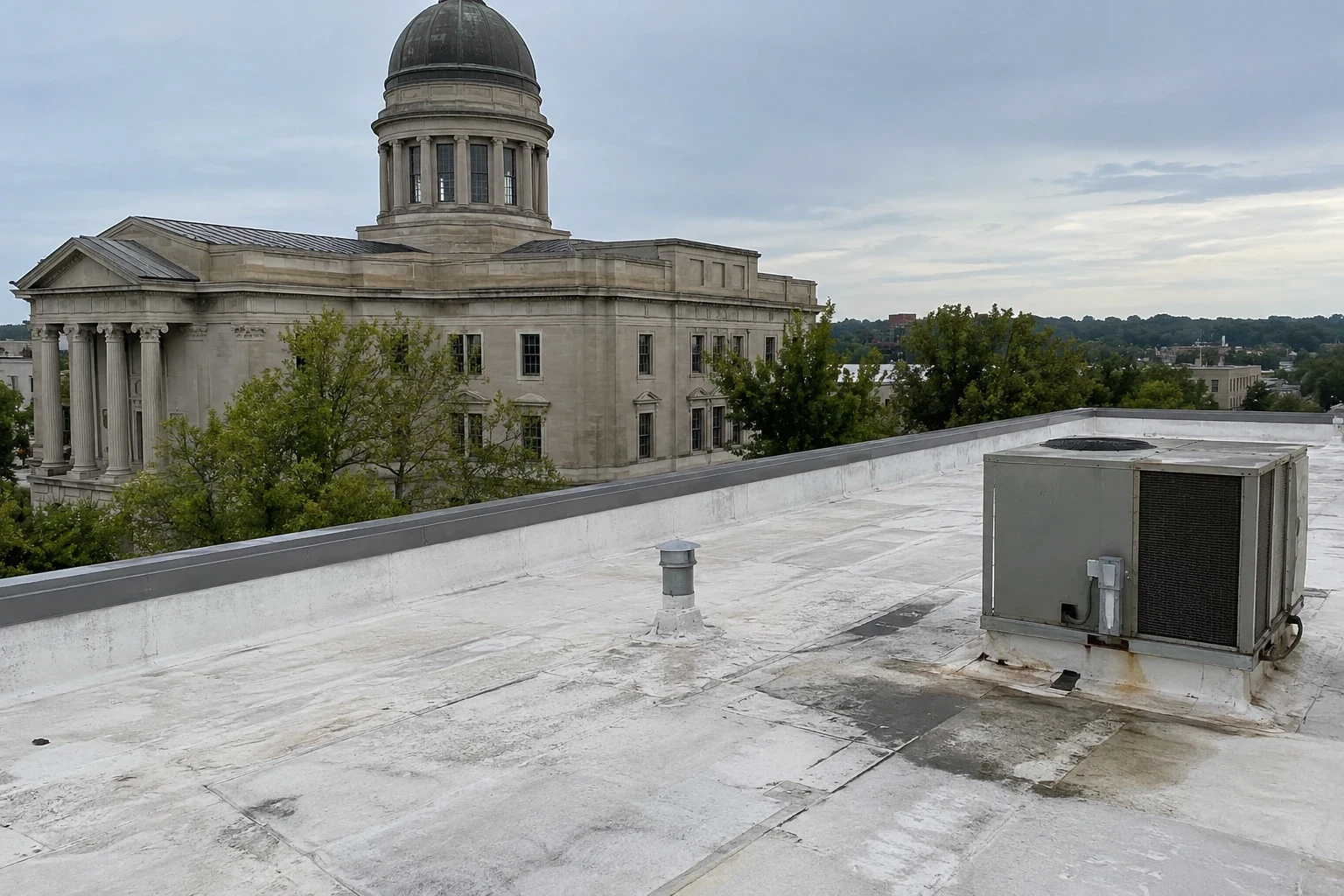
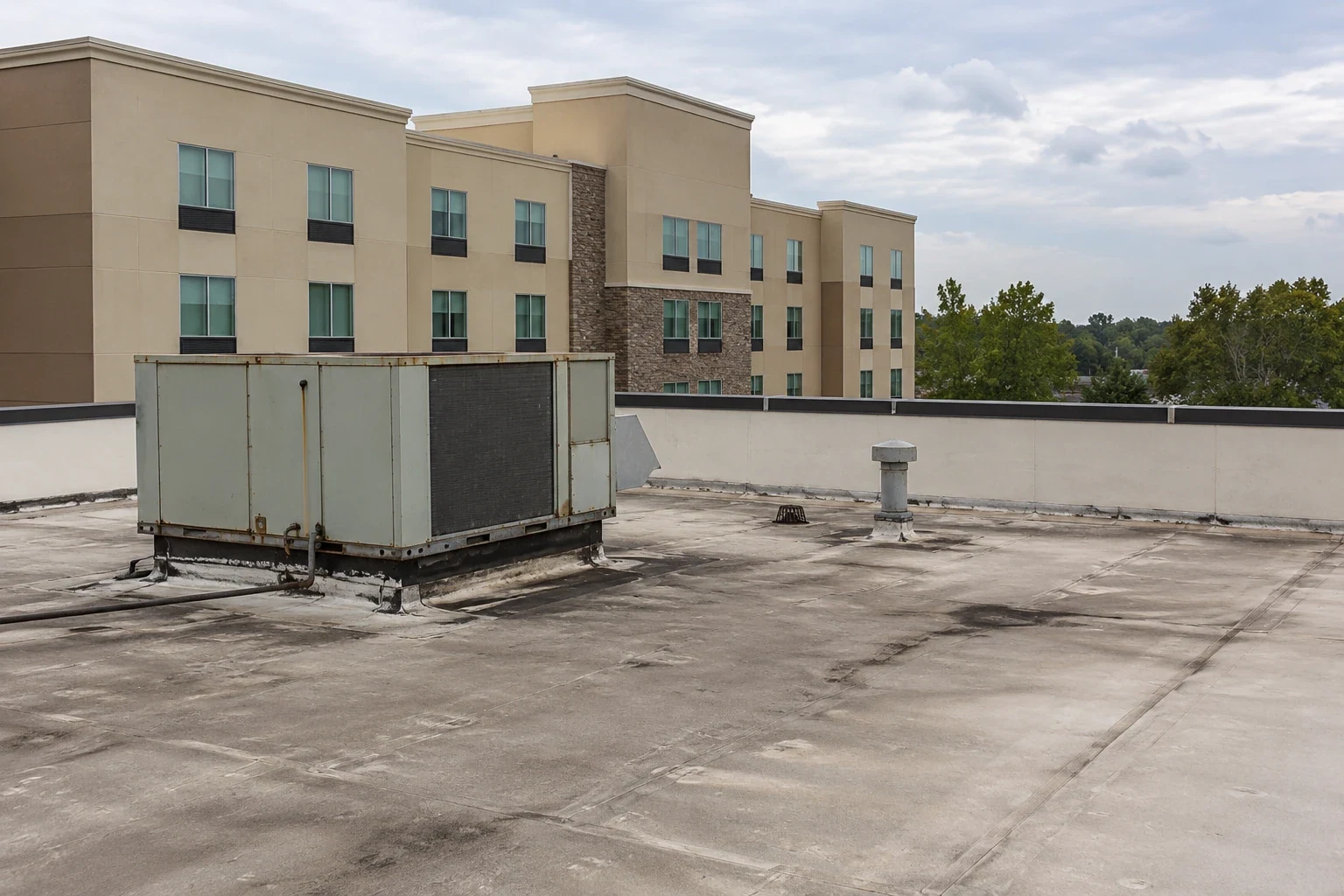
Flashing at walls and raised details
A wall flashing has to be attached to something solid at the top, lapped correctly onto the roof at the bottom and covered by a counterflashing or coping so water cannot get behind it. Over time, the top edge pulls loose, sealant dries out and the wall itself may crack or lose mortar. Once water gets behind the flashing, it runs down into the roof insulation and sometimes into the wall cavity. Interior symptoms can appear well away from the actual opening. That is why patching the ceiling or the spot above it rarely solves the problem.
Our flashing and penetration repair work covers removing the old flashing, checking and repairing the substrate behind it, replacing wet insulation at the base, and installing new flashing to a proper height with secure termination at the top. If the wall itself is leaking above the roof, through cracked masonry or failed joints, we point that out so the right trade can repair it. A new flashing cannot stop water coming through the wall above it.
Working over barracks rooms and offices
Many Army buildings stay occupied during roof work, including barracks where soldiers live. Noise, odors from adhesives and access to stairways and entrances all affect the people inside. Before we start, we agree with facility staff on work hours, which rooms sit under each phase of work, and how residents and occupants will be notified. If certain rooms need to be cleared or protected, that is arranged in advance. Work that produces strong odors, such as some adhesives, is scheduled when the building is less occupied where possible, and air intakes near the work are noted so fumes do not get drawn inside.
Our roofing for occupied buildings approach keeps the open area small, seals each section before the crew leaves, and checks rooms below after rain until the repair is complete. Any HVAC shutdown or temporary outage is scheduled with the facility. Walkways under the work are protected or closed off, and debris is cleaned up daily. Facility staff get a short daily update so they can answer questions from occupants. Any problem found during the day, such as wet insulation or a damaged deck, is reported the same day with photos.
Can the existing roof stay?
Recovering an older roof with new membrane is often cheaper and faster than a full tear-off, but only if the existing roof is dry and solid enough to stay in place. Wet insulation trapped under a recover keeps damaging the deck and loses its insulating value. There are also limits on how many roofs can be stacked on one building. We take cores and run moisture checks before recommending a recover, so the decision is based on the actual roof. If only part of the roof is wet, those areas can be removed and replaced before the recover goes on.
A roof recover can be a good choice when most of the existing roof is dry and only isolated areas need replacing. Drainage matters too. New insulation raises the roof surface, which changes how water reaches the drains. Our roof drain and scupper work makes sure drains are reset or extended to match the new roof height, so water does not pond at the outlets after the recover is finished. Edge metal, curbs and wall flashings are also raised to suit the new roof height.
Fort Eustis and nearby installations
Fort Eustis, now part of Joint Base Langley-Eustis, includes barracks along with training, maintenance and administrative buildings. Each building has its own roof construction and repair history, so we inspect the specific building named in the request rather than assuming it matches another one. Work there involves the installation's access and security rules, which we plan around from the start. That includes worker clearances, vehicle access, delivery routes and any restricted areas near the building.
For roof work coordinated near Newport News, the facility contact identifies the building, the affected rooms and any phasing needed to keep it occupied. We confirm the existing roof system, measure the wall and curb details that need repair and check the insulation near the leaks. Where records exist, we compare them with what is on the roof now, since many buildings have been modified since the drawings were made.
The proposal spells out the work, the materials, the phases and any items that depend on design decisions or other trades. Questions about the structure, building systems or wall repairs go to the right specialists. If the approved design does not match what we find once the roof is open, we document the difference and get a decision before changing the work. You end up with a scope a contracting office can review, compare and approve.
Related military buildings
Barracks have their own concerns: people sleeping below, limited working hours and strict notice requirements. Our military barracks roofing page goes into more detail on how we work above residential rooms, including edge repairs and phased work. The same principles apply to any occupied building: small open areas, daily dry-in and clear communication with residents and staff. Barracks often have many rooftop vents and exhaust fans, so penetration details get careful attention.
Warehouses and depots on base have large roofs over stored equipment and supplies, and leaks there can damage expensive inventory. Our military warehouse roofing page explains how we protect stored contents and coordinate deliveries with shipping and receiving. Whichever building type is involved, the repair starts with an inspection of that roof, fixes the cause of the leak, replaces wet material and leaves the facility with clear records. Those records make the next inspection, repair or budget request much easier for whoever manages the building.
Commercial Roofing Questions
Why does water show up far from the leaking wall flashing?
Water that gets behind a wall flashing can run inside the wall or through the insulation before it reaches the ceiling. We trace it back to the opening instead of patching where the stain appears.
How are barracks occupants affected by roof work?
We agree on work hours, notices and any room protection with facility staff, keep open areas small and seal the roof each day so residents are disturbed as little as possible.
When is a roof recover a good choice?
When the existing roof is mostly dry and solid. We take cores and run moisture checks first, because wet insulation should not be trapped under a new membrane.
Do drains need work during a recover?
Usually. New insulation raises the roof surface, so drains have to be reset or extended to match the new height or water will pond around them.
What if the approved design does not match the roof?
We document the difference with photos and measurements and send it to the facility or contracting officer for a decision before changing the work.
Have the Army roof wall flashing inspected
Tell us which building and which rooms are affected. Once access is approved, we will inspect the roof and send photos with a plain explanation of a lasting repair.