
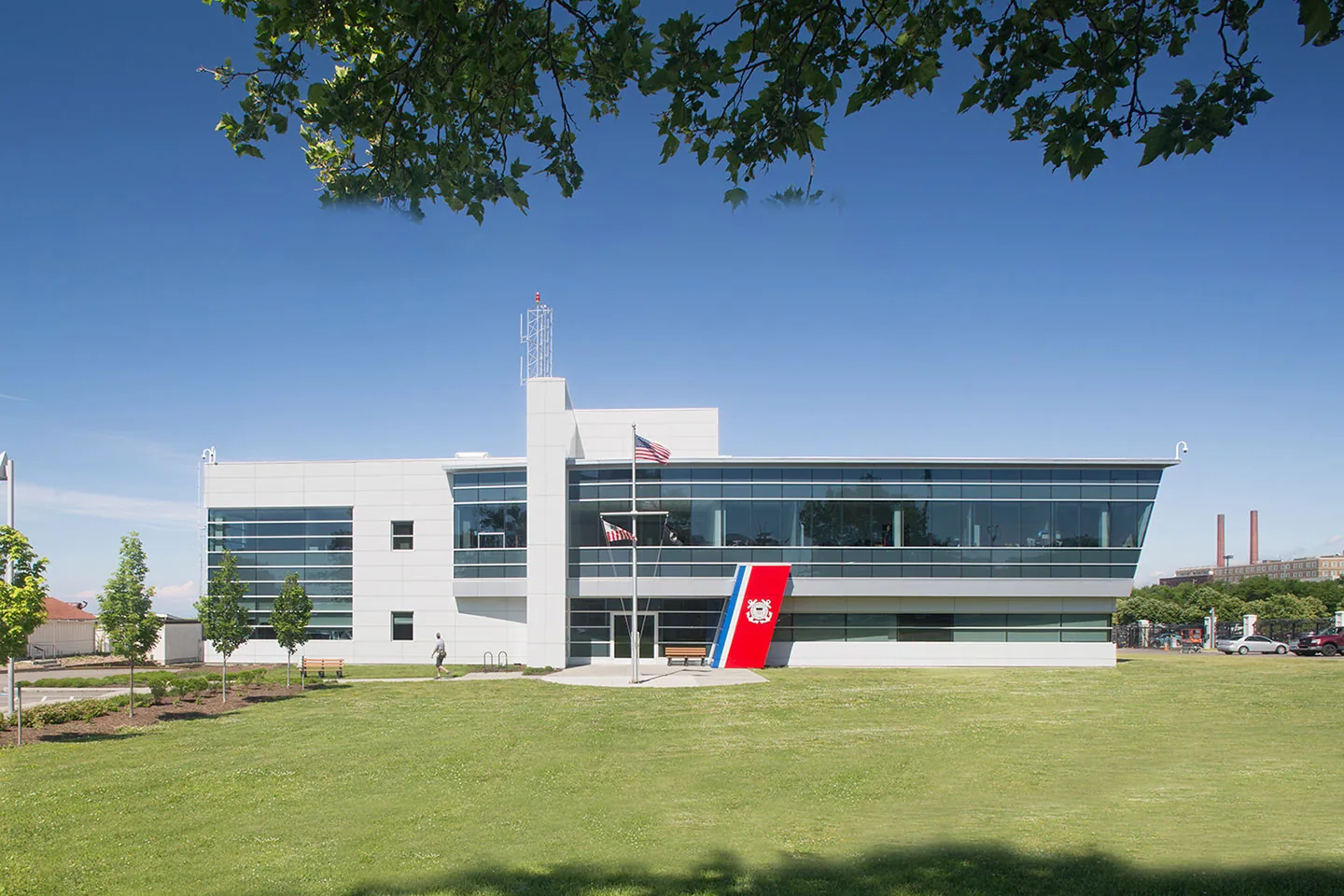
Coast Guard buildings sit right on the water, and their roofs take the full force of coastal weather: salt air, wind-driven rain, nor'easters and tropical storms. Metal corrodes faster, sealants break down sooner and flashings get pushed harder by wind than they would a few miles inland. The leaks we are asked about most often come from the junction between a low roof and a taller wall, where the flashing has pulled away or the wall behind it has deteriorated. Water gets behind the flashing and runs down into the roof and the rooms below.
Office and operations buildings on these stations are usually occupied around the clock, so a leak affects people, equipment and paperwork right away. We inspect the wall flashing, the counterflashing and the wall surface above, check how water drains away from the wall, and test the insulation near the leak for moisture. You get photos and a written explanation of the cause and the repair, plus a plan that fits the facility's access and security requirements. If part of the problem is in the wall itself, we say so clearly so the right trade can be brought in.
Rebuilding the wall flashing
A wall flashing only works if it is fastened to a solid surface at the top, lapped properly onto the roof at the bottom and protected by a counterflashing or coping. On older buildings near the water, the wood or masonry behind the flashing often deteriorates. Fasteners rust out, mortar joints crumble and the top of the flashing starts to peel away in high wind. Caulking the top edge does not hold for long because there is nothing solid behind it to hold onto.
A proper flashing failure repair removes the old flashing, repairs or replaces the backing on the wall, replaces wet insulation at the base and installs new flashing with a secure top termination and a new counterflashing. We use corrosion-resistant metal and fasteners suited to the coastal environment. If the wall above the flashing is letting water in through cracks or open joints, we point it out, because new flashing cannot stop water that enters the wall higher up.
Drainage along the walls
Water often collects along the base of a wall, especially where the roof slopes toward it or where a drain or scupper is nearby. If a drain is slow or a scupper is partly blocked, water can stand against the flashing for hours after a storm, and even a small gap will let it in. Before we divide the job into phases or decide how far the repair needs to reach, we look at where water flows and pools along the wall.
Our roof drain and scupper work includes clearing and repairing drains, rebuilding the roof around the drain bowl and resizing or adding scuppers where water has nowhere to go. In some cases tapered insulation can move water away from the wall toward the drains. Good drainage takes pressure off the flashing and makes the whole repair last longer. We note any ponding areas on the roof plan so the facility can see where water stays after rain.
Base access and occupied buildings
Work on a Coast Guard facility requires coordination with the base for worker access, vehicle approval, delivery routes and any restricted areas. Some operations cannot be interrupted, and certain parts of the station may be off-limits at certain times. We plan the job around those requirements from the beginning, including when cranes can be used and where materials can be staged. Waterfront sites often have tight laydown space, so deliveries are scheduled in smaller loads when needed.
Our military installation roofing page explains how we handle clearances, safety plans and coordination with facility staff. Because these buildings are usually occupied, we also follow our occupied building roofing approach: small open areas, daily dry-in, advance notice for noisy or odor-producing work, and protection for rooms and equipment below. Communications equipment, radios and computers in operations rooms get special attention, since even a small drip can take them out of service.
Facility staff get a short update each day, and any unexpected conditions are reported the same day with photos. If weather threatens, the open area is sealed before the crew leaves, even if that means stopping early.
Portsmouth and nearby facilities
Coast Guard Base Portsmouth includes administrative, operations and support buildings, each with its own roof type and repair history. One building on the base tells us very little about the next. We inspect the specific building named in the request and base the repair on what we find there, rather than assuming it matches nearby buildings.
For roof work coordinated near Portsmouth, the facility contact identifies the building, the affected rooms and any access or security requirements. We confirm the existing roof system, measure the wall and drain details that need work, and check the insulation for moisture. Where older drawings exist, we compare them with the roof as it stands today.
The proposal lists the repair, the materials, the schedule and any items that depend on design approvals or other trades. Questions about the structure, the masonry or building systems are routed to the right specialists. If conditions differ from the approved design once the roof is opened, we document them and get a decision before changing the work. You end up with a scope the contracting office can review, compare and approve without guesswork.
Related facilities
Naval buildings around Hampton Roads face the same salt air and coastal storms, and many have similar low-slope roofs with walls, curbs and drains to keep sealed. Our naval facility roofing page covers drain repairs, wet insulation and base coordination on those buildings. Corrosion-resistant materials and secure edges matter on every waterfront roof. Galvanized fasteners and thin edge metal that would last decades inland can rust through much sooner on the water.
Storage buildings and depots bring the added concern of protecting equipment and supplies under the roof. Our military warehouse roofing page explains how we protect stored contents and coordinate deliveries. At the end of any project, the facility receives photos of the finished work, a description of what was repaired and a list of anything another trade still needs to handle, so the next maintenance cycle starts with clear records. We also recommend inspections after major storms, when wind and salt spray are most likely to have loosened flashings and edges.
Commercial Roofing Questions
Why do wall flashings fail so often on waterfront buildings?
Salt air corrodes metal and fasteners, sealants break down faster, and high winds push on the flashing. The wall behind it can also deteriorate, leaving nothing solid to fasten to.
Can the top of the flashing just be re-caulked?
Only as a short-term fix. A lasting repair replaces the flashing, repairs the backing on the wall and adds a proper counterflashing.
Does drainage affect wall flashing leaks?
Yes. Water that pools against a wall puts constant pressure on the flashing. Fixing slow drains or adding scuppers helps the repair last.
How do you handle Coast Guard base access?
We coordinate worker clearances, vehicle approval, delivery routes and restricted areas with the facility before mobilizing and follow their schedule throughout.
What if the wall itself is leaking?
We note it clearly in our report. New flashing cannot stop water entering through cracks or open joints higher on the wall, so the right trade needs to repair it.
Have the Coast Guard roof wall junction inspected
Tell us which building and which rooms are affected. Once access is arranged, we will inspect the roof and send photos with a clear plan for a permanent repair.