
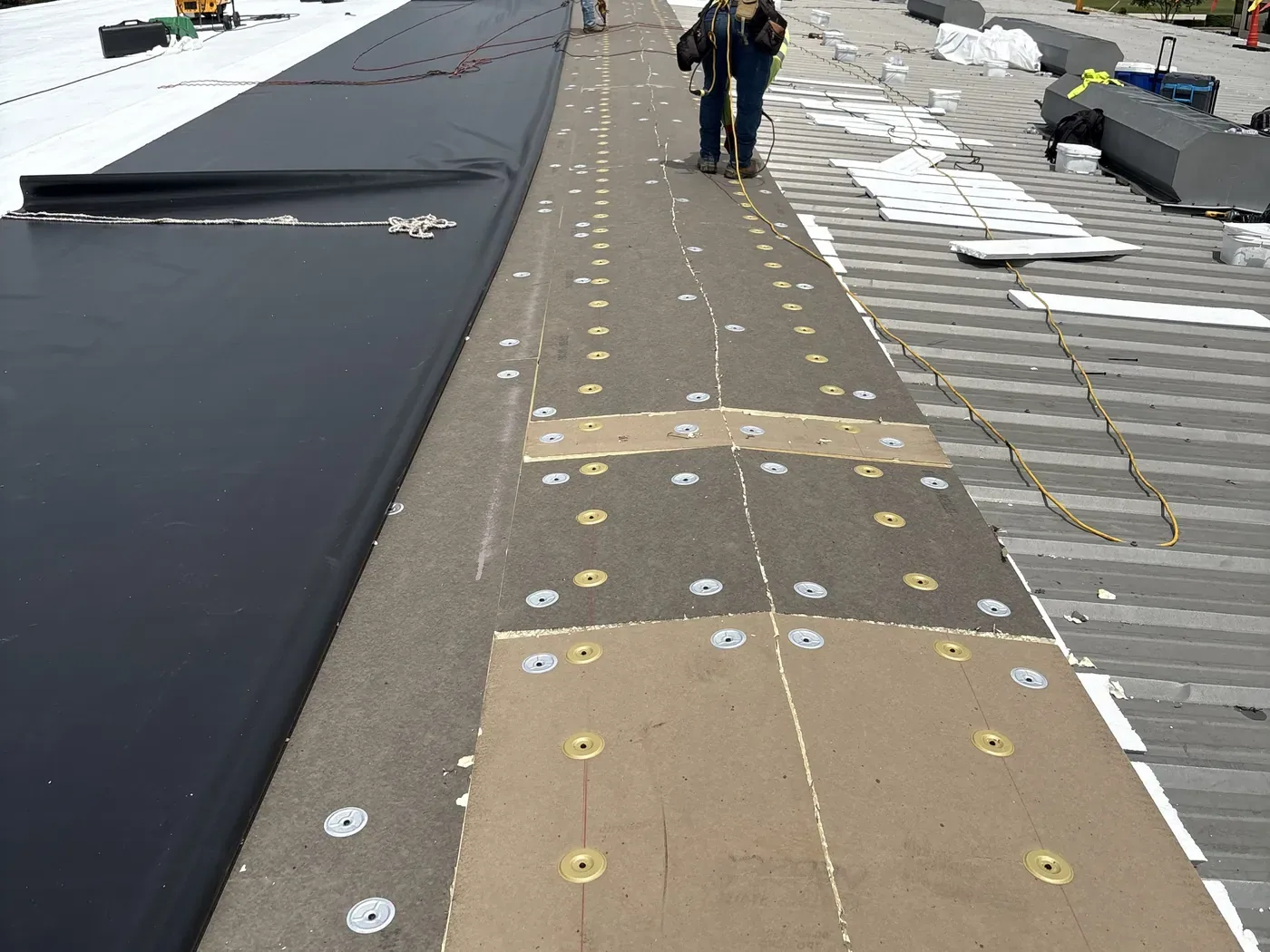
Many older industrial and warehouse buildings in Chesapeake, VA have metal roofs that leak at the laps, fasteners and end joints while most of the panels are still solid. A metal roof retrofit installs a new roof over the existing one instead of tearing it off, which avoids exposing the building and keeps the old panels as a base. It's often a smart move, but only if the existing panels, clips and framing are in good enough shape to stay. On a manufacturing plant roof, we also review drawings, rooftop equipment and any process exhaust before recommending a system.
Greenbrier has plenty of older metal buildings, but each one has to be inspected on its own. We look at seams, closures, fasteners, rust and the attachment between panels and purlins. If a closure or eave has come loose because the framing behind it is damaged, that gets repaired before anything goes over it. The retrofit design follows what we find on your roof, along with the edge, wall and curb details it needs to stay watertight.
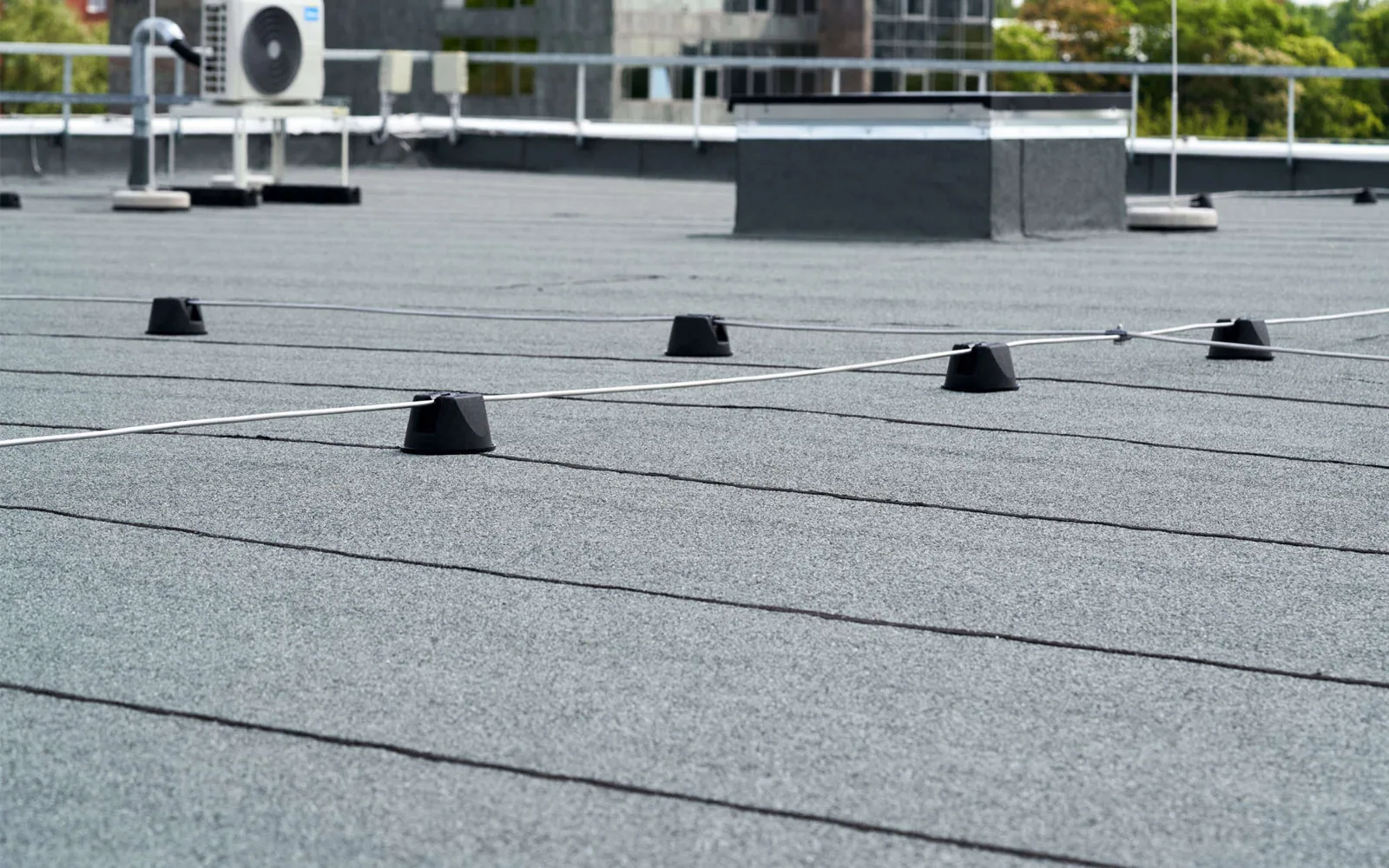
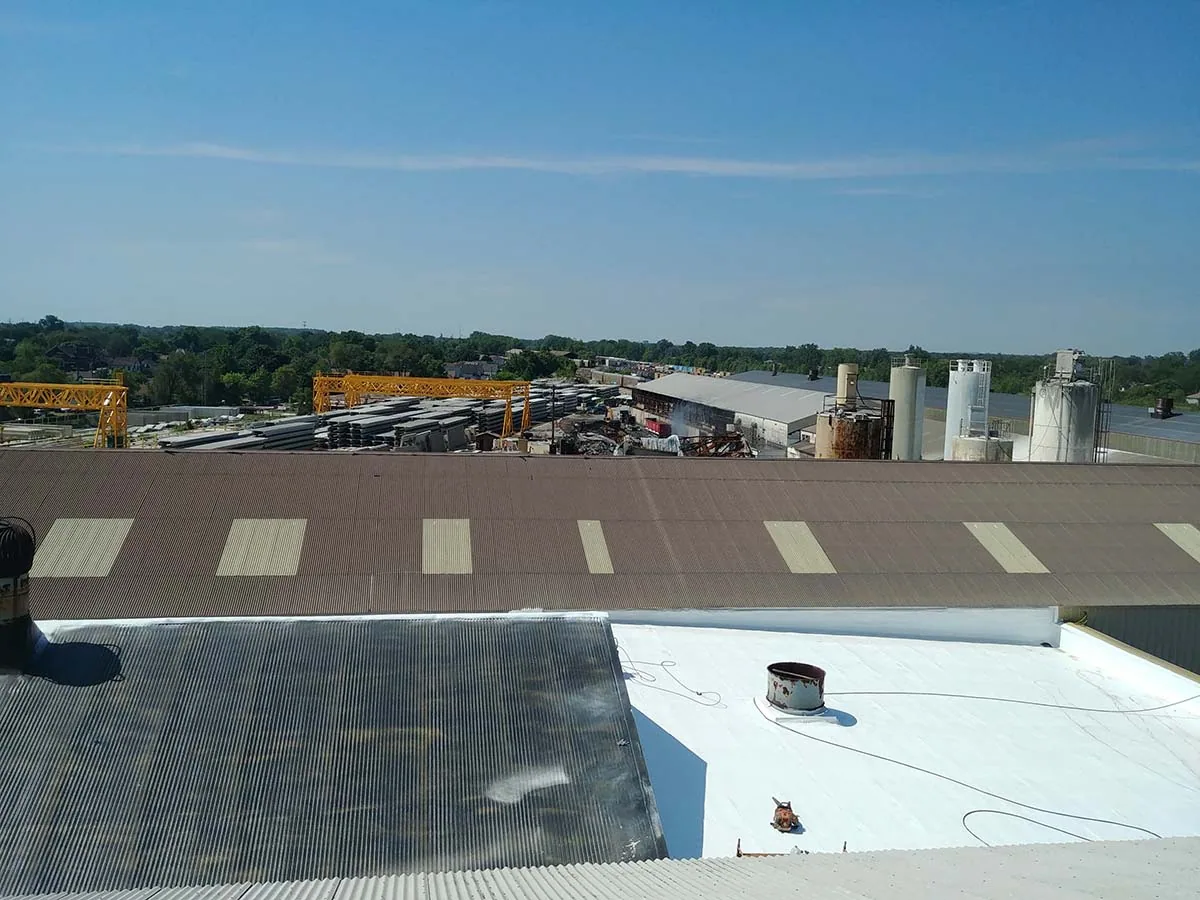
Two ways to retrofit a metal roof
There are two main approaches. Metal-over-metal installs new metal panels on a sub-framing system of clips or purlins attached through the old roof into the structure. Membrane-over-metal fills the low ribs of the old panels with insulation, adds a cover board, and then installs a single-ply membrane such as TPO on top. They are very different builds, with different costs, weights, details and long-term maintenance. We'll show you both on your roof, with the edge, wall and curb work included, so you're not comparing a bare panel price to a membrane price.
Before either option, we do a roof inspection of the existing metal. We check panel condition, rust, loose or missing fasteners, failed closures and how the panels are attached. A flat-looking roof can still have broken clips or corroded purlins underneath. If there's any question about whether the structure can carry a new roof, a structural engineer should check it. That decision comes from the structure itself, not from how much demolition the owner wants to avoid. Our report separates what we've confirmed from what still needs to be checked.
Building up support over the old panels
A single-ply membrane can't be laid directly on ribbed metal. The low spaces between the ribs have to be filled first, usually with flute-fill insulation cut to the panel profile, then covered with a flat layer of insulation or cover board for the membrane to sit on. We measure the panel profile on site so the infill fits, and we list every layer in the estimate. A quote that lists only membrane square footage is leaving out much of the real work.
Metal-over-metal works differently. New clips or sub-purlins are fastened through the old roof into the purlins below, and the new panels attach to that framing. The type and spacing of clips depend on your building's framing, wind requirements and the manufacturer's tested system. One product's clip doesn't fit every old panel profile. Both approaches also need new flashing at walls, curbs, ridges and eaves. We compare the two using the same roof area, the same repairs and the same building protection, so the difference in cost is real.
Fix leaks and rust before covering them
An open lap or leaking fastener often means trouble underneath: rusted panels, wet insulation or corroded purlins. We check those areas with a closer look, and sometimes by removing a panel or fastener. Anything that's actually damaged gets repaired or replaced before the retrofit goes on. Covering a rusted purlin with a new roof doesn't make it stronger. If we find more damage during the work, we show you and price it before we continue, and the roof is sealed at the end of each day.
A retrofit membrane system needs the right insulation and cover board for your panel profile and the attachment method. Adding insulation also raises the roof surface, which can shorten flashing heights at walls, curbs and drains. We measure those details before ordering. If HVAC units need to be raised or moved, your mechanical contractor handles the unit while we handle the roof around it. We don't call a curb done until it's properly flashed, even if the rest of the roof is finished.
Comparing TPO and standing-seam retrofits
A TPO retrofit over existing metal adds insulation, gives you a white reflective surface and hides old seams and fasteners. It needs flute fill, a cover board, proper fastening into the structure and heat-welded seams. A new membrane doesn't make bad panels sound, so damaged panels or purlins still have to be repaired first. Our quote shows the infill, insulation, edge metal and curb flashing, not just the membrane, and it lists any repairs we found during the inspection.
A standing-seam metal retrofit keeps the building's metal look and uses concealed clips, which avoids exposed fasteners on the new roof. It needs a sub-framing system matched to the old panels and the building's framing. Panels, clips and trim aren't interchangeable between manufacturers, so we price a complete system. We compare both options with the same repairs, the same equipment coordination and the same building protection. The right choice depends on your building, budget, energy goals and how long you plan to own the property. Weather and site conditions also need to suit the installation before work begins.
Retrofit projects around Greenbrier and Great Bridge
Healthcare, industrial and other occupied buildings all need retrofit plans tailored to their own equipment and operations. A retrofit project in Greenbrier gets its own roof inspection and access plan. The building manager tells us where materials can be staged and when we can work. If a curb is blocked by equipment, we keep it on the list and finish other areas that are ready. Our estimate includes clips, infill, flashing and trim, not just the new roof surface.
On occupied buildings, we describe how each day's work will be sealed. When the job is done, you get records showing what was kept, what was added and what was repaired, with photos and any test results. Anything still pending is listed separately, such as a unit waiting to be reset. Warranty terms depend on the specific system and manufacturer, and future rooftop changes may need approval, so we'll go through that paperwork with you instead of promising a set number of years.
Great Bridge and Greenbrier both have a mix of standing-seam, through-fastened and other metal roofs. The neighborhood doesn't tell us which type you have. We check the panel profile, attachment and framing on site, photograph the key details, and leave any unverified area out of the retrofit until it's confirmed.
Commercial Roofing Questions
What's the difference between metal-over-metal and membrane-over-metal?
Metal-over-metal installs new metal panels on clips or sub-purlins over the old roof. Membrane-over-metal fills the old panel ribs with insulation, adds a cover board and installs a single-ply membrane on top.
Can you tell if the old panels are good enough just by looking?
Not always. We check fasteners, rust, clips and attachment, and may remove a panel to look underneath. If the structure is in question, an engineer should review it.
What does flute fill do?
It fills the low spaces between the ribs of the old metal panels so a flat layer of insulation and cover board can support a membrane roof on top.
Will the retrofit affect flashing at walls and curbs?
Yes. The new roof sits higher than the old one, so flashings at walls, curbs and drains may need to be raised. We measure those before ordering materials.
What records will I get after the retrofit?
Photos and notes showing the old panels kept, the repairs made, and the new system installed. Any unfinished items or warranty requirements are listed separately.
Find the supporting basis beneath the retrofit option
Send us any drawings of the existing metal roof and tell us where it's leaking. We'll inspect the panels and framing and explain your retrofit options with photos.