
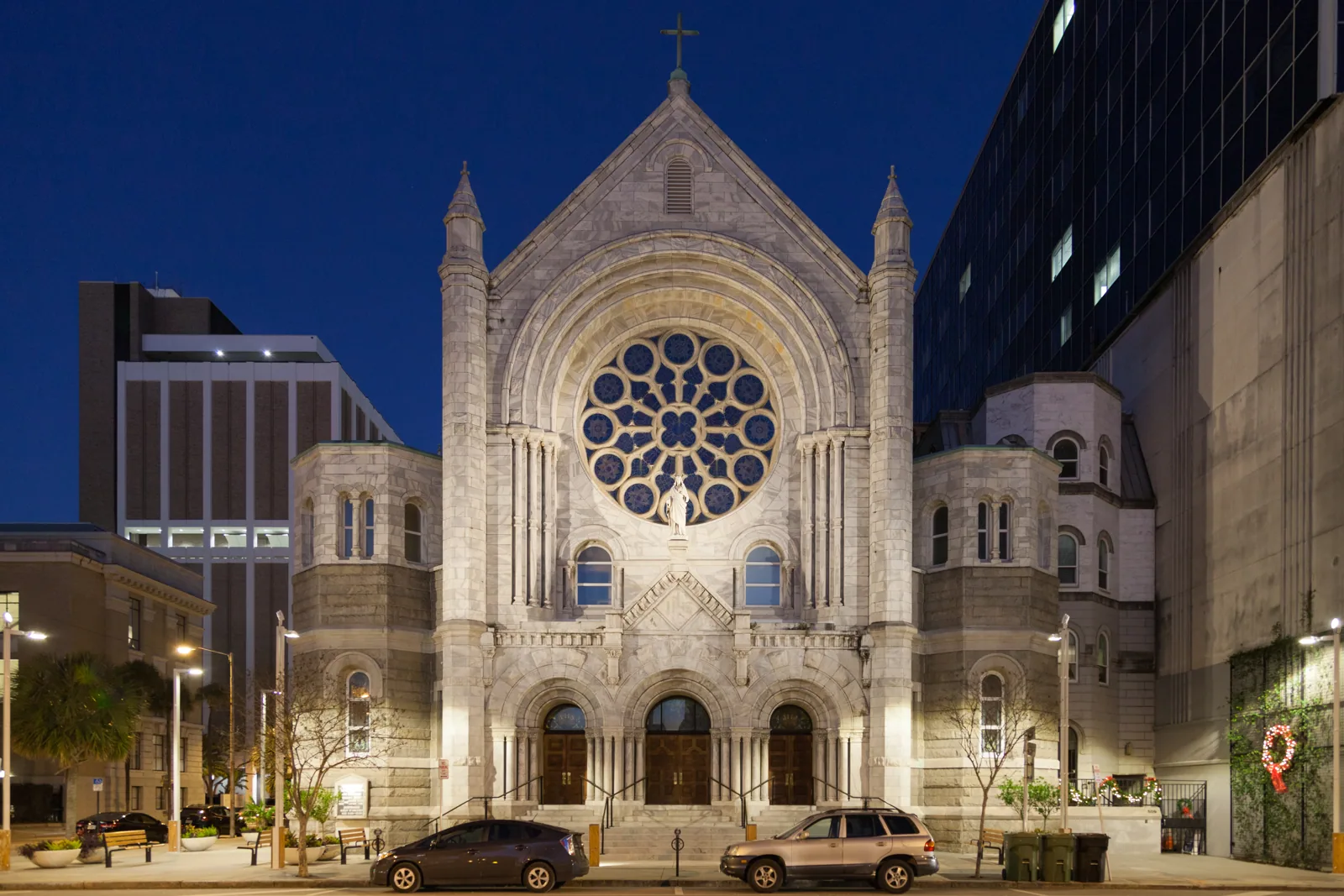
Church buildings are rarely one simple roof. A typical property in Chesapeake might have a steep sanctuary roof, a lower flat roof over classrooms or a fellowship hall, a newer addition from a later building campaign, and a covered entry or breezeway connecting them. The places where those roofs meet are where most church leaks start. Water from a large upper roof pours onto a lower one, flashings at the wall between them crack or pull loose, and gutters or scuppers overflow during heavy rain.
Because the water often travels inside a wall before it shows up, the stain in the hallway may be well away from the actual opening. We look at the roof levels involved, how the upper roof drains onto the lower one, and the condition of the wall flashing and counterflashing where they meet. We also check the insulation under the lower roof. You get photos and a plain explanation of where the water enters and what a lasting fix involves, along with a plan to schedule the work around services and events.

Where roof levels meet
When a large upper roof drains onto a smaller lower one, that lower roof takes far more water than it was designed for, often concentrated at one spot below a downspout or scupper. The membrane there wears faster, and the flashing at the base of the upper wall sees constant water. Clogged gutters on the upper roof make it worse by sending water over the edge and down the wall. We trace the water from the upper roof down before deciding what needs repair.
Often the fix involves both drainage and flashing. Our drain and scupper repair work can add splash protection, extend downspouts to a better location or improve the lower roof's drainage. Where the wall flashing has failed, a flashing failure repair removes the old flashing, repairs the wall surface behind it and installs new flashing with a secure top termination and counterflashing. Doing one without the other usually means the leak returns.
Protecting the rooms below
Church interiors often have finishes that are expensive or impossible to replace: plaster ceilings, wood paneling, stained glass, organs, pianos and sound equipment. Before any roof area is opened, we identify what sits below it and how it will be protected. In some cases, that means covering furnishings with plastic; in others, it means scheduling work for a time when a room can be cleared. We would rather spend an extra hour protecting an organ than risk any damage to it.
When a lower roof has been leaking for a while, the insulation under it is often wet. Our roof insulation and cover board work replaces wet material so the new membrane goes over dry, solid roof. Wet insulation left in place keeps feeding water into ceilings and encourages mold. If we find the deck has been damaged, we report it with photos and get approval before going further, since that changes the scope and the cost.
Working around services and events
Churches have busy calendars: weekend services, weddings, funerals, weekday ministries, preschools and community groups. Roof work needs to fit around those. Before we schedule anything, we sit down with the facilities contact or building committee and go over the calendar, identify quiet days and agree on which activities cannot have noise, odors or crews overhead. Funerals in particular can come up on short notice, so we keep a way to pause the work quickly.
Our roofing for occupied buildings approach divides the work into small sections that can be opened and closed the same day. Noisy tasks such as tear-off are scheduled for weekdays when the building is lightly used. Parking lots and entrances are kept clear for members and visitors, and materials are staged in an agreed spot away from playgrounds or preschool areas. The church office gets a short update each day so staff can answer questions.
Churches in Chesapeake
Great Bridge, the Cedar Road corridor and the rest of Chesapeake have churches of every age and size, from small brick buildings to large campuses with several additions. Each one has its own mix of roof types, so we inspect the specific building rather than assuming it is built like another church nearby. For church roof work near Great Bridge, the facilities contact tells us where leaks appear and which events are coming up.
We inspect the roof levels, gutters, drains and wall flashings around the problem area, check the insulation under any low-slope sections and photograph what we find. If the building has older records from an earlier roofing project, we compare them with the current roof, since additions and repairs often change things.
The proposal explains the cause of the leak, the repair, the schedule and how interiors will be protected. Building committees often need to present options to the congregation, so we can price a focused repair alongside a larger section replacement and explain the trade-offs in plain language. Photos are included so members who never climb on the roof can see the problem for themselves.
Related buildings
Many churches run schools or preschools in their classroom wings, and those rooms have their own safety and scheduling needs. Our school roofing page covers working around students and class schedules, including edge and drainage repairs. The same care for occupants, noise and timing applies to church education buildings.
Church offices, meeting rooms and administrative wings are similar to small office buildings, with finished ceilings, computers and files below the roof. Our office building roofing page explains how we work above occupied office space. At the end of any church project, you receive photos of the completed work, a description of what was repaired and a list of any items still needing attention, such as masonry repairs or gutter cleaning, so the property committee can plan for them.
Commercial Roofing Questions
Why does the church leak where the roof levels meet?
The upper roof often drains onto the lower one, concentrating water at the wall flashing between them. If that flashing or the drainage fails, water gets in at the junction.
Can the roof work be scheduled around services?
Yes. We plan the work around the church calendar, keep noisy tasks to quiet weekdays and can pause for funerals or special events.
How do you protect sanctuaries and organs?
We identify what sits under each work area before opening the roof and cover or clear those spaces in advance. Only small areas are opened at a time.
Why replace insulation under the lower roof?
A lower roof that has been leaking usually has wet insulation, which keeps feeding water into ceilings and can cause mold. It needs to be replaced before new membrane goes on.
Can you give the building committee repair options?
Yes. We can price a focused repair and a larger section replacement side by side and explain the pros and cons of each in plain language.
Have the church roof junction checked
Tell us which rooms are leaking and which roof sections sit above them. We will trace where the water comes in and send photos with a short repair plan.