
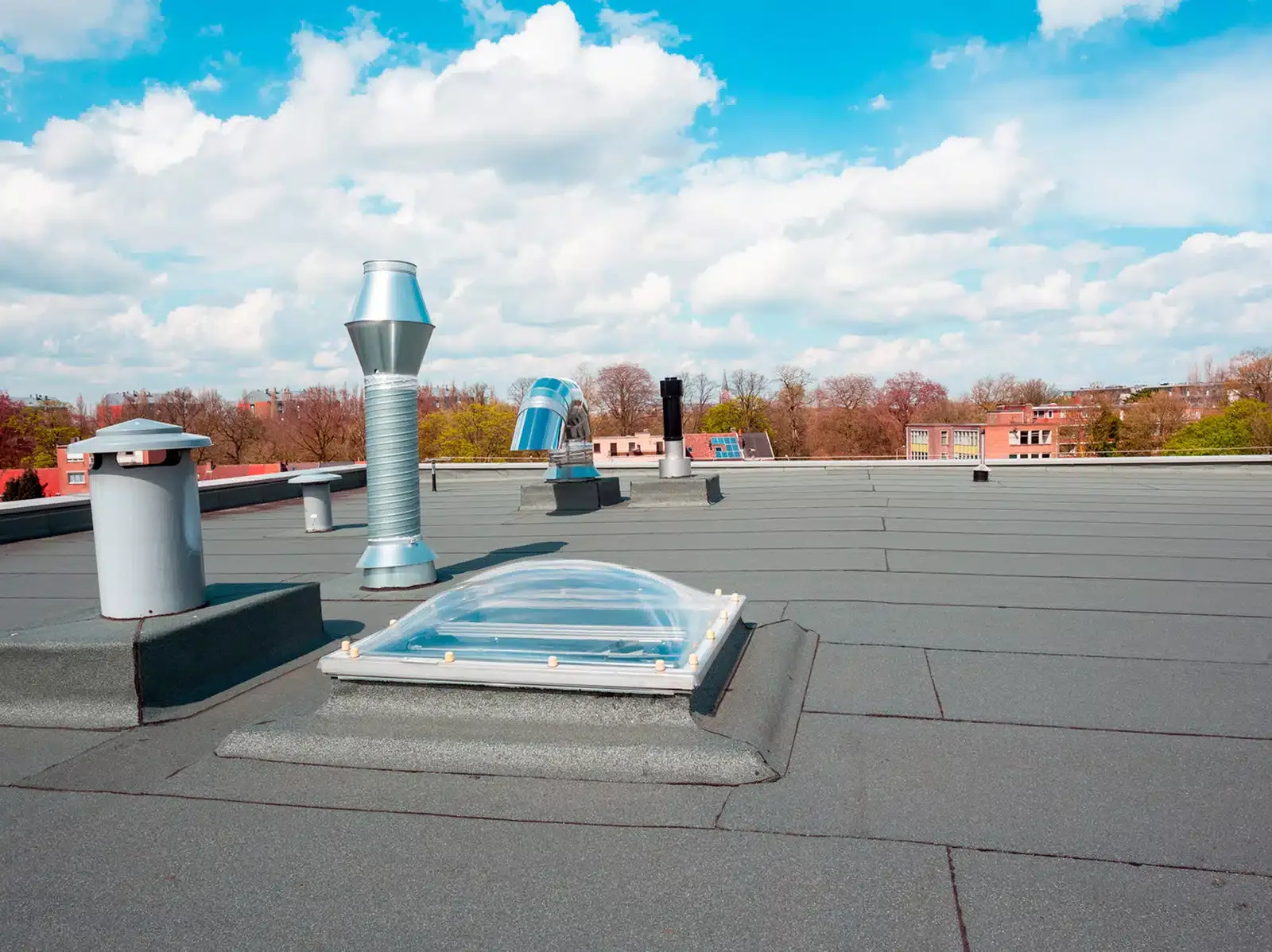
SOPREMA is best known for SBS modified bitumen roofing, but the company also makes liquid-applied membranes based on PMMA and other resins, along with PVC single-ply sheets. On commercial buildings in Chesapeake you will often see SOPREMA SBS as the main roof with a liquid-applied product used to flash awkward penetrations, pipe clusters and odd-shaped curbs. Each material bonds differently, so the repair has to match what is already there. A patch that bonds well to SBS may peel off a PVC sheet, and a liquid membrane applied over the wrong primer will lift within months.
When one of these roofs leaks, we look first at the details. Liquid-flashed penetrations can debond if the surface was not prepared well. SBS laps can open at walls and corners. Earlier repairs done with roof cement or an unrelated product often create new problems around the patch. We inspect the failed area, check the insulation underneath, identify earlier repairs and give you photos plus a written plan for a permanent fix. If something cannot be confirmed without opening the roof, the plan says so and explains how we would check it.
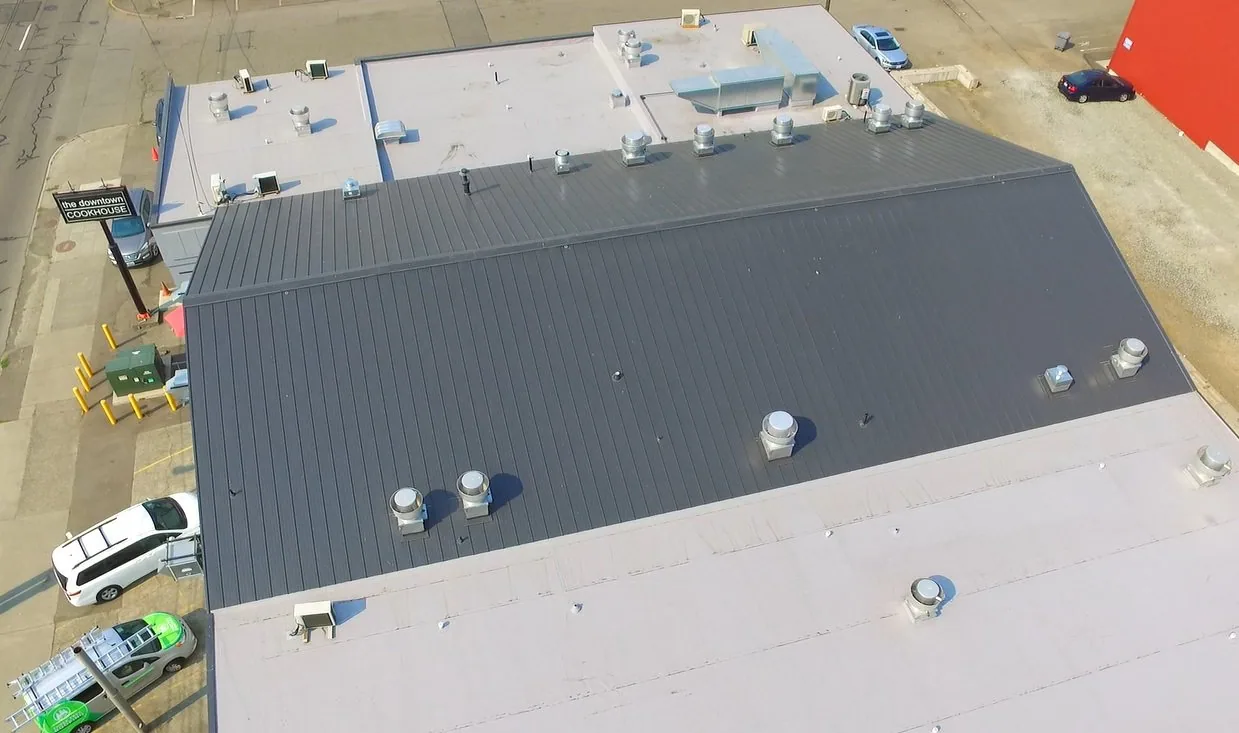
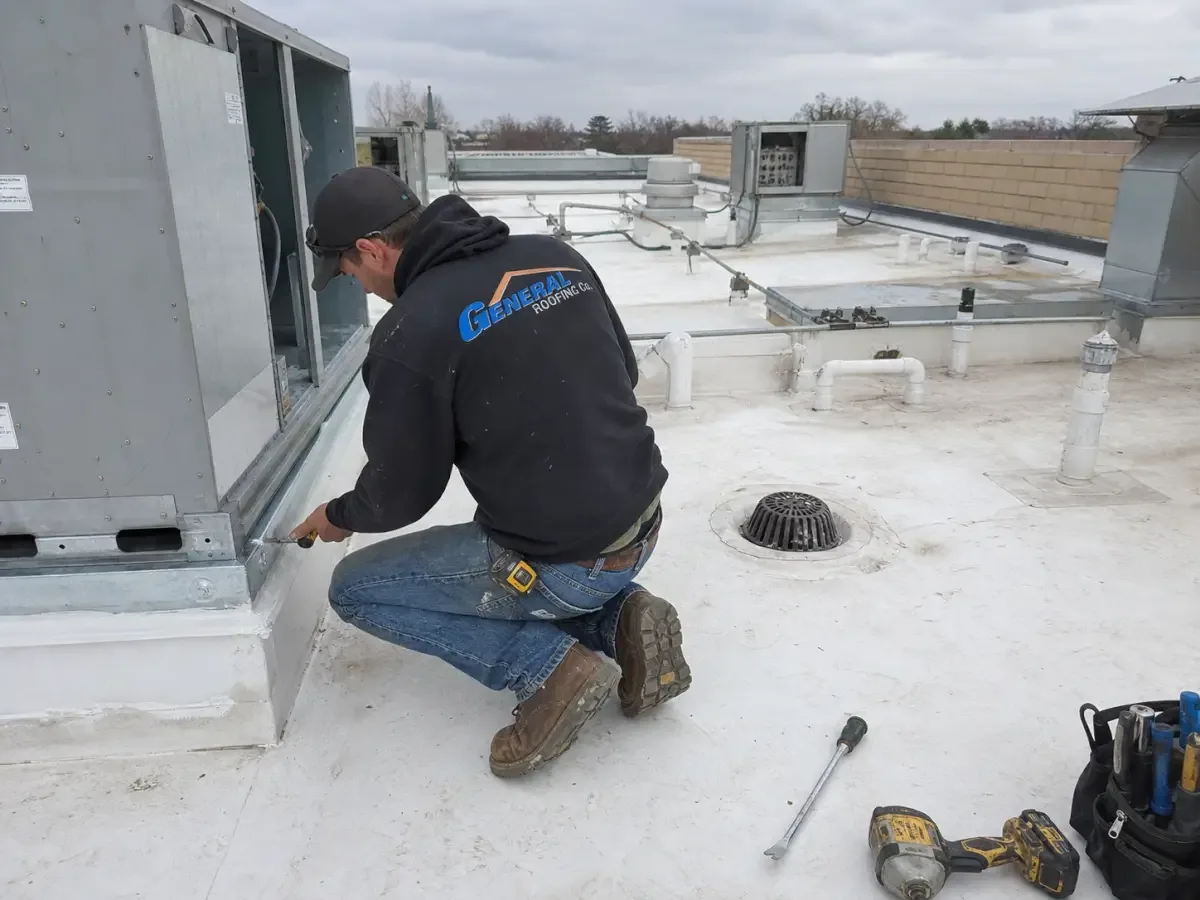
Sheets, liquids and single-ply
A SOPREMA SBS roof is a modified bitumen roofing system built from a base sheet and a cap sheet, applied by torch, hot asphalt or cold adhesive depending on the product. A PMMA liquid membrane is mixed and applied over a primed surface with a reinforcing fleece, curing in minutes. A PVC sheet is heat-welded. All three can appear on the same roof. We identify which product is at each location before choosing a repair. Records help, but we confirm on the roof, since later repairs often used whatever material the last contractor had on the truck.
That matters because the preparation is different for each. Liquid systems need clean, dry, primed surfaces and proper mixing; an SBS repair needs the existing cap sheet cleaned and the granules handled correctly at the lap; PVC needs a clean surface and a good weld. Picking the wrong product, or skipping the prep, leads to repairs that peel or split within a season or two. Getting the product right at each spot is a large part of what makes a repair last.
Earlier repairs and surface preparation
Most older roofs have been patched at some point. Asphalt roof cement smeared around a pipe, a strip of peel-and-stick tape on a seam, or a coating brushed over a blister can all interfere with a proper repair. Some of those materials will not let new SBS or liquid membrane bond. We find and remove them before new work goes down, so the repair attaches to sound roof instead of an old patch. That removal adds some labor, but it is far cheaper than redoing a repair that failed because it was glued to old roof cement.
Penetrations are where liquid-applied products earn their keep, and our skylight and penetration flashing service covers rebuilding them properly. We clean and abrade the surface, prime it, and apply the reinforced liquid membrane to the manufacturer's required thickness. Where a pipe or curb is better flashed with sheet material, we use sheet. The choice is based on the detail, not on habit. Either way, we flash to a proper height above the roof surface and check that water drains away from the penetration instead of pooling around it.
Fix the insulation before the top layer
Water that gets past a failed lap or penetration soaks into the insulation and can spread well beyond the opening. A new cap sheet or liquid flashing over wet board traps that moisture, and the leak returns or the deck starts to corrode. Wet insulation also loses most of its insulating value, so the building costs more to heat and cool until it is replaced. We trace the wet area with moisture checks or cores, cut out what is saturated, replace insulation and cover board, and rebuild the roof layers over dry material.
A commercial roof repair done this way takes more time than a quick patch, but it actually ends the leak. If we find the deck is damaged once the roof is open, we stop, photograph it and get your approval before continuing. Torch-applied work is done with a fire watch, and the area is sealed at the end of each day so an evening storm does not get into the building. Inside, we protect furnishings and equipment below the work area and check the ceiling after each rain until the repair is complete.
Comparing SOPREMA with other suppliers
Johns Manville also makes SBS modified bitumen, so it is a common alternative on replacement bids. The base sheets, cap sheets and adhesives are different products, and they should not be mixed within one roof without checking compatibility. When comparing, make sure each bid has the same number of plies, the same insulation and the same details at walls, curbs and drains. A low bid with fewer plies or thinner insulation is not saving you money over the life of the roof.
A Sika Sarnafil PVC roof is a different approach altogether: a single welded sheet instead of multiple bitumen plies. PVC can be a good choice near kitchen exhaust or other grease and chemical exposure, while SBS offers tough, multi-layer protection against foot traffic and impact. We explain which suits your building and price each one on the same scope. In many cases repairing a sound SBS roof is the best value, and we will say so when it is.
Local work and closeout
Commercial buildings around Greenbrier include older low-slope warehouses and newer office and flex buildings, and their roofs vary from one property to the next. For SOPREMA roofing in Greenbrier, we confirm the building and the products on it, then plan staging, torch work and working hours with the property manager. Deliveries and lifts are scheduled so docks and parking stay usable during business hours. Tenants get advance notice of torch work, odors and noisy days.
At the end of the job you receive photos, a list of SOPREMA products installed at each location, and notes on any insulation, deck or earlier repairs that were removed. Torch work includes our fire-watch notes. Warranty coverage depends on the specific documents for your project, and we review those with you instead of assuming coverage. Chesapeake's heat softens bitumen and its heavy rains find any weak lap, so we recommend inspections in spring and fall and after major storms. Catching a lifted lap or a cracked liquid flashing early keeps the repair small and keeps the insulation dry.
Commercial Roofing Questions
What types of roofing does SOPREMA make?
SOPREMA makes SBS modified bitumen sheets, liquid-applied membranes such as PMMA, and PVC single-ply membranes. Many roofs use more than one of these, so we confirm the product at each detail.
Why do old patches have to come off before repair?
Roof cement, tapes and coatings from earlier repairs can stop new material from bonding. We remove them so the repair sticks to sound roof.
When is a liquid-applied flashing the right choice?
For pipe clusters, odd shapes and tight penetrations where sheet flashing is hard to fit. The surface must be cleaned, dried and primed for the liquid to bond properly.
Can new layers go over wet insulation?
No. Wet insulation traps moisture against the deck and the leak returns. We remove and replace wet material first.
How should we compare SOPREMA with other bids?
Check that each bid covers the same number of plies, the same insulation, and the same details at walls, curbs and drains. Then compare price and long-term performance.
Have the SOPREMA roof leak traced
Send any records for the roof and the area where water is getting in. We will find the failed detail and send photos with a straightforward repair recommendation.