
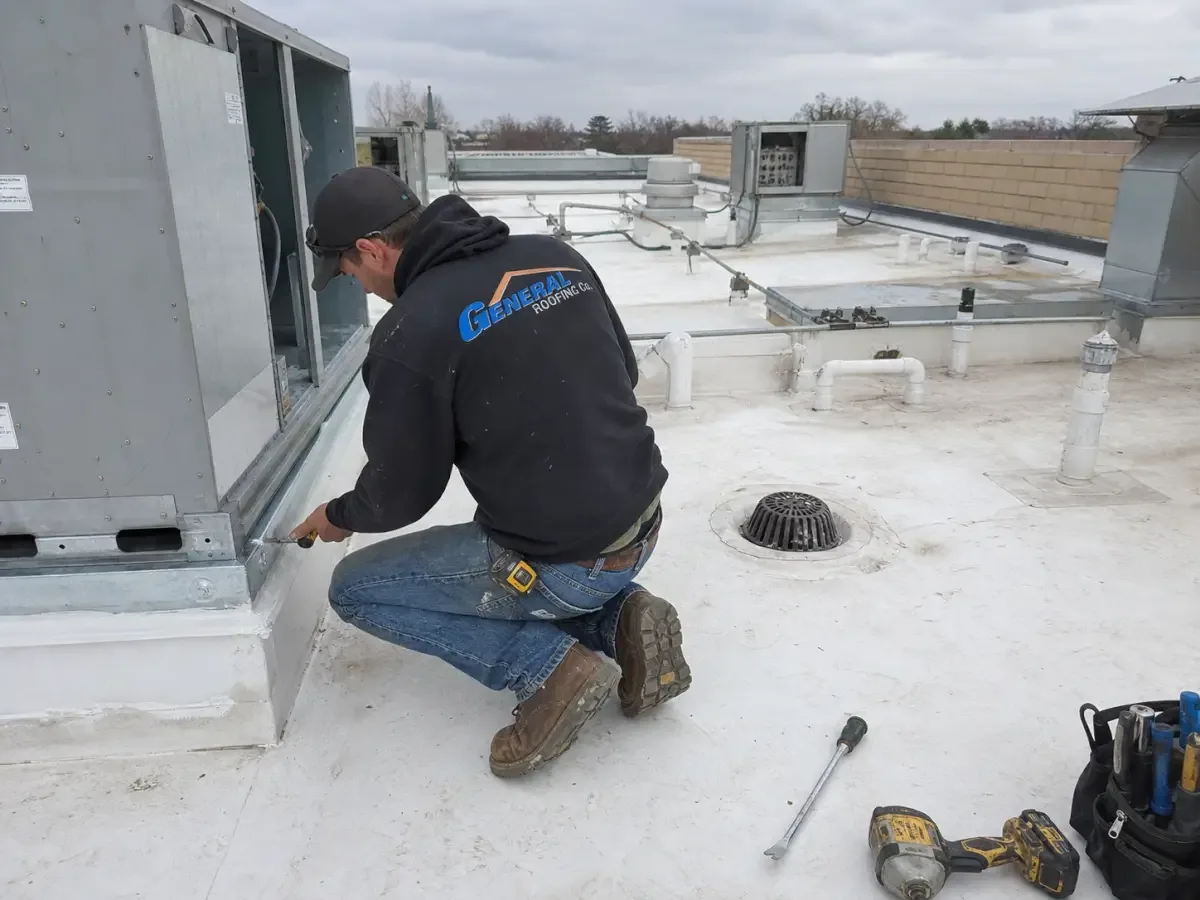
Sika sells its PVC roofing membranes under two names, Sarnafil and Sikaplan. Both are heat-welded thermoplastic sheets, and on a well-built roof the welded seams are often the strongest part of the system. When a Sarnafil roof in Chesapeake leaks, the cause is usually a weld that was never fully fused, a penetration that was added later and flashed poorly, or a puncture from foot traffic or dropped tools. The membrane itself is rarely the problem. Quality PVC holds up well to sun and standing water when it is installed correctly. A careful inspection finds the specific point where water gets in.
We start by confirming which Sika membrane is installed and how it is attached. Then we probe the seams around the leak, look at every penetration and curb nearby, and check whether the insulation underneath has taken on water. Older PVC can become harder to weld as it ages and gets dirty, so we also test whether the existing sheet will accept new material. You get photos and a written explanation of what failed, how far the damage goes, and what a permanent repair involves. If someone wants to coat over the problem instead, we explain why that usually hides the leak rather than fixing it.
Sarnafil or Sikaplan
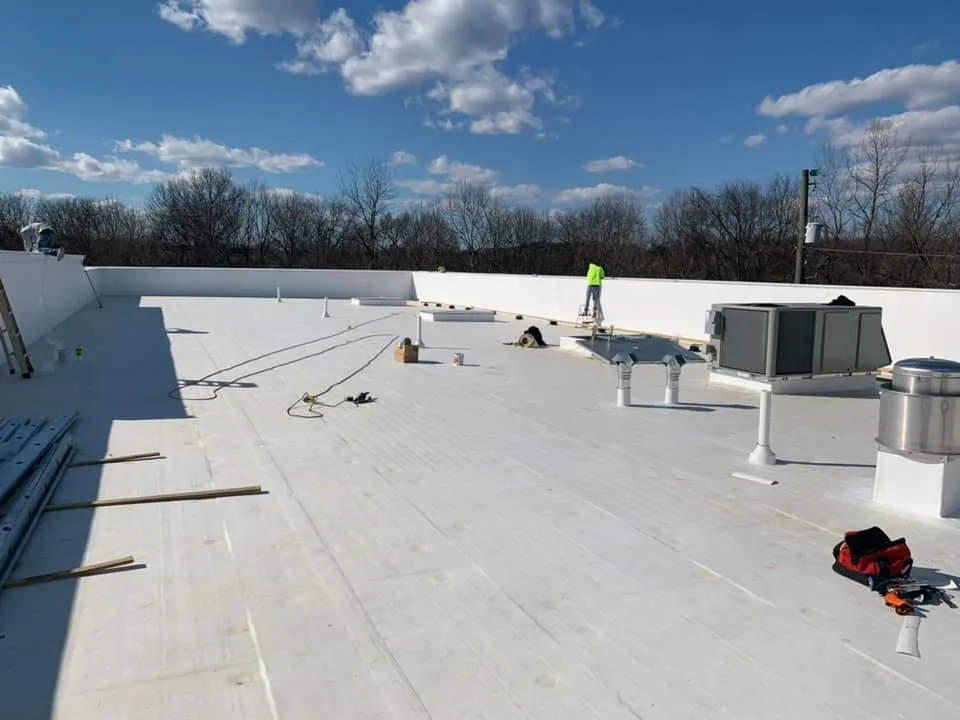
Sarnafil and Sikaplan are related but distinct product lines, and each has its own thicknesses, reinforcements and accessories. A repair should use membrane and flashing made to weld to the sheet on your roof. We confirm the product from installation records when they exist and from the roof itself when they don't. That matters most at details, where the right prefabricated corners and boots save time and make a cleaner, stronger repair. If the records are gone and the roof gives no clear answer, we tell you that and choose materials that our testing shows will weld reliably to the existing sheet.
Our PVC roofing page explains how these membranes are seamed and attached generally. On a Sika roof we also note whether it is mechanically fastened, adhered or ballasted, because that changes how a repair is laid out and how far it must extend. A fastened sheet has rows of plates under the seams; cutting a repair through them without planning can weaken the attachment. A ballasted roof means moving stone or pavers before any repair, and putting them back carefully afterward so the membrane is not damaged.
Bad seam versus hidden damage
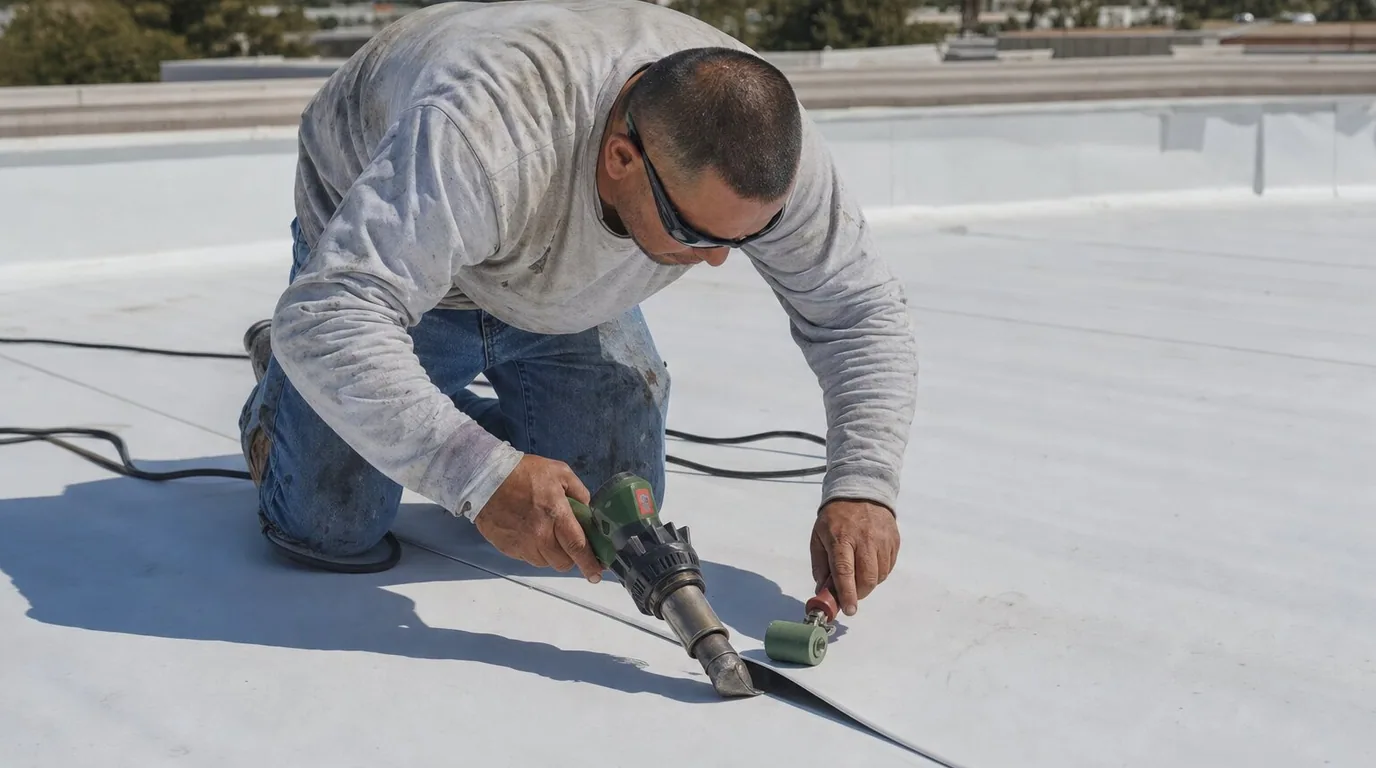
A weld that has opened can be a workmanship problem from the original installation, or it can be a sign of stress from something else, such as movement at a wall, a loose fastener or a deck problem. Rewelding a seam that keeps getting pulled apart only buys a short time. We probe the seams with a seam tool, look for wrinkles and stress lines, and check fastening near the open area to understand why it failed. A seam that failed once because of a bad weld is a simple fix; one that keeps opening because the wall is moving needs a different detail.
A commercial roof inspection confirms the extent before we price the work. Moisture testing or a small core tells us whether the insulation is wet. Weathered PVC is cleaned and test-welded before repairs begin, because a membrane that has gotten dirty or chalky over years will not bond reliably without preparation. We also check whether the seam edges have been sealed with caulk in the past, since that has to be removed before welding.
If the inspection turns up more seams with the same problem, we tell you, so you can decide whether a broader seam repair makes more sense than chasing leaks one at a time.
Repair through to dry roof
Water entering at a pipe boot or failed weld spreads under the membrane and soaks the insulation. A new weld on top does not dry that material out. We remove wet board, replace it, and bring new membrane back over dry, sound insulation on all sides. If the deck is damaged, we report it and get approval before going further, since deck repair changes the cost and the schedule. Interior protection stays in place throughout, and the roof is closed up at the end of every day.
Penetrations are a frequent source of trouble on any PVC roof, and our skylight and penetration flashing work covers rebuilding those details with proper boots, curbs and welded flashing. Pitch pans filled with sealant are replaced where possible, because they need regular topping off and eventually leak. If equipment has to be moved to reach a penetration, we coordinate with the trade that owns it. New penetrations added after the original roof was built are the usual suspects, so we check those first.
Comparing Sarnafil with other PVC roofs
A Duro-Last roof is also PVC, known for prefabricated accessories. Both systems can perform well, but their membranes and accessories are separate product lines, so we confirm compatibility before mixing them. When you compare replacement bids, ask that each one covers the same tear-off or recover approach, the same insulation and every detail at curbs, walls and drains. That's where real differences in cost and performance show up. Ask each bidder to name the exact membrane and thickness they plan to install.
A Holcim Elevate proposal may offer PVC, TPO or EPDM. A cheaper membrane can make sense on some buildings, but the comparison should be honest about seam strength, chemical exposure from kitchen or process exhaust, and how each option handles the details on your roof. We lay out the trade-offs plainly so the decision is based on the building, not just the price per square. On many buildings, repairing a sound Sarnafil roof costs far less than replacing it with anything else.
What you receive at the end
When the work is finished, you get photos of each repaired seam and detail, a list of the Sika products used, and notes on any insulation or deck we replaced. Each photo is tied to a location on a simple roof plan so the work is easy to find later. If other trades still need to finish something, such as reconnecting a unit, that is listed separately so nobody assumes it was handled. Warranty terms depend on the specific Sika documents for your project, and we review those with you instead of promising coverage based on the brand name.
Keep the records with the building files. They make future repairs faster, because the next contractor knows exactly which membrane is on the roof and where previous work was done. In Chesapeake's climate, with long humid summers, heavy rain and the occasional tropical storm, we recommend inspecting PVC roofs twice a year and after major storms. A small open weld caught early is a short repair; the same weld found after a wet season usually means replacing insulation.
Commercial Roofing Questions
Is Sarnafil the same as Sikaplan?
No. Both are Sika PVC membranes, but they are different product lines with their own specifications and accessories. We confirm which one is on the roof before ordering repair material.
Why did a welded seam open on our roof?
It may have been under-welded during installation, or something such as wall movement or a loose fastener may be pulling it apart. We check the cause so the repair holds.
Can old PVC still be welded?
Usually, with proper cleaning and preparation. We test-weld weathered membrane before starting repairs to confirm it will bond.
Can a Duro-Last or other PVC product be used to repair a Sarnafil roof?
Not automatically. Different manufacturers' membranes can weld differently and their accessories are made for their own systems. We check compatibility first.
What records do we keep after the repair?
Photos of the repaired seams and details, the Sika products used, notes on any insulation or deck replaced, and a list of any work other trades still need to complete.
Find the failed weld on your Sarnafil roof
Send any membrane records and the location of the leak. We will inspect the seams and details around it and send back photos with a clear repair plan.