

Johns Manville sells both single-ply membranes (EPDM, TPO and PVC) and modified bitumen systems in APP and SBS. That range means a "JM roof" in Chesapeake could be a thin welded sheet or a heavy, multi-ply built-up assembly with a granulated cap sheet. The repair for a split seam on one looks nothing like the repair on the other. Before we recommend anything, we confirm what kind of Johns Manville system is on the roof and how many layers are underneath it.
The calls we get on these roofs are usually about a split at a seam, a crack at a wall flashing or blisters in a modified bitumen cap sheet. Water that gets through those openings often travels between layers before it reaches the interior. We inspect the problem area, check the insulation and older layers around it, and give you photos and a written recommendation that explains what failed and what a lasting fix involves.
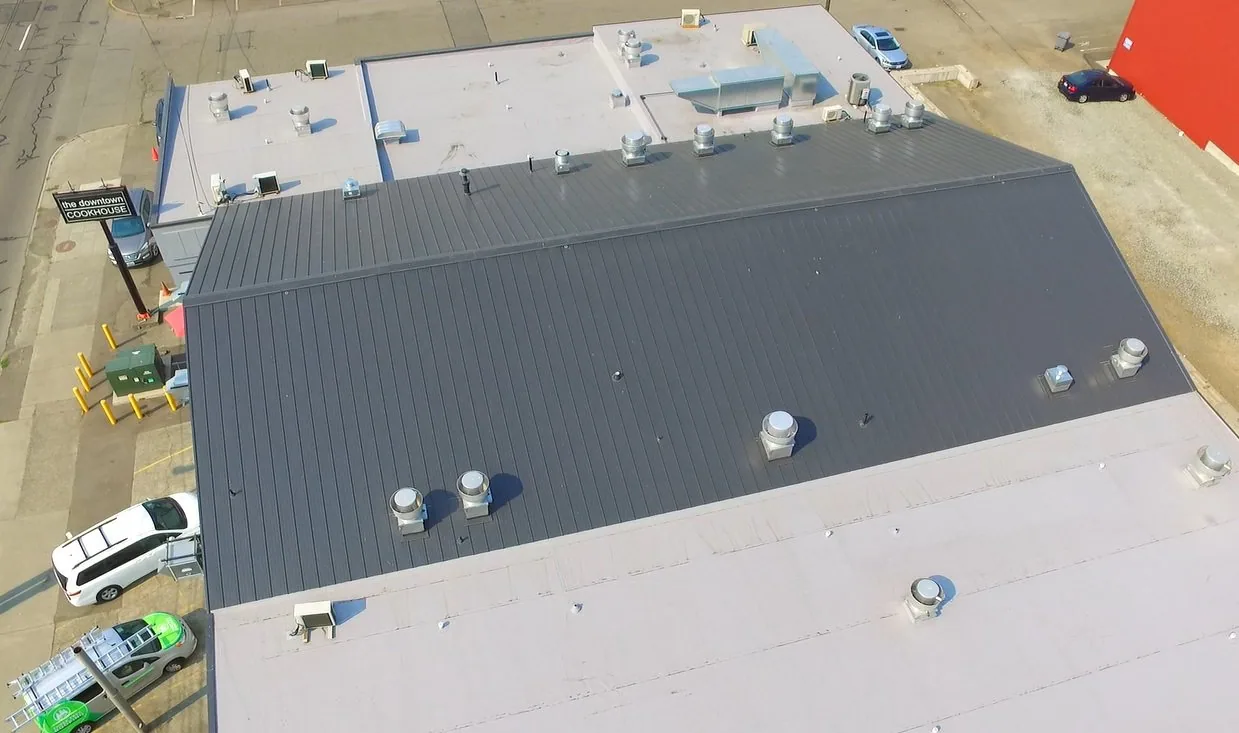
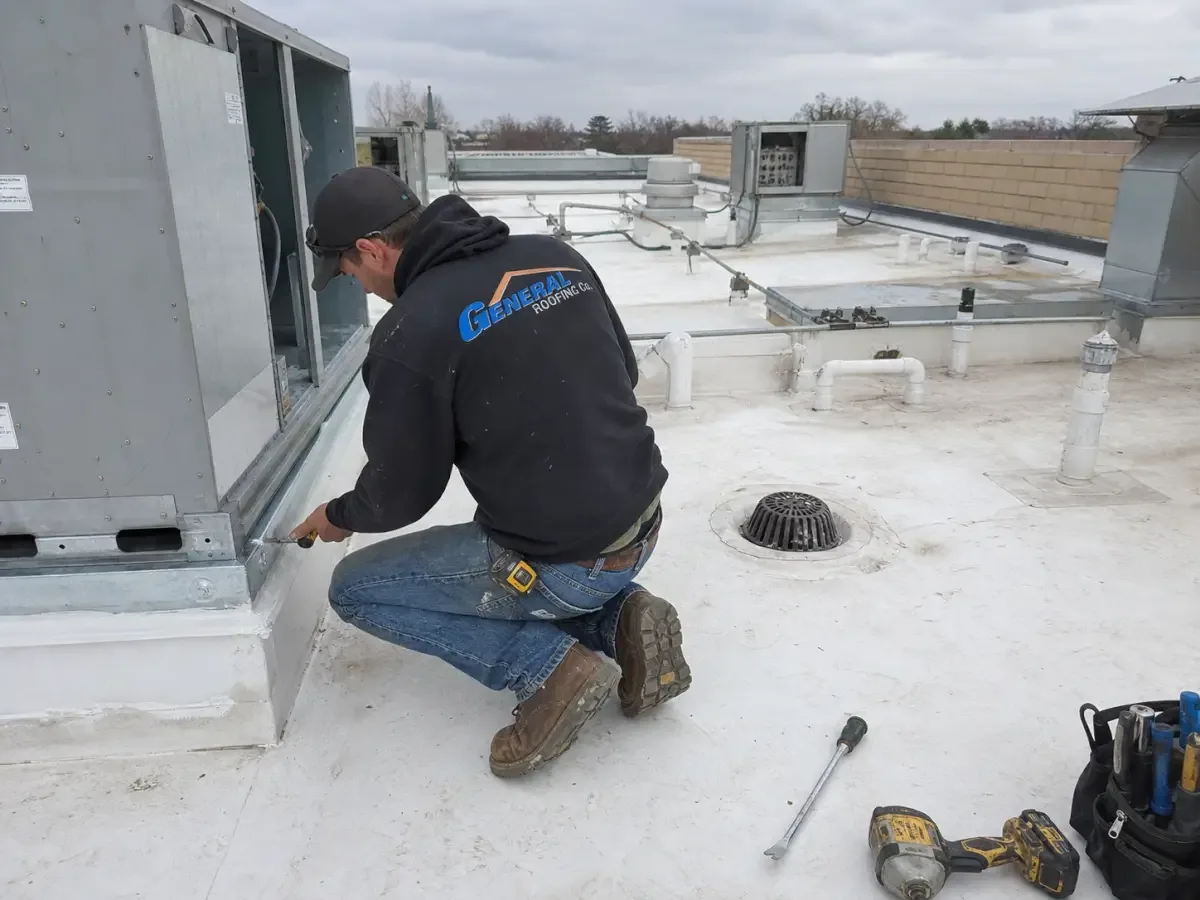
Single-ply sheet or layered system
A single-ply roof has one waterproofing membrane over insulation. It is relatively light and quick to install, and its seams are the critical point. A modified bitumen roofing system has two or more plies of asphalt-based sheet, often with a mineral-surfaced cap. Johns Manville makes both. The repair approach depends on which you have: single-ply is welded or taped, while modified bitumen is torched, set in hot asphalt or applied with cold adhesive, depending on the product. Mixing methods causes poor bonds and early failure.
With modified bitumen we also look at whether the base ply is intact under the cap sheet. A cracked cap over a sound base ply is a smaller repair than a split that goes through every layer. We check the laps, the flashings at walls and curbs, and the surface granules, since bare spots let sunlight break down the asphalt faster. Knowing exactly what is there lets us quote the right amount of work. It also tells us whether a repair, a restoration of the surface or a full replacement is the sensible next step for the roof.
Find out what is underneath
Many older commercial roofs in Chesapeake have been re-covered at least once, so there may be an old built-up roof under the current membrane. Every extra layer adds weight to the structure and makes the next tear-off more expensive. That matters. Building codes limit how many roofs can be stacked, wet layers trapped underneath keep holding water, and old asphalt can react with some new single-ply membranes. We find out how many layers are present and whether they are dry before recommending a recover or a repair.
A commercial roof inspection includes core cuts in representative spots, which we patch the same day, plus moisture checks near the leak. We note earlier repairs, especially ones done with materials that do not match the current roof, because a coal-tar or asphalt patch on a single-ply membrane can damage the sheet around it. The inspection report shows what we found and how it affects your options. It also gives you a reliable baseline if you plan to sell the building, refinance or budget for a replacement in the next few years.
Replace wet insulation, not just the top layer
A split in the membrane lets water into the insulation, and wet insulation stays wet for a long time under a roof. Putting a new cap sheet over it traps that moisture against the deck, where it can rust steel or rot wood and continue causing leaks. It also adds weight and cuts the insulating value of the roof, which shows up on energy bills. We cut out the wet area, replace the insulation and cover board, and then rebuild the membrane layers so the repair ties into dry, solid roof on all sides.
Our roof insulation and cover board work covers this part of the job. If we find more wet material than expected once the roof is open, we stop, measure it, photograph it and get your approval before expanding the repair. The area is dried in at the end of each work day so a surprise afternoon storm does not undo the work or soak the interior. We protect the interior below with plastic and buckets where needed and check the ceiling after each rain until the repair is complete.
Comparing JM with other manufacturers
For modified bitumen, SOPREMA is a frequent alternative. Both manufacturers make SBS systems, but their base sheets, cap sheets and adhesives are separate product lines. When we compare, we price both on the same number of plies, the same insulation and the same flashing details at walls, curbs and drains. A two-ply system bid against a three-ply system is not a fair comparison. Ask each bidder to list the exact products they plan to use so you can see what is really being offered.
A GAF proposal may come in for either a single-ply or a modified bitumen roof. Again, the key is matching scope: tear-off versus recover, insulation thickness, attachment method and how each detail is built. We lay out those items side by side so you can see what each bid actually includes. The membrane brand matters less than whether the whole roof is built correctly. A well-installed roof from any major manufacturer will outlast a poorly installed one from the best brand.
Local work and the closeout package
Greenbrier has a mix of commercial buildings, from older low-slope warehouses to newer office and flex properties. For Johns Manville roofing in Greenbrier, we confirm the building, the existing layers and the JM system to be installed. We set up access, staging and work hours with the property manager so the job does not disrupt tenants, deliveries or parking. Torch work is scheduled for times when the area below can be monitored, and we keep fire extinguishers on the roof at all times while torches are in use.
At completion you receive photos of the work, a list of the Johns Manville products installed, and notes on how many layers were removed or left in place and any insulation that was replaced. Torch-applied work also includes our fire-watch notes. Warranty coverage depends on the documents issued for your specific job, which we review with you directly rather than assuming coverage based on the brand.
Chesapeake's long, hot summers soften asphalt roofs and speed up granule loss, while heavy rain and humid air find every weak seam. Keeping the cap sheet's granule surface intact and the flashings tight is the best way to get full service life from a modified bitumen roof here. We recommend inspections each spring and fall, and after major storms. Small cracks and open laps caught during those visits are inexpensive to fix.
Commercial Roofing Questions
Is a Johns Manville roof single-ply or modified bitumen?
It can be either. Johns Manville makes EPDM, TPO and PVC single-ply membranes as well as APP and SBS modified bitumen systems. We confirm which one is on your roof before planning repairs.
Why do you cut cores during the inspection?
Core samples show how many roof layers are present and whether the insulation is wet. That decides whether a recover is possible or the old layers need to come off. We patch each core the same day.
Can we put a new cap sheet over wet insulation?
No. Trapped moisture keeps damaging the deck and causes new leaks. Wet insulation needs to be removed and replaced before new layers go on.
How should we compare JM with SOPREMA or GAF bids?
Make sure every bid has the same number of plies, the same insulation, the same tear-off or recover approach and the same details at walls, curbs and drains. Then the price difference means something.
What records do we receive after the work?
Photos, the JM products installed, the number of layers removed or kept, insulation replaced, and any related notes such as fire-watch records for torch-applied work.
Have the split in the Johns Manville roof looked at
Send any records for the roof and the location of the split or leak. We will inspect the layers around it and send photos with a plain-language repair plan.