
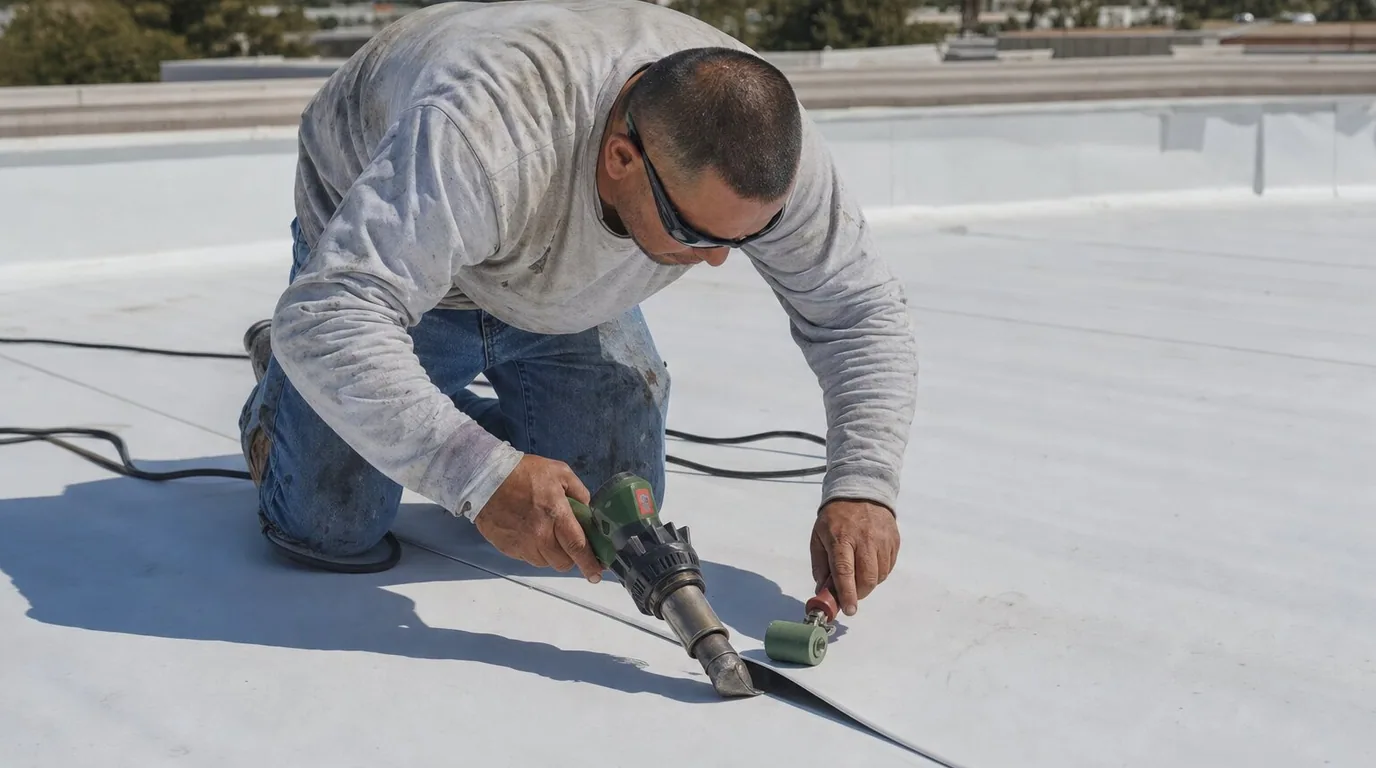
Holcim Elevate, the line formerly sold under the Firestone Building Products name, covers EPDM rubber, TPO and PVC membranes. A building in Chesapeake with an "Elevate roof" could have any of the three, and they are not repaired the same way. EPDM seams are taped or glued; TPO and PVC are heat-welded. Using the wrong method or an incompatible patch is one of the most common reasons a repaired roof starts leaking again within a season. So the first thing we do is confirm which membrane you have.
The leaks we are called about on these roofs usually trace back to a curb, a pipe or a wall where the flashing has pulled loose. Water gets behind the flashing, runs under the membrane and stains a ceiling tile some distance away. We inspect the failed detail and the roof around it, check whether the insulation is wet, and send you photos with a written recommendation for a permanent repair.
Identify the membrane and the detail
Each Elevate membrane has its own flashing materials, seam products and installation steps. An EPDM curb flashing uses uncured rubber and seam tape. A TPO or PVC roofing curb uses welded membrane and prefabricated corners. The details look similar from a distance, but the materials do not mix. We confirm the membrane from records and from the roof itself, then pick repair materials made to work with it.
We also look at how the roof is attached and what sits under the membrane. A fully adhered EPDM roof over polyiso insulation behaves differently from a mechanically fastened TPO roof over cover board when it comes to how far a repair needs to reach. Knowing both the membrane and the layers beneath it lets us size the repair correctly the first time, instead of patching the visible tear and coming back next month for the same leak. We also note the age of the roof and any areas that look like they were repaired before, since a patch from a different product family can complicate the next repair.
Compatibility versus condition
Two separate questions decide how a failed detail gets fixed. The first is compatibility: will the new material bond to the existing membrane? The second is condition: is the existing roof around the detail still dry, solid and well attached? A perfectly compatible patch fails if it is glued to wet, crumbling insulation. A roof in good condition still fails if the wrong product is used on it. We answer both before quoting.
A commercial roof inspection on an Elevate roof checks the seams, flashings, drains and edges, and includes moisture testing near the leak. Where we cannot tell from the surface, we take a core sample and patch it the same day. You get a clear picture of what is in good shape, what needs repair, and what we would need to open up to confirm.
Older EPDM in particular can shrink and pull at the edges and curbs, and weathered TPO may need careful cleaning before it will weld. We note those conditions so the repair plan reflects them.
Repair the curb from the deck up
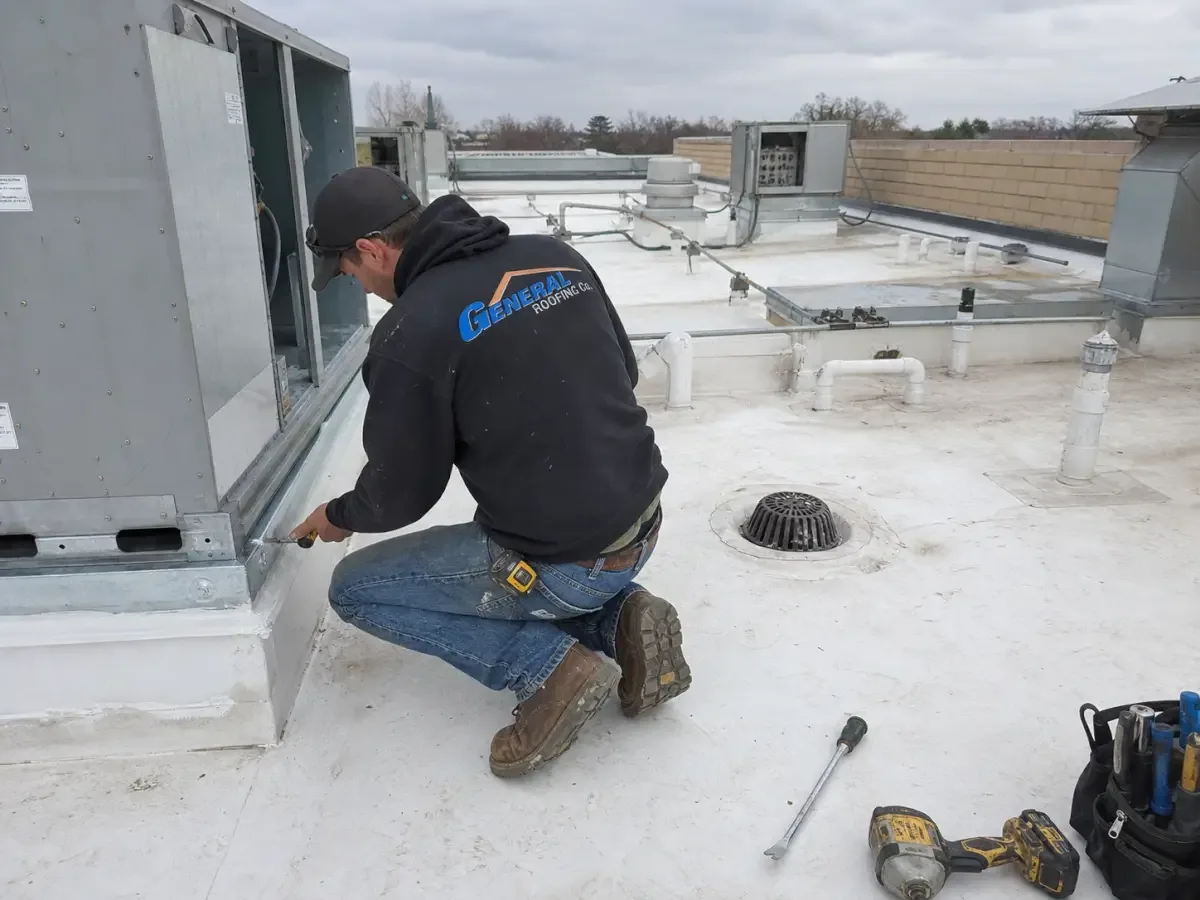
When a curb flashing pulls away, water often runs into the insulation around the curb and down the sides of the curb framing. Re-adhering the flashing on top does not fix wet wood or soaked board underneath. We remove the failed flashing, check the curb framing and the insulation around it, replace anything that is wet or rotted, and then install new flashing to the correct height above the finished roof surface.
Our rooftop equipment curbs and supports work covers the roofing side of the job. If the unit needs to be lifted, disconnected or re-set, that is your mechanical contractor's work, and we schedule around it rather than flashing around equipment that is in the way. If the curb is too short for the new roof height, we raise it before flashing. The result is a curb detail that sheds water instead of one that relies on sealant. We also check the condensate line and any pipes running out of the unit, because water from the equipment itself is sometimes mistaken for a roof leak.
Comparing Elevate with other systems
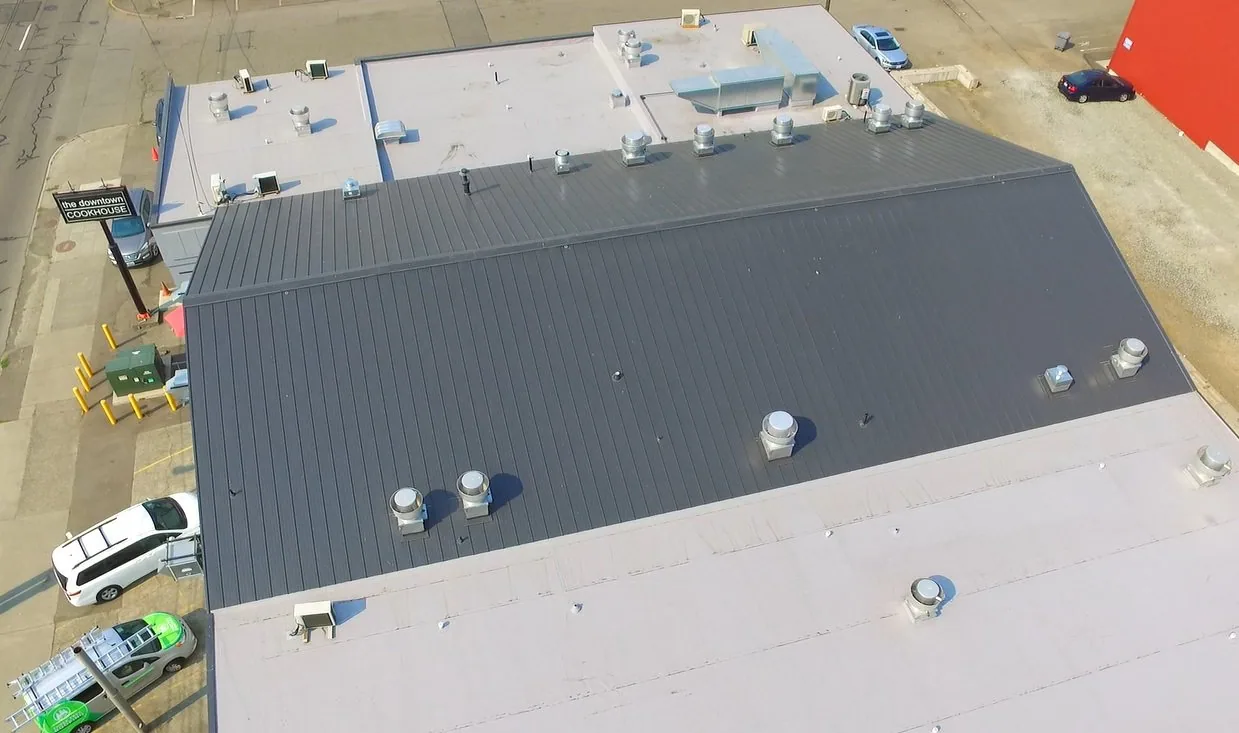
A Sika Sarnafil PVC roof is a reasonable alternative if you are replacing rather than repairing, but Sarnafil and Elevate PVC are different products with their own accessories. On a roof that is mostly sound, a full switch of manufacturers rarely makes sense just to fix one curb. They are not mixed on the same roof without checking compatibility. When we compare options, we price the entire roof the same way for each: tear-off or recover, insulation, attachment, edges and every curb and wall detail.
A Versico system offers EPDM, TPO and PVC as well, so it lines up closely with Elevate on paper. The differences show up in specific membranes, accessories and installation requirements. Matching scopes across bids is what keeps the comparison honest. A low price that leaves out insulation replacement or curb rebuilding is not really lower; it just moves the cost to the next leak. We put the options side by side in plain terms so you can see what each one includes and where the real differences are.
Local projects and closeout
Commercial buildings in Greenbrier include older flat-roofed warehouses as well as newer offices and flex space, so the roof on one says little about the one next door. For Holcim Elevate work in Greenbrier, we confirm the building and its membrane, then work out access, staging and working hours with the property manager. Deliveries and crane lifts are planned so they do not block docks or customer parking. If tenants are working below, we agree on noisy hours and odor-producing work, such as adhesives, ahead of time and give them notice before the crew arrives.
When the job is complete, you get photos of each repaired detail, a list of the Elevate products we installed and notes on any wet insulation or rotted curb framing that was replaced. If something still needs a mechanical or electrical contractor, we list it separately. Warranty coverage depends on the specific documents issued for your project, so we go through those with you instead of assuming coverage.
Hampton Roads weather is hard on curb details: long humid summers, heavy downpours and the occasional tropical storm. A curb that leaks only in wind-driven rain usually has a flashing or counterflashing problem. Checking those details after major storms is cheap insurance against wet insulation. A short visit to look at curbs, edges and drains after a big storm costs far less than replacing a section of soaked roof later.
Commercial Roofing Questions
Is Holcim Elevate the same as Firestone?
Holcim Elevate is the current name for the commercial roofing line previously sold as Firestone Building Products. Existing Firestone roofs are typically repaired with the corresponding Elevate materials, after confirming the membrane on site.
Does it matter whether the roof is EPDM, TPO or PVC?
Yes. EPDM is taped or glued at the seams, while TPO and PVC are heat-welded. The repair materials and methods differ, so we confirm the membrane before recommending a fix.
Why not just re-glue the loose curb flashing?
Because water has often already soaked the insulation or curb framing underneath. Re-gluing over wet material does not last. We replace what is wet and then install new flashing.
Who handles the rooftop unit during curb repairs?
Your mechanical contractor lifts, disconnects or resets the equipment. We handle the roofing, insulation and curb flashing and schedule around their work.
What do we get at the end of the job?
Photos of the completed details, the Elevate products installed, notes on any insulation or framing replaced, and a separate list of any work still needed from other trades.
Have the Holcim Elevate curb leak inspected
Send any product records you have and point us to the curb or detail that is leaking. We will check the insulation around it and send photos with a straightforward repair plan.