
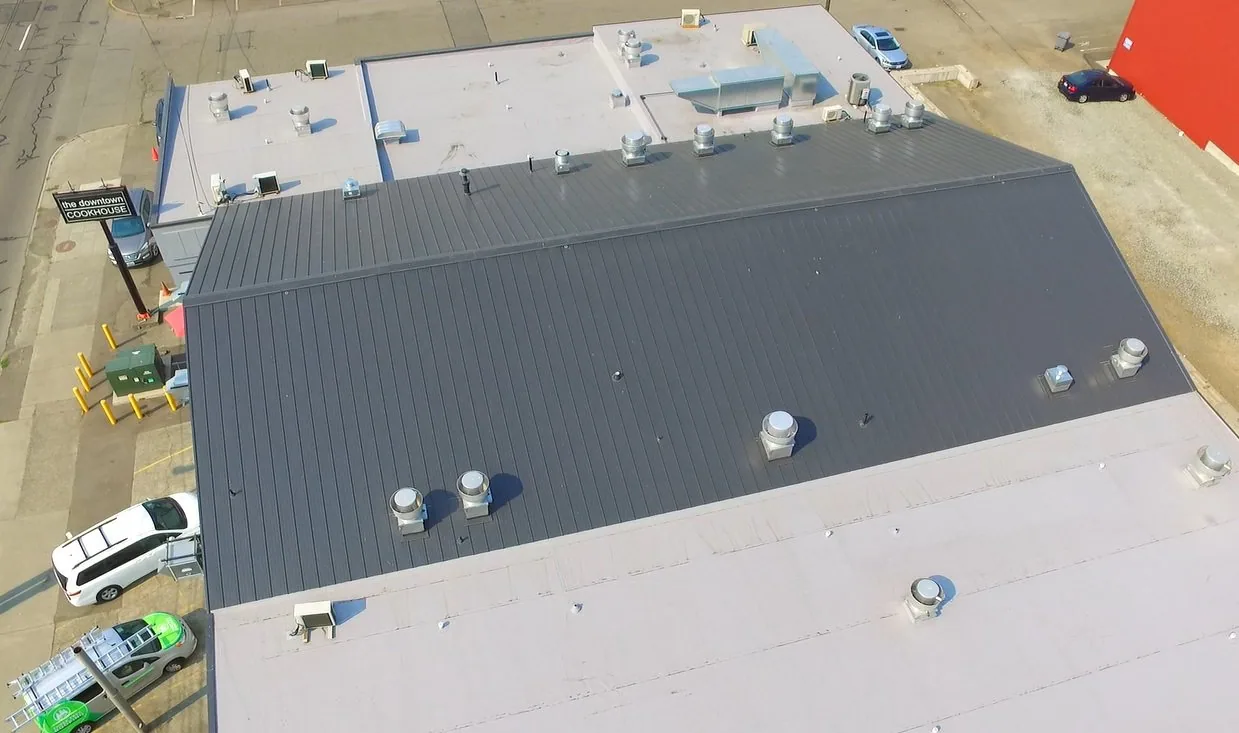
GAF makes several kinds of commercial roofing, so "it's a GAF roof" only narrows things down so far. The building could have a single-ply TPO membrane, a PVC membrane or a multi-ply modified bitumen system, and each one is repaired differently. In Chesapeake we often find the leak at a rooftop unit, a pipe boot or a wall flashing rather than in the open roof, with water travelling under the membrane before it drips into a ceiling. Our first job is to confirm which GAF system is installed and find where the water actually gets in.
We look at the failed detail and the roof around it, check whether the insulation is wet, and note anything that looks like an earlier patch with a different material. Older records help, but roofs get repaired and modified over the years, so we confirm on the roof before recommending anything. You get photos and a written explanation of what failed, why, and what a lasting repair involves, including any work on equipment that another trade has to handle.
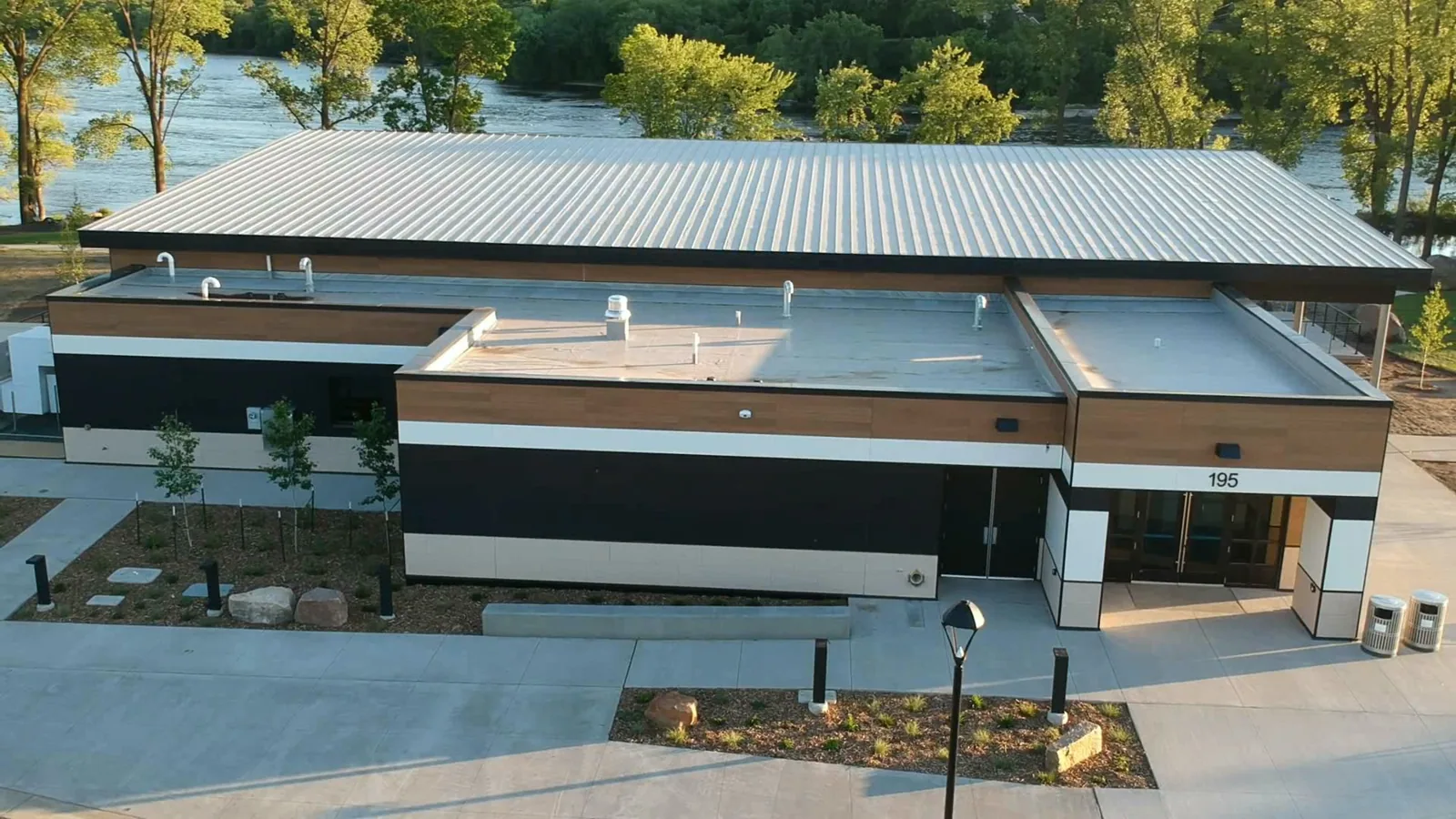
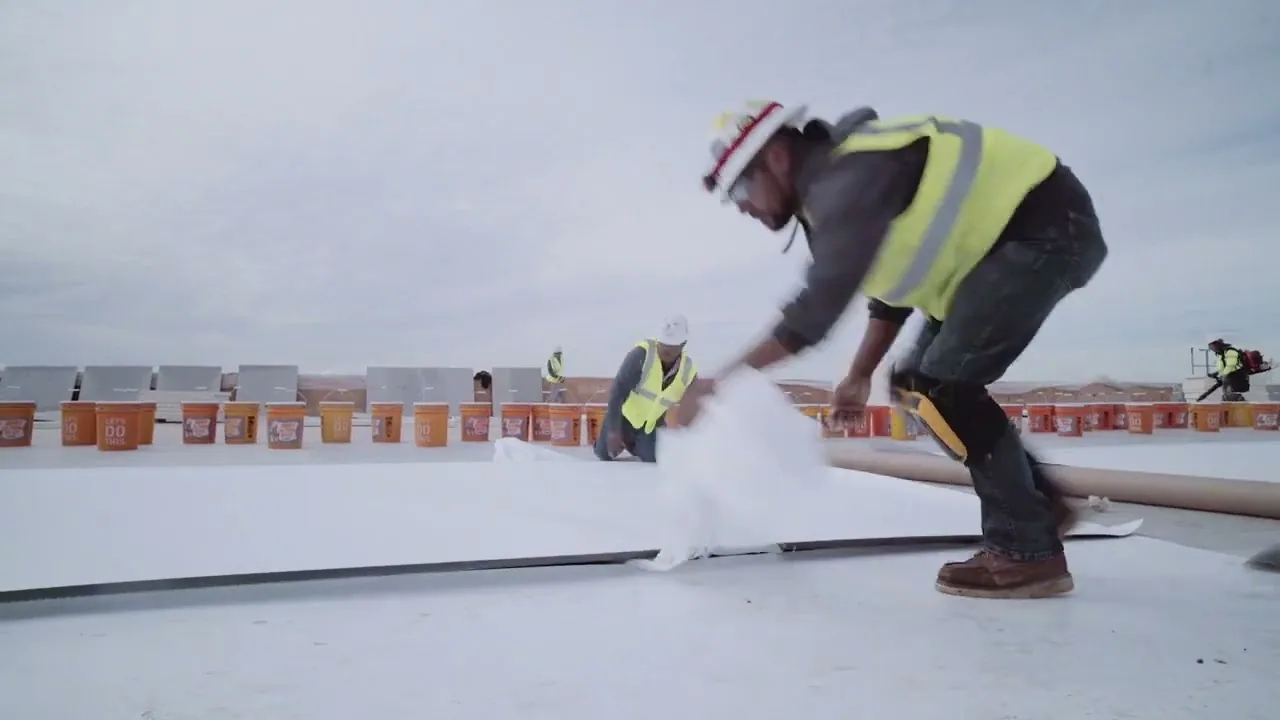
Which GAF system is on the roof
A GAF TPO roof, a GAF PVC roof and a GAF modified bitumen roof share a brand name and very little else on the roof. TPO and PVC are heat-welded single-ply sheets; modified bitumen is built up in layers and sealed with torch, hot asphalt or cold adhesive. The repair materials, the seam method and the flashing details all depend on which one you have. We identify the system before pricing, because using the wrong material on a seam or flashing is a reliable way to create the next leak.
Many low-slope roofs around Hampton Roads are TPO roofing, and GAF is one of the major TPO suppliers. On a TPO roof we check how weathered the existing sheet is, because older TPO often needs thorough cleaning before new material will weld to it. We also check how the membrane is attached, whether mechanically fastened or adhered, since that affects how far a repair has to extend and what happens at the edges.
Check what can stay before choosing a repair
Before anyone recommends a patch, recover or replacement, we need to know what condition the existing roof is in under the surface. A membrane can look fine while the insulation beneath it is saturated. Older repairs may have used a product that is not compatible with the current membrane. Fasteners may have backed out near the edges. Each of those changes the right answer, and some can only be confirmed by cutting a small test opening and repairing it the same day.
Our commercial roof inspection covers the membrane, seams, flashings, drains and edges, along with moisture checks where they matter. We note what we can see directly and what we would need to open up to confirm. If a recover is being considered, we check whether the existing roof is dry and sound enough to stay in place under new material. That way the proposal is based on the roof you have, not on a guess.
Fix the detail and the damage around it
When a curb flashing or wall detail fails, water rarely stays at the opening. It runs under the membrane and soaks the insulation, sometimes well beyond the visible problem. A repair that only re-flashes the curb leaves wet board underneath, and that board keeps holding water against the deck. We trace how far the moisture has spread, remove the wet material, replace it, and bring new membrane and flashing back onto dry, solid roof.
A commercial roof repair done this way costs more than a tube of sealant, but it stops the leak instead of moving it. If equipment has to be lifted or disconnected to reach the base of a curb, we coordinate with your mechanical contractor and schedule around them. Any extra wet area we find mid-repair is measured and photographed, and we get your approval before expanding the work. The building stays protected and dried in at the end of each day.
Comparing GAF with other manufacturers
If you are collecting bids, you may see GAF alongside Johns Manville or other suppliers. Johns Manville also makes single-ply and modified bitumen systems, so the comparison is not apples to oranges, but the specific products, accessories and installation steps differ. We price each option for the same roof: same area, same insulation repairs, same edge metal and the same equipment details. Otherwise the lowest number usually just means something was left out.
A Carlisle SynTec system is another common alternative, especially for TPO and EPDM. Carlisle and GAF membranes are not interchangeable at the seams, so a repair on one should use materials approved for that system. When you compare full proposals, look at tear-off versus recover, insulation thickness, how the membrane is attached and how every curb and wall is detailed. Those items drive long-term performance more than the brand name on the roll.
Local work and project closeout
Building stock around Greenbrier ranges from older low-slope warehouses to newer office and flex buildings, and their roofs vary just as much. For GAF roofing in Greenbrier, we confirm the building and the GAF system on it, then plan access around the property manager's schedule and any tenant restrictions. Material deliveries and crane picks are arranged with the building contact in advance so they do not block loading docks or parking during business hours.
At closeout you receive photos of the finished work, a list of the GAF products installed and notes on any wet insulation we replaced. If a mechanical unit or electrical item still needs attention from another trade, we list it separately so it does not get lost. Warranty terms depend on the specific GAF documents issued for your job; we walk you through those instead of assuming coverage from the brand alone. Keep the package with your building files for future inspections.
One more practical note: Chesapeake gets heavy rain, high humidity and the occasional tropical storm, and those conditions find weak details quickly. A roof that leaks only in wind-driven rain often has a problem at a wall, coping or curb rather than in the field. We look there first and schedule follow-up checks after major storms so small openings get fixed before they turn into wet insulation.
Commercial Roofing Questions
How do I know which GAF product is on my roof?
Check your original installation paperwork or warranty if you have it. If not, we identify the system on site from the membrane type, seams and details, and tell you plainly if anything cannot be confirmed without testing.
Do you check the existing roof before recommending a repair or recover?
Yes. We inspect the membrane, seams, flashings and drains and check for wet insulation. A recover only makes sense if the existing roof is dry and sound enough to stay in place.
Why does the repair extend past the leaking detail?
Water spreads under the membrane and soaks the insulation around the opening. If that wet material stays, the problem continues, so we replace it and tie the new work into dry roof.
Can a GAF roof be compared fairly with other brands?
Yes, as long as every bid covers the same area, the same insulation repairs and the same details at curbs, walls and edges. We price each option on that same basis.
What do we receive when the job is finished?
Photos of the completed work, the GAF products installed, notes on any insulation replaced, and a separate list of any equipment or other trade work still outstanding.
Have the GAF roof leak traced
Send whatever records you have for the roof and tell us where water is showing up inside. We will inspect the roof, follow the leak to its source and send photos with a clear repair recommendation.