
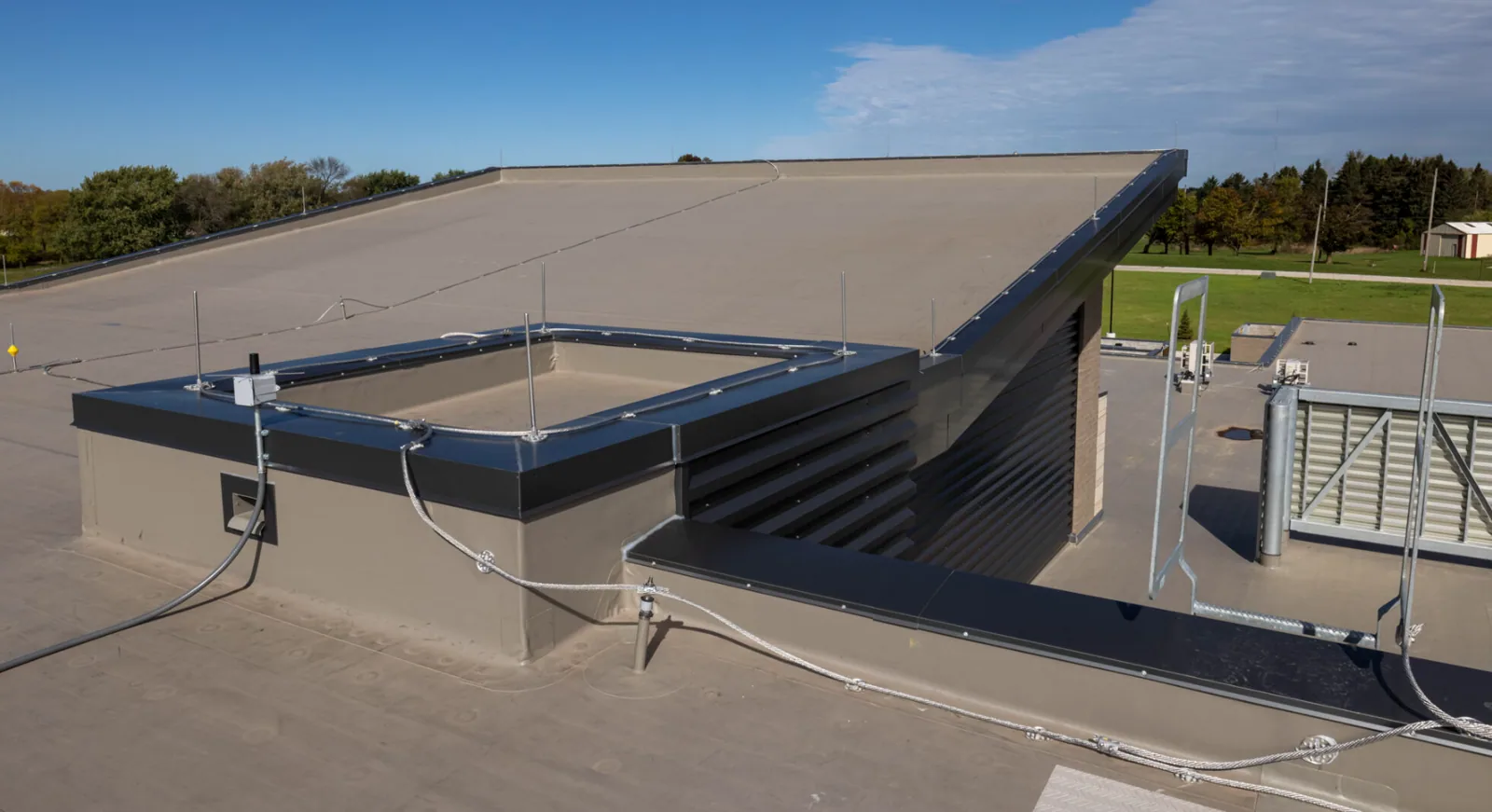
Versico makes EPDM, TPO and PVC membranes, plus VersiFleece, a fleece-backed sheet often used for adhered installations. On Chesapeake buildings, the trouble spot we see most often on these roofs is the perimeter: edge metal that has loosened, a membrane termination pulling away under the coping, or a corner that lifted in a storm. Once water gets behind the edge, it runs into the insulation and the wall below. Interior stains along an exterior wall, peeling paint or damp drywall near the top of a wall are typical signs that the problem is at the perimeter rather than in the field of the roof.
We start by confirming which Versico membrane is on the roof and how it is attached. Then we inspect the edge and the insulation behind it, check the fastening of the metal, and look for the path water is taking into the building. You get photos and a written recommendation that covers the membrane, the metal and anything under them that needs replacing. If part of the problem belongs to another trade, such as a cracked parapet or failed wall sealant, we point that out clearly.
Which Versico product is installed
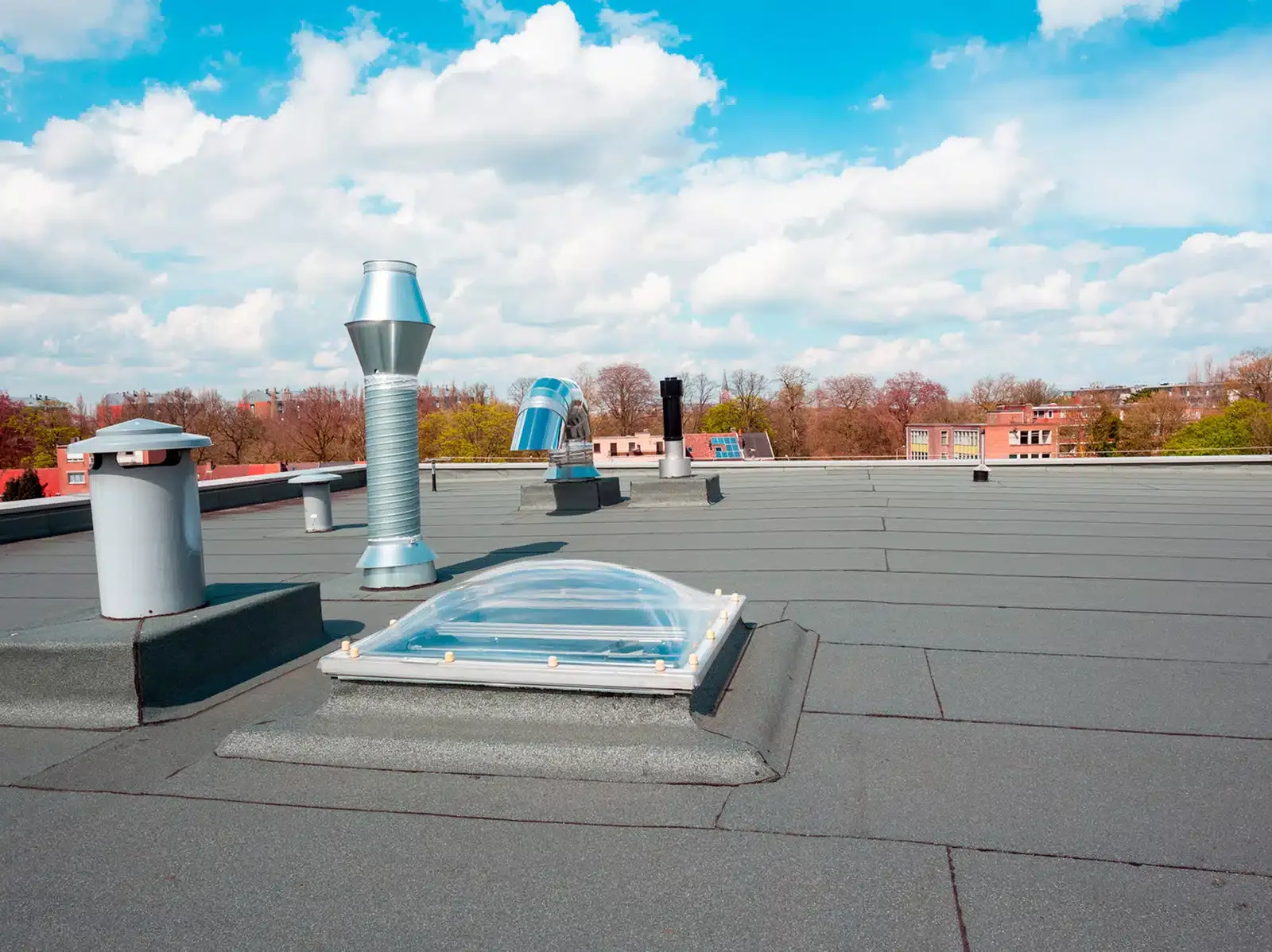
EPDM, TPO, PVC and fleece-backed sheets each have their own seam method, flashing materials and edge details. EPDM uses tape and primer; TPO and PVC are heat-welded; a fleece-backed membrane is adhered and has its own lap requirements. A repair that uses the wrong product will not bond. We identify the membrane from records where available and confirm it on the roof before we order anything. Even roofs from the same manufacturer can differ in thickness, color and reinforcement, and those details affect the repair materials.
Many roofs in the area are TPO roofing, and Versico TPO is a common choice. With TPO we check how weathered the membrane is near the edge, since sun-exposed perimeter sheets age faster and need careful cleaning before new material will weld. We also confirm whether the roof is fastened or adhered, because that changes how the edge should be secured. Edges on fastened roofs rely on a row of fasteners and a properly anchored termination; adhered roofs rely on the bond of the sheet near the perimeter. Both need sound wood to fasten into.
Surface versus what is underneath
The membrane on top might be in fine shape while the insulation behind the edge is soaked. Or the membrane might be weathered while everything under it is dry. These are separate questions, and both affect the repair. We look at the surface condition and also check what is underneath, so the recommendation fits the actual problem instead of assuming the worst or the best. A roof that only needs edge work should not be quoted as a full replacement, and a roof with saturated insulation should not get a cosmetic patch.
Our commercial roof inspection includes the edges, seams, flashings, drains and moisture testing near the leak. Where needed, we cut a small core and repair it the same day. The report shows what can stay, what has to be replaced and what we would need to open up to confirm. That prevents surprise change orders once the job is underway. It also gives you a clear record to compare against later, after storms or when planning future budgets.
Fix the wet material behind the edge
When an edge has been leaking for a while, the insulation at the perimeter and the wood nailer under the metal are often wet or rotted. New metal fastened into rotten wood does not hold. We remove the edge metal, replace damaged nailers and wet insulation, reattach the membrane, and install new metal fastened into sound wood. On coastal buildings, edge securement matters even more because wind uplift starts at the perimeter and corners. A loose edge is often the starting point for a membrane that peels back in a storm.
Our edge metal, coping and gutter work covers the full perimeter, including gutters and downspouts. If the wall below has damage from long-term leaking, we point it out so you can bring in the right trade. Additional wet material found during the repair is measured and photographed, and we get your approval before going further. Interior protection stays up throughout, and the roof is sealed watertight at the end of each day.
Comparing Versico with other systems
Versico and Carlisle SynTec are both part of Carlisle, and their product ranges overlap. That makes them close comparisons on paper. Even so, specific membranes, accessories and installation requirements should be checked rather than assumed to be interchangeable. We confirm which products are approved for use together before mixing them on the same roof, especially at seams and flashings. When you compare bids, look at the whole scope. That means tear-off or recover, insulation thickness, attachment, perimeter metal and every curb and wall detail.
A Holcim Elevate proposal may offer EPDM, TPO or PVC as well. Each manufacturer has its own seam products and edge details. We price each option on the same roof area, the same insulation repairs and the same perimeter work. That way a lower price reflects real savings rather than missing scope. If one bid is much lower, it is worth asking which items it leaves out.
Pay attention to how each bid handles edge metal, nailers and corners. On Chesapeake buildings exposed to tropical storms and nor'easters, perimeter securement often decides how a roof holds up in high wind. Bids that skip nailer replacement or reuse old, bent metal may look cheaper but rarely save money after the next big storm.
Local work and the closeout package
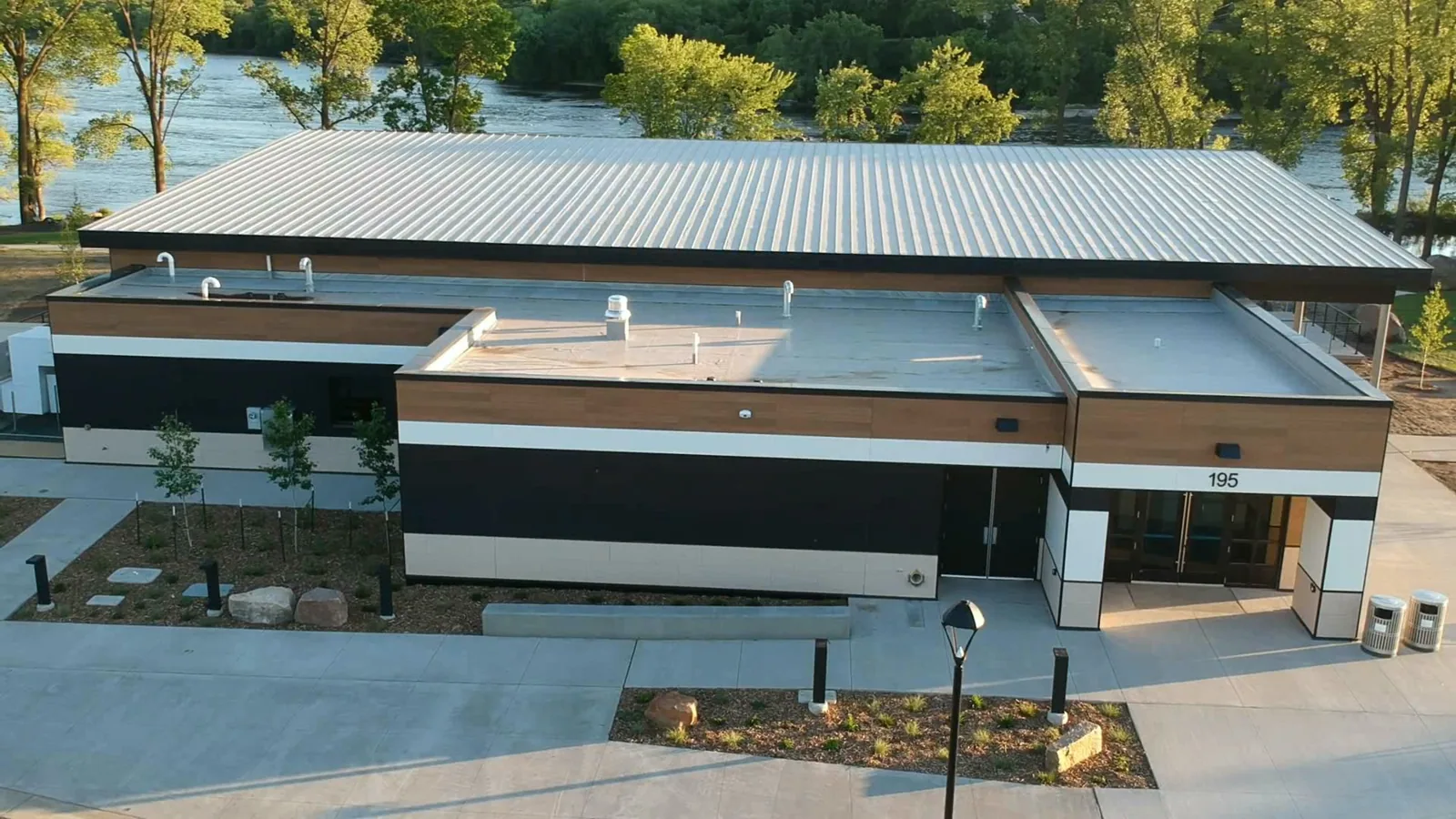
Buildings in Greenbrier range from older flat-roofed warehouses to newer offices and flex space, and their perimeters are built in different ways. For Versico work in Greenbrier, we confirm the building and membrane, then plan access, staging and working hours with the property manager. Edge work often happens over sidewalks and entrances, so we set up overhead protection and keep pedestrians clear. Deliveries and lifts are planned around tenant hours, and we keep the building contact updated each day.
At closeout you receive photos of the repaired edge, a list of the Versico products and metal installed, and notes on any nailers or insulation we replaced. If wall repairs or other trade work are still needed, they are listed separately. Warranty coverage depends on the documents issued for your job, which we review with you rather than assuming coverage based on the brand. Edge photos are labeled by elevation so they are easy to match to the building later.
Keep those records with your building files. After a major storm, they give us a baseline for checking the edges quickly, and they tell the next contractor exactly what was installed. That saves time and money on every future repair.
Commercial Roofing Questions
Which membranes does Versico make?
Versico makes EPDM, TPO and PVC membranes, along with VersiFleece fleece-backed sheets. Each one uses different seam and flashing methods, so we confirm the product on your roof first.
Can the membrane be fine while the insulation is wet?
Yes. The surface can look good while insulation behind a leaking edge is soaked. We check both before recommending a repair.
Why replace the wood nailer under the edge metal?
Rotted wood cannot hold fasteners. New metal attached to a bad nailer will loosen again, especially in high wind.
Are Versico and Carlisle the same?
Both are Carlisle companies with overlapping product lines, but specific products and accessories should be checked for compatibility rather than assumed to be interchangeable.
What do we receive when the repair is complete?
Photos of the repaired edge, the Versico products and metal installed, notes on nailers or insulation replaced, and any outstanding work for other trades.
Get the loose Versico roof edge inspected
Send any product records and tell us where the edge or leak is. We will check the insulation and metal at the perimeter and send photos with a clear repair plan.