
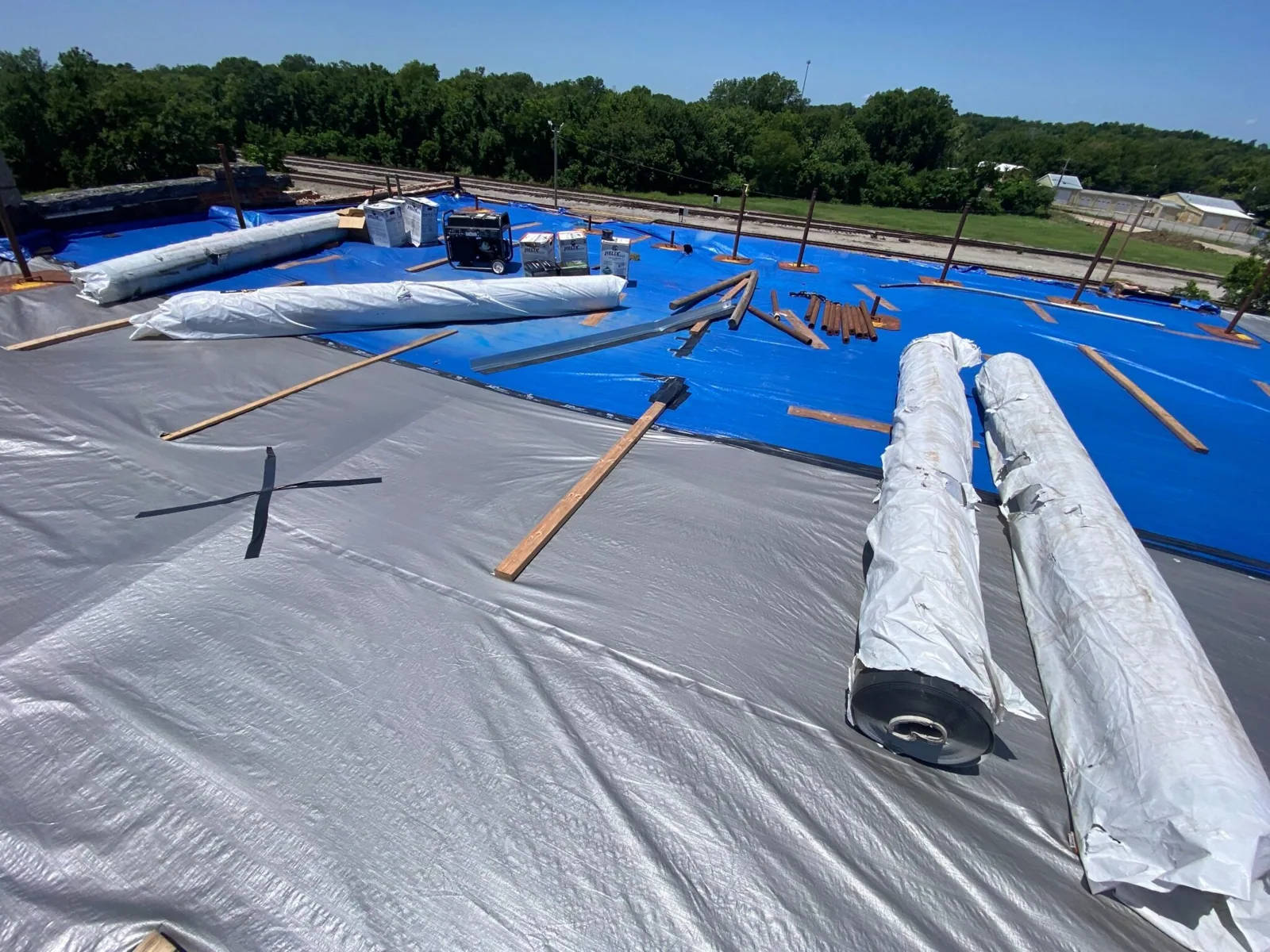
A torn seam on a Chesapeake warehouse roof can stay open while an insurance claim is reviewed, and every rain makes the interior damage worse. The roof still needs to be inspected and protected while the paperwork moves. We work with insurance restoration teams on commercial roofing. We inspect the damage and the roof around it, and our records separate what we saw from causes or hidden conditions we could not confirm. The owner gets temporary protection and a plan for the permanent repair. Coverage is decided by the insurer, and a photo or storm date does not mean a claim will be approved.
For a restoration job in the Greenbrier Business District, Great Bridge or elsewhere in Chesapeake, we need the building identified first. We inspect the actual roof in the areas we are cleared to access. The owner provides the date of the storm and any past repair records. Those help us know where to look, but they do not tell us the current condition everywhere. Send us the address, where water is getting in and any roof photos. We define the roof work and what still needs checking, and our documentation separates storm damage from older wear and hidden questions.
Documenting the Damage
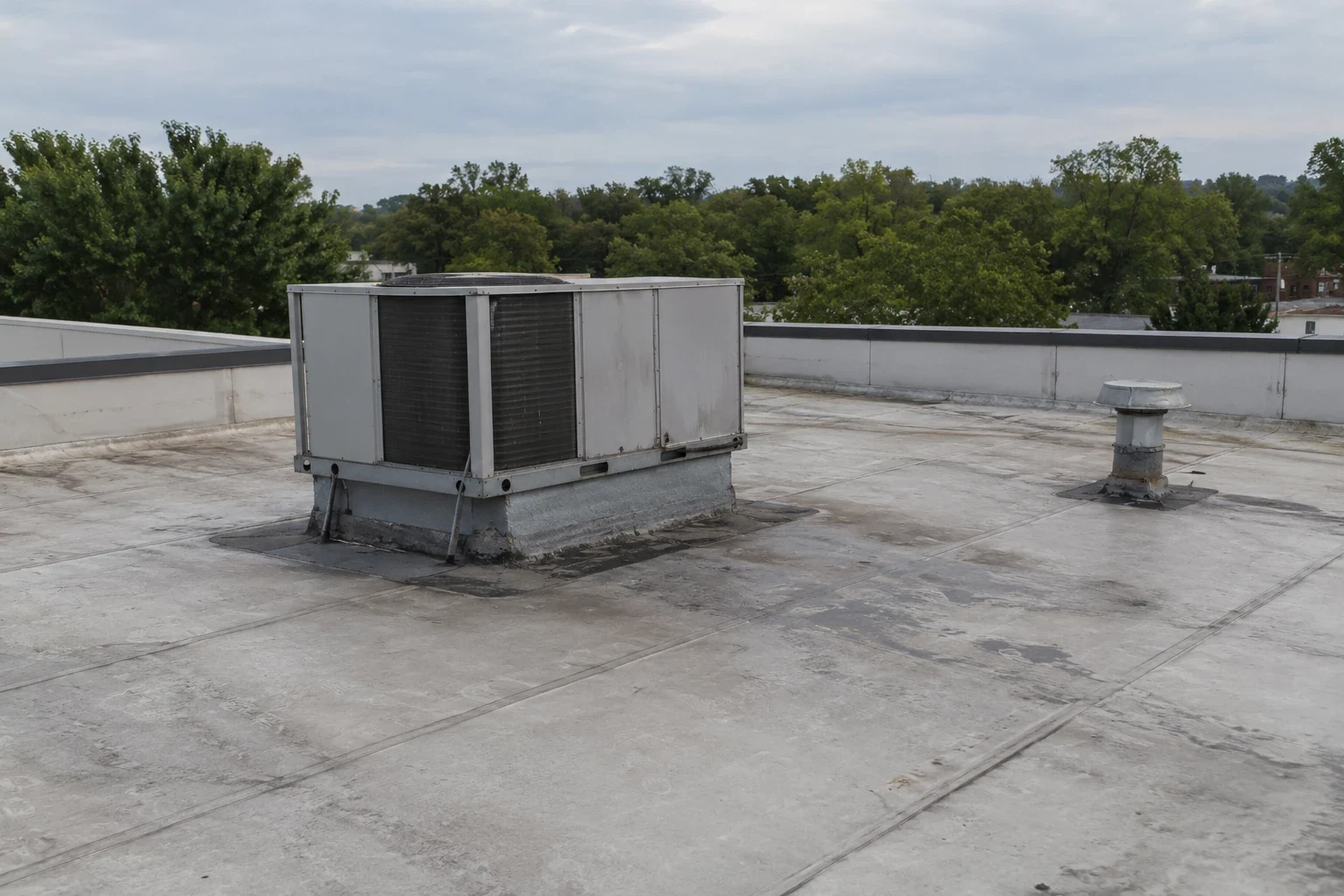
A displaced edge can expose roofing under a damaged metal joint. We locate the opening and inspect the roof around it. Photos record its location and condition at the time of our visit. They cannot show every hidden layer or prove the full cause. Areas we could not reach are scheduled for another visit, and structural questions go to an engineer. The owner can share clear findings with the adjuster without suggesting the whole roof needs the same repair.
Our roof insurance claim assistance describes the damage we found and any areas we could not inspect. We separate confirmed damage from questions that need more investigation. The storm date is kept separate from the condition we inspected. The adjuster interprets the findings and decides coverage. Our roofing report is useful whatever the outcome, describing the repair needed and the prep, so further checks can move forward without implying they have been approved.
Emergency Protection
An open seam may need temporary protection before permanent materials are available. We work in the areas we can safely reach. We take emergency calls overnight, on weekends and on holidays, and what we can do depends on access and weather. Our records describe the temporary protection clearly. The insulation or other parts of the roof may still need checking. The owner sees what is still needed, so reducing damage now does not get confused with completing the permanent repair.
Our emergency roof repair starts with the damaged area and the building contact. We explain what is exposed so management can protect rooms below. Temporary materials may need to be removed later to reach clean membrane for the permanent repair, and that is noted in the plan. Restoration teams can track each step. A quick patch does not prove every layer is restored, so further checks and engineering reviews stay on the list.
Sizing the Permanent Repair
A tear may need new material well beyond the visible opening. We inspect the surrounding membrane and confirm it is clean and sound enough to bond to. Old patches, coatings or loose attachment can change the repair method. We include those findings before any new layer goes on. The owner sees what comes off and what stays. A measurement of the tear alone does not define the repair, so we explain why the repair extends where it does and keep unconfirmed areas separate.
Our commercial roof repair uses materials compatible with the existing membrane. We identify nearby flashing and edge details that need work. Equipment changes may need the mechanical contractor's involvement. A larger replacement option is priced on its own, with its own insulation checks. The owner sees all of this before materials are ordered, so the restoration team can review price and timing for the complete scope.
Wet Insulation
Water can soak insulation well beyond the visible opening. When it affects the repair, we take core samples. Each opening is approved, sealed the same day and coordinated with the building contact for protection below. We report confirmed wet areas separately from areas we have not checked. A dry surface does not prove dry insulation. Removal quantities are based on what we find, not on a percentage of the roof or the size of the stain inside.
Our insulation and cover board replacement covers the wet layers we confirm. We find sound insulation around the damaged area and flag any structural questions for an engineer. Their findings may change how the roof is attached or how large each work area is, and we update the scope. The new roof goes on over prepared insulation, with any open questions resolved or clearly assigned first.
Coordinating the Work
A building under restoration may still be occupied. We explain what will be exposed and how materials will move, and the building contact decides on room and equipment protection. Approval to start the overall project does not mean every room below the roof work is protected. If we find more damage, the plan is reviewed again before the opening grows. Work at properties near Greenbrier follows that building's own approvals and the condition of its roof.
On larger restoration jobs, general contractors manage the trades that need to work before or after the roof. Property management companies provide building contacts and past repair records. Each trade signs off on its own work. When we finish, photos show completed repairs and materials. Claim decisions, equipment work and interior restoration are handled separately, and anything we saw outside the repair area is noted for a future inspection.
Commercial Roofing Questions
Can you start repairs before the claim is approved?
We can install temporary protection to prevent further damage. Permanent repairs usually follow the owner's approval, and coverage is decided by the insurer.
What do you provide for the claim file?
Dated photos, the locations of damage on a roof plan, a description of what we found and the repair needed, and notes on areas we could not inspect.
Do you decide whether damage is covered?
No. We document the physical damage and repairs. The adjuster and insurer decide coverage.
Why might the repair be larger than the visible damage?
The new material has to bond to sound membrane, and wet insulation must be replaced. Both can extend the repair beyond the visible tear.
Can you work with our general contractor?
Yes. We coordinate the roofing schedule with the other trades on the restoration project.
Get storm damage documented and repaired
Send us the building address, the storm date and photos of the damage. We will inspect the roof, protect it if needed and send clear documentation.