
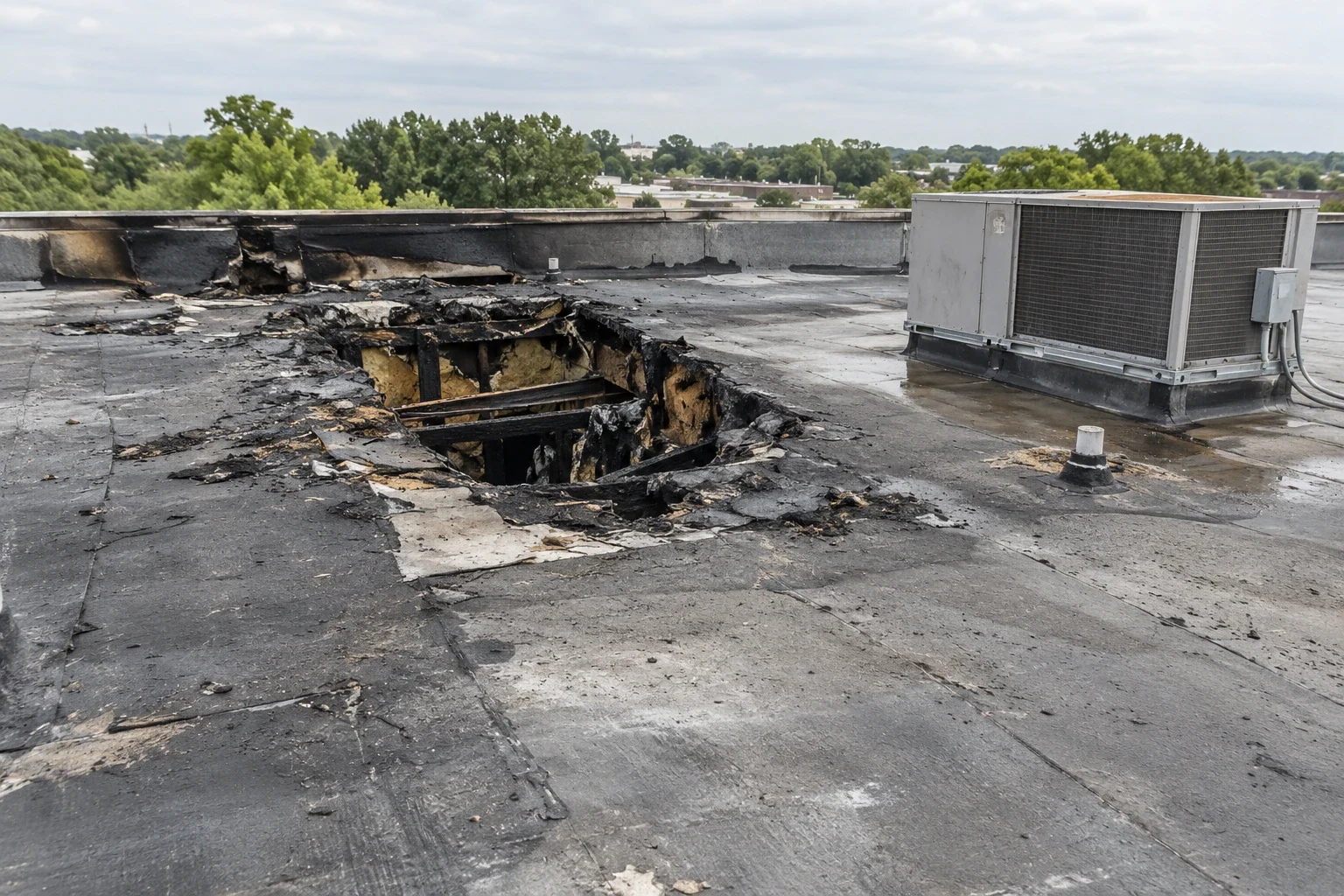
After a fire, the roof over a Chesapeake warehouse may look like it has a burned patch, but the damage usually goes further. Heat can shrink and blister membrane well beyond the scorch marks, and the water used to fight the fire often soaks insulation across a much wider area. We assess commercial roofs after the building has been cleared for entry. We find the damaged membrane, metal and insulation, and we separate roofing damage from structural questions that need an engineer. A patch over a weakened deck is not a repair, and we will not pretend otherwise.
For a fire-damaged building in Greenbrier or anywhere else in Chesapeake, we start with the property contact and the areas the fire marshal, insurer or engineer has cleared. Tell us where the damage is and who manages the building. We inspect what is safe to reach, set up temporary protection where needed and explain what has to be decided before permanent repairs begin. You get a repair plan based on what is actually on the roof, not just on the fire report.
Safety and Access Come First
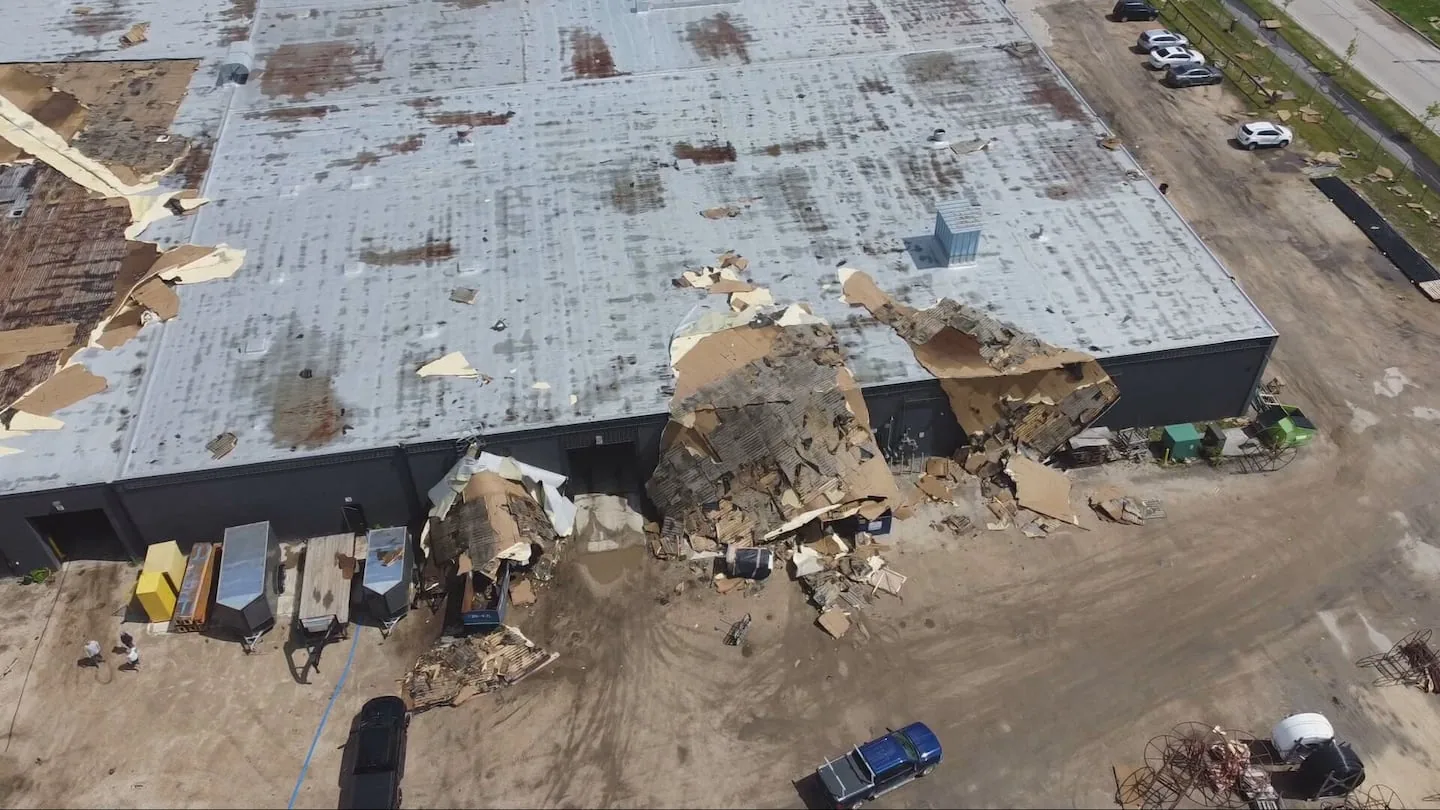
Fire can weaken a roof deck, joists and supports in ways that are not obvious from above. Before anyone walks the roof, the building owner and the appropriate engineers need to decide which areas are safe. We tell you which roof areas we need to see and how we would access them. If only part of the roof is cleared, we stay within that area. Anything we cannot reach yet is noted so it can be inspected once it is cleared.
Our commercial roof inspection after a fire records the damage we can see, where we were able to go and what still needs checking. Photos show the conditions clearly, but they cannot confirm that a deck or structure is sound. Structural concerns go to a qualified engineer, and their findings may change how much roof needs to be removed. We keep those questions in the report so nothing is assumed safe without proof.
Finding Sound Membrane Beyond the Burn
Charred, melted or shrunken membrane cannot be patched. New material needs sound, clean membrane to tie into. We inspect the area around the fire damage to find where the roof is still in good condition, which often means removing more than the visibly burned section. We explain why the repair area extends past the scorch marks and show it on a roof plan. That way you know the repair is based on the roof's actual condition, not just the outline of the fire.
When a larger area is affected, a commercial roof replacement of the damaged section may be the right answer. We define where the new roof will tie into the existing roof and how edges, curbs and walls will be detailed. Undamaged areas are checked separately before being added to the scope. The new materials are chosen to work with what remains, because a roof that looks similar may still need different prep.
Water Damage From Firefighting
Firefighting water can run under the membrane and soak insulation far from the fire itself. Wet insulation loses its insulating value, adds weight and can damage the deck over time. We plan core cuts or moisture checks in the areas that matter, with the building contact's approval and protection for the space below. Each opening is sealed the same day. A dry surface does not mean dry insulation, so we confirm before deciding what can stay.
Our insulation and cover board replacement covers the wet or damaged layers we confirm. Areas still being checked are listed before quantities are finalized. If deck repairs are needed first, they are sequenced before the new insulation goes in. A new membrane cannot fix a damaged deck underneath it, so the owner sees the full scope and order of work before materials are ordered.
Roof Repair vs. Structural Repair
A warped deck or a damaged equipment support needs to be evaluated by a qualified engineer. We point out what we see from the roof, such as sagging, soft spots or distorted metal, but we do not make structural conclusions we are not qualified to make. The engineer's findings may change how much roof comes off, how crews access the area or how the new roof is attached. We plan the roofing around that, so the new roof goes on over a structure that has actually been repaired.
Separate membrane puncture repair may also be needed, for example where firefighters or debris punctured the roof away from the fire. Each puncture is inspected and repaired on its own rather than lumped in with the fire damage. Where the roof is ready, those repairs can move ahead. Areas waiting on structural decisions stay on hold until the engineer clears them.
Temporary Protection While Repairs Are Planned
An open or badly damaged roof needs temporary protection to keep rain out while repairs are planned and approved. We take emergency calls in the evening, on weekends and on holidays, and the work we can do depends on safe access and the weather. Temporary dry-in must be secured to sound roof to hold in wind. We explain what the temporary protection does and how long it should last, and we keep the permanent repair on the list so it is not forgotten.
Our emergency roof repair crews start with the building and the damage at hand, working with the facility contact on interior protection. Healthcare buildings have their own contacts and rules about when work can happen. A property near Great Bridge is handled with its own approvals. Temporary and permanent repairs are always tied to the area we inspected and were cleared to work on.
Closing Out the Project
When the roof work is done, we document what was repaired or replaced, the materials used and any areas left for later. Work done by other trades, such as structural or mechanical repairs, is noted separately. We review the warranty for the new roofing. Insurance coverage is decided by the claim adjuster, and we do not promise any outcome, but we provide clear photos and a written summary that make the claim process easier.
During a post-fire inspection we often find other problems, such as opened seams from heat or movement. Our seam failure repair addresses those with proper cleaning and welding or adhesive work. Each repair is recorded with its location, so if a new leak appears later it can be compared with the work done. That keeps future decisions based on the roof as it actually is today.
Commercial Roofing Questions
Can you inspect the roof right after a fire?
Only after the building owner, fire officials or engineers have cleared the area. We tell you which roof areas we need to reach, and we stay within the cleared areas until the rest is safe.
Why does the repair area extend beyond the burned section?
Heat damages membrane beyond the visible scorch marks, and firefighting water often soaks insulation further out. New roofing needs sound material to tie into, so we repair to where the roof is actually in good condition.
Do you evaluate structural damage?
No. We point out signs such as sagging or soft deck, but structural decisions belong to a qualified engineer. We plan the roofing around their findings.
Can you protect the building while repairs are being approved?
Yes. We install temporary dry-in where it is safe and secure, including on nights and weekends. It is recorded as temporary so the permanent repair still gets scheduled.
Will you help with the insurance claim?
We provide photos, measurements and a written description of the roof damage and repairs. Coverage decisions are made by the insurer, and we do not promise any particular outcome.
Get the roof assessed after a fire
Tell us where the damage is, which areas have been cleared and who manages the building. We will inspect the cleared areas, protect the building where needed and send photos with a clear repair plan.