
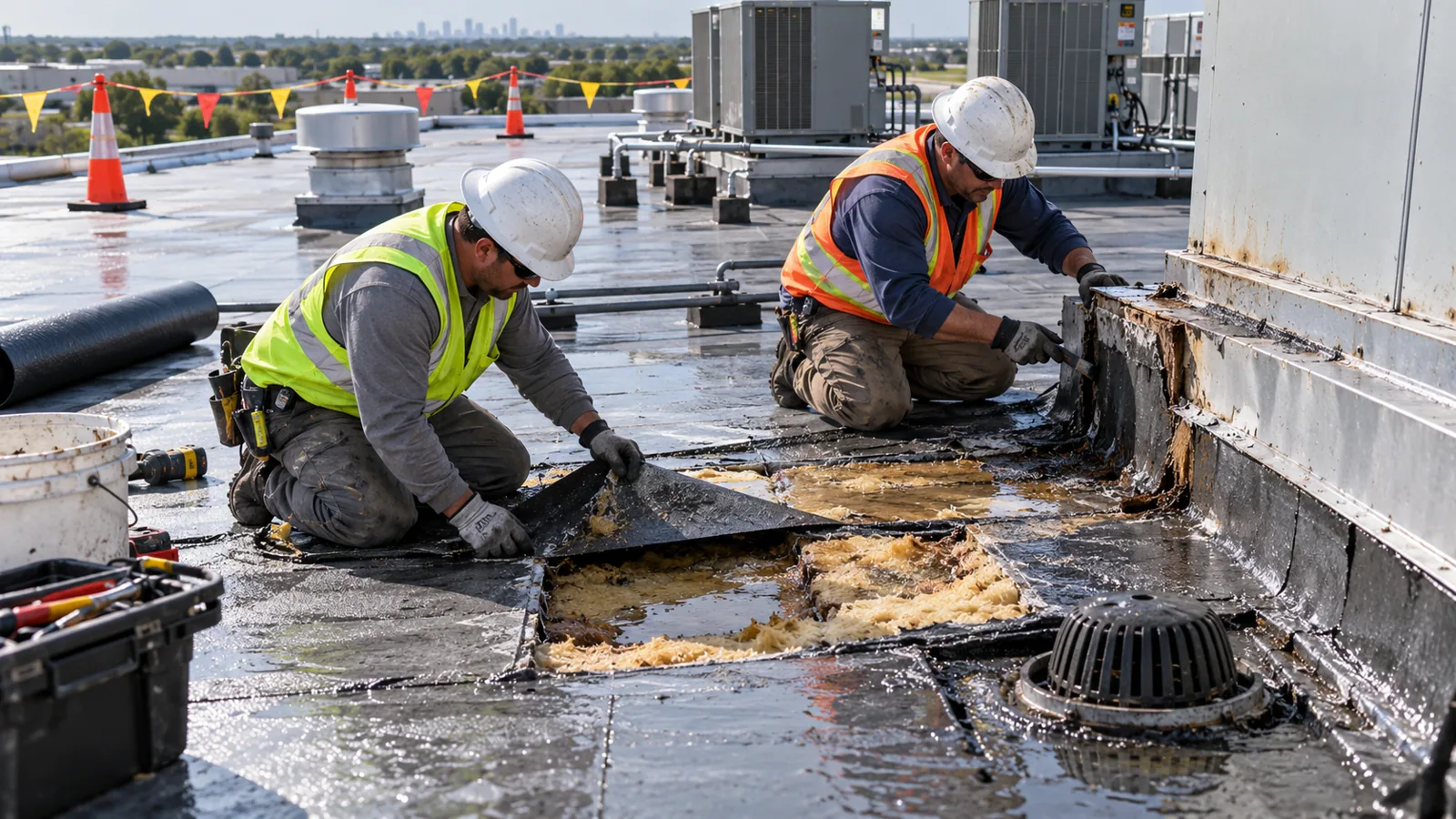
A puncture next to a new rooftop unit on an office building raises two questions at once: how to fix it properly, and whether the repair or the new equipment affects the roof warranty. We provide roof warranty management in Chesapeake, VA, that keeps both questions in view. The repair is based on what we find on the roof and the materials that were actually installed. The warranty question is answered by reading the actual warranty documents, not by assuming that a brand name means a problem is covered.
We work across Chesapeake, including the Greenbrier Business District, Great Bridge and Cavalier Industrial Park. Each review starts with the building, the installed roof system and the person responsible for it. We inspect flashings, seams and transitions, then compare what we see with the warranty paperwork on file. Those documents tell us what was installed and what the manufacturer requires, but not whether the roof is in good shape today. After the visit, you get a short summary of what we inspected, what we found, what is still uncertain and what repair we recommend, along with any warranty requirements that apply to it.
Matching the Roof to Its Paperwork
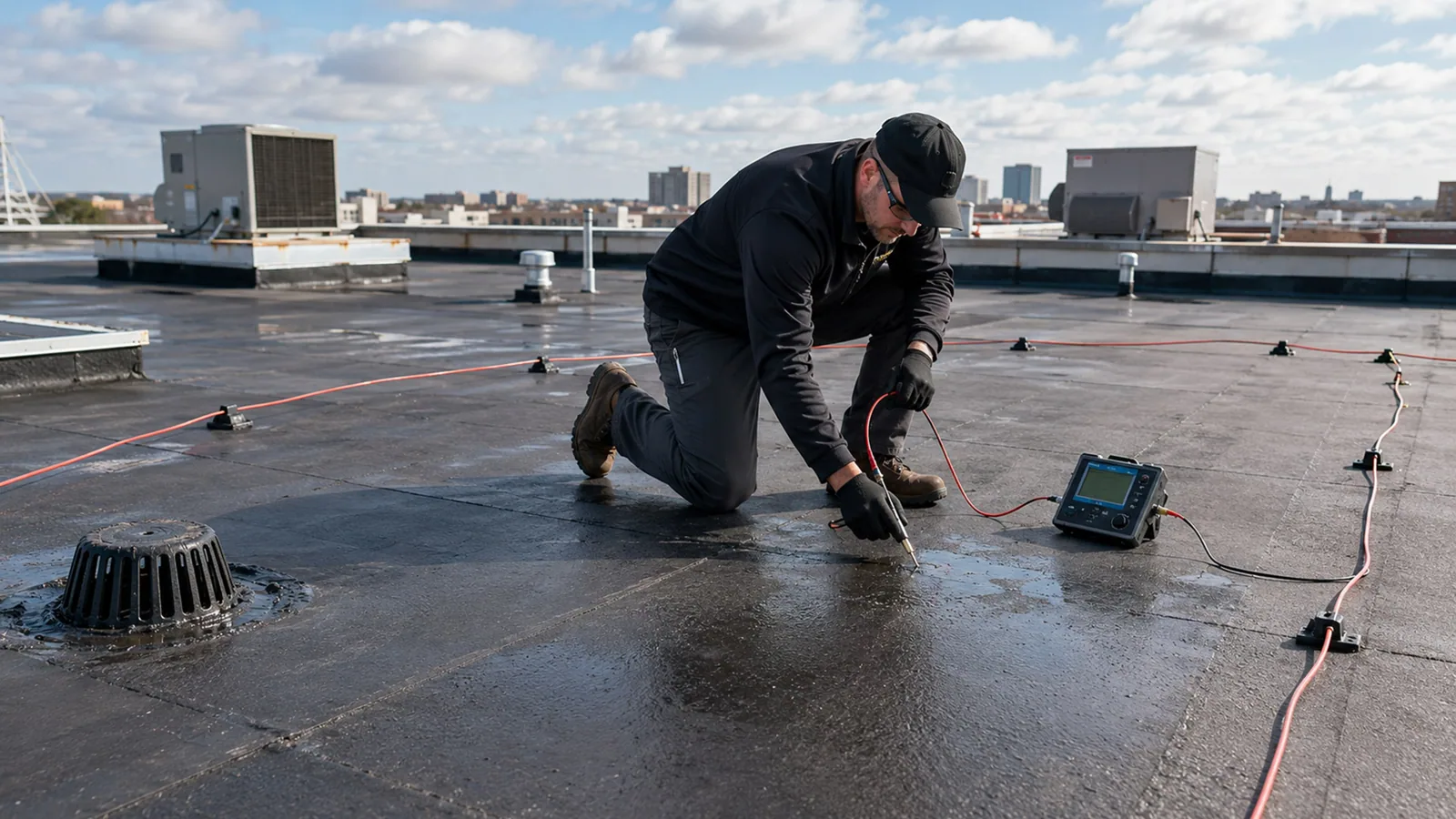
To repair a roof under warranty, you need to know exactly what was installed: the membrane, the insulation, the attachment method and the accessories. We compare the warranty documents, installation records and submittals with what is on the roof. A warranty usually covers a specific system installed a specific way, with conditions for maintenance and changes. If records are missing, we note that and work from what we can confirm on the roof, so the repair is right even while the paperwork is being tracked down.
Our roof condition reports sit alongside your warranty file. They show each defect, its location and what we could not inspect. Where we need more information about the materials or insulation, we say so. The report describes the repair needed, while the warranty review answers what the manufacturer requires. Keeping both together helps you make the right call and talk to the manufacturer with clear facts.
Documenting a Problem Before It Is Repaired
When a leak or defect is reported, we photograph it and its surroundings before anything is changed. We note old patches, the condition of nearby seams and anything that might explain the cause. If we cannot tell how far water has traveled, we say so and recommend a check. This record matters for warranty claims, because manufacturers often want to see the original condition and the cause before a repair is made. It also makes sure our repair addresses the real problem.
Our commercial roof leak repair work compares what we see on the roof with what building staff see inside. If the water is coming from a wall, window or HVAC unit, we tell you which trade should handle it. For urgent leaks, we take emergency calls overnight, on holidays and on weekends. Temporary repairs are logged as temporary, so the permanent fix and any warranty notice still get handled.
Using Compatible Repair Materials
A permanent repair has to bond to the existing membrane. We check the membrane around the damage for dirt, aging and old repair materials that could prevent a good bond, and we clean or remove material until we reach sound roof. Using the wrong patch on a warranted roof can cause the repair to fail and may affect coverage. We confirm the existing materials and use products and methods that are compatible with them, so the repair holds and fits the manufacturer's requirements.
A commercial roof repair on a warranted roof starts with confirming what is underneath. If wet insulation is suspected, we plan a small test cut, protect the space below and seal it the same day. Confirmed wet areas are repaired; unknown areas are listed for a further check. A sound repair makes the warranty conversation easier, but it does not decide on its own what the manufacturer will cover.
Rooftop Changes and New Equipment
New HVAC units, solar racks, vents and cable penetrations are some of the most common ways warranties get voided. Many manufacturers require notice or approved details before anyone cuts into the roof. We review the planned change, explain the flashing or curb detail it needs and coordinate with the mechanical or structural contractor. The roofing work needs enough clearance and a sound surface to tie into. We also check what the warranty requires before the work begins.
Our rooftop equipment curbs and supports work covers the roofing around new or relocated units. We note which flashings are complete and which are waiting on another trade. A mechanical contractor's install date does not mean the roofing is ready. If the layout changes, the new details get their own review. That keeps later changes separate from the original installation and protects the warranty you already have.
Healthcare and Occupied Buildings
For healthcare facilities, warranty work starts with the building, the facility team and the records on file. The team tells us which rooms, equipment and roof areas have restrictions. We describe what we could inspect and connect our findings to the warranty requirements in the documents provided. A past repair record helps identify the system, but it does not prove that later changes are still covered. Interior or equipment issues are kept separate from the roofing findings, so you know what evidence is still needed before talking to the manufacturer.
For buildings near Greenbrier, we review the current records and locate earlier repairs. If a detail has changed since the last visit, we inspect it on its own. Missing material information is listed as a follow-up item. Each building's warranty and repair history is reviewed separately, since another building's documents do not set the rules for yours.
After the Repair
When the work is done, we record what was repaired, where and with which materials, along with any checks completed. Deferred items, and any interior or equipment problems that belong to another trade, are listed separately. We keep the warranty documents with the repair record. If a new leak appears later, that record shows what was done and what has changed, without assuming that an earlier repair covered every later modification.
Our roof asset management service keeps roof findings and warranty documents in one place. Each visit adds current photos and a clear next step. A label such as "under warranty" is not enough on its own; the record shows the actual system, repairs and open questions. That makes it easier to coordinate permanent repairs, temporary fixes and warranty claims without anything falling through the cracks.
Commercial Roofing Questions
Does the membrane brand tell you whether a repair is covered by warranty?
No. Coverage depends on the warranty documents, the installed system, the cause of the problem and whether the roof has been changed. We review the documents and the roof together before drawing any conclusion.
What records help with a warranty claim?
The warranty itself, installation records, past repair invoices, photos of the defect before repair and the date the leak started. We help gather and organize these.
How are emergency repairs handled on a warranted roof?
We stop the water with a temporary repair and record exactly what was done, including photos. That record supports any manufacturer notice and the permanent repair that follows.
What should happen before a new rooftop penetration is cut?
Check the warranty for notice and detail requirements, confirm the curb or flashing design and coordinate with the mechanical contractor. Cutting first and asking later is a common way to lose coverage.
What should an owner keep after a repair?
A description of the repair, photos, the materials used, the location on the roof plan and any correspondence with the manufacturer. Keep it with the original warranty.
Protect your roof and your warranty
Send us the building address and any warranty or installation documents you have. We will inspect the roof, document what we find and explain the repair along with any warranty requirements that apply.